
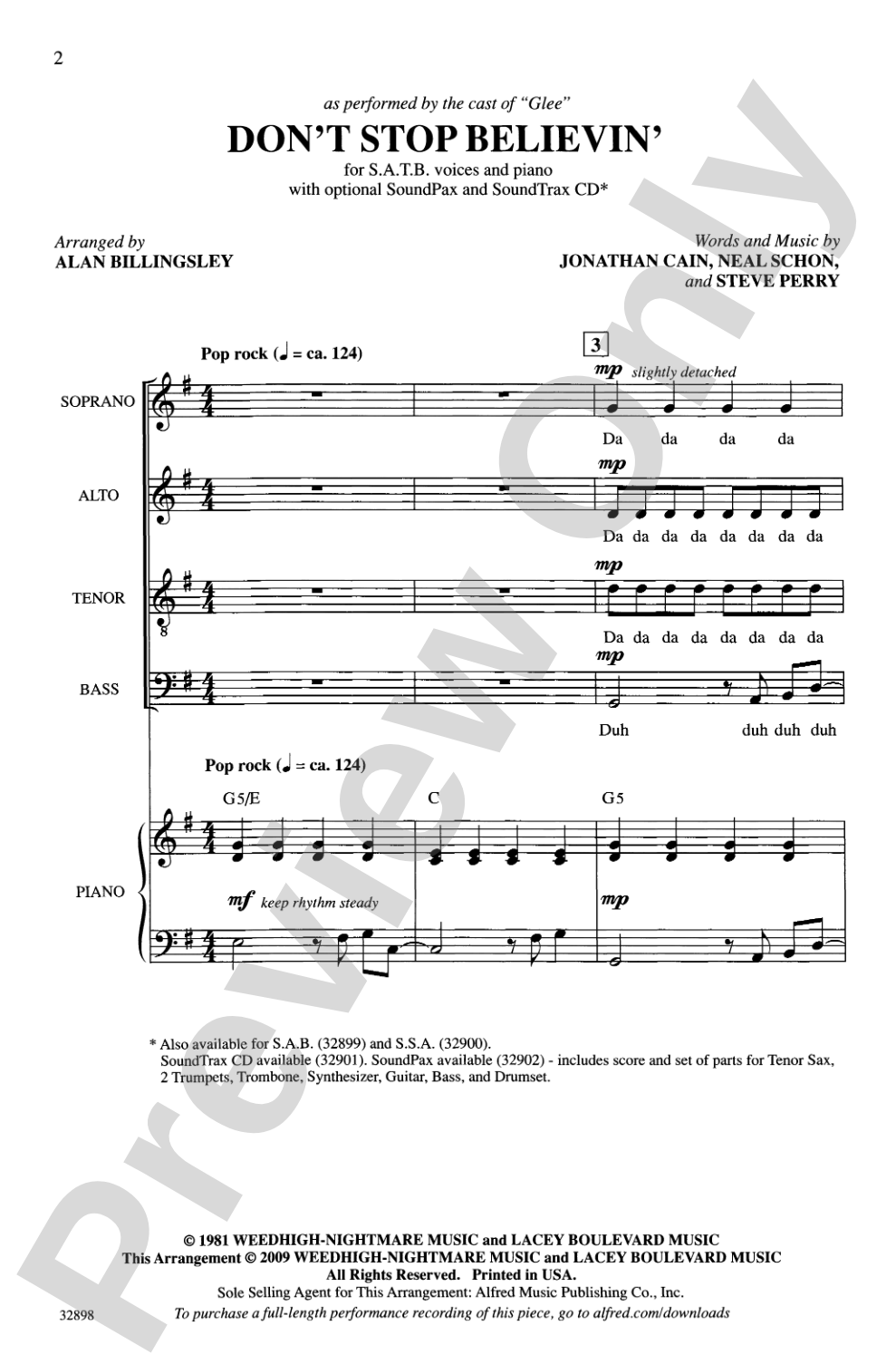
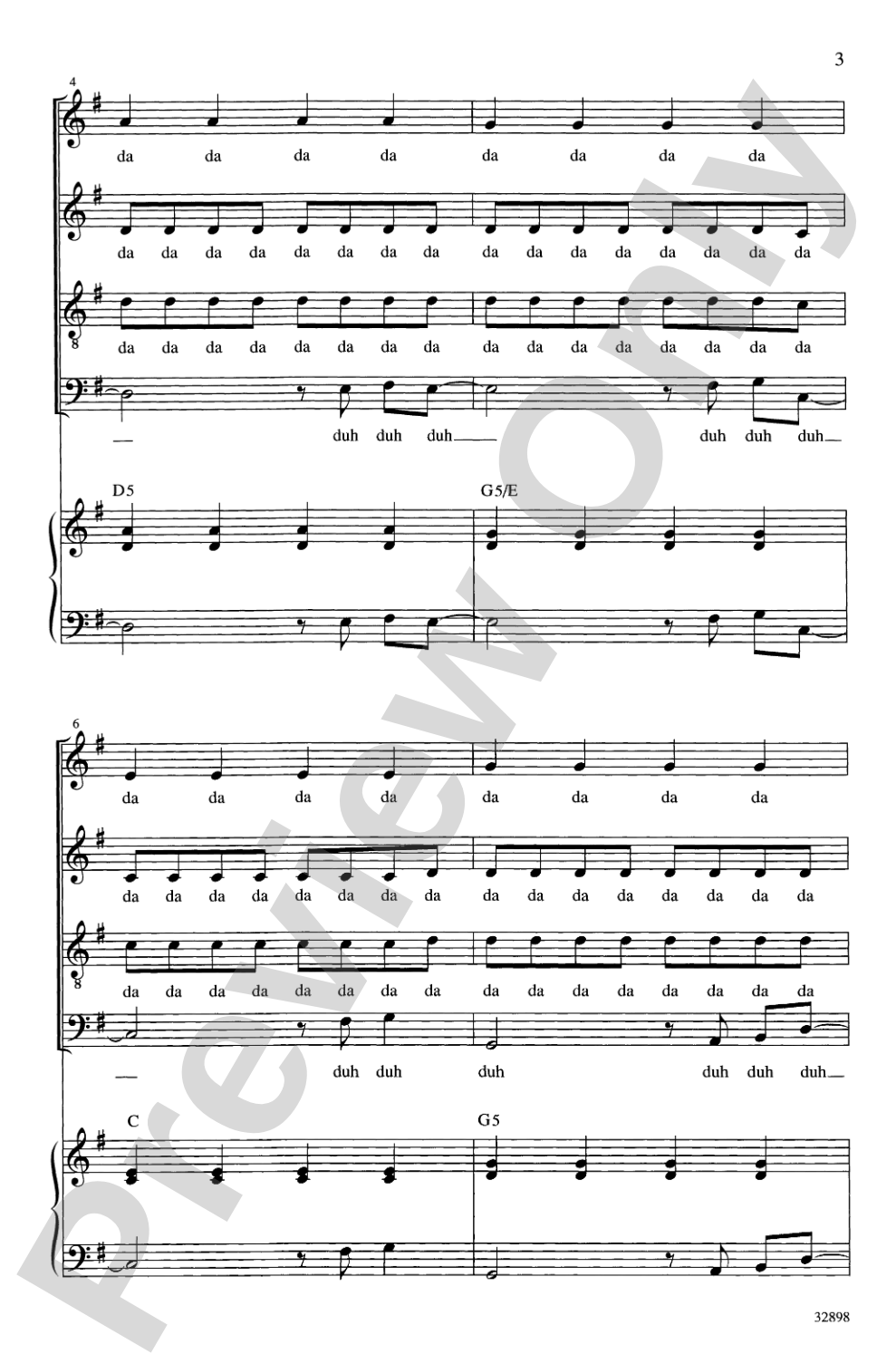
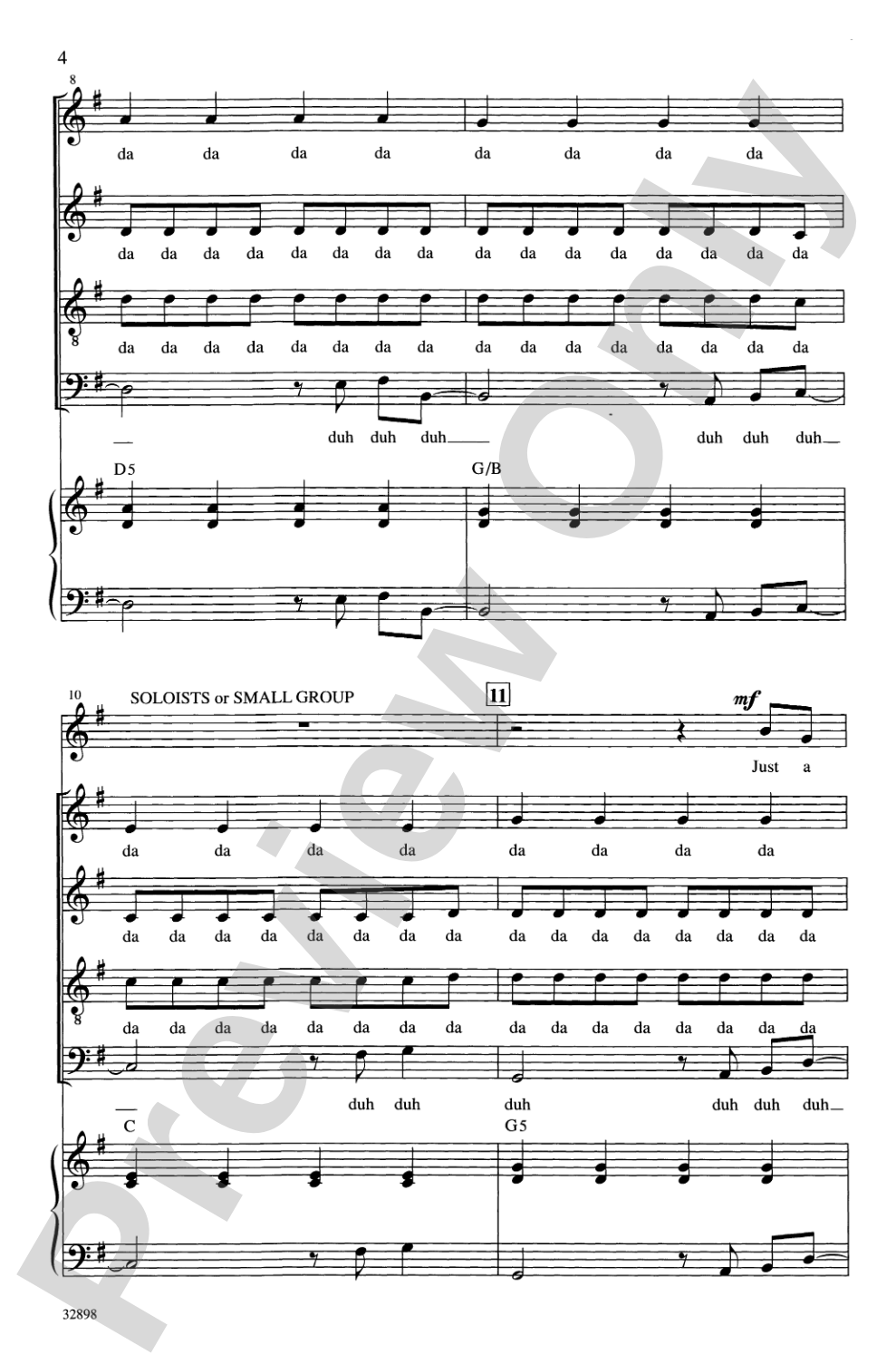
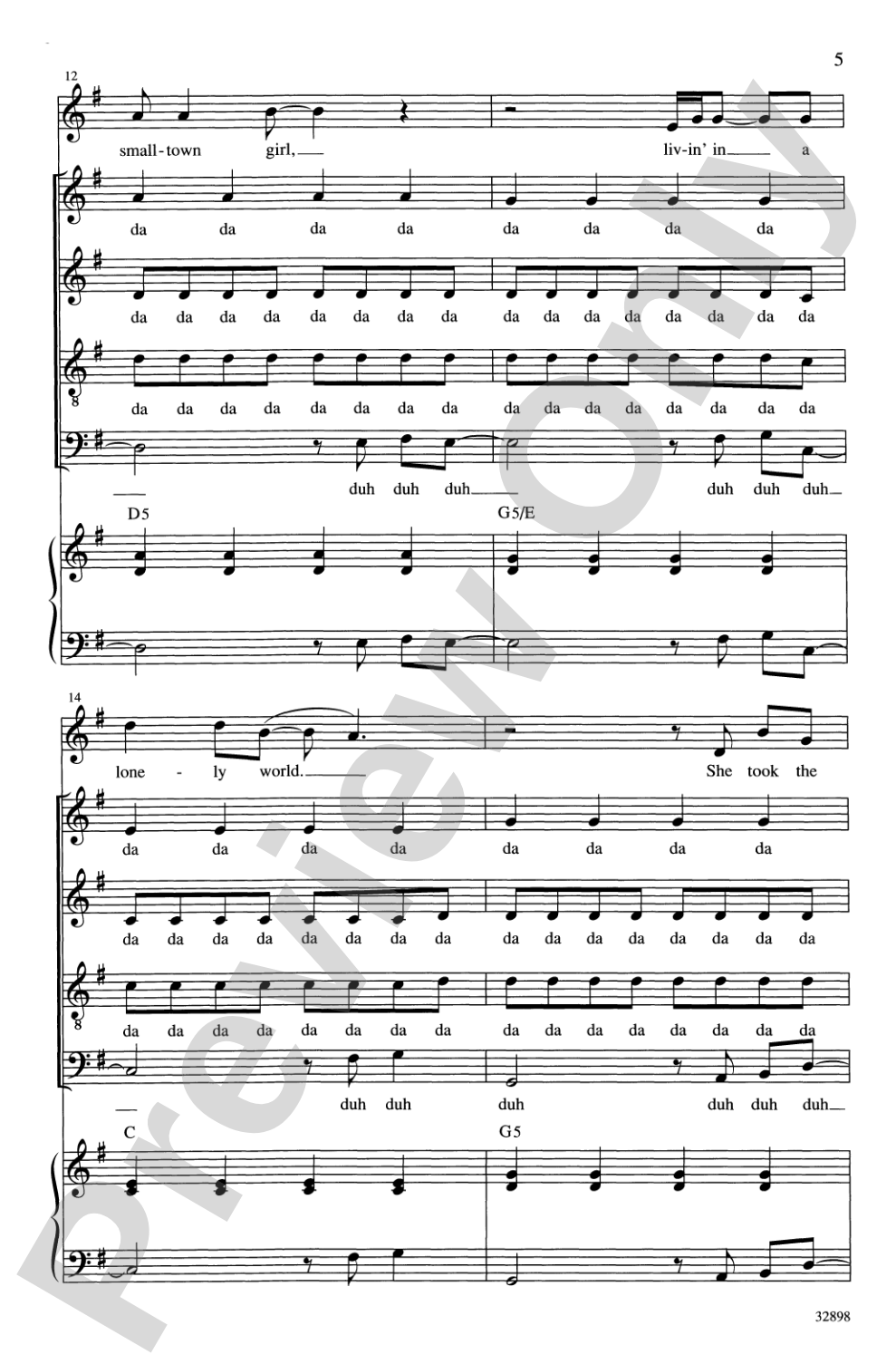

Don't Stop Believin': SATB Choral Octavo
As Performed by the cast of Glee / Words and music by Jonathan Cain, Neal Schon, and Steve Perry [Journey] / arr. Alan Billingsley
Item: 00-PO-0003169

$2.50
Minimum order quantity: 20 copies
Pickup currently not available
Related Items
Don't Stop Believin': SoundTrax Digital Audio Download |
$27.99
|
View | |
Don't Stop Believin': SoundTrax Digital Audio Download |
$29.99
|
View | |
Don't Stop Believin': SSA Choral Octavo |
$2.50
|
View | |
Don't Stop Believin': TTB Choral Octavo |
$2.95
|
View | |
Don't Stop Believin': Choral SoundPax |
$30.00
|
View | |
Don't Stop Believin': 2-Part Choral Octavo |
$2.10
|
View | |
Don't Stop Believin': SATB Choral Octavo |
$2.50
|
View | |
Don't Stop Believin': SAB Choral Octavo |
$2.50
|
View | |
Don't Stop Believin': TTB Choral Octavo |
$2.95
|
View | |
Don't Stop Believin': Choral Octavo SoundTrax CD |
$29.99
|
View | |
Don't Stop Believin': Choral SoundPax |
$30.00
|
View | |
Don't Stop Believin': 2-Part Choral Octavo |
$2.10
|
View | |
Don't Stop Believin': Choral Octavo SoundTrax CD |
$27.99
|
View |
Description
Your students will thank you! This monster power ballad, as heard on the pilot episode of the hit TV show Glee, is from Journey's 1981 album Escape. It's also featured in the current Broadway musical Rock of Ages. This is a song for the ages! Also available: SAB (00-32899), SSA (00-32900), TTB (00-35811), and a 2-Part (more kid friendly version) (00-33112).


Don't just read it, hear it, play along with it, and watch your students grow with it. In MakeMusic Cloud, Don't Stop Believin': SATB Choral Octavo comes alive with professional accompaniment, adjustable tempo, and built-in practice tools that turn solo practice into real progress.
Open in the Player
Jump straight in and assign it today.
Start Your Free Trial
Open this title and explore the full library in minutes.
Sample Audio
1
Audio File
--:--
0:00
0:00
Sample Video
No sample videos found.
Additional Details
Series:
Alfred Pop Choral Series
Publisher:
Alfred Music
Page Count:
20
SKU:
00-PO-0003169
More about this title
About the Composer: Jonathan Cain
Jonathan Cain is a keyboardist, songwriter, and founding member of Journey, the arena rock band that defined the sound of 1980s rock music. He co-wrote "Don't Stop Believin'" alongside Neal Schon and Steve Perry, creating one of the most recognizable songs in popular music history. His work spans decades of commercial success and has introduced millions of listeners to memorable melodies and emotionally resonant songwriting.
Cain's compositions have been performed across genres and contexts, from stadium concerts to theatrical productions like Rock of Ages. His approach to songcraft emphasizes accessible, singable melodies paired with driving harmonic progressions that engage both performers and audiences.
Why we love this
Alan Billingsley's arrangement captures the anthemic energy that made this song a cultural phenomenon while keeping it singable for high school and community choirs. The piece works beautifully in concert settings because audiences recognize it instantly, yet the four-part writing respects each voice line and avoids oversimplification. Programming this alongside more traditional repertoire signals that your ensemble takes music seriously across all genres.
What to expect
This is pure anthemic rock translated to choral harmony. The piece surges with the kind of melodic confidence that makes singers feel like they're part of something larger than themselves. There's joy in the familiarity paired with the pride of delivering a well-arranged, ensemble-driven version of a genuine pop landmark.
Who it's for
High school and community choirs seeking contemporary repertoire that engages singers and audiences alike. This arrangement works for ensembles with solid SATB balance and the ability to sustain energy across a full-length pop song. Singers often arrive in rehearsal already knowing the tune, which accelerates learning and builds enthusiasm.
How to get the most out of it
- Build intensity gradually through the verses rather than singing at full volume from the start; the power ballad payoff in the chorus lands harder when dynamics are earned.
- Lock the rhythm section (bass and drums from the recorded accompaniment) into a steady groove; precision with the pocket matters more here than in classical literature.
- Shape the famous opening piano riff clearly in your rehearsals so singers internalize the melodic anchor before they enter.
- Encourage soloists or section leaders to own the vulnerability in the pre-chorus; this song connects emotionally when singers believe in the lyrical sentiment.
How to use it
This works best in a concert that mixes classics with contemporary selections, perhaps bracketed by other pop arrangements or placed as a crowd-pleasing closer. Consider pairing it with theatrical numbers from musicals since the Broadway connection to Rock of Ages provides natural context. The emotional arc and broad appeal make it an excellent choice for a spring or end-of-year concert where you want to celebrate the full range of repertoire your ensemble has tackled.
Skills your students will build
- Sustaining energy and dynamics across extended phrases in popular song form
- Balancing individual voice line clarity with homophonic blend in rock-style arrangements
- Performing with recorded accompaniment and matching rhythmic pocket
- Interpreting contemporary secular repertoire with emotional authenticity
- Navigating the harmonic language of 1980s rock composition