
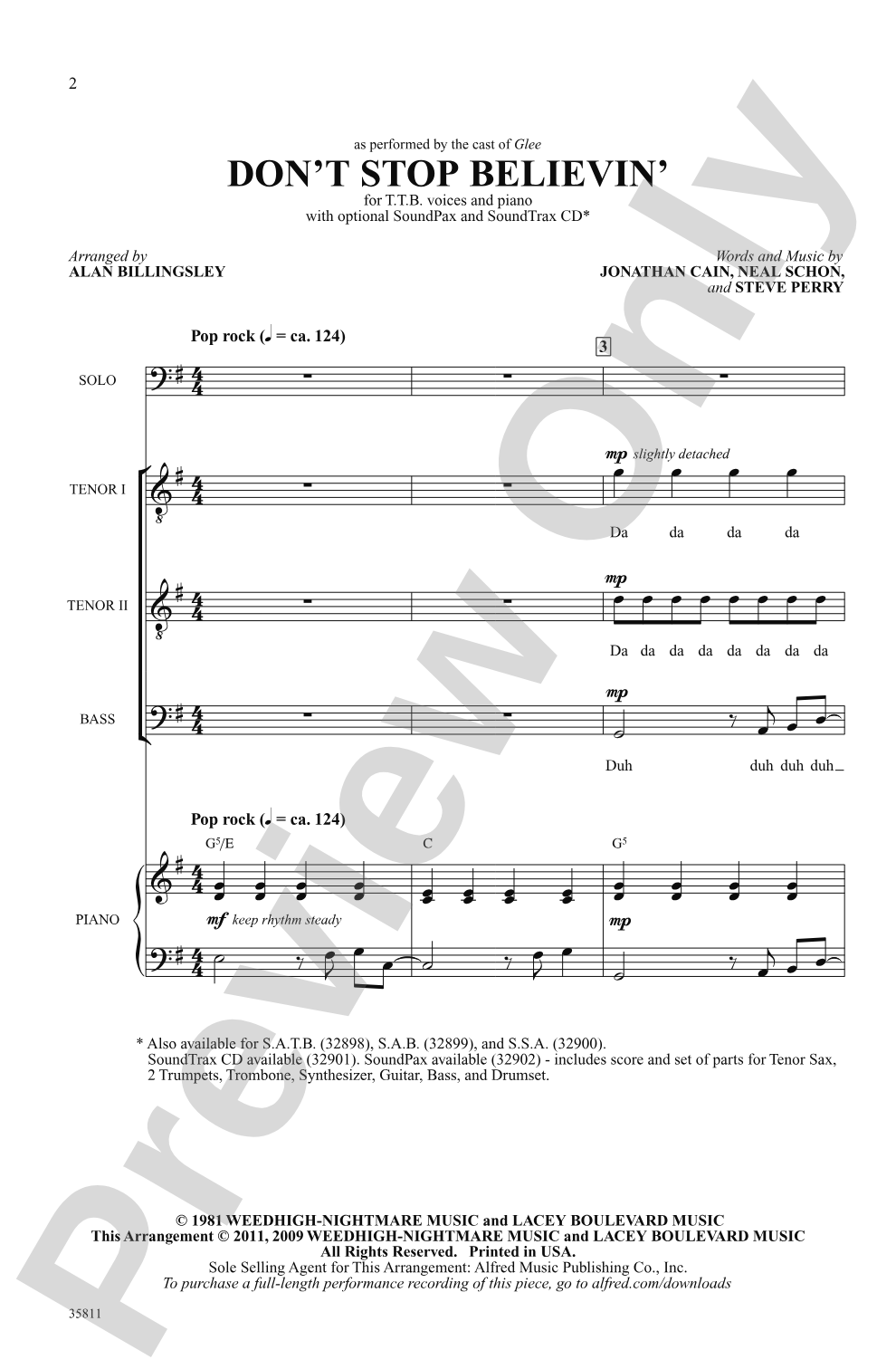
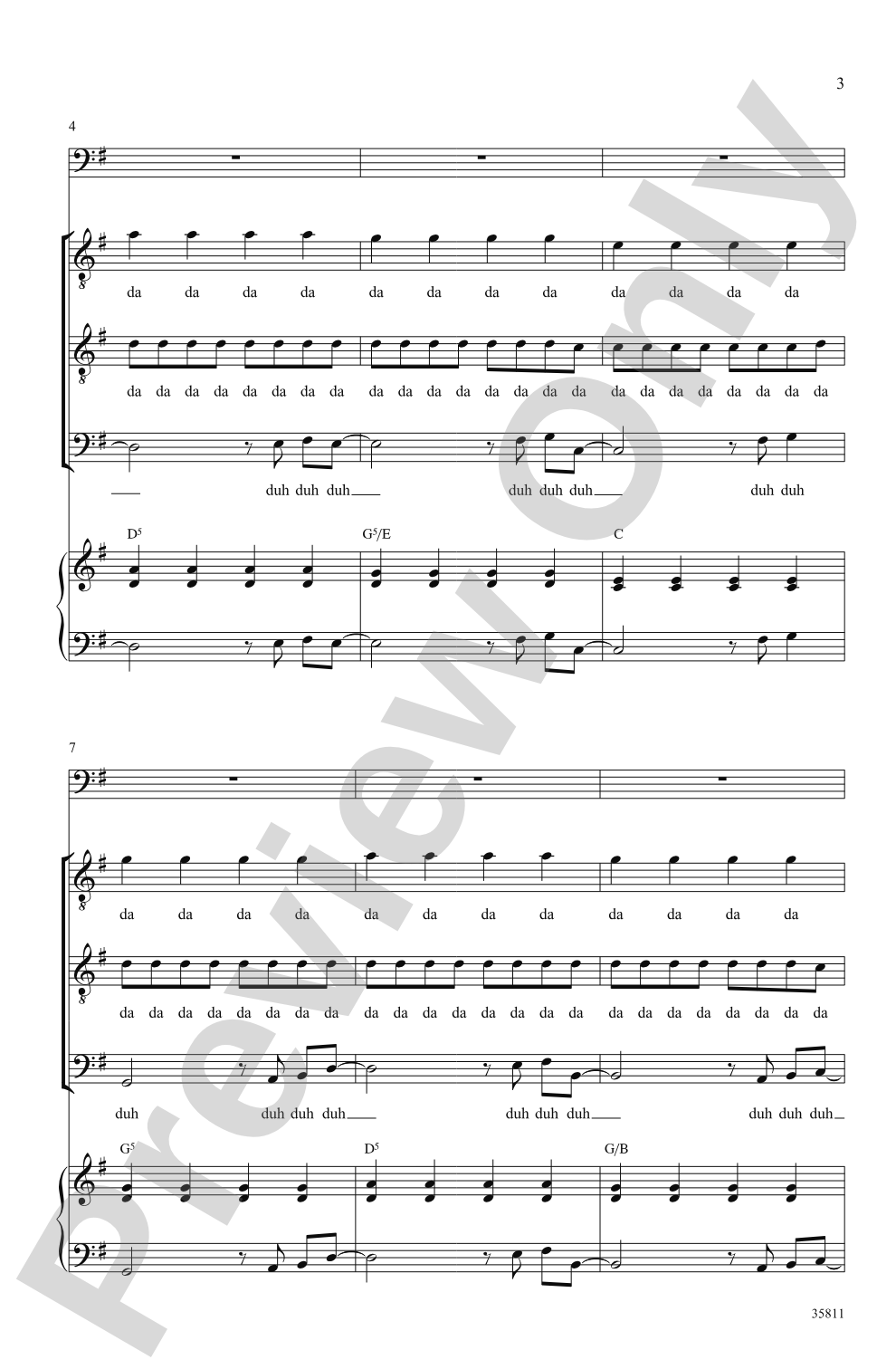
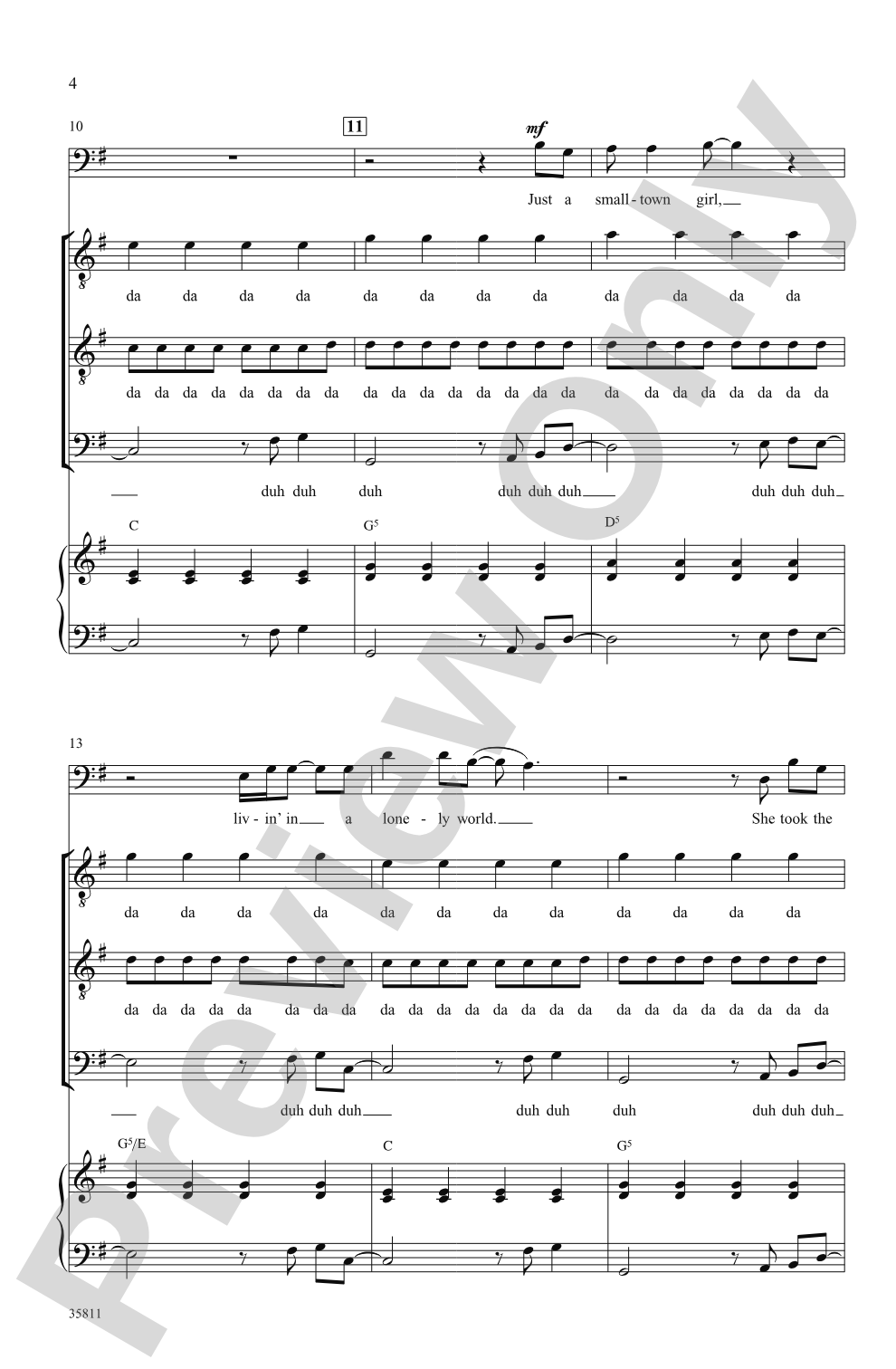

Don't Stop Believin': TTB Choral Octavo
As Performed by the cast of Glee / Words and music by Jonathan Cain, Neal Schon, and Steve Perry [Journey] / arr. Alan Billingsley
Item: 00-PO-0001104

$2.95
Minimum order quantity: 10 copies
Please note: Under U.S. copyright law, you must purchase the exact number of copies needed for your ensemble. Printing, duplicating or sharing additional copies is strictly prohibited.
Pickup currently not available
Related Items
Don't Stop Believin': SoundTrax Digital Audio Download |
$27.99
|
View | |
Don't Stop Believin': SoundTrax Digital Audio Download |
$29.99
|
View | |
Don't Stop Believin': SATB Choral Octavo |
$2.50
|
View | |
Don't Stop Believin': SAB Choral Octavo |
$2.50
|
View | |
Don't Stop Believin': SSA Choral Octavo |
$2.50
|
View | |
Don't Stop Believin': SSA Choral Octavo |
$2.50
|
View | |
Don't Stop Believin': Choral SoundPax |
$30.00
|
View | |
Don't Stop Believin': 2-Part Choral Octavo |
$2.10
|
View | |
Don't Stop Believin': 2-Part Choral Octavo |
$2.10
|
View | |
Don't Stop Believin': SATB Choral Octavo |
$2.85
|
View | |
Don't Stop Believin': SAB Choral Octavo |
$2.50
|
View | |
Don't Stop Believin': TTB Choral Octavo |
$2.95
|
View | |
Don't Stop Believin': Choral Octavo SoundTrax CD |
$29.99
|
View | |
Don't Stop Believin': Choral SoundPax |
$30.00
|
View | |
Don't Stop Believin': 2-Part Choral Octavo |
$2.10
|
View | |
Don't Stop Believin': Choral Octavo SoundTrax CD |
$27.99
|
View |
Description
Your students will thank you! This monster power ballad, as heard on the pilot episode of the hit TV show Glee, is from Journey's 1981 album Escape. It's also featured in the current Broadway musical Rock of Ages. This is a song for the ages! Also available: SATB (00-32898), SAB (00-32899), SSA (00-32900), and a 2-Part (more kid friendly version) (00-33112).


Don't just read it, hear it, play along with it, and watch your students grow with it. In MakeMusic Cloud, Don't Stop Believin': TTB Choral Octavo comes alive with professional accompaniment, adjustable tempo, and built-in practice tools that turn solo practice into real progress.
Open in the Player
Jump straight in and assign it today.
Start Your Free Trial
Open this title and explore the full library in minutes.
Sample Audio
1
Audio File
--:--
0:00
0:00
Sample Video
No sample videos found.
Additional Details
Series:
Alfred Pop Choral Series
Publisher:
Alfred Music
Page Count:
16
SKU:
00-PO-0001104
More about this title
About the Composer: Jonathan Cain
Jonathan Cain co-founded Journey in 1980 and served as the band's keyboardist and primary songwriter throughout their most commercially successful era. He crafted some of rock's most enduring anthems, including "Don't Stop Believin'," which became a defining song of the 1980s and has since transcended its original context to appear in films, television, and Broadway productions. Cain's songwriting combines accessible melodies with emotionally resonant lyrics, making his work particularly valuable for choral arrangers seeking material that engages student performers and audiences alike.
Why we love this
This arrangement captures everything that makes the original iconic while sitting comfortably in a men's or mixed voicing context. Alan Billingsley's work preserves the song's emotional drive and anthemic quality, giving your singers a piece they already know and love, which energizes rehearsals and performances. Programming this signals that you're meeting your students where they are musically, and the Broadway and Glee credentials make it a natural draw for recruiting singers to your ensemble.
What to expect
Driving and anthemic, with a slow-building intensity that mirrors the original's journey from intimate verses to explosive choruses. The piece carries an emotional honesty typical of power ballads, inviting singers to invest in every phrase. Expect your singers to feel the momentum building as they approach each chorus.
Who it's for
TTB choirs, male ensembles, and directors seeking accessible pop repertoire that engages secondary students and builds mixed-voice confidence. This works equally well for treble voices if your ensemble is configured that way, making it a flexible choice for any director looking for material with immediate cultural relevance.
How to get the most out of it
- Balance the melody across voice parts so the sing-along quality shines through; this isn't a piece where one voice should dominate.
- Lean into the rhythmic precision of the accompaniment recording to lock in the groove, especially during the pre-chorus sections.
- Shape the dynamics to build toward the chorus; the power of this song lives in the swelling moments where all voices arrive together.
- Encourage singers to connect with the lyrical content; this ballad's emotional resonance depends on commitment to the text, not just pitch accuracy.
How to use it
Feature this in a pops concert or end-of-year celebration where contemporary music anchors your programming. It pairs naturally with other rock-influenced choral arrangements and gives audiences an immediate connection point, making it ideal for performances designed to draw family and community attendance. Consider using it as a concert closer to send singers and listeners out on an inspiring note.
Skills your students will build
- Sustaining legit vocal production across a wide range in pop-influenced writing
- Coordinating part entries in a syncopated, rhythmically driven arrangement
- Balancing melody and harmony within a homophonic texture
- Connecting emotional intent to phrasing and dynamic shape