
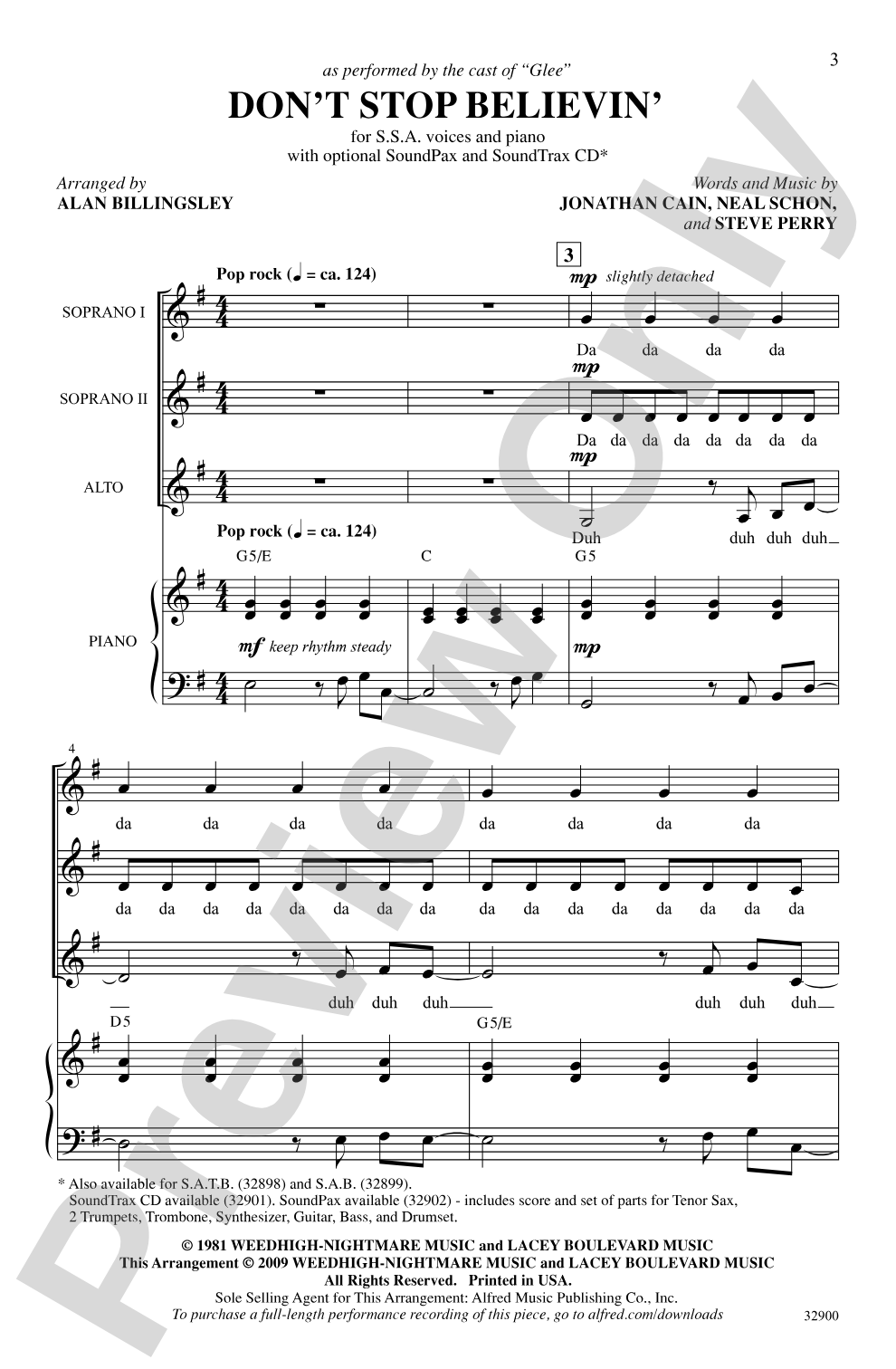
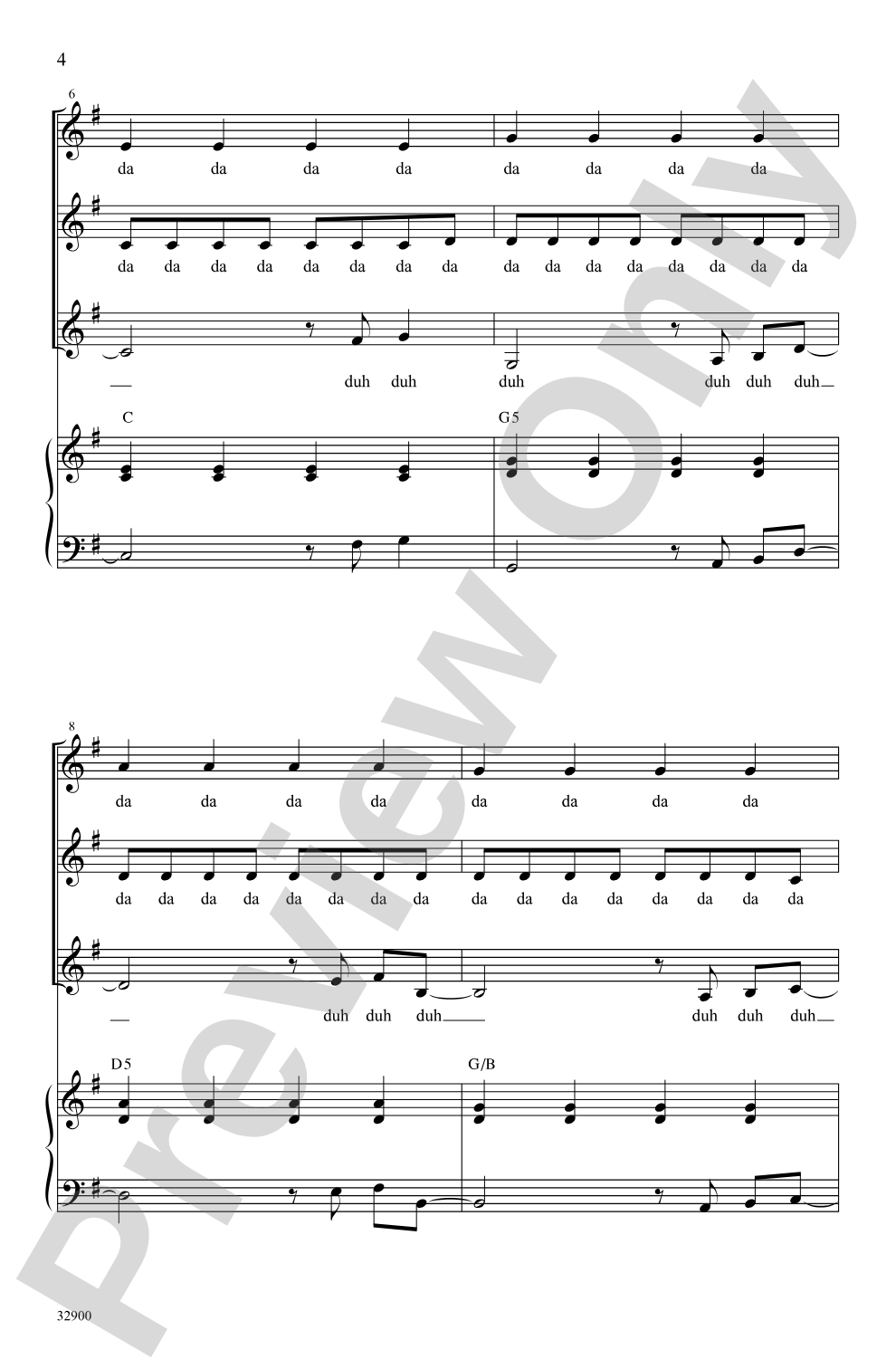
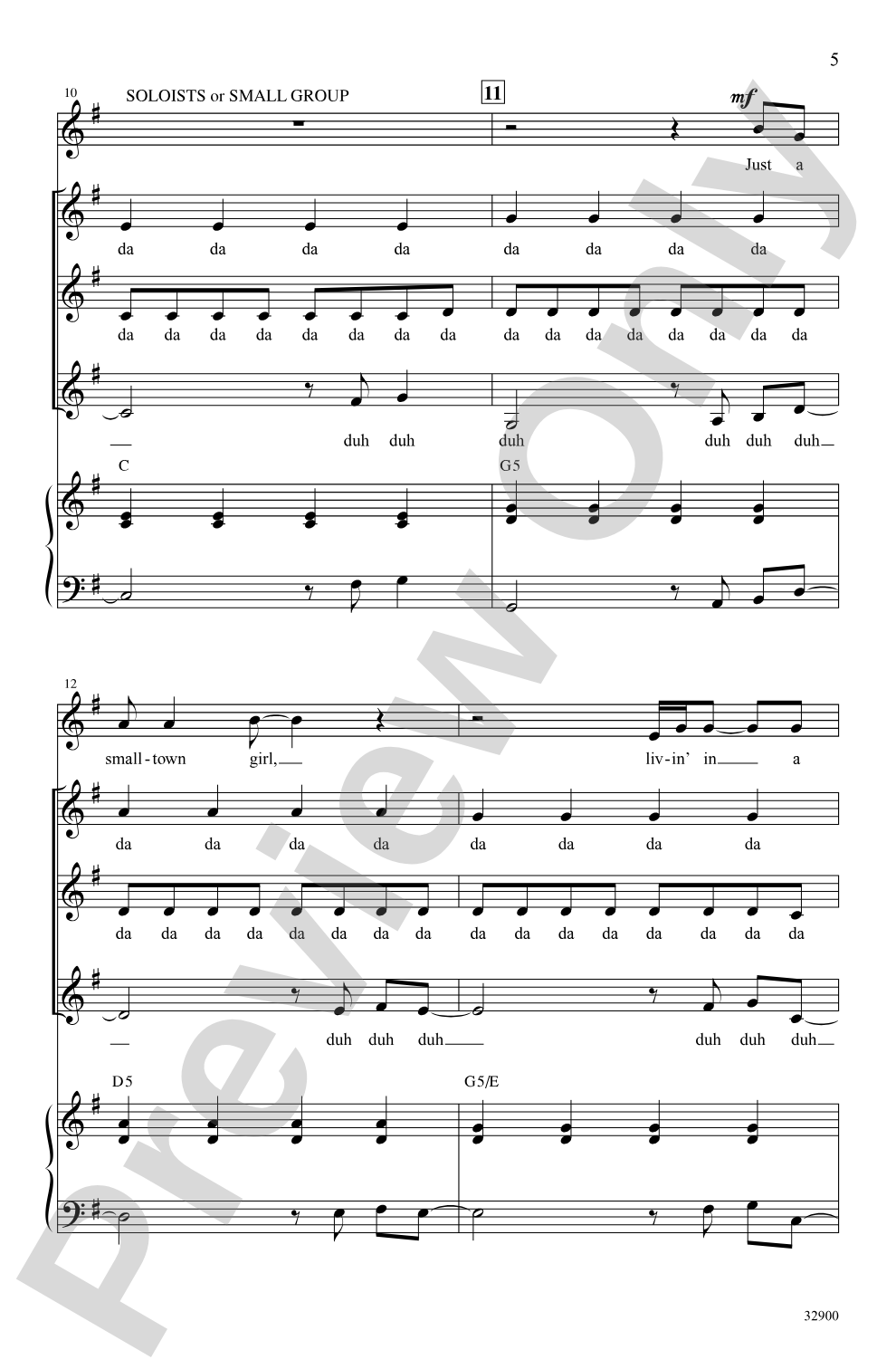
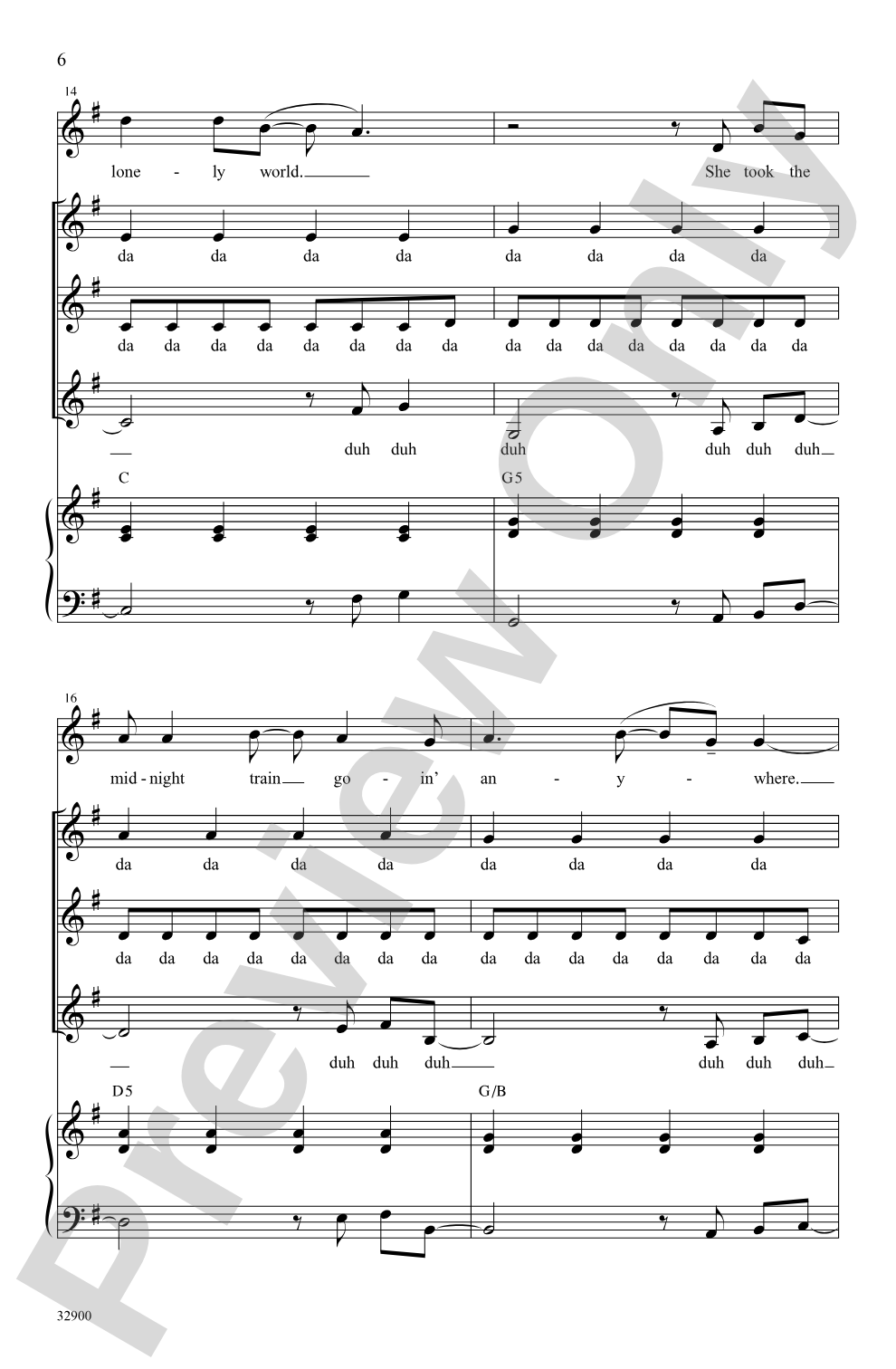

Don't Stop Believin': SSA Choral Octavo
As Performed by the cast of Glee / Words and music by Jonathan Cain, Neal Schon, and Steve Perry [Journey] / arr. Alan Billingsley
Item: 00-PO-0008011
$2.50
Minimum order quantity: 20 copies
Pickup currently not available
Related Items
Don't Stop Believin': SoundTrax Digital Audio Download |
$29.99
|
View | |
Don't Stop Believin': SATB Choral Octavo |
$2.50
|
View | |
Don't Stop Believin': TTB Choral Octavo |
$2.95
|
View | |
Don't Stop Believin': Choral SoundPax |
$30.00
|
View | |
Don't Stop Believin': 2-Part Choral Octavo |
$2.10
|
View | |
Don't Stop Believin': SATB Choral Octavo |
$2.50
|
View | |
Don't Stop Believin': SAB Choral Octavo |
$2.50
|
View | |
Don't Stop Believin': SSA Choral Octavo |
$2.50
|
View | |
Don't Stop Believin': TTB Choral Octavo |
$2.95
|
View | |
Don't Stop Believin': Choral Octavo SoundTrax CD |
$29.99
|
View | |
Don't Stop Believin': Choral SoundPax |
$30.00
|
View | |
Don't Stop Believin': 2-Part Choral Octavo |
$2.10
|
View | |
Don't Stop Believin': Choral Octavo SoundTrax CD |
$27.99
|
View |
Description
Your students will thank you! This monster power ballad, as heard on the pilot episode of the hit TV show Glee, is from Journey's 1981 album Escape. It's also featured in the current Broadway musical Rock of Ages. This is a song for the ages! Also available: SATB (00-32898), SAB (00-32899), TTB (00-35811), and a 2-Part (more kid friendly version) (00-33112).


Don't Stop Believin': SSA Choral Octavo isn't in MakeMusic Cloud just yet...but it could be. Let us know you'd like to see it, and you'll help shape what comes next. In the meantime, start a free trial and dive into thousands of interactive titles your students can play along with today.
Request This Title
Tell us you want it.
Start Your Free Trial
Explore everything that's ready to play right now.
Sample Audio
1
Audio File
--:--
0:00
0:00
Sample Video
No sample videos found.
Additional Details
Series:
Alfred Pop Choral Series
Publisher:
Alfred Music
Page Count:
20
SKU:
00-PO-0008011
More about this title
About the Composer: Jonathan Cain
Jonathan Cain joined Journey as keyboardist in 1980 and became a principal songwriter for the band during their most commercially successful era. His work on Escape and subsequent albums helped define the sound of arena rock in the 1980s, blending synthesizer textures with the band's signature vocal harmonies.
Cain's compositional approach emphasizes melodic accessibility without sacrificing harmonic sophistication. For music educators, his output represents a valuable bridge between popular music that resonates with students and material that demands serious musical craft.
Why we love this
Billingsley's SSA arrangement captures the emotional arc of the original without requiring a high soprano line to sit uncomfortably above the staff. The writing lets three voices share the lead phrase across the song, making this accessible to mixed-ability sections while preserving the anthem quality that made the original unforgettable.
What to expect
Earnest and soaring, this arrangement honors the song's power ballad DNA while keeping the emotional core intact. The progression from intimate verse to full-voiced chorus feels earned, not manufactured, and gives singers the satisfaction of building something together.
Who it's for
SSA choirs with solid musicianship but no need for extreme range demands. The piece works especially well for high school choirs, college non-majors, and community ensembles that want repertoire with immediate cultural resonance.
How to get the most out of it
- Shape the long vowels in the held notes of the chorus (particularly on 'believing') with a gradual swell and release; this gives weight to the lyrics without forcing tension in the voice.
- Balance the lower voices during the verse sections so the accompaniment doesn't wash out the melody line; use the recorded accompaniment to practice internal listening.
- Treat the key modulation near the end as a moment of genuine lift, not just a technical shift; ask singers to imagine the emotional stakes rising rather than simply executing a higher pitch.
How to use it
Pair this with other 1980s and contemporary pop repertoire for a concert segment that speaks directly to student culture and generational memory. It also works as a strategic closer for a pops concert or as a finale piece in a musical theatre focused program.
Skills your students will build
- Phrase shaping across long note values
- Balancing melody and accompaniment in pop voicing
- Navigating key modulation with secure intonation
- Sustaining vocal energy through repetitive harmonic structures