
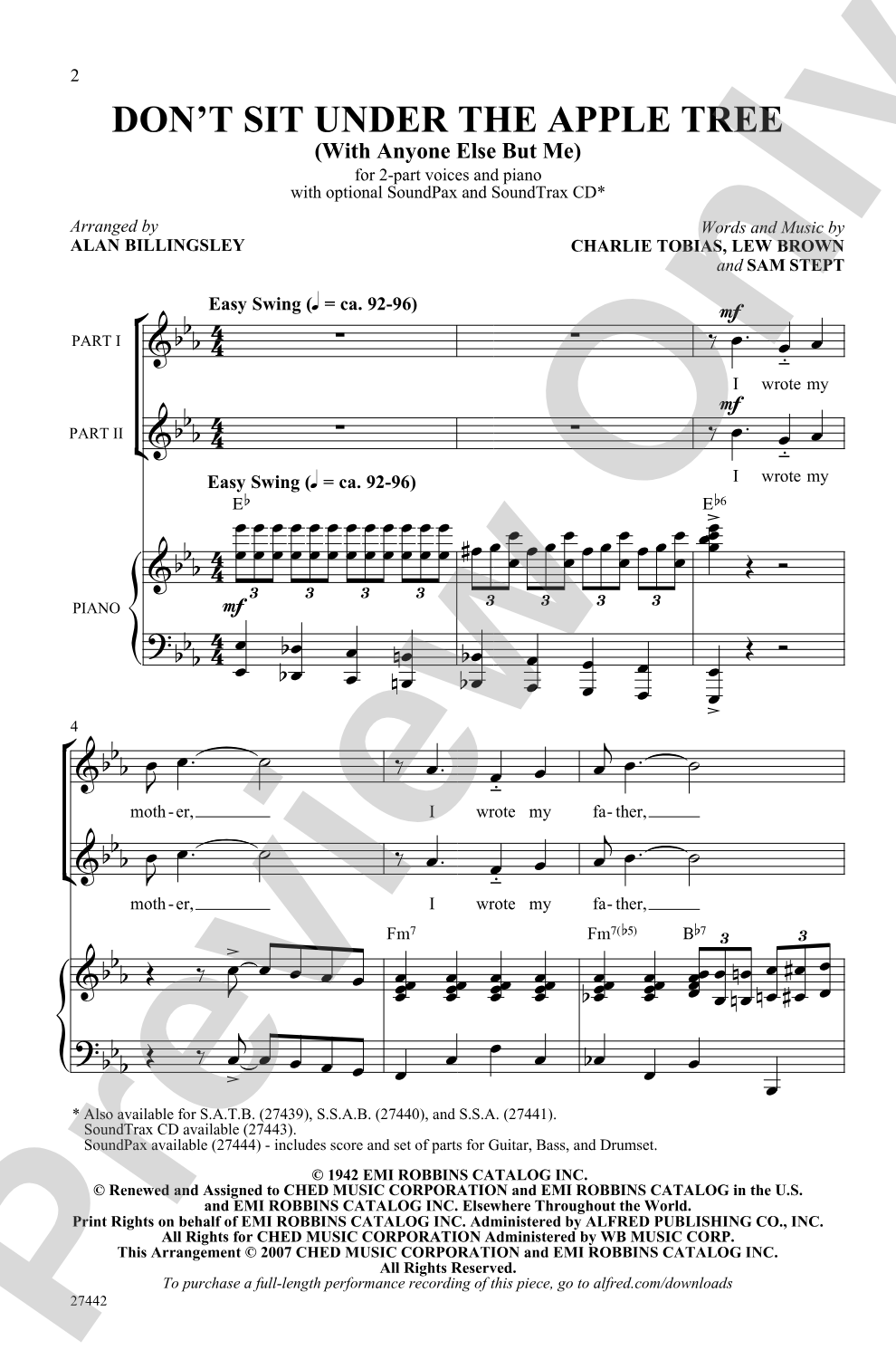
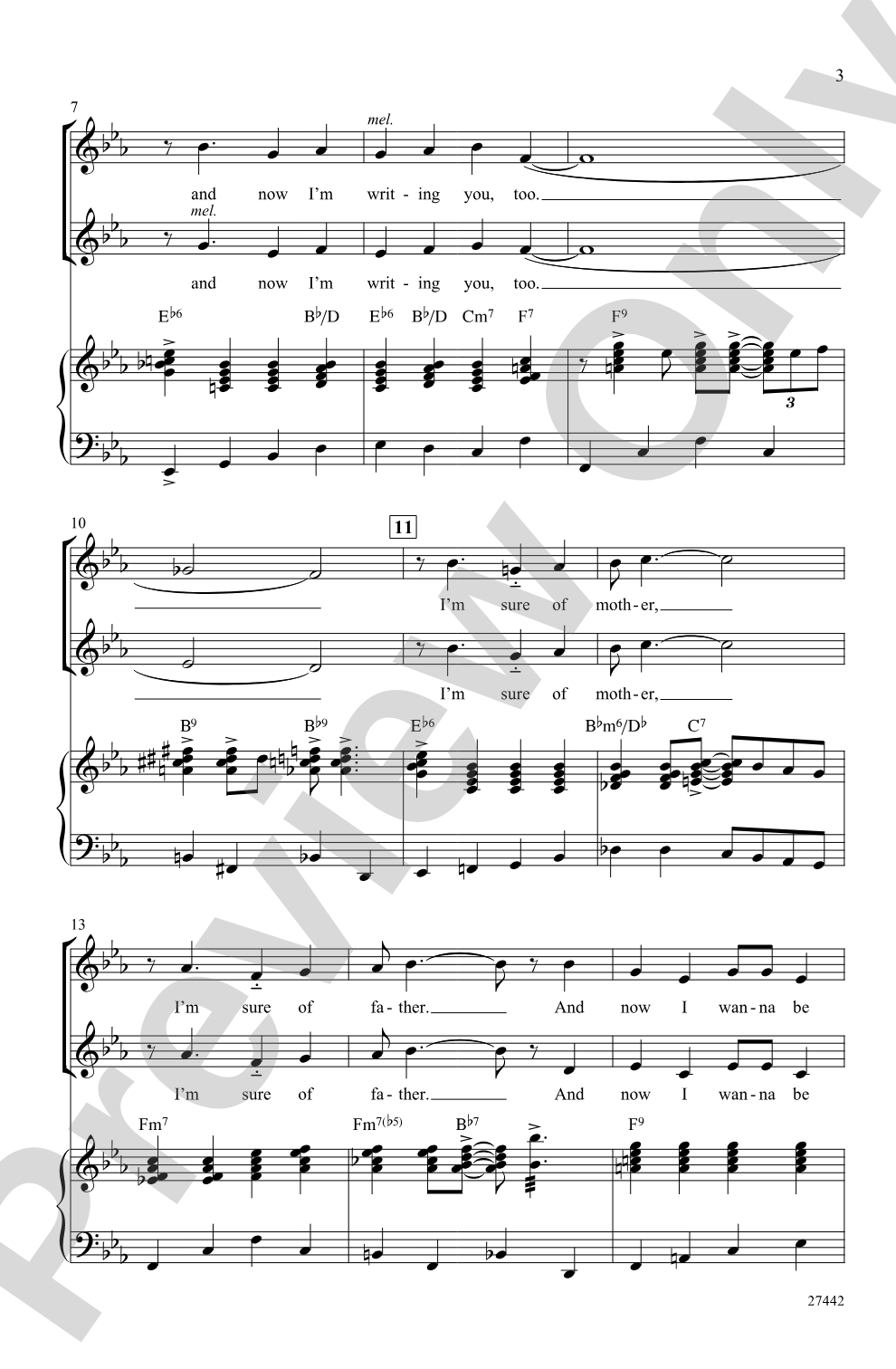
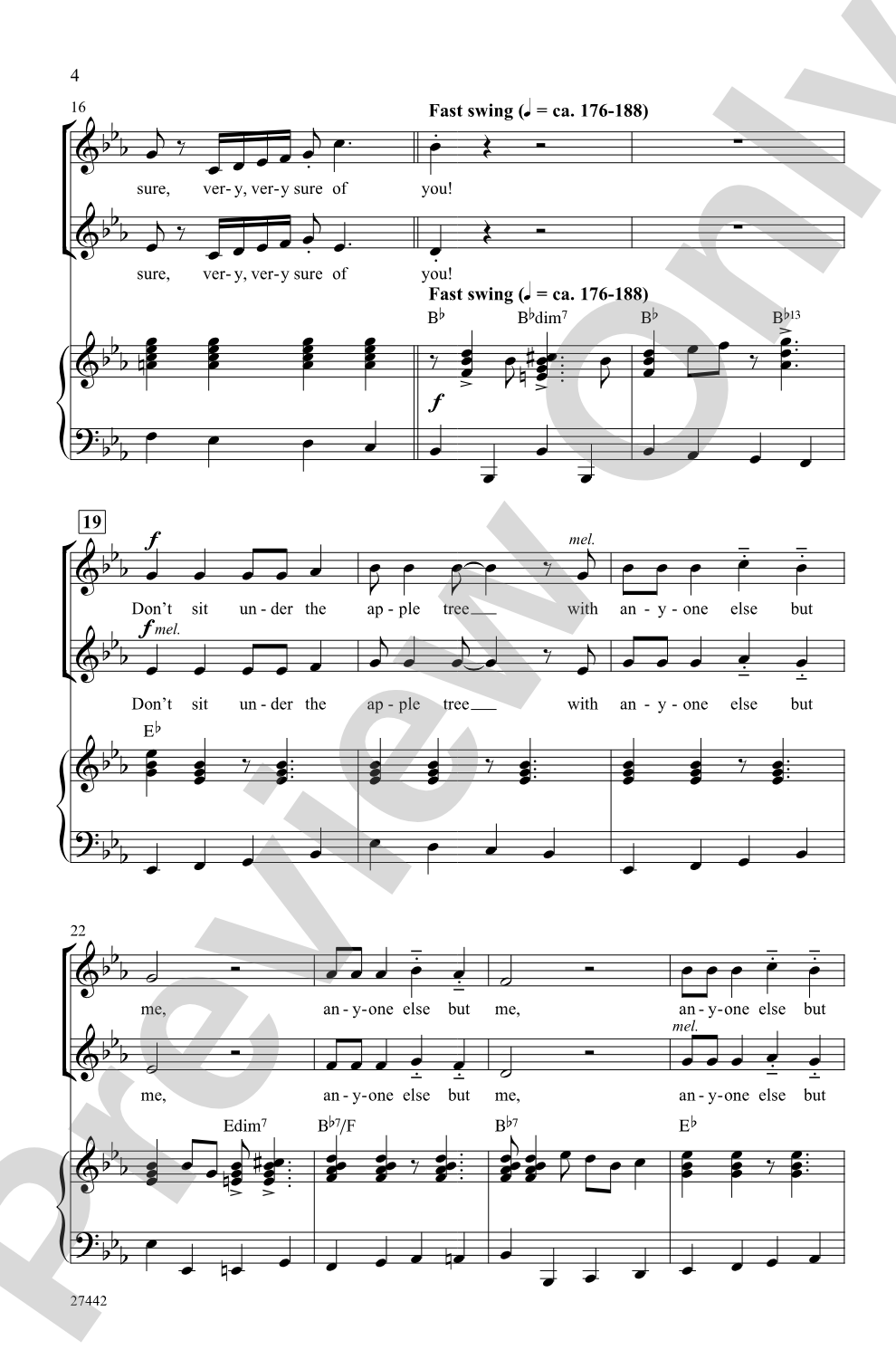

Don't Sit Under the Apple Tree: 2-Part Choral Octavo
(With Anyone Else but Me)
Words and music by Charlie Tobias, Lew Brown and Sam Stept / arr. Alan Billingsley
Item: 00-PO-0007981
$1.85
Minimum order quantity: 20 copies
Pickup currently not available
Related Items
Don't Sit Under the Apple Tree: SoundTrax Digital Audio Download |
$27.99
|
View | |
Don't Sit Under the Apple Tree: SATB Choral Octavo |
$2.25
|
View | |
Don't Sit Under the Apple Tree: SAB Choral Octavo |
$1.85
|
View | |
Don't Sit Under the Apple Tree: SSA Choral Octavo |
$2.10
|
View | |
Don't Sit Under the Apple Tree (With Anyone Else but Me): Choral SoundPax |
$15.00
|
View | |
Don't Sit Under the Apple Tree: SATB Choral Octavo |
$2.25
|
View | |
Don't Sit Under the Apple Tree: SAB Choral Octavo |
$1.85
|
View | |
Don't Sit Under the Apple Tree: SSA Choral Octavo |
$2.10
|
View | |
Don't Sit Under the Apple Tree: 2-Part Choral Octavo |
$1.85
|
View | |
Don't Sit Under the Apple Tree: Choral Octavo SoundTrax CD |
$27.99
|
View | |
Don't Sit Under the Apple Tree: Choral SoundPax |
$15.00
|
View |
Description
A tight, swinging hit from the 1940s that's perfect for your girl groups or your mixed ensembles. Arranger Alan Billingsley included the opening verse, which sets the stage for the cute lyrics that made this song a hit during World War II. Great for pop/jazz groups or larger choirs as well.


Don't Sit Under the Apple Tree: 2-Part Choral Octavo isn't in MakeMusic Cloud just yet...but it could be. Let us know you'd like to see it, and you'll help shape what comes next. In the meantime, start a free trial and dive into thousands of interactive titles your students can play along with today.
Request This Title
Tell us you want it.
Start Your Free Trial
Explore everything that's ready to play right now.
Sample Audio
1
Audio File
--:--
0:00
0:00
Sample Video
No sample videos found.
Additional Details
Series:
Alfred Pop Choral Series
Publisher:
Alfred Music
Page Count:
12
SKU:
00-PO-0007981
More about this title
About the Composer: Charlie Tobias
Charlie Tobias wrote some of the most enduring popular songs of the 1930s and 1940s, often collaborating with composers like Lew Brown and Sam Stept. His gift for crafting memorable melodies with clever, singable lyrics made him a fixture in the Tin Pan Alley catalog, and his work remains a cornerstone of Great American Songbook education.
For choir directors, Tobias represents an accessible entry point into authentic swing-era repertoire. His songs sit comfortably in student voices and retain their charm across decades, making them reliable choices for building enthusiasm for jazz and popular music.
Why we love this
Alan Billingsley's arrangement strips away nothing essential. The inclusion of the opening verse gives singers a narrative foothold before the refrain swings in, and the 2-part voicing keeps the focus on rhythmic precision and blend rather than technical display. This is the kind of piece that reminds students why they joined choir in the first place.
What to expect
Sunlit and flirtatious, with the rhythmic buoyancy that defined swing-era popular song. The opening verse carries a gentle, almost conversational warmth before the refrain breaks into the kind of playful energy that made this song irresistible on the radio during wartime.
Who it's for
Groups looking for authentic 1940s repertoire that doesn't require advanced reading skills or unusual ranges. Both all-female ensembles and mixed choirs will find the writing sits naturally, and directors seeking crossover appeal between jazz and choral programs will appreciate how seamlessly this fits into either context.
How to get the most out of it
- Anchor the swing feel in the rhythm section and let ensemble members lock in their entrances by listening rather than watching. Billingsley's orchestration rewards ensemble singers who hear the groove.
- Attend to the lyrics in rehearsal. The humor and wartime context of the song matter; singers who understand the narrative shape deliver sharper articulation and better phrasing.
- Balance the verse and refrain as two distinct moods. The verse should feel conversational and grounded; the refrain lifts into the infectious swing that made the tune a hit.
How to use it
Pair this with other Great American Songbook selections to create a nostalgia-driven concert set, or use it as an accessible gateway into jazz idiom for younger choirs. The 12-page octavo length and available accompaniment tracks make it practical for pops concerts or end-of-year celebrations where variety and engagement matter as much as depth.
Skills your students will build
- Swing rhythms and triplet feel in a 2-part texture
- Lyric clarity and comedic timing in ensemble singing
- Listening and blending in jazz-influenced harmonic movement
- Stylistic interpretation of 1940s popular music idioms