
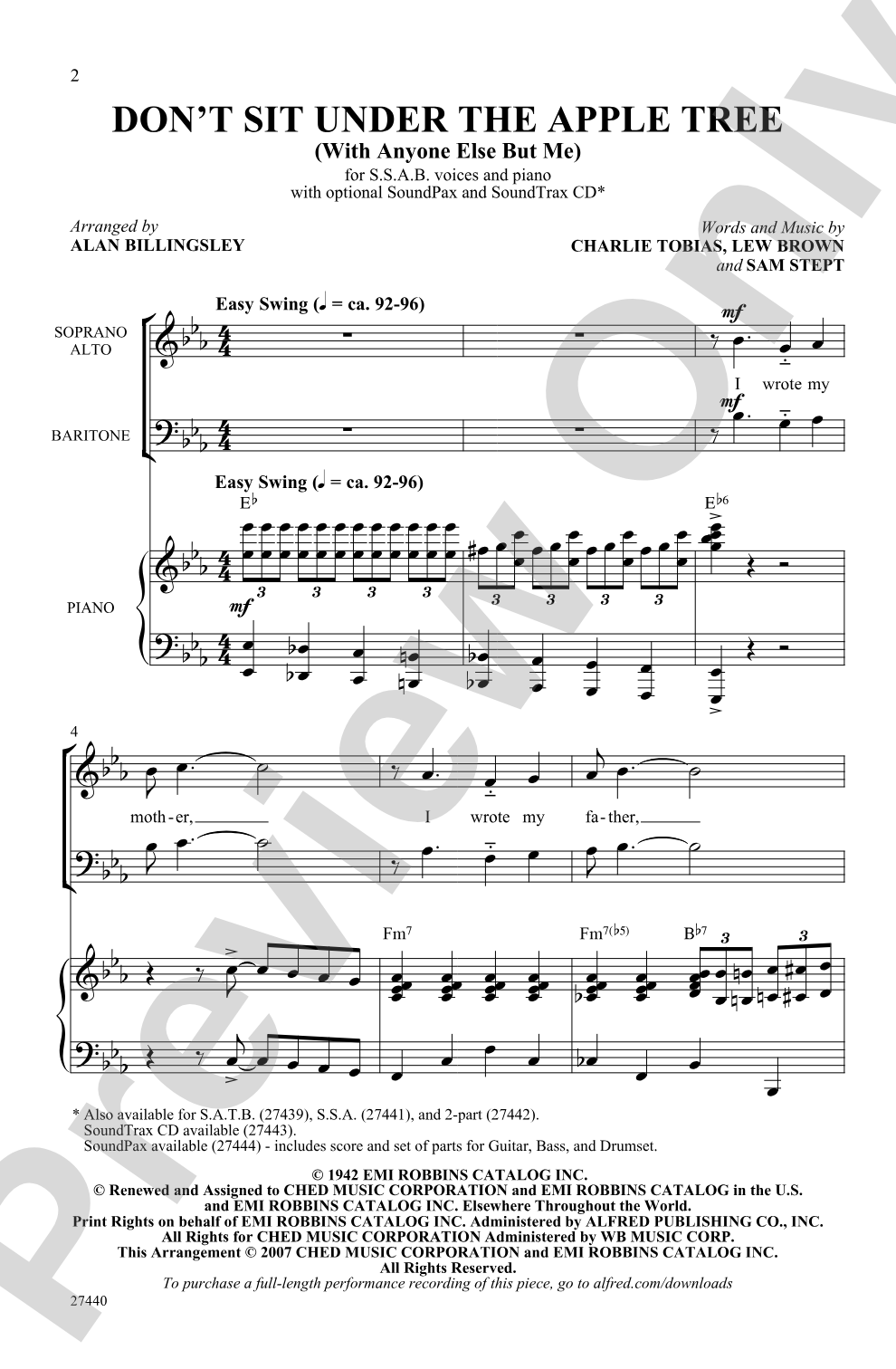
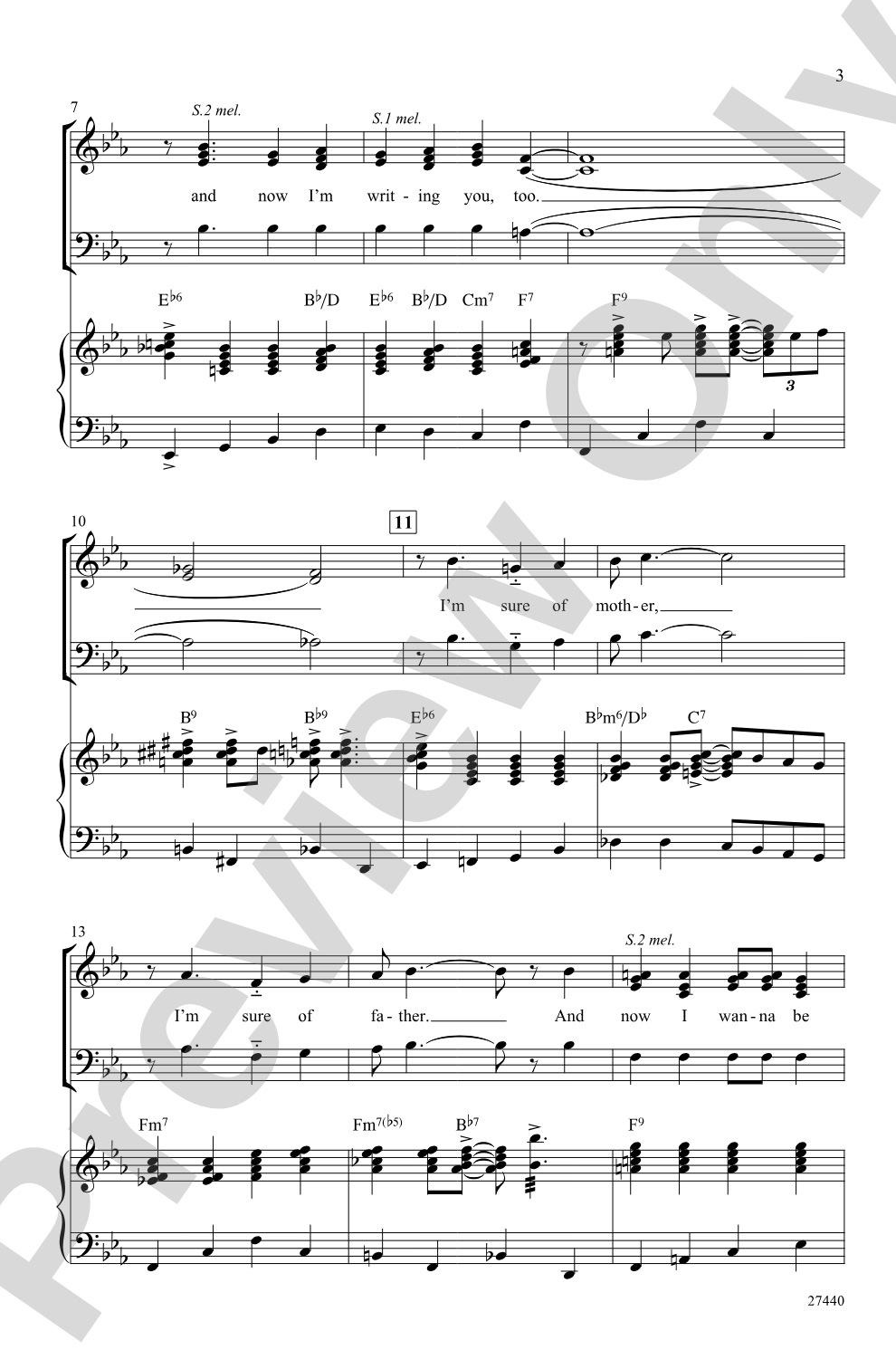
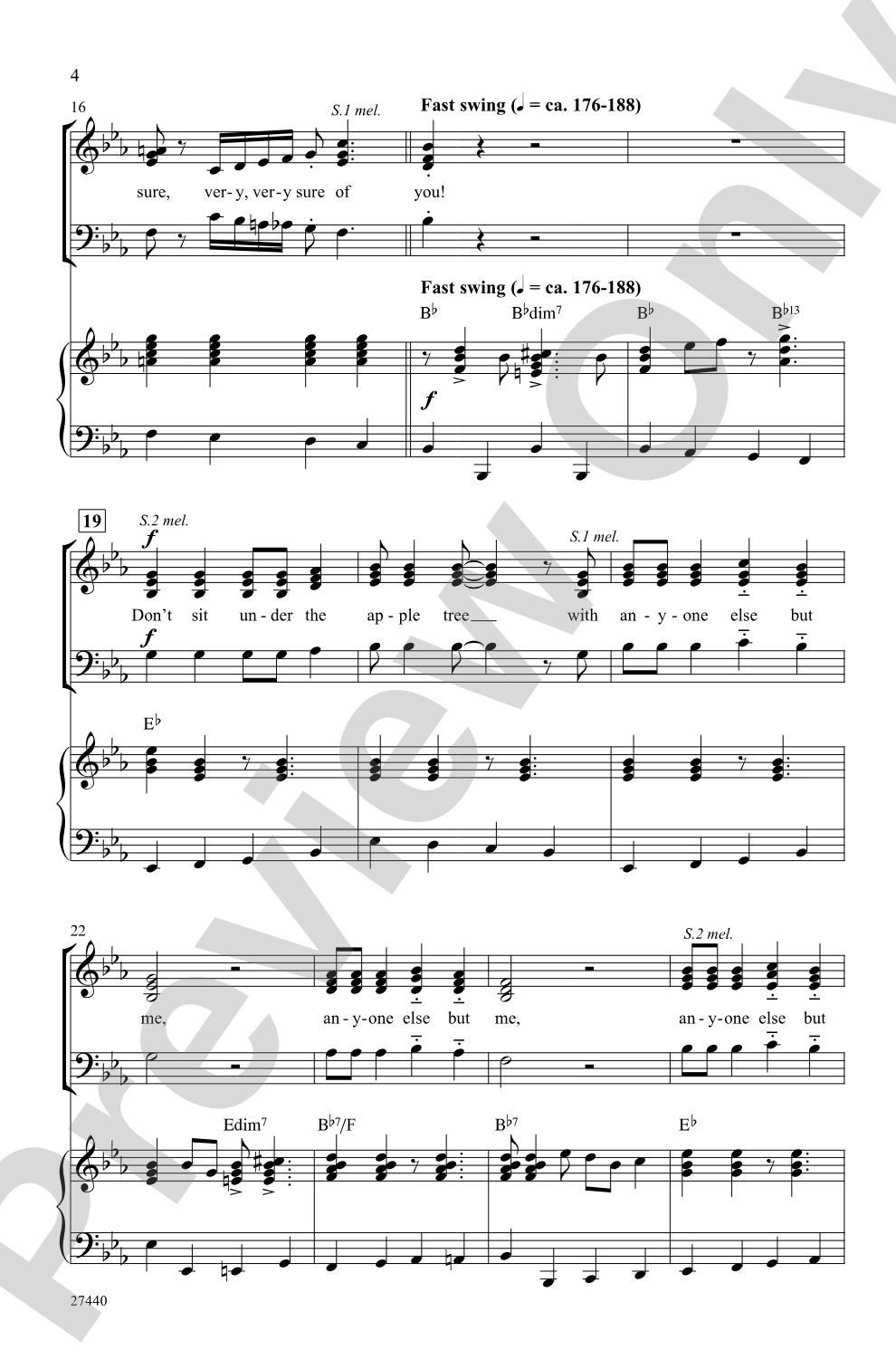

Don't Sit Under the Apple Tree: SAB Choral Octavo
(With Anyone Else but Me)
Words and music by Charlie Tobias, Lew Brown and Sam Stept / arr. Alan Billingsley
Item: 00-PO-0007980
$1.85
Minimum order quantity: 20 copies
Pickup currently not available
Related Items
Don't Sit Under the Apple Tree: SoundTrax Digital Audio Download |
$27.99
|
View | |
Don't Sit Under the Apple Tree: SATB Choral Octavo |
$2.25
|
View | |
Don't Sit Under the Apple Tree: SSA Choral Octavo |
$2.10
|
View | |
Don't Sit Under the Apple Tree: 2-Part Choral Octavo |
$1.85
|
View | |
Don't Sit Under the Apple Tree (With Anyone Else but Me): Choral SoundPax |
$15.00
|
View | |
Don't Sit Under the Apple Tree: SATB Choral Octavo |
$2.25
|
View | |
Don't Sit Under the Apple Tree: SAB Choral Octavo |
$1.85
|
View | |
Don't Sit Under the Apple Tree: SSA Choral Octavo |
$2.10
|
View | |
Don't Sit Under the Apple Tree: 2-Part Choral Octavo |
$1.85
|
View | |
Don't Sit Under the Apple Tree: Choral Octavo SoundTrax CD |
$27.99
|
View | |
Don't Sit Under the Apple Tree: Choral SoundPax |
$15.00
|
View |
Description
A tight, swinging hit from the 1940s that's perfect for your girl groups or your mixed ensembles. Arranger Alan Billingsley included the opening verse, which sets the stage for the cute lyrics that made this song a hit during World War II. Great for pop/jazz groups or larger choirs as well.


Don't Sit Under the Apple Tree: SAB Choral Octavo isn't in MakeMusic Cloud just yet...but it could be. Let us know you'd like to see it, and you'll help shape what comes next. In the meantime, start a free trial and dive into thousands of interactive titles your students can play along with today.
Request This Title
Tell us you want it.
Start Your Free Trial
Explore everything that's ready to play right now.
Sample Audio
1
Audio File
--:--
0:00
0:00
Sample Video
No sample videos found.
Additional Details
Series:
Alfred Pop Choral Series
Publisher:
Alfred Music
Page Count:
12
SKU:
00-PO-0007980
More about this title
About the Composer: Charlie Tobias
Charlie Tobias was a prolific songwriter and lyricist who helped define the American songbook during the 1930s and 1940s. His gift for crafting memorable melodies paired with clever, singable lyrics made him a mainstay of radio and film during the swing era, and his songs became standards recorded by everyone from Bing Crosby to Ella Fitzgerald.
Why we love this
Alan Billingsley's arrangement captures the infectious energy of the original while keeping the voicing accessible for typical high school and community choir ranges. The inclusion of the opening verse gives singers (and audiences) the full narrative arc, and the swinging rhythmic feel provides a refreshing contrast to standard classical fare without demanding advanced jazz vocabulary.
What to expect
Nostalgic charm with a modern edge. The arrangement swings with the ease of a song that lived on the radio, yet stays grounded in solid harmonic writing that keeps singers engaged. There's playfulness here, but never at the expense of musicality.
Who it's for
Pop and jazz choirs, community groups, and mixed ensembles looking for accessible repertoire with real musicianship demands. High school show choirs and larger classical choirs will find this both an audience pleaser and a vehicle for teaching swing vocabulary and style.
How to get the most out of it
- Lock in the swing feel from the downbeat. The rhythm section should establish a loose, shuffled pulse that lets the front-line melody breathe rather than pulling the tempo forward.
- Balance the SAB voicing so the altos don't get swallowed by sopranos and basses during the main section. Keep the middle voice present and supported.
- Shape the cute lyrics with character. The storytelling matters here; lean into the narrative of the verse and let that humor carry into the chorus.
- Use the recorded accompaniment as a model for phrasing and articulation, especially in rhythmic passages where syllabic clarity sells the groove.
How to use it
Schedule this for a program celebrating American songwriting or as a lighter offering in a concert heavy with art song and classical work. It pairs naturally with other Great American Songbook standards and works equally well as a standalone feature or as part of a medley exploring the swing era.
Skills your students will build
- Swing articulation and phrasing conventions
- SAB blend and balance in three-part mixed voicing
- Lyrical storytelling and comedic timing
- Reading syncopated rhythms and off-beat entrances
- Historical context of 1940s popular music and radio culture