

Danny Boy: SAB Choral Octavo
Arr. Mark Hayes
Item: 00-PO-0002871

$2.95
Minimum order quantity: 20 copies
Pickup currently not available
Related Items
Danny Boy: SATB Choral Octavo |
$2.95
|
View | |
Danny Boy: SSAA Choral Octavo |
$2.95
|
View | |
Danny Boy: TTBB Choral Octavo |
$2.00
|
View | |
Danny Boy: SATB Choral Octavo |
$2.95
|
View | |
Danny Boy: SAB Choral Octavo |
$2.95
|
View | |
Danny Boy: SSAA Choral Octavo |
$2.95
|
View | |
Danny Boy: TTBB Choral Octavo |
$2.00
|
View | |
Danny Boy: Choral Octavo SoundTrax CD |
$27.99
|
View |
Description
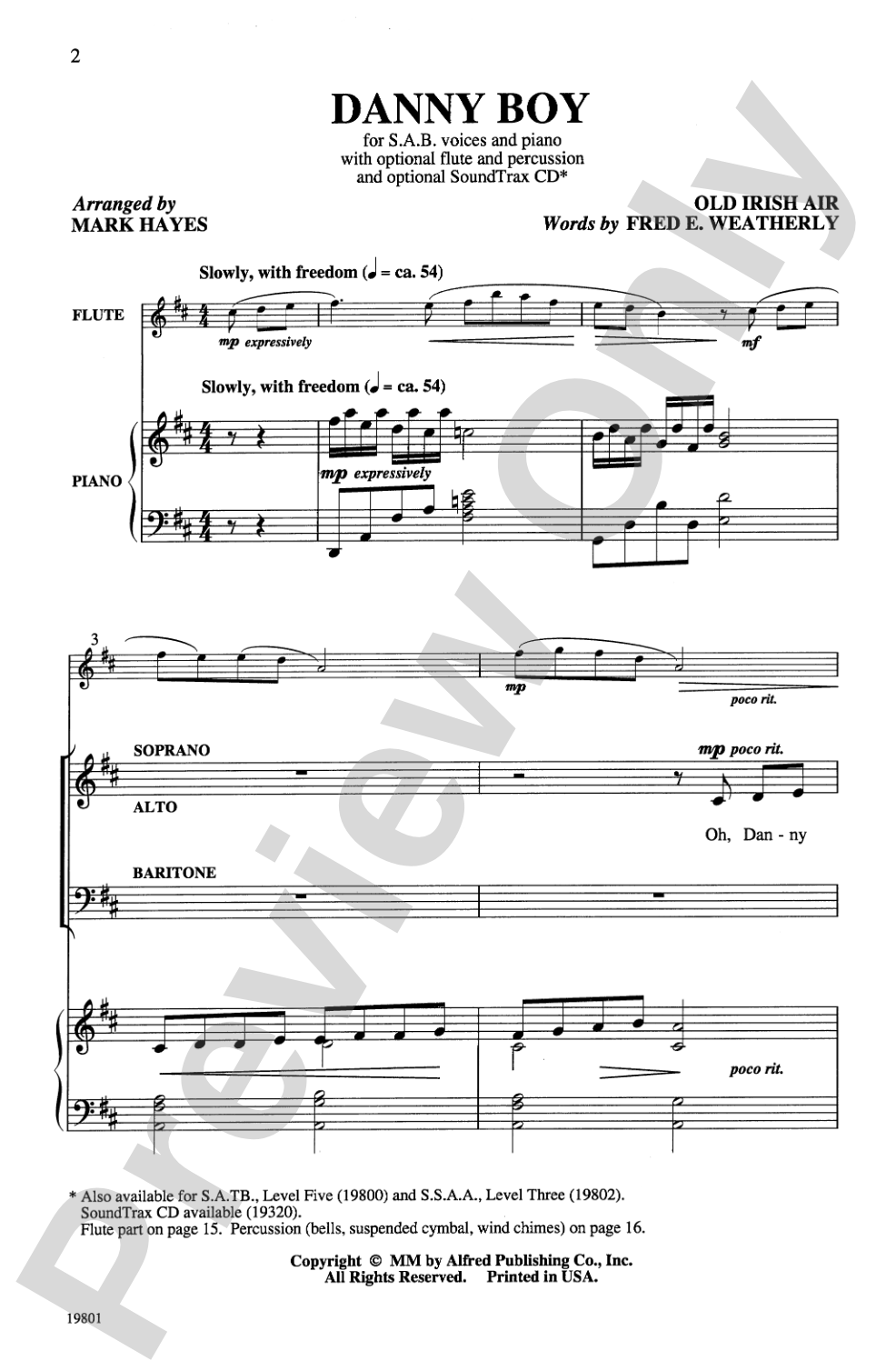
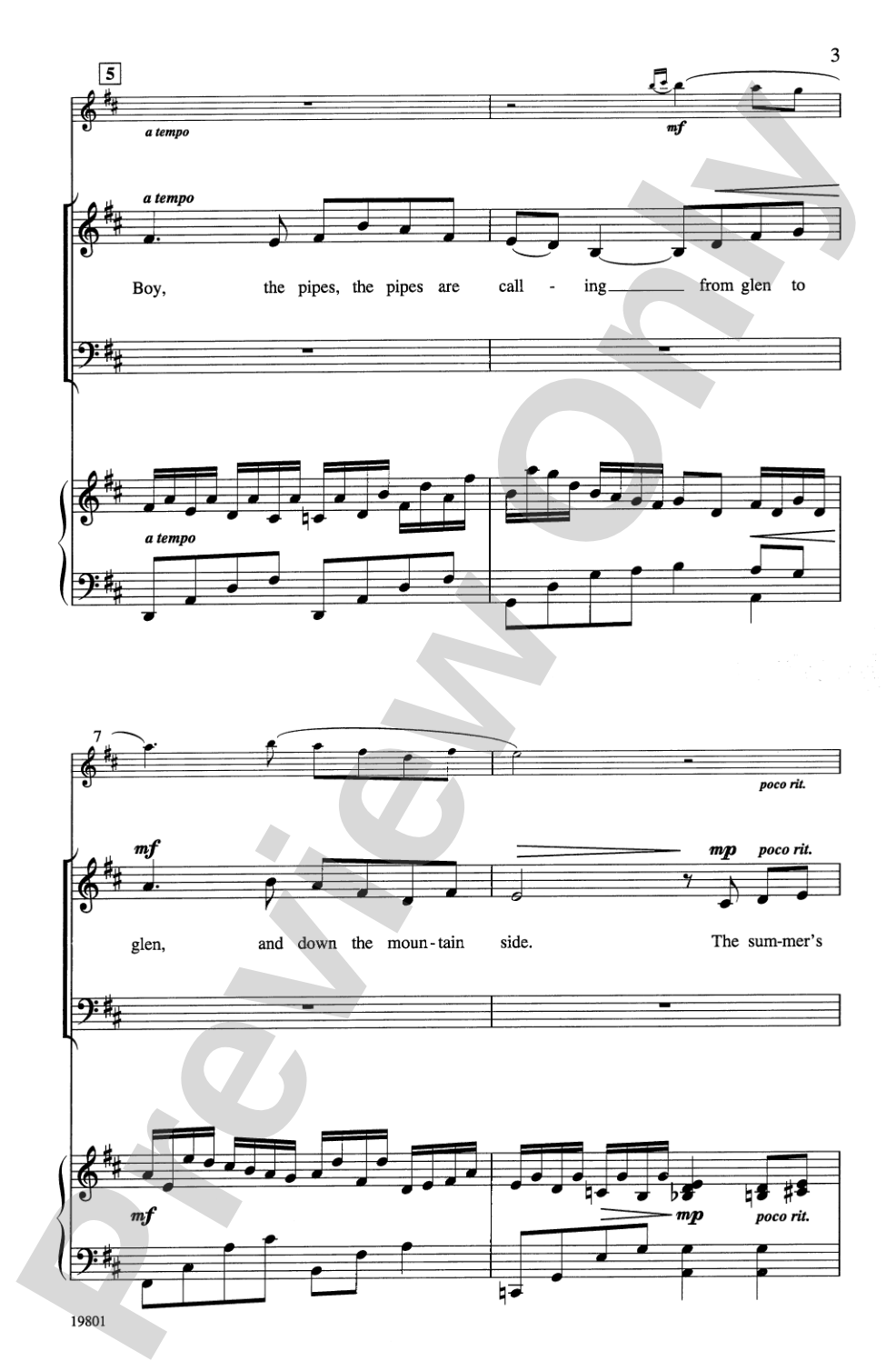
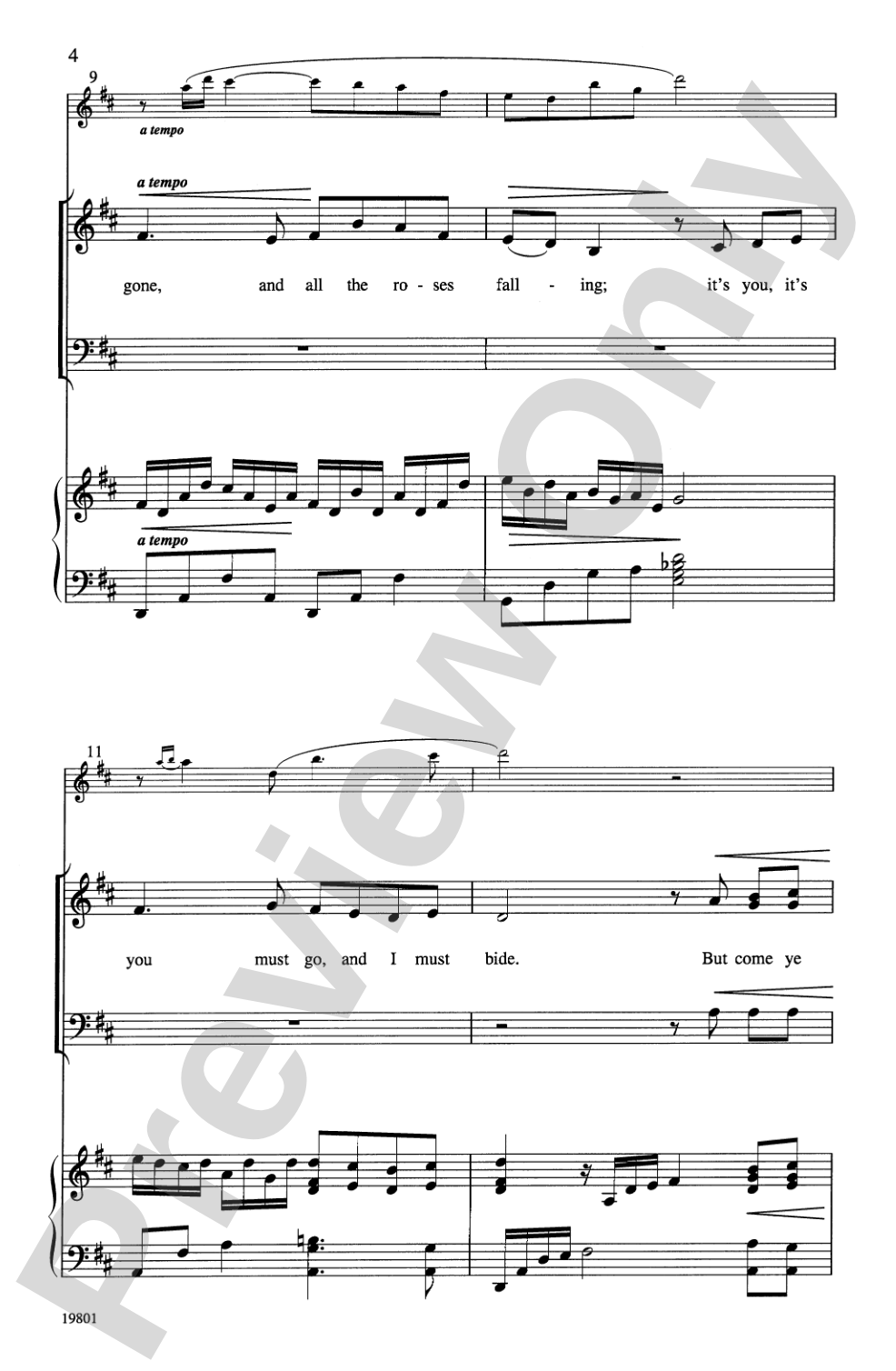
Only Mark Hayes could write such a spectacularly beautiful arrangement of this timeless, emotional Irish air. It opens expressively, with an optional flute, and builds, but culminates in a touching, pianissimo re-statement of the melody that takes your breath away! It's emotionally and musically fulfilling; your choirs will perform it year after year. Along with the flute, an optional percussion part (bells and cymbal) is included in the publication.


Don't just read it, hear it, play along with it, and watch your students grow with it. In MakeMusic Cloud, Danny Boy: SAB Choral Octavo comes alive with professional accompaniment, adjustable tempo, and built-in practice tools that turn solo practice into real progress.
Open in the Player
Jump straight in and assign it today.
Start Your Free Trial
Open this title and explore the full library in minutes.
Sample Audio
1
Audio File
--:--
0:00
0:00
Sample Video
No sample videos found.
Additional Details
Series:
Alfred Archive Edition: Alfred Choral Designs
Publisher:
Alfred Music
Page Count:
16
SKU:
00-PO-0002871
Instrumentation:
Opt. Flute and Percussion
More about this title
About the Arranger: Mark Hayes
Mark Hayes has composed and arranged over 1,750 published works across concert, sacred, and theatrical music. A summa cum laude graduate in Piano Performance from Baylor University, he has guest conducted at Lincoln Center, the National Cathedral, and Carnegie Hall, and his compositions include large-scale works like his Requiem (premiered at Lincoln Center in 2013) and commissions for international institutions. In 2010, Baylor University honored him with the Award for Exemplary Leadership in Christian Music for his sustained contributions to the field.
Beyond his choral and orchestral work, Hayes is a concert pianist and prolific composer for piano, with more than 100 piano books in print spanning gospel, classical, jazz, and Broadway styles. He has also worked as an orchestrator and record producer, and his musical theatre credits include arrangements for the musical We'll Meet Again. Based in Kansas City, Missouri, Hayes continues to compose, conduct, and perform internationally.
Why we love this
Hayes's touch here is unmistakable: the arrangement breathes with genuine lyricism rather than settling for sentimentality. The journey from expressive opening to the hushed final statement of the melody demonstrates sophisticated pacing, and the optional flute and percussion parts add textural dimension without ever overcomplicating a folk tune that deserves respect. Your singers will return to this piece season after season because it rewards their emotional investment.
What to expect
This is the arrangement of Danny Boy that honors why the tune endures. It opens with tenderness, builds with genuine warmth, and arrives at a moment of quiet vulnerability that feels earned rather than imposed. Singing it is a small act of reverence.
Who it's for
SAB choirs at the intermediate level and beyond will find this arrangement accessible yet substantial. It works equally well for church music programs, competitive festivals, and concert settings where emotional depth matters more than technical showiness.
How to get the most out of it
- Honor the optional flute part in the opening; whether you use it or feature a solo voice, let it set the expressive tone before the choir enters.
- Shape the dynamic arch carefully across the middle sections. Resist the temptation to rush the buildup; the return to pianissimo lands harder when the path there feels inevitable.
- Blend the optional percussion (bells and cymbal) subtly. These colors should enhance the atmosphere, not draw attention away from the melody.
- In the final piano passage, encourage singers to sustain with a sense of release rather than strain. This moment asks for transparency of sound.
How to use it
Program this as a standalone feature in a choral concert, or pair it with other folk arrangements and world music to create a thematic set. It also serves beautifully in memorial services, seasonal concerts, or festivals where a moment of reflection strengthens the overall arc of your program.
Skills your students will build
- Shaping long phrases with dynamic nuance
- Blending three-part harmonies with transparency and warmth
- Managing the emotional arc of a piece from quiet opening to climax and return
- Coordinating with optional instrumental parts (flute and percussion)