
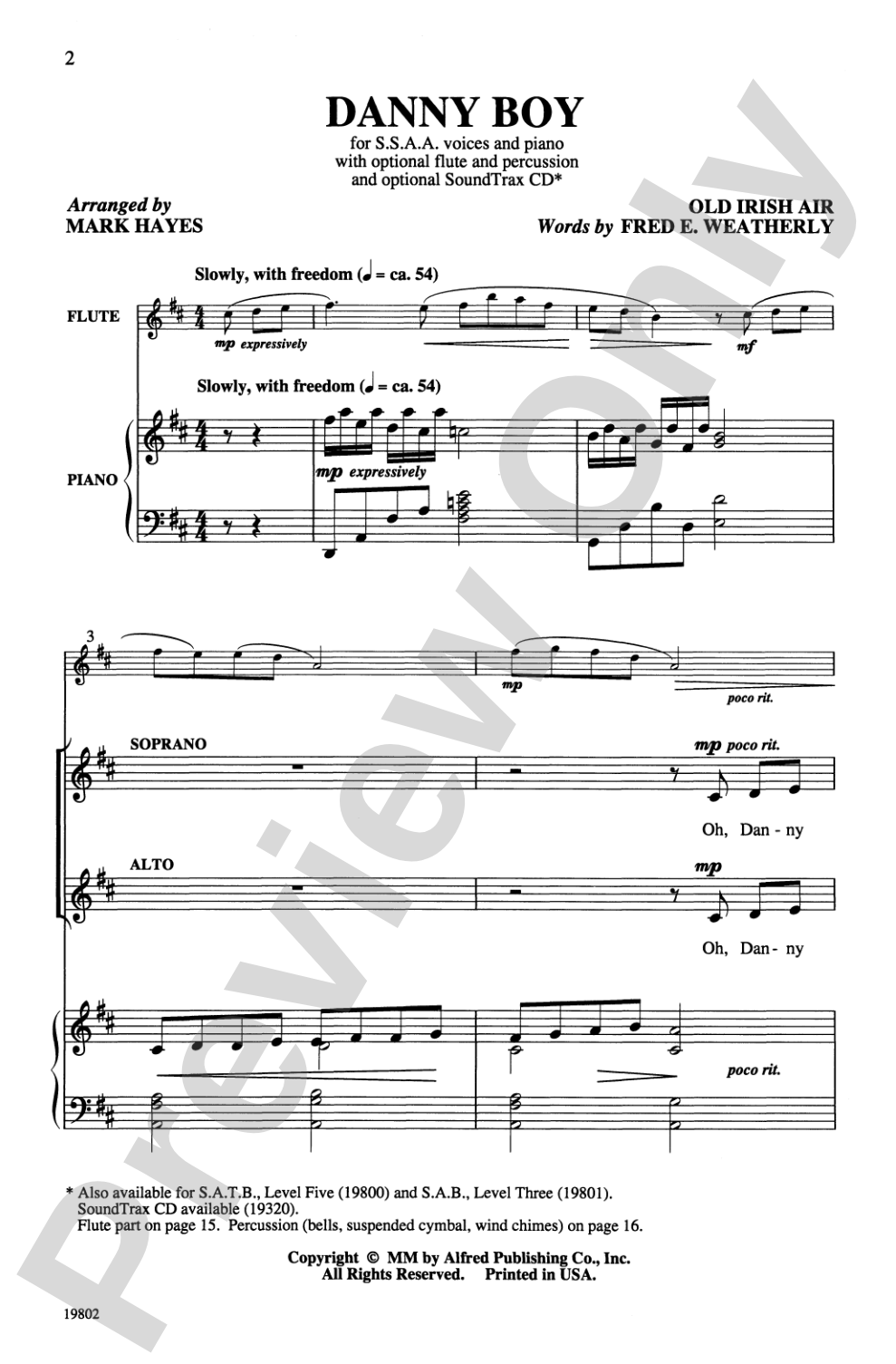
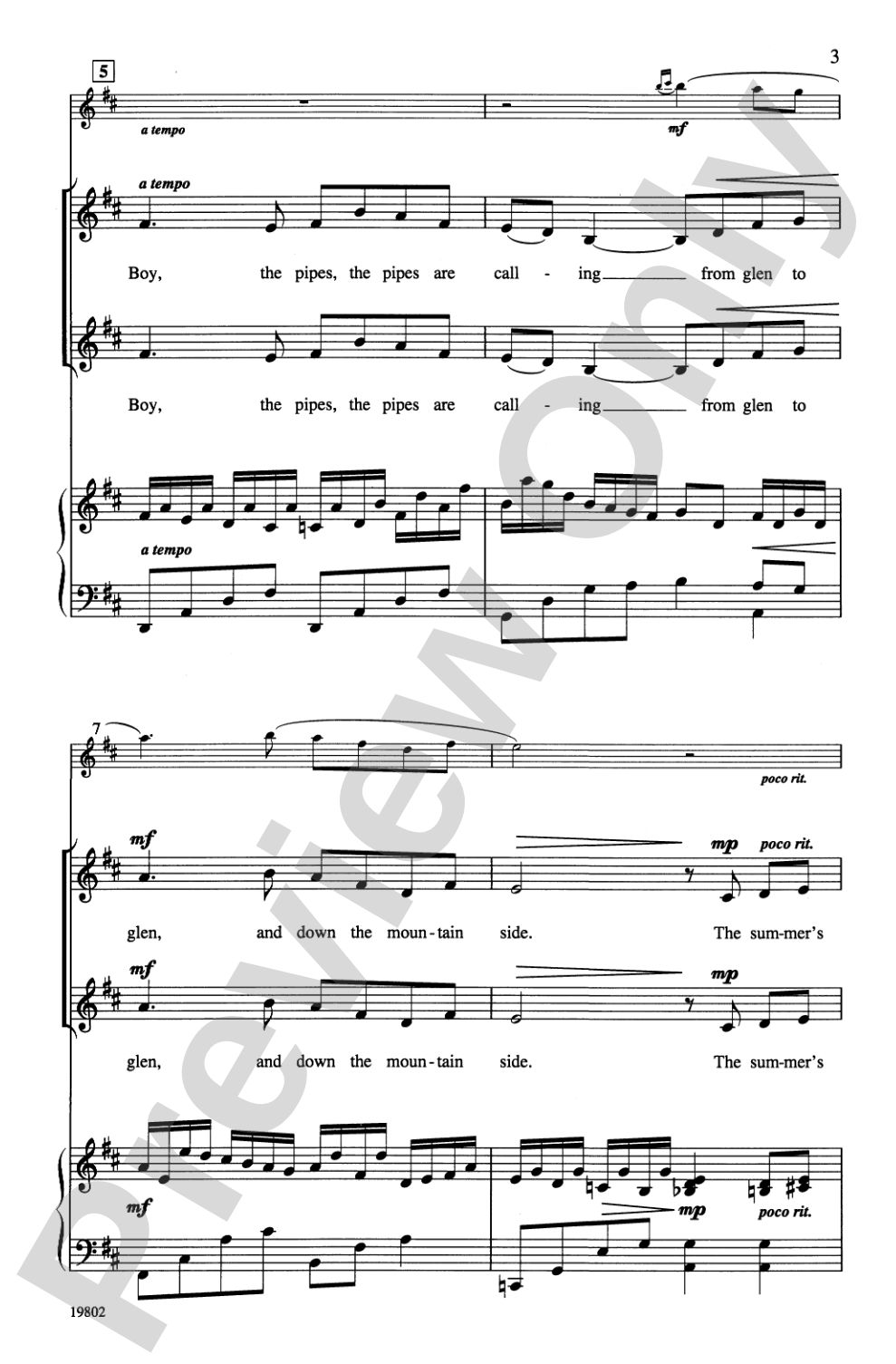
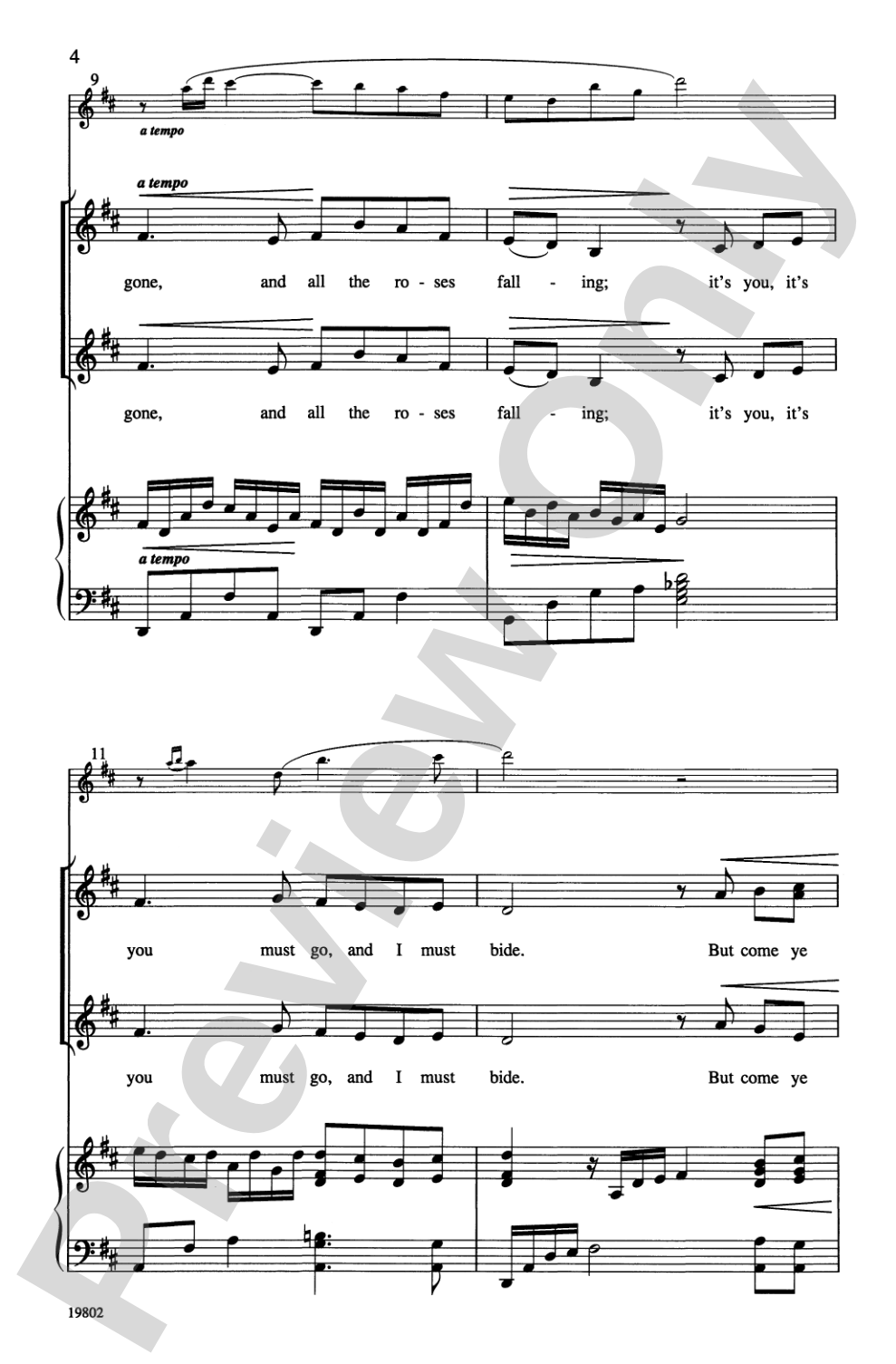

Danny Boy: SSAA Choral Octavo
Arr. Mark Hayes
Item: 00-PO-0002166

$2.95
Minimum order quantity: 20 copies
Pickup currently not available
Related Items
Danny Boy: SATB Choral Octavo |
$2.95
|
View | |
Danny Boy: SAB Choral Octavo |
$2.95
|
View | |
Danny Boy: TTBB Choral Octavo |
$2.00
|
View | |
Danny Boy: SATB Choral Octavo |
$2.95
|
View | |
Danny Boy: SAB Choral Octavo |
$2.95
|
View | |
Danny Boy: SSAA Choral Octavo |
$2.95
|
View | |
Danny Boy: TTBB Choral Octavo |
$2.00
|
View | |
Danny Boy: Choral Octavo SoundTrax CD |
$27.99
|
View |
Description
Only Mark Hayes could write such a spectacularly beautiful arrangement of this timeless, emotional Irish air. It opens expressively, with an optional flute, and builds, but culminates in a touching, pianissimo re-statement of the melody that takes your breath away! It's emotionally and musically fulfilling; your choirs will perform it year after year. Along with the flute, an optional percussion part (bells and cymbal) is included in the publication.


Don't just read it, hear it, play along with it, and watch your students grow with it. In MakeMusic Cloud, Danny Boy: SSAA Choral Octavo comes alive with professional accompaniment, adjustable tempo, and built-in practice tools that turn solo practice into real progress.
Open in the Player
Jump straight in and assign it today.
Start Your Free Trial
Open this title and explore the full library in minutes.
Sample Audio
1
Audio File
--:--
0:00
0:00
Sample Video
No sample videos found.
Additional Details
Series:
Alfred Archive Edition: Alfred Choral Designs
Publisher:
Alfred Music
Page Count:
16
SKU:
00-PO-0002166
Instrumentation:
Opt. Flute and Percussion
More about this title
About the Arranger: Mark Hayes
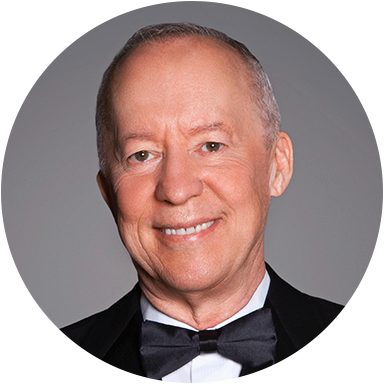
Mark Hayes is a prolific composer and arranger with over 1,750 published works spanning sacred and secular genres. A Baylor University graduate (summa cum laude, Piano Performance, 1975), he has conducted at Lincoln Center, the National Cathedral, and Carnegie Hall, while his commissioned works have premiered globally, from Hong Kong to Rome. His versatility extends across orchestration, record production, and piano composition, with more than 100 piano books in print across classical, gospel, jazz, and musical theater styles.
Beyond concert music, Hayes has contributed to theatrical projects including the score for the award-winning "Civil War Voices" and orchestration for "Madame Buttermilk." In 2010, Baylor University recognized his leadership in Christian music with a special honor. His body of work reflects a commitment to crafting music that serves both performer and audience, from intimate choral settings to large-scale collaborative commissions.
Why we love this
Hayes brings a composer's sensibility to arrangement work, and this rendition proves why. The structure respects the melody's inherent beauty while the gradual build and ethereal pianissimo return demonstrate architectural confidence; directors appreciate writing that knows when to step back. The optional instrumentation makes it flexible for concert contexts without requiring full ensemble resources.
What to expect
The piece unfolds like a remembered moment, beginning with quiet tenderness before swelling into full-hearted expression, then closing with the haunting simplicity of memory itself. Hayes honors the Irish melody's inherent melancholy without oversaturating it, allowing the harmonic language to deepen feeling rather than impose it. The result feels both timeless and intimate, as though the air is being sung anew by each generation.
Who it's for
This arrangement suits advanced high school and college choirs comfortable with expressive singing and dynamic control. The SSAA voicing makes it accessible to women's choirs while the optional flute and percussion parts welcome mixed ensembles or those with instrumental resources. Whether performing in concert, festival, or contest settings, singers who respond to emotional storytelling in music will find this rewarding.
How to get the most out of it
- Allow the optional flute to breathe independently in the opening rather than doubling the choir exactly; the arrangement invites a dialogue between voices and instrument, not mere doubling.
- Shape the dynamic arch carefully from the softer opening through the fuller middle section; Hayes writes genuine climax, not just loudness, so ensure the crescendo feels earned.
- Approach the final pianissimo restatement as a moment of vulnerability. This passage asks for restraint and focus from all four voices, so rehearse it separately to develop the consensus needed for such exposed singing.
- If using the percussion parts, integrate bells and cymbal tastefully as textural color rather than structural anchors; they should enhance without overriding the choral sound.
How to use it
This works beautifully as a concert closing number or as a centerpiece for a program exploring folk music across cultures. Its emotional weight suggests pairing it with lighter repertoire earlier in the concert for programming balance, and its optional instrumentation means it can work whether your ensemble is strictly choral or augmented with small instrumental forces.
Skills your students will build
- Blending voices across four parts with independent harmonic lines
- Sustaining soft dynamic control and intonation in exposed passages
- Shaping long phrases and understanding arc-based structure rather than section-by-section approaches
- Interpreting emotional content through text association and musical gesture
- Balancing choral sonority with optional instrumental colors