

Cry Me a River: TBB Choral Octavo
Words and music by Arthur Hamilton / arr. Jay Althouse
Item: 00-PO-0001974
$1.95
Minimum order quantity: 20 copies
One moment…
Related Items
Cry Me a River: SoundTrax Digital Audio Download |
$27.99
|
View | |
Cry Me a River: SATB Choral Octavo |
$2.10
|
View | |
Cry Me a River: SAB Choral Octavo |
$1.95
|
View | |
Cry Me a River: SSA Choral Octavo |
$1.95
|
View | |
Cry Me a River: SATB Choral Octavo |
$2.10
|
View | |
Cry Me a River: SAB Choral Octavo |
$1.95
|
View | |
Cry Me a River: TBB Choral Octavo |
$1.95
|
View | |
Cry Me a River: Choral Octavo SoundTrax CD |
$27.99
|
View |
Description
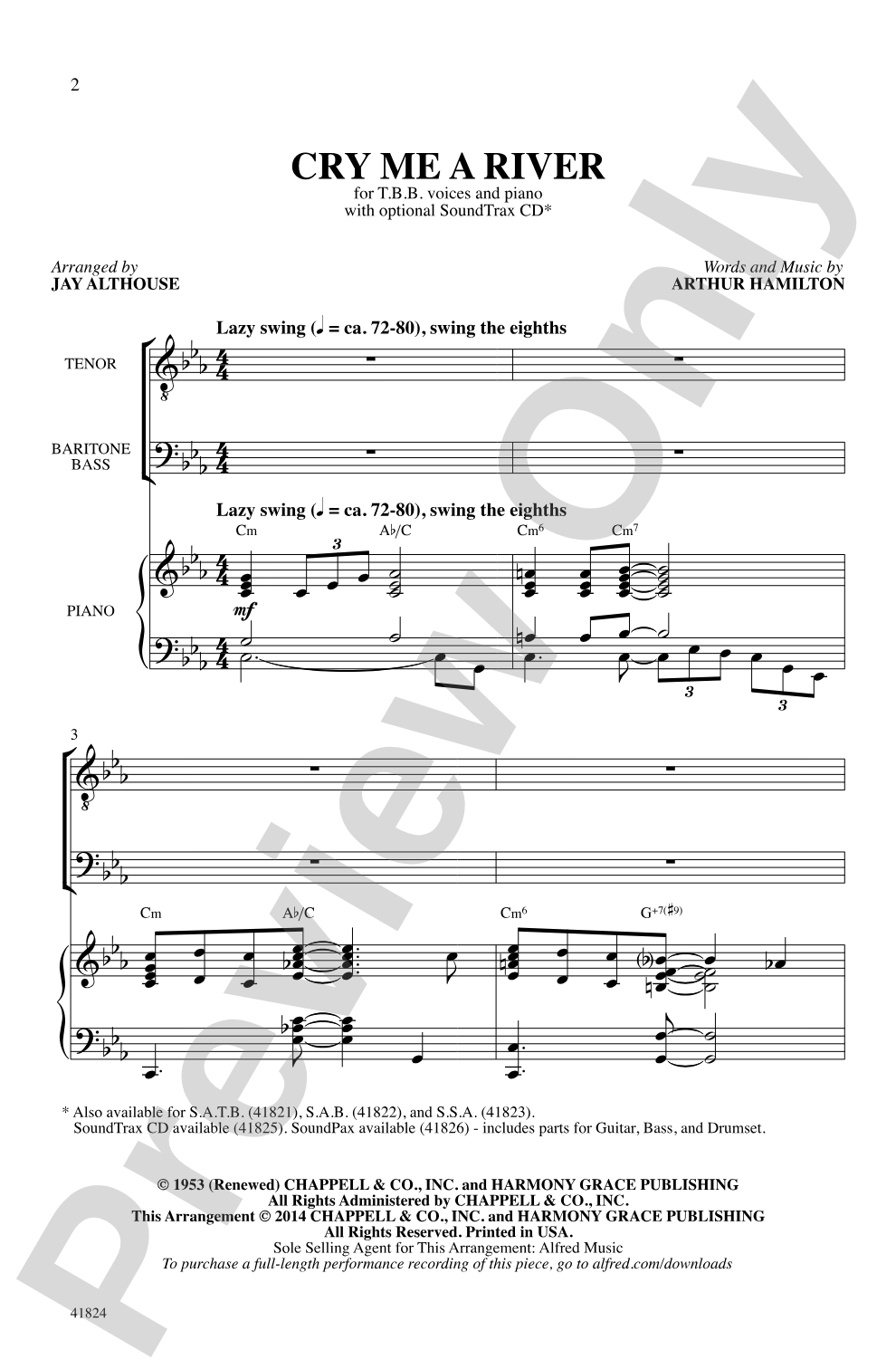
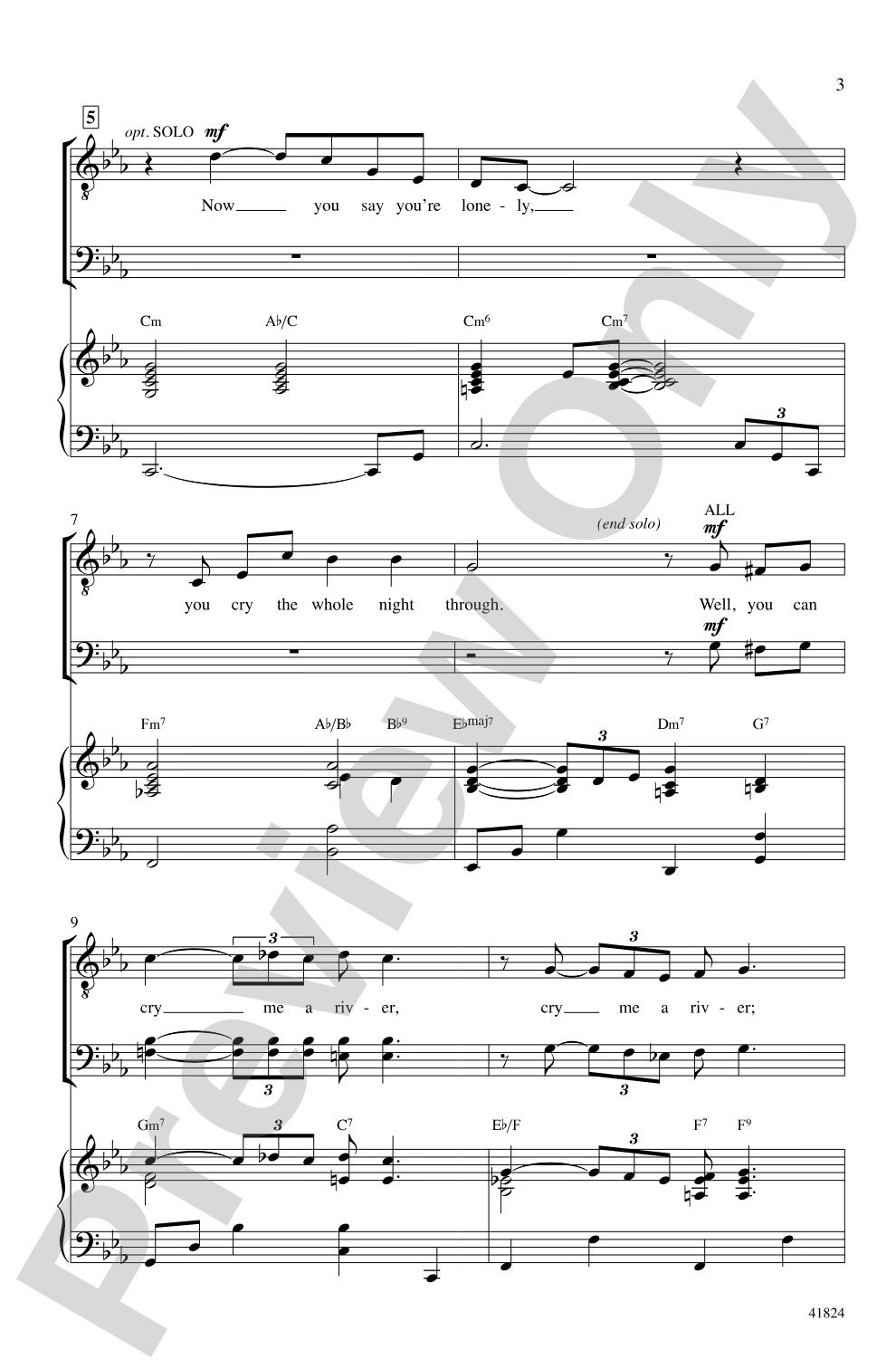
This popular torch song was originally composed for Ella Fitzgerald, but ended up being dropped from the film Pete Kelly's Blues. She would eventually record it six years later, but in the meantime, a recording by Julie London introduced it to the world. Jay's sweet harmonies make for a bluesy arrangement.


Cry Me a River: TBB Choral Octavo isn't in MakeMusic Cloud just yet...but it could be. Let us know you'd like to see it, and you'll help shape what comes next. In the meantime, start a free trial and dive into thousands of interactive titles your students can play along with today.
Request This Title
Tell us you want it.
Start Your Free Trial
Explore everything that's ready to play right now.
Sample Audio
1
Audio File
--:--
0:00
0:00
Sample Video
No sample videos found.
Additional Details
Series:
Alfred Pop Choral Series
Publisher:
Alfred Music
Page Count:
12
SKU:
00-PO-0001974
More about this title
About the Composer: Arthur Hamilton
Arthur Hamilton composed "Cry Me a River" in 1953, crafting one of the great American torch songs. The ballad was initially written for Ella Fitzgerald's appearance in Pete Kelly's Blues, though it ultimately didn't make the final cut of the film. Hamilton's gift for blending lyrical melody with emotional depth ensured the song found its audience anyway, becoming a jazz standard and enduring vehicle for singers across genres.
Why we love this
Jay Althouse captures the bluesy DNA of this standard while making it singable across different voicing combinations (TB, TTB, TBB, TTBB). The arrangement respects the torch song's intrinsic cool without demanding soprano-level range or excessive complexity, giving solid choirs a chance to explore jazz harmony and phrasing in a repertoire piece that audiences genuinely want to hear.
What to expect
Sophisticated and worldly, with the kind of harmonic richness you hear in a jazz lounge. The arrangement sits somewhere between pop sensibility and jazz club elegance, delivering the emotional weight of a torch song without demanding dramatic vocal excess. It's a piece that lets good singing speak for itself.
Who it's for
Choirs looking to program a sophisticated jazz standard that doesn't require five-part voicing or extensive vocal athleticism. The flexible voicing options make it accessible to groups ranging from high school mixed ensembles to community and college choirs seeking repertoire with genuine popular appeal.
How to get the most out of it
- Lean into the blues sensibility by relaxing strict rhythmic precision in places; let the ensemble breathe naturally on lyrical phrases rather than locking to a metronomic pulse.
- Use the recorded accompaniment to establish harmonic color and groove, but encourage singers to listen to classic recordings (Ella Fitzgerald, Julie London) to internalize the emotional arc before full rehearsals.
- Balance the harmony so inner voices don't disappear into the texture; these bluesy chords need clarity in the second and third voices to avoid muddiness.
How to use it
Program this alongside other American standards or songs from mid-century film to create a thematic set that appeals to mixed-age audiences. It works especially well in concerts where you want to demonstrate your choir's versatility in jazz harmony and phrasing, or as a bridge piece between classical and contemporary repertoire.
Skills your students will build
- Jazz harmony voicing and voice leading
- Stylistically appropriate phrasing in swing and blues contexts
- Flexibility among TB/TTB/TBB/TTBB voicing options
- Blend and balance in extended jazz chords