
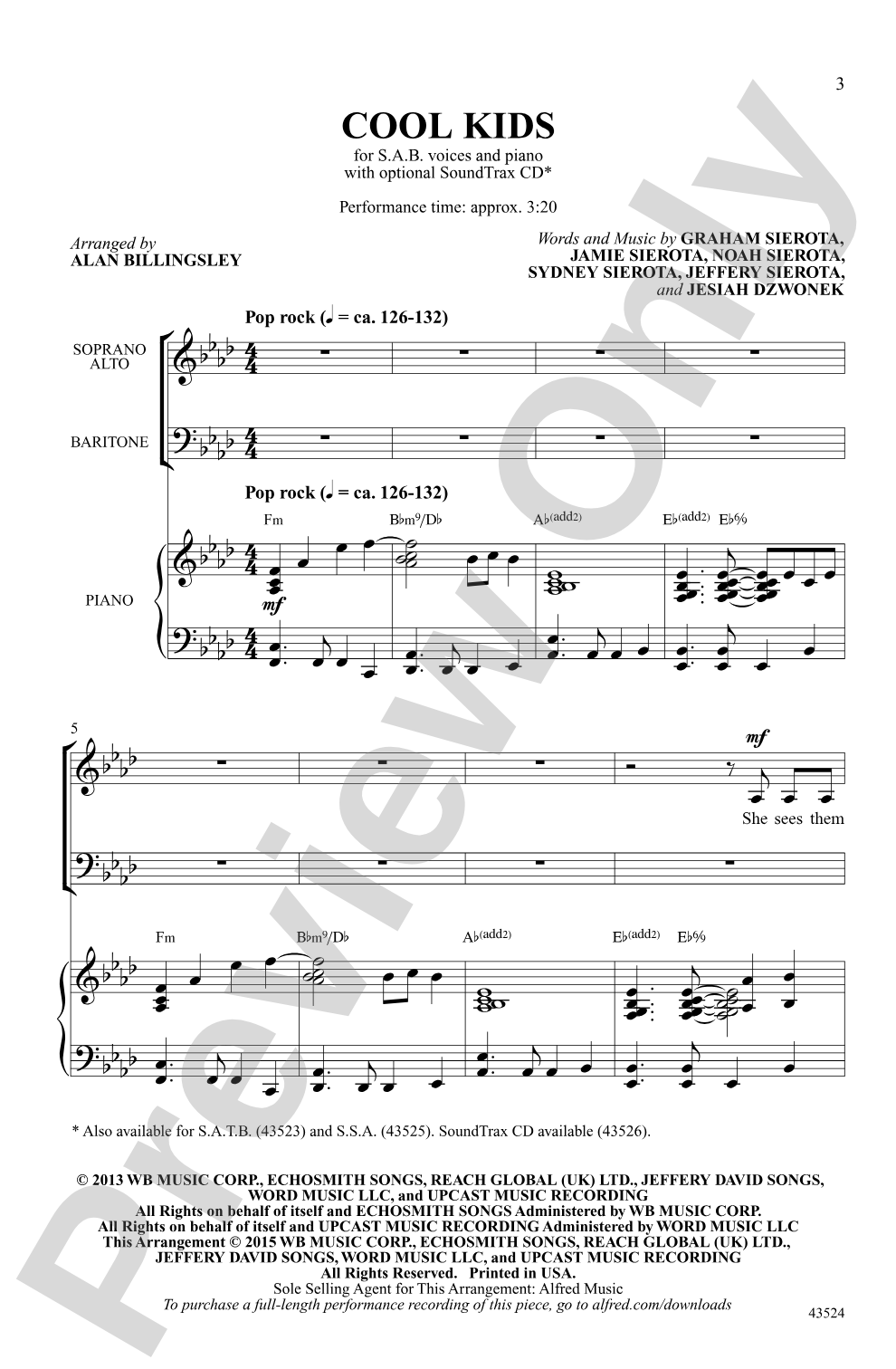
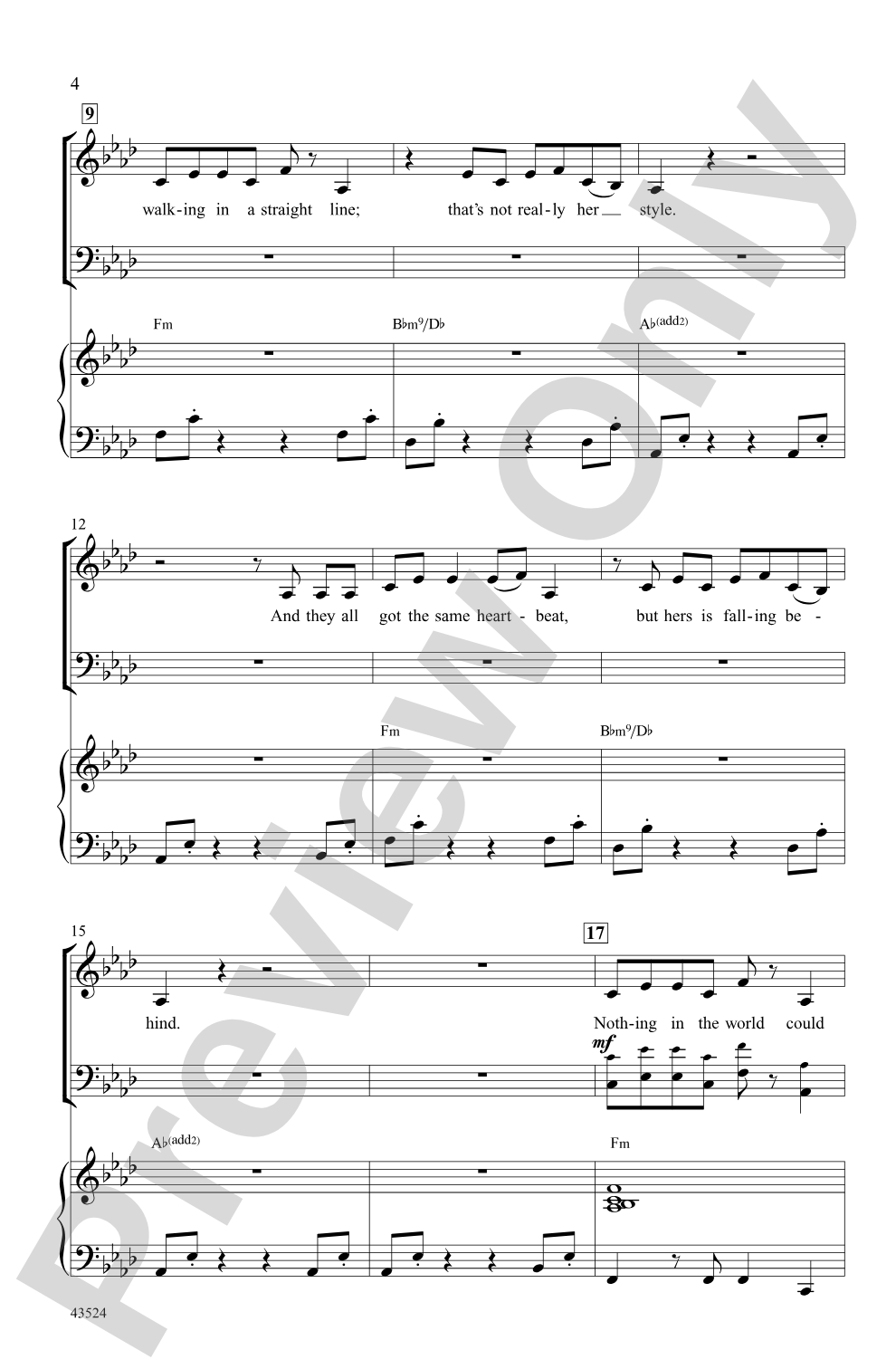
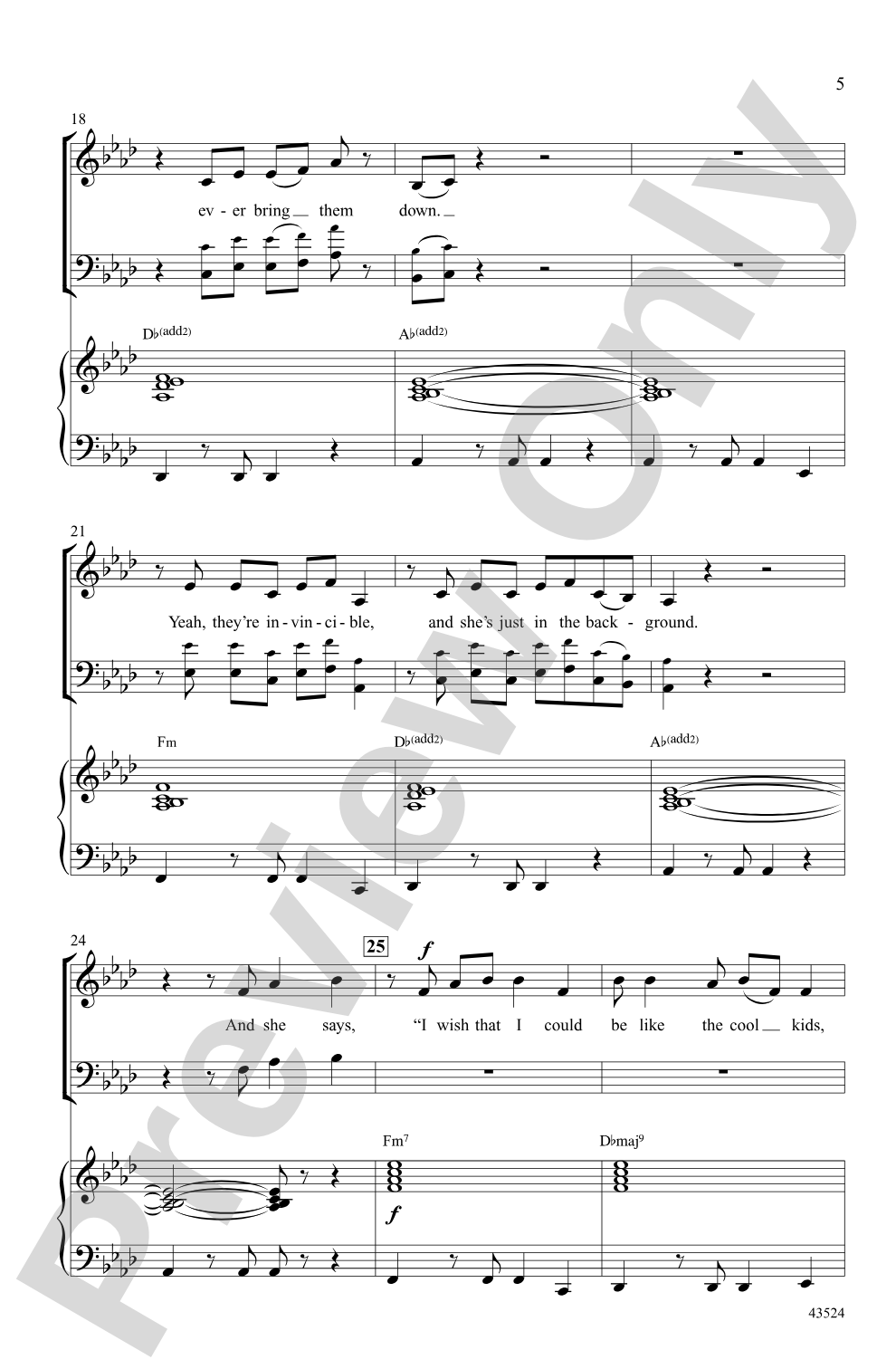

Cool Kids: SAB Choral Octavo
Words and music by Graham Sierota, Jamie Sierota, Noah Sierota, Sydney Sierota, Jeffery Sierota, and Jessiah Dzwonek [Echosmith] / arr. Alan Billingsley
Item: 00-PO-0003412
$2.10
Minimum order quantity: 20 copies
Pickup currently not available
Related Items
Cool Kids: SoundTrax Digital Audio Download |
$29.99
|
View | |
Cool Kids: SATB Choral Octavo |
$2.10
|
View | |
Cool Kids: SSA Choral Octavo |
$2.10
|
View | |
Cool Kids: SATB Choral Octavo |
$2.10
|
View | |
Cool Kids: SAB Choral Octavo |
$2.10
|
View | |
Cool Kids: SSA Choral Octavo |
$2.10
|
View | |
Cool Kids: Choral Octavo SoundTrax CD |
$29.99
|
View |
Description
"I wish that I could be like the cool kids!" This catchy, effervescent single from the indie-pop band Echosmith went platinum in the United States, with over one million recordings sold. Quickly-learned, this is a fun addition to any pop program.


Cool Kids: SAB Choral Octavo isn't in MakeMusic Cloud just yet...but it could be. Let us know you'd like to see it, and you'll help shape what comes next. In the meantime, start a free trial and dive into thousands of interactive titles your students can play along with today.
Request This Title
Tell us you want it.
Start Your Free Trial
Explore everything that's ready to play right now.
Sample Audio
1
Audio File
--:--
0:00
0:00
Sample Video
No sample videos found.
Additional Details
Series:
Alfred Pop Choral Series
Publisher:
Alfred Music
Page Count:
16
SKU:
00-PO-0003412
More about this title
About the Composer: Graham Sierota
Graham Sierota is a composer and member of Echosmith, the indie-pop band that brought "Cool Kids" to platinum status in the United States. Writing alongside his siblings Jamie, Noah, Sydney, and Jeffery, Sierota helped craft one of the most recognizable pop hooks of the 2010s. The song's accessibility and emotional directness have made it a staple in contemporary pop choral arrangements.
Echosmith's songwriting focuses on relatable, youth-centered themes delivered with infectious melodies. Sierota's compositional voice emphasizes straightforward harmonic language and vocal-forward arrangements, qualities that translate naturally to choral settings.
Why we love this
This arrangement captures everything that made the original a hit without requiring your choir to wrestle with complex voice leading or distant melodic lines. The SAB voicing keeps the melody front and center while distributing harmonic interest across all three parts, so every singer feels invested in the sound. Directors appreciate how quickly students grasp the tune and how naturally it leads to confident, energetic performances.
What to expect
Bright, buoyant, and immediately singable. The piece captures that wistful-yet-hopeful energy of the original recording while keeping the focus on vocal delivery and ensemble blend. It feels fresh and current without sounding thin or trivial.
Who it's for
Choral directors looking to connect with singers through recognizable, contemporary pop music will find a natural fit here. This works equally well for high school choirs, college pop ensembles, and community groups seeking accessible material that doesn't compromise on musicality. The SAB voicing makes it inclusive for mixed voice groups without the complexity of four-part writing.
How to get the most out of it
- Anchor the rhythmic energy with a steady groove; the percussion accompaniment thrives on consistent pulse rather than rubato.
- Balance the solos and solo sections carefully, especially if using the recorded accompaniment. Individual voices need clarity without overpowering the ensemble texture.
- Emphasize the dynamic contrasts to maintain listener interest across all 16 pages. The arrangement likely includes quieter and fuller moments that shape the emotional arc.
- Tune the parallel thirds and other interval-based harmony with extra attention; these chord colors define the pop sensibility of the piece.
How to use it
Program this as a standalone pop selection in a concert that mixes classical and contemporary work, or pair it with other modern pop arrangements to showcase your choir's range. It also works beautifully in a spring or end-of-year concert where you want to celebrate ensemble achievement with something the audience will instantly recognize and enjoy.
Skills your students will build
- Singing contemporary pop with idiomatic phrasing and style
- Balancing ensemble blend with clear solo presentation
- Maintaining rhythmic precision while maintaining lyrical flow
- Singing in SAB voicing with three independent harmonic lines
- Responding to recorded accompaniment and staying locked with external rhythm