
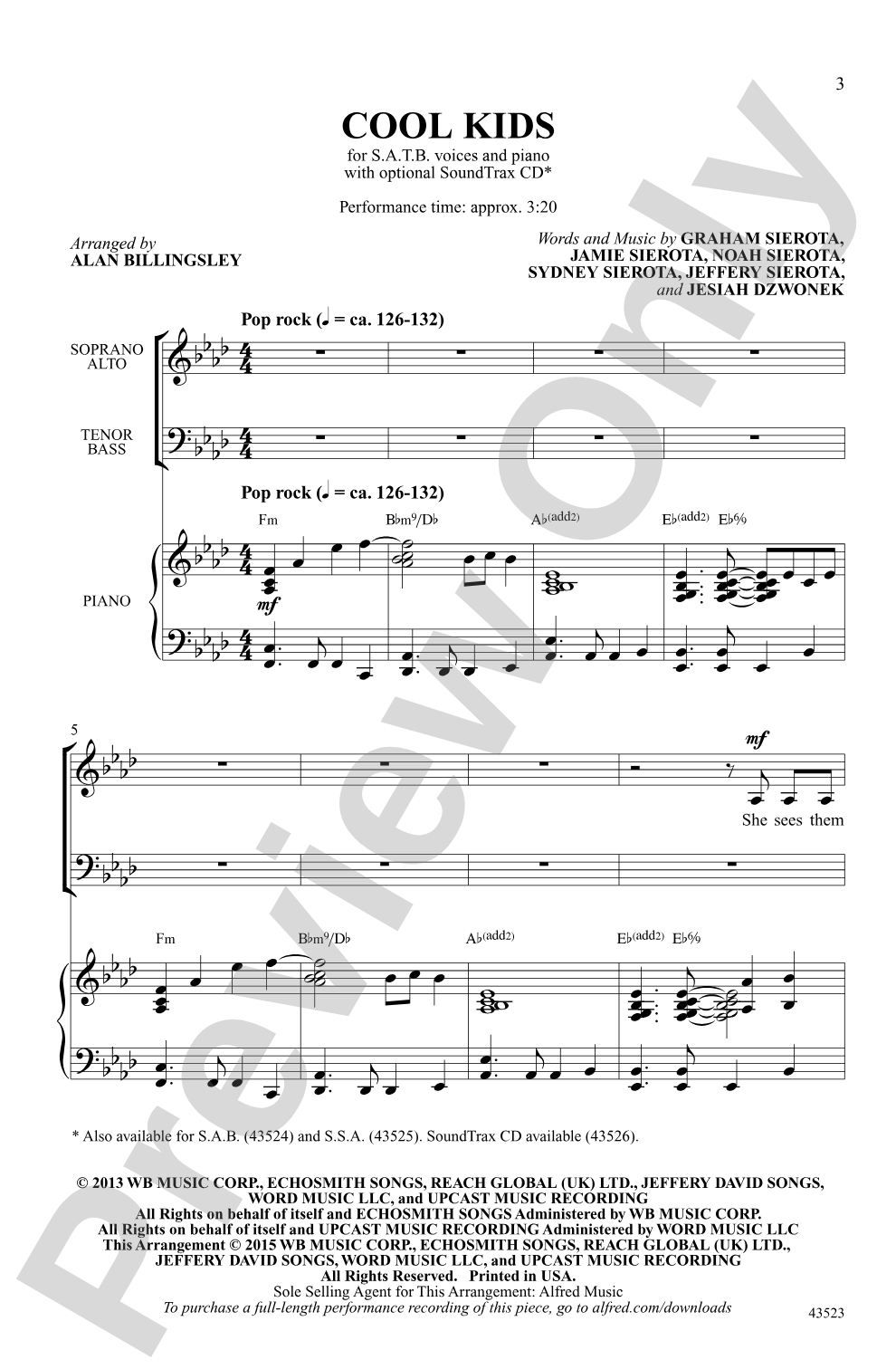
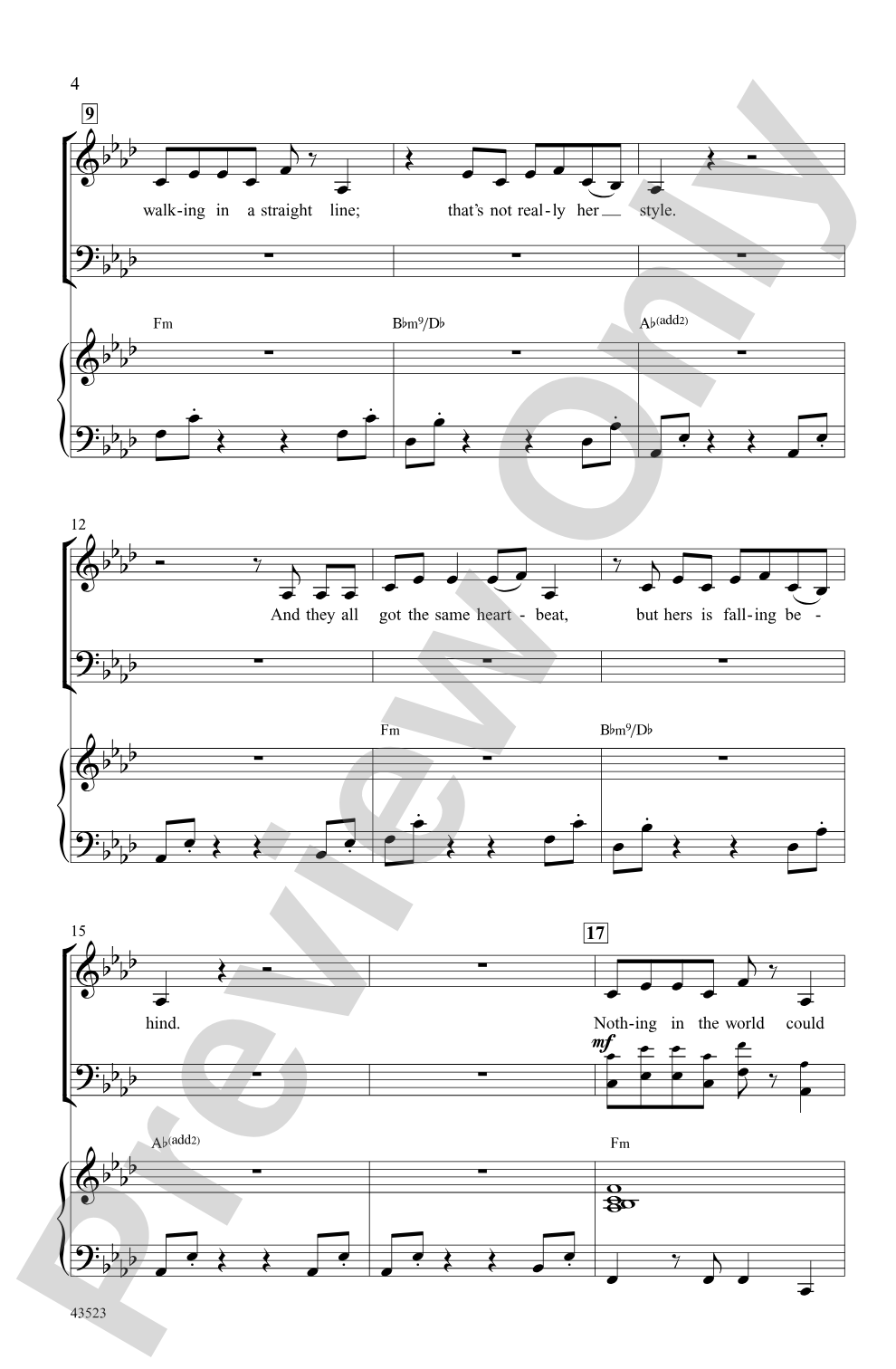
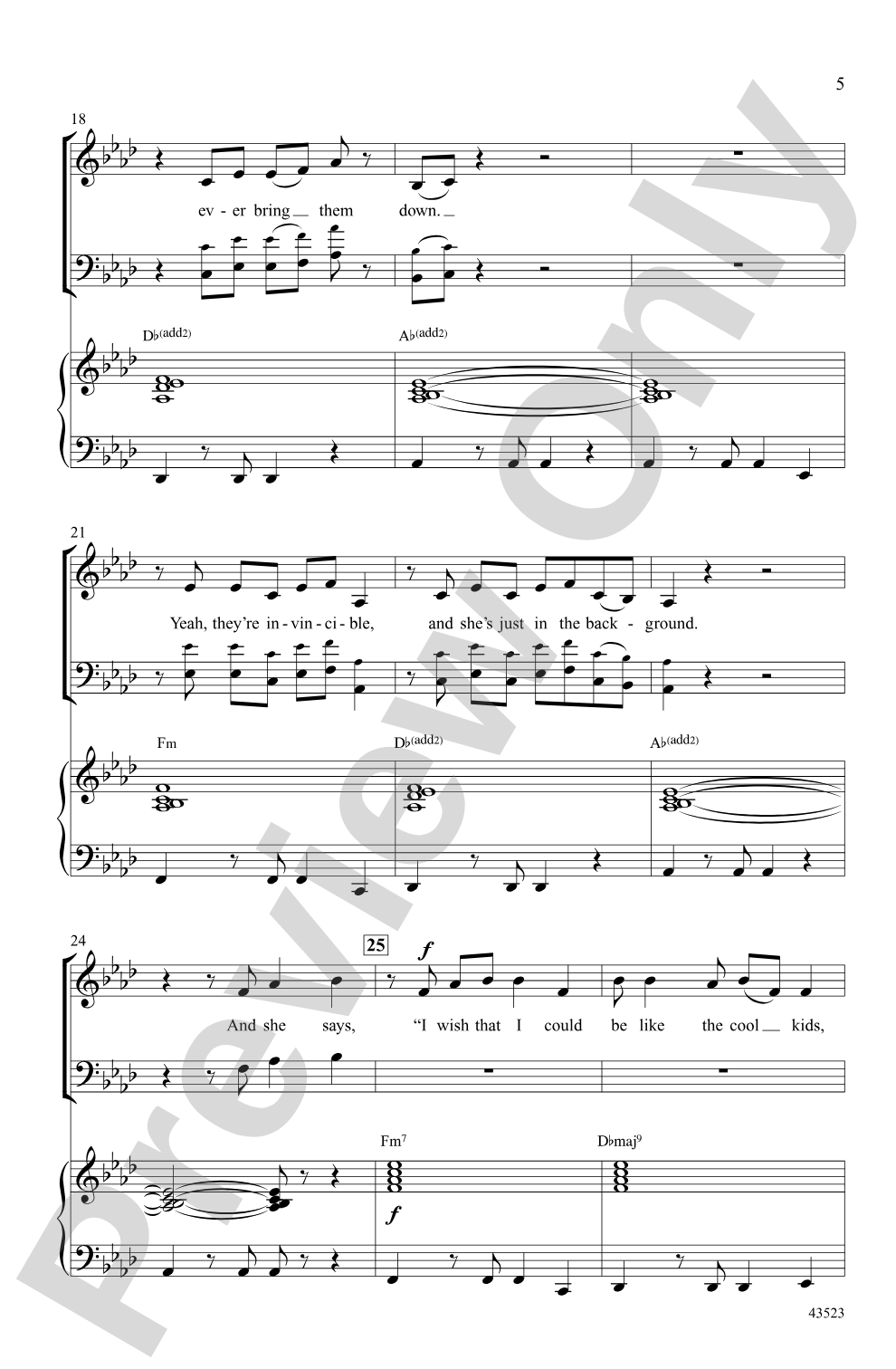

Cool Kids: SATB Choral Octavo
Words and music by Graham Sierota, Jamie Sierota, Noah Sierota, Sydney Sierota, Jeffery Sierota, and Jessiah Dzwonek [Echosmith] / arr. Alan Billingsley
Item: 00-PO-0003411
$2.10
Minimum order quantity: 20 copies
Pickup currently not available
Related Items
Cool Kids: SoundTrax Digital Audio Download |
$29.99
|
View | |
Cool Kids: SAB Choral Octavo |
$2.10
|
View | |
Cool Kids: SSA Choral Octavo |
$2.10
|
View | |
Cool Kids: SATB Choral Octavo |
$2.10
|
View | |
Cool Kids: SAB Choral Octavo |
$2.10
|
View | |
Cool Kids: SSA Choral Octavo |
$2.10
|
View | |
Cool Kids: Choral Octavo SoundTrax CD |
$29.99
|
View |
Description
"I wish that I could be like the cool kids!" This catchy, effervescent single from the indie-pop band Echosmith went platinum in the United States, with over one million recordings sold. Quickly-learned, this is a fun addition to any pop program.


Cool Kids: SATB Choral Octavo isn't in MakeMusic Cloud just yet...but it could be. Let us know you'd like to see it, and you'll help shape what comes next. In the meantime, start a free trial and dive into thousands of interactive titles your students can play along with today.
Request This Title
Tell us you want it.
Start Your Free Trial
Explore everything that's ready to play right now.
Sample Audio
1
Audio File
--:--
0:00
0:00
Sample Video
No sample videos found.
Additional Details
Series:
Alfred Pop Choral Series
Publisher:
Alfred Music
Page Count:
16
SKU:
00-PO-0003411
More about this title
About the Composer: Graham Sierota
Graham Sierota is a composer and multi-instrumentalist best known for his work with Echosmith, the indie-pop band he formed with his siblings. As the primary songwriter for the group, he has crafted pop melodies that resonate across mainstream and alternative audiences, demonstrating a gift for writing hooks that stay with listeners long after the first hearing.
Sierota's compositional approach balances accessibility with genuine musicality, creating songs that work equally well on radio and in ensemble settings. His arrangements for choral ensembles reveal an understanding of how pop song structure translates to vocal writing.
Why we love this
This arrangement captures everything that made "Cool Kids" a viral earworm: the infectious melodic hook, the relatable energy, and the immediate approachability that makes singers want to dig in from rehearsal one. The SATB voicing opens the piece to standard high school and college choirs without sacrificing the pop character, and the recorded accompaniment keeps rehearsals moving so you can focus on interpretation, blend, and phrasing rather than learning intricate harmonies by rote.
What to expect
Bright, buoyant, and wry—the arrangement preserves the song's gentle self-awareness without losing its celebratory pop energy. There's an earnest vulnerability underneath the upbeat surface that gives singers something genuine to connect to, even as they're having fun with one of the most recognizable hooks of the 2010s.
Who it's for
This piece belongs in any high school or collegiate choral program looking to program contemporary pop alongside more traditional repertoire. It works for treble-dominated choirs as well as mixed ensembles, and it's approachable enough for students new to sight-reading yet engaging enough to hold the attention of experienced singers.
How to get the most out of it
- Keep the rhythm driving forward even in slower passages; the arrangement depends on consistent pulse to maintain the song's contemporary feel and prevent it from sounding overly formal.
- Balance the lead melody prominently but let the inner voices breathe, especially where the harmony layers get fuller—clarity matters as much as blend in pop repertoire.
- Lean into the conversational, almost spoken quality of the opening lines; this is not classical art song, and a naturalistic delivery pays off in connection with your audience.
- Use the recorded accompaniment in rehearsal to reinforce groove and tempo, then work toward independence so the choir can shape phrases while the track supports rather than leads.
How to use it
Program this early in a pop or contemporary music set to establish energy and audience engagement, or use it as a palate cleanser between heavier classical or art song selections. It works as an excellent closer for informal concerts, pops concerts, or community events where you want the audience to leave humming and smiling.
Skills your students will build
- Singing contemporary pop phrasing and rhythm without over-articulation
- Maintaining independence while locking into a rhythmic accompaniment track
- Balancing blend and clarity within layered, homophonic harmony
- Connecting emotionally to text that is conversational rather than poetic