

Closer to the Flame: SSA Choral Octavo
Words by Susan Bentall Boersma, music by David Lantz III
Item: 00-PO-0001268

$2.05
Minimum order quantity: 10 copies
Please note: Under U.S. copyright law, you must purchase the exact number of copies needed for your ensemble. Printing, duplicating or sharing additional copies is strictly prohibited.
Pickup currently not available
Related Items
Closer to the Flame: SoundTrax Digital Audio Download |
$27.99
|
View | |
Closer to the Flame: SATB Choral Octavo |
$2.05
|
View | |
Closer to the Flame: SAB Choral Octavo |
$2.05
|
View | |
Closer to the Flame: SATB Choral Octavo |
$2.05
|
View | |
Closer to the Flame: SAB Choral Octavo |
$2.05
|
View | |
Closer to the Flame: SSA Choral Octavo |
$2.05
|
View | |
Closer to the Flame: Choral Octavo SoundTrax CD |
$27.99
|
View |
Description
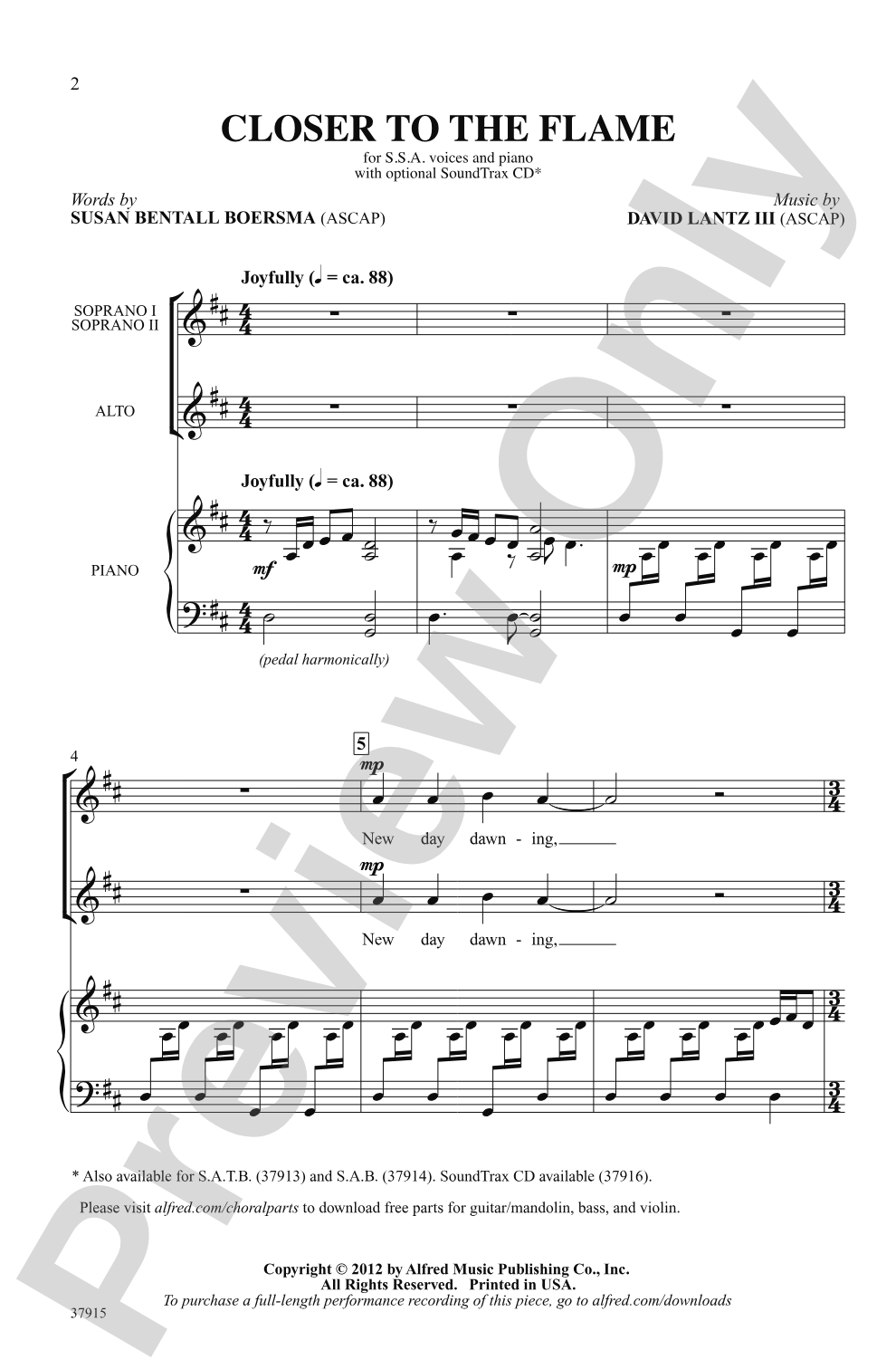
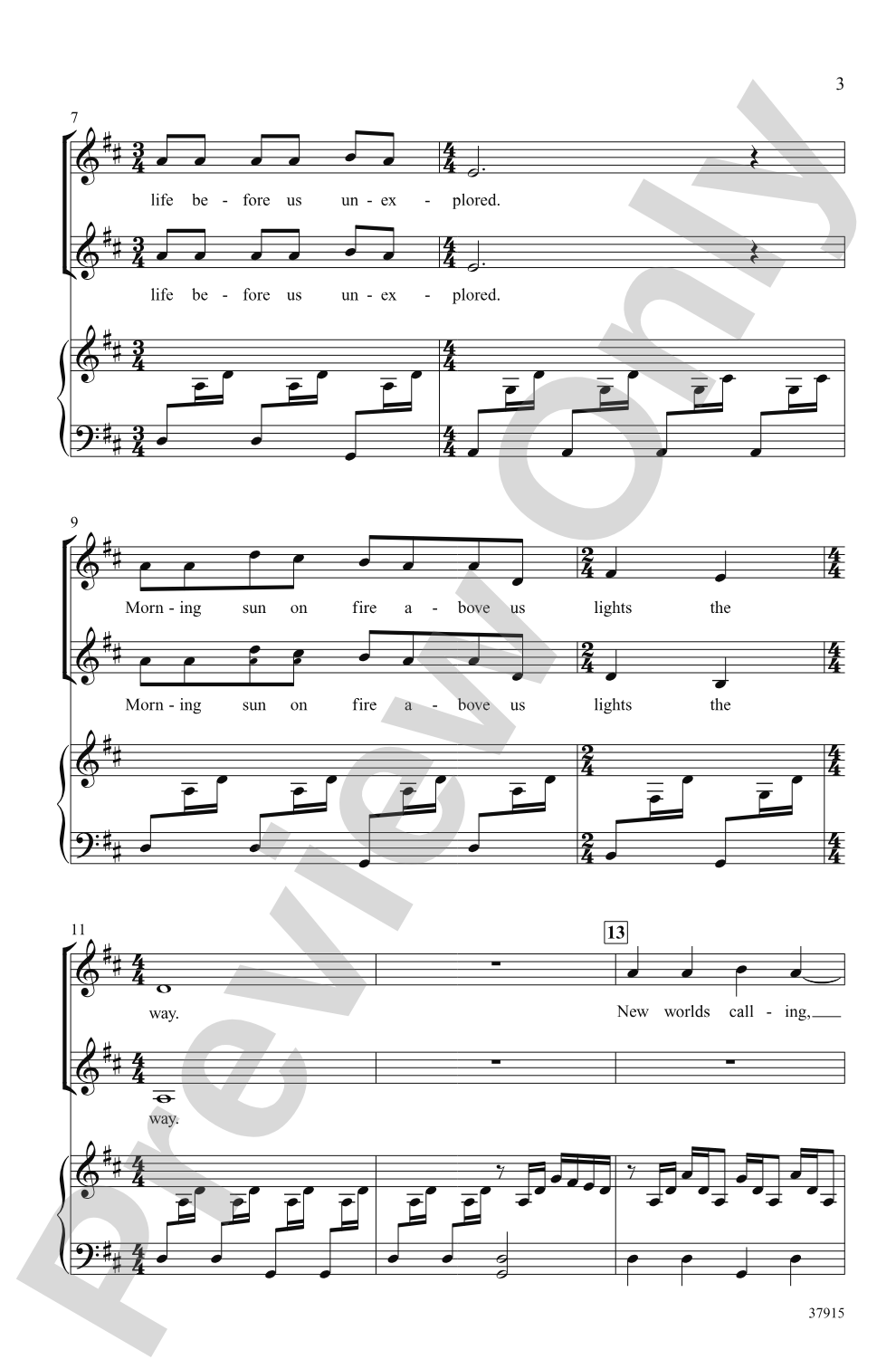
The buoyant music and hopeful text of this contemporary original are reminiscent of a traditional American folk song. A compelling accompaniment gracefully winds throughout, easily navigating metric changes. Parts for mandolin/guitar, bass, and violin are available free online.


Don't just read it, hear it, play along with it, and watch your students grow with it. In MakeMusic Cloud, Closer to the Flame: SSA Choral Octavo comes alive with professional accompaniment, adjustable tempo, and built-in practice tools that turn solo practice into real progress.
Open in the Player
Jump straight in and assign it today.
Start Your Free Trial
Open this title and explore the full library in minutes.
Sample Audio
1
Audio File
--:--
0:00
0:00
Sample Video
No sample videos found.
Additional Details
Series:
Alfred Choral Designs
Publisher:
Alfred Music
Page Count:
12
SKU:
00-PO-0001268
Instrumentation:
Opt. Guitar/Mandolin, Bass & Violin
More about this title
About the Composer: David Lantz
David Lantz has built a reputation as a composer who understands what works in the choral rehearsal room. His arrangements and original works balance musical substance with practical accessibility, making them favorites among directors seeking repertoire that challenges singers without overwhelming them.
Lantz's gift for melody and his ear for contemporary harmonic language have made him a prolific voice in choral music education. His works appear regularly on festival programs and in octavo collections, consistently earning recognition for their craftsmanship and emotional directness.
Why we love this
The folk-song sensibility here feels genuine rather than manufactured, and the accompaniment does something unusual, it comments on the text rather than simply supporting it. Mandolin, guitar, bass, and violin parts available free online mean you can layer in instrumental color without requiring players to purchase additional materials, making this both musically rich and budget-conscious.
What to expect
The music has a forward momentum that feels both reflective and affirming. Harmonies settle comfortably even as they shift, this is contemporary writing that doesn't alienate singers unfamiliar with modern idioms, which is precisely why it lands with audiences.
Who it's for
This octavo works beautifully for SSA ensembles ranging from high school to community choirs. It suits festival and contest contexts while also serving as an excellent choice for concert programming where you want something contemporary that doesn't demand extensive rehearsal time.
How to get the most out of it
- Treat the metric modulations as gentle shifts rather than seismic events. A single rehearsal focused on singing through the accompaniment recording will help singers feel the meter changes as natural breathing points rather than obstacles.
- If you're adding instrumental parts, let the mandolin or guitar establish the tonal center first during early rehearsals. This grounds the optional instrumentation as texture rather than complication.
- The recorded accompaniment captures the buoyant quality the piece demands. Use it to model articulation and phrasing, particularly in how the text sets phrases across the bar lines.
How to use it
Pair this with traditional folk arrangements to highlight how contemporary composers draw from those wells. Its moderate length and singable range make it an excellent penultimate selection on a concert, providing a strong emotional moment without exhausting your ensemble before a final, spirited closer.
Skills your students will build
- Singing through metric shifts (transitions between duple and triple subdivisions)
- Blend and balance when layering with optional instrumental parts
- Phrasing across bar lines while maintaining textual clarity
- Intonation in contemporary harmonic language that doesn't rely on functional progressions