
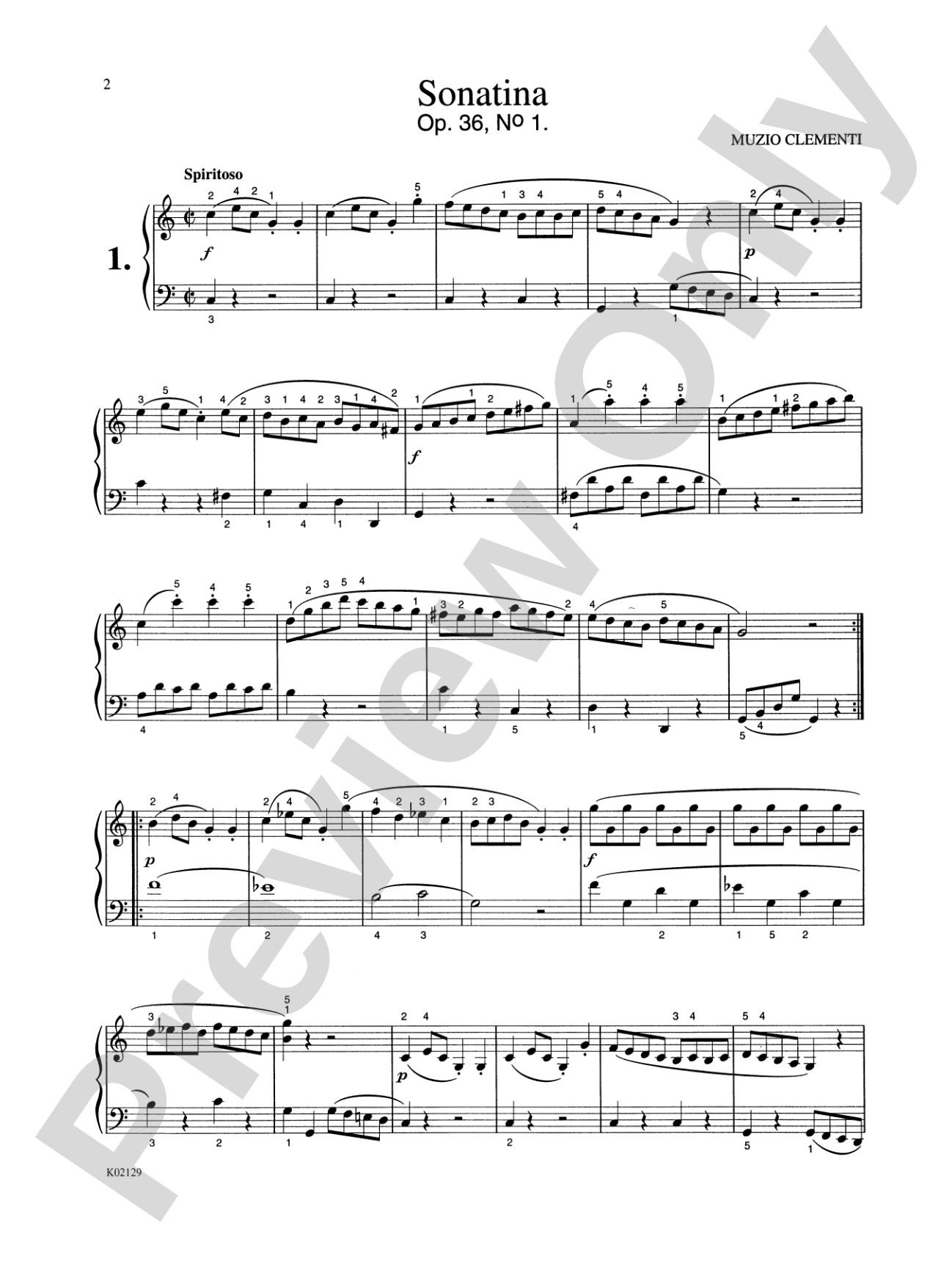
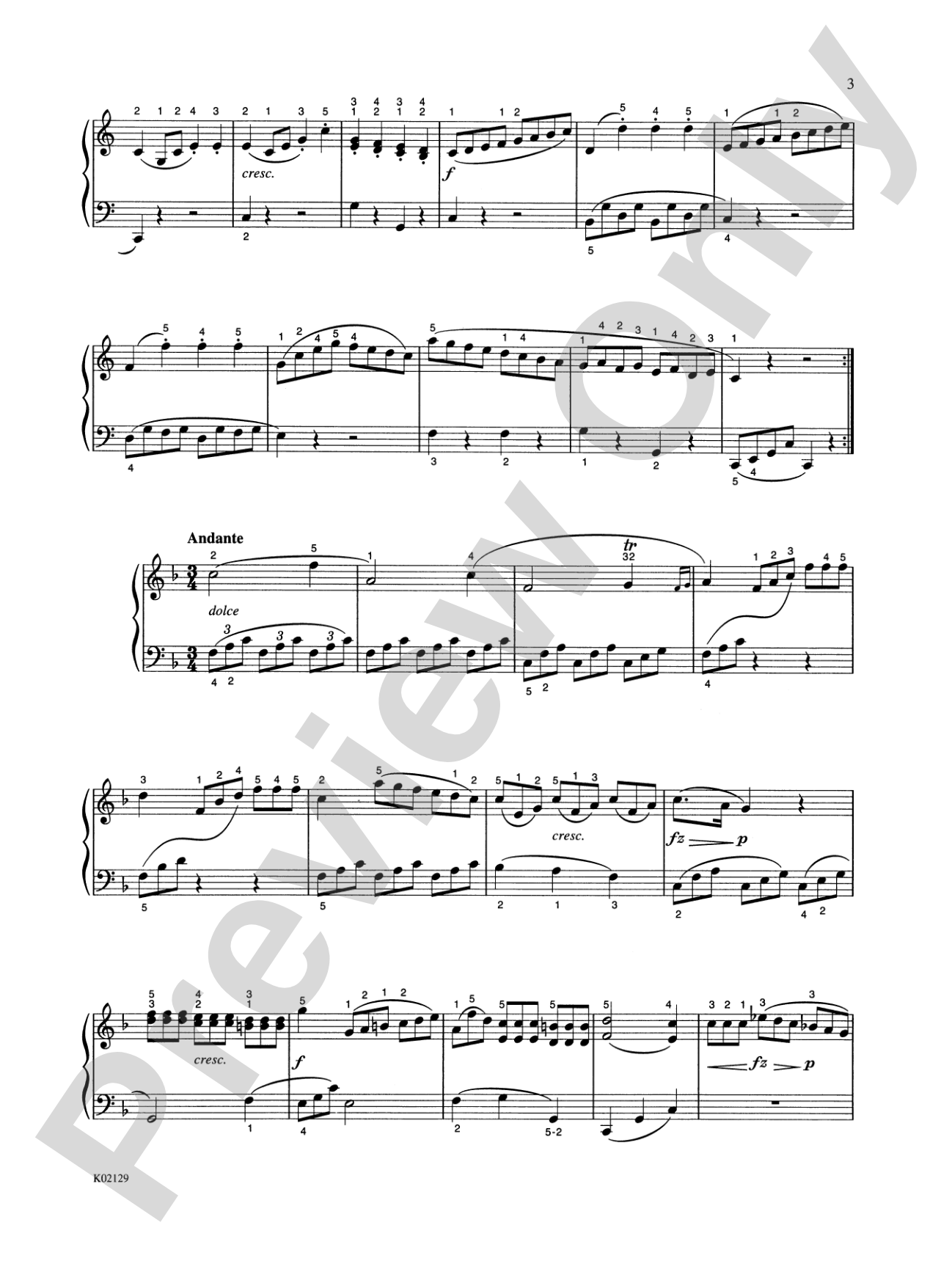
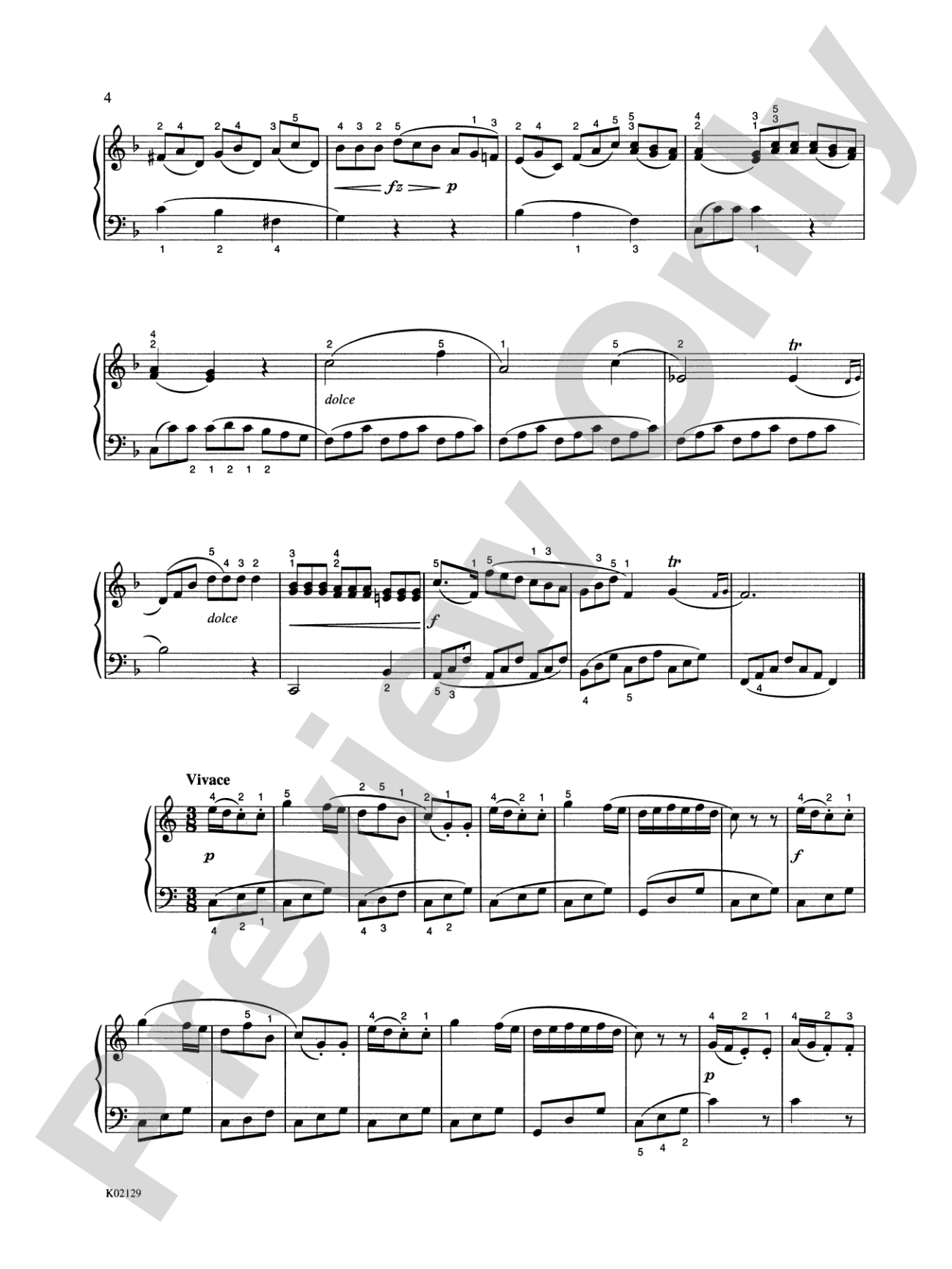
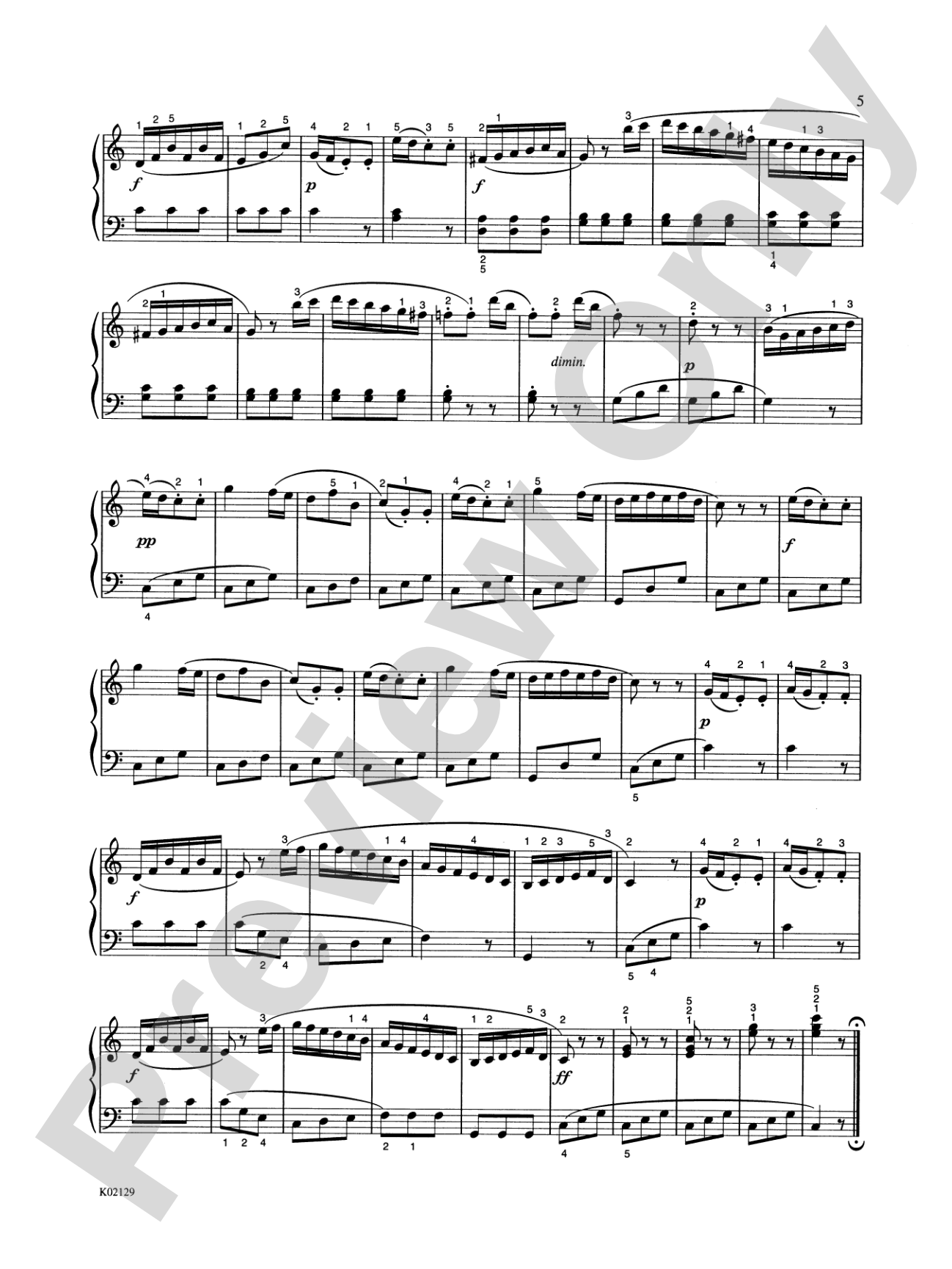

Clementi: Six Sonatinas, Op. 36: Piano Book
By Muzio Clementi
Item: 00-PK-0002771

$8.99
Pickup currently not available
Buy Extra Parts (Digital PDF Download)
| Product | Price | Quantity |
|---|---|---|
| Clementi: Six Sonatinas, Op. 36 | $0.99 | |
| Clementi: Six Sonatinas, Op. 36 | $0.99 | |
| Clementi: Six Sonatinas, Op. 36 | $0.99 | |
| Clementi: Six Sonatinas, Op. 36 | $0.99 | |
| Clementi: Six Sonatinas, Op. 36 | $0.99 | |
| Clementi: Six Sonatinas, Op. 36 | $0.99 |
Parts Added to Cart!
Description
Muzio Clementi (1752--1832) was a famed composer, pianist, pedagogue, conductor, music publisher, editor, and piano manufacturer. Although born in Italy, he spent most of his life in England. In his time, he was known as "the father of the pianoforte," "father of modern piano technique", and "father of Romantic pianistic virtuosity." This collection of his 6 Sonatinas, Opus 36, includes: No. 1 in C major * No. 2 in G major * No. 3 in C major * No. 4 in F major * No. 5 in G major * No. 6 in D major. Newly engraved edition.


Don't just read it, hear it, play along with it, and watch your students grow with it. In MakeMusic Cloud, Clementi: Six Sonatinas, Op. 36: Piano Book comes alive with professional accompaniment, adjustable tempo, and built-in practice tools that turn solo practice into real progress.
Open in the Player
Jump straight in and assign it today.
Start Your Free Trial
Open this title and explore the full library in minutes.
Sample Audio
No sample audio found.
Sample Video
No sample videos found.
Additional Details
Series:
Kalmus Edition
Publisher:
Alfred Music
Page Count:
36
SKU:
00-PK-0002771
More about this title
About the Composer: Muzio Clementi
Muzio Clementi (1752, 1832) transformed keyboard music during the Classical era, bridging the gap between Baroque harpsichord writing and modern piano technique. Though Italian by birth, he established himself as a dominant force in London's musical life, where he composed prolifically, taught generations of pianists, founded a publishing house, and even manufactured pianos. His influence extended far beyond performance; he shaped how pianists approached the instrument itself, championing technical innovations that would define Romantic virtuosity.
Why we love this
These sonatinas strike an ideal balance between accessibility and artistic substance. They introduce students to Classical form and Romantic expression without the interpretive complexity of later Beethoven, yet they demand enough technical control and musical maturity that intermediate players engage seriously with the material. Each sonatina is genuinely rewarding to perform rather than merely functional.
What to expect
These sonatinas inhabit the threshold between elegance and emotion. The Classical proportions and clear structures feel architecturally satisfying, yet the harmonic language and melodic contours suggest depths of feeling beneath the surface. Playing them feels like learning to speak a language you didn't know you understood.
Who it's for
Intermediate to early advanced pianists ready for the transition from Baroque counterpoint and Mozart to fuller Romantic expression. Teachers working with students who have solid technique and are beginning to explore Classical form with more sophisticated harmonic awareness will find these pieces exactly right for the moment when students can handle genuine musical depth.
How to get the most out of it
- Balance clarity of articulation with the lyrical character of the opening themes; Clementi's textures can blur if the accompaniment overwhelms the melody.
- Approach the Rondo finales with rhythmic precision, the humor emerges from clean phrasing, not rushed tempo.
- Let the modulations breathe naturally; resist the urge to drive through development sections that deserve space.
How to use it
Program individual sonatinas as recital staples for intermediate players, or use the full set as a teaching curriculum spanning several months. They also pair naturally with contemporaneous works by Haydn and early Beethoven, allowing you to trace the Classical-to-Romantic transition across a concert program.
Skills your students will build
- Classical sonata form structure (exposition, development, recapitulation)
- Voice independence and textural clarity in multi-part writing
- Harmonic analysis of Classical and proto-Romantic progressions
- Pedal control in slow movements and accompaniment figures
- Interpretive choice within formal constraints
- Technical fluency in Alberti bass patterns and scalar passage work