
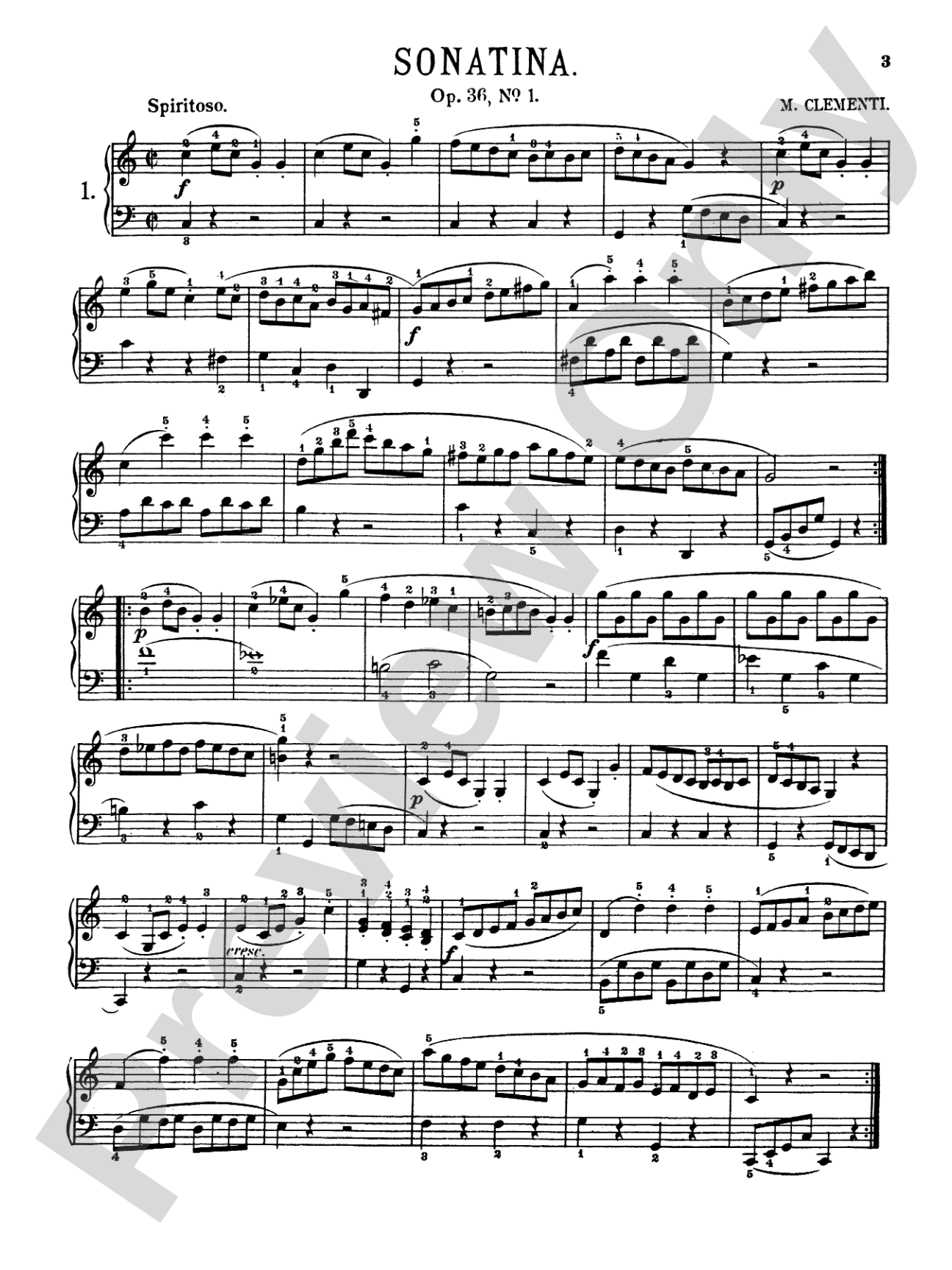
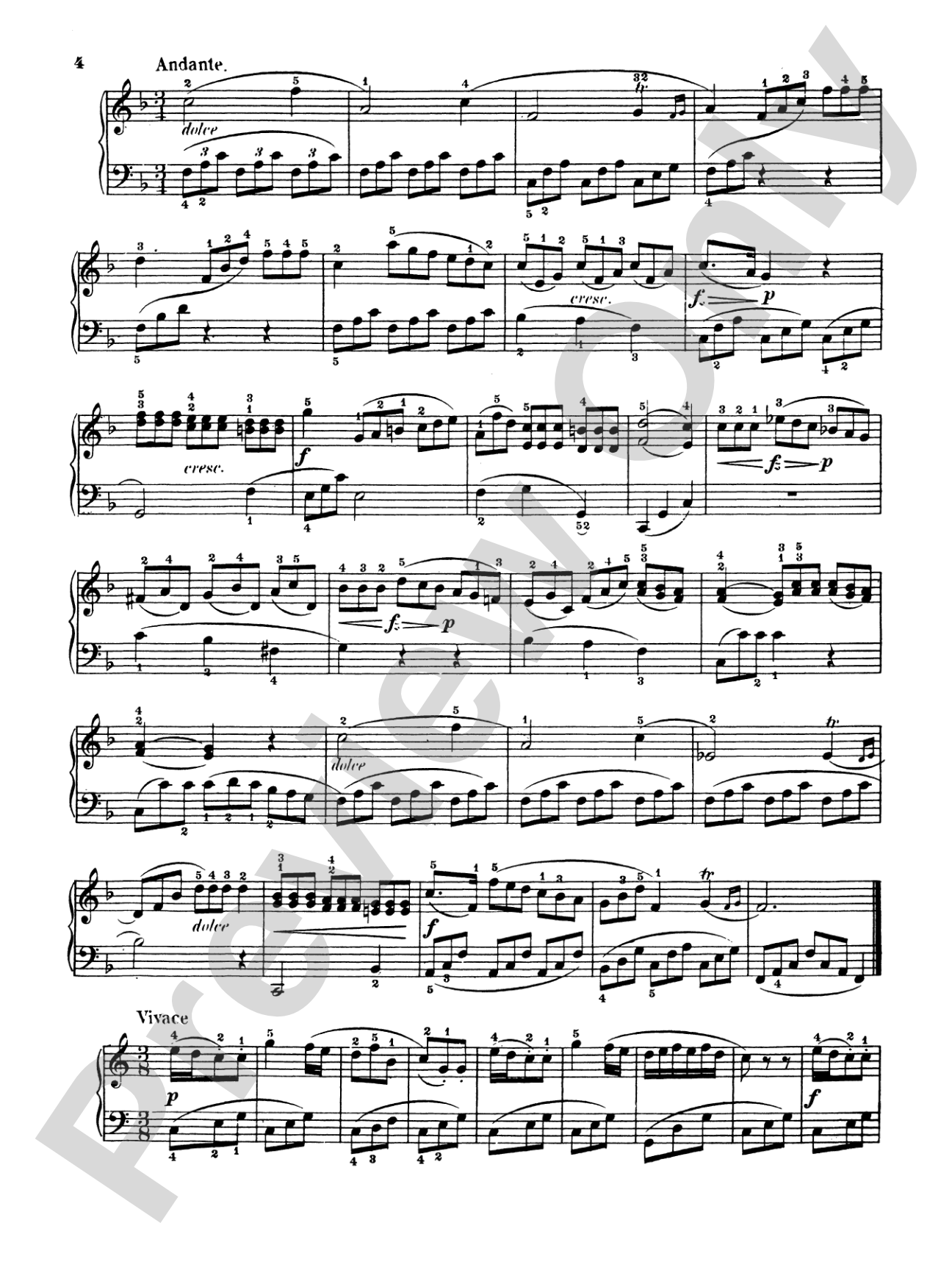
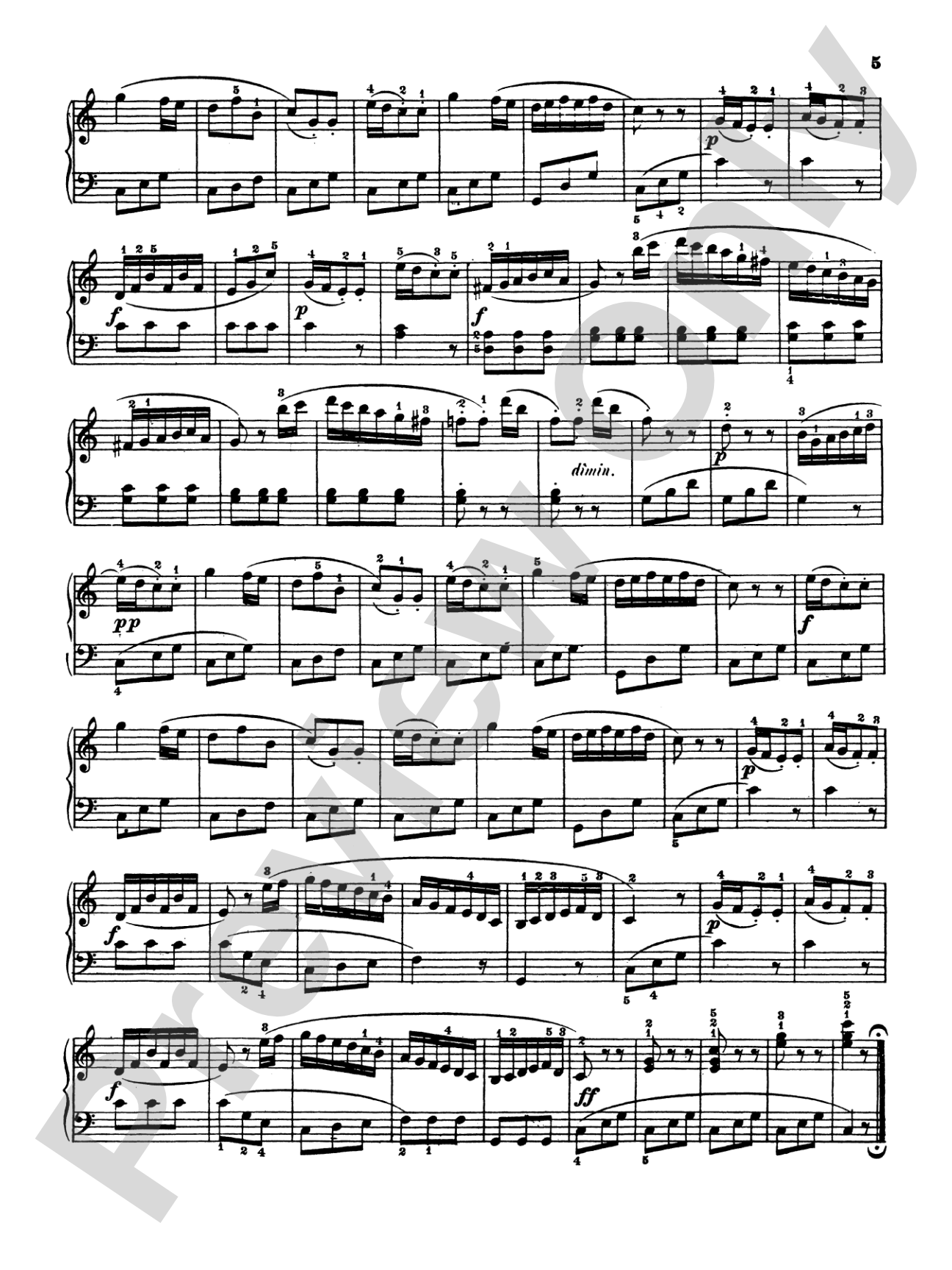

Clementi: Six Sonatinas, Op. 36: Piano Book
By Muzio Clementi
Item: 00-PK-0002990

$9.99
Pickup currently not available
Buy Extra Parts (Digital PDF Download)
| Product | Price | Quantity |
|---|---|---|
| Clementi: Six Sonatinas, Op. 36 | $0.99 | |
| Clementi: Six Sonatinas, Op. 36 | $0.99 | |
| Clementi: Six Sonatinas, Op. 36 | $0.99 | |
| Clementi: Six Sonatinas, Op. 36 | $0.99 | |
| Clementi: Six Sonatinas, Op. 36 | $0.99 | |
| Clementi: Six Sonatinas, Op. 36 | $0.99 |
Parts Added to Cart!
Description
Muzio Clementi (1752--1832) was a famed composer, pianist, pedagogue, conductor, music publisher, editor, and piano manufacturer. Although born in Italy, he spent most of his life in England. In his time, he was known as "the father of the pianoforte," "father of modern piano technique", and "father of Romantic pianistic virtuosity." This collection of his 6 Sonatinas, Opus 36, includes: No. 1 in C major * No. 2 in G major * No. 3 in C major * No. 4 in F major * No. 5 in G major * No. 6 in D major.


Don't just read it, hear it, play along with it, and watch your students grow with it. In MakeMusic Cloud, Clementi: Six Sonatinas, Op. 36: Piano Book comes alive with professional accompaniment, adjustable tempo, and built-in practice tools that turn solo practice into real progress.
Open in the Player
Jump straight in and assign it today.
Start Your Free Trial
Open this title and explore the full library in minutes.
Sample Audio
No sample audio found.
Sample Video
No sample videos found.
Additional Details
Series:
Kalmus Edition
Publisher:
Alfred Music
Page Count:
32
SKU:
00-PK-0002990
More about this title
About the Composer: Muzio Clementi
Muzio Clementi (1752-1832) stands as one of the most influential keyboard composers of the late 18th century. Born in Rome but primarily based in London, he revolutionized piano technique and composition through his prolific output of sonatas, sonatinas, and concertos. His pedagogical works shaped how generations of pianists approached the instrument, earning him recognition as a pivotal figure in the transition from harpsichord to pianoforte.
Clementi's dual career as performer and publisher gave him unique authority over how keyboard music was written and taught. His sonatinas occupy a special place in piano literature: they are neither simplistic exercises nor virtuosic showpieces, but carefully crafted pieces that introduce intermediate pianists to Classical form, texture, and expressive range. Teachers and students have long valued his work for its clarity, musical substance, and genuine engagement with the emerging capabilities of the modern piano.
Why we love this
These sonatinas strike a rare balance between musical seriousness and genuine playability. Each of the six pieces has genuine character and harmonic interest, yet the writing respects the hand size and technical ability of developing pianists. They bridge the gap between early Classical simplicity and Romantic expression in a way few collections at this level achieve.
What to expect
Elegant and transparent, with the brightness of the Classical era balanced by moments of genuine lyrical warmth. These pieces capture the essence of the early piano's crisp articulation and clear textures while hinting at the expressive possibilities that Romantic composers would later explore. There's an inviting sense of discovery in each movement.
Who it's for
Intermediate piano students (typically Grade 2-3 ABRSM or RCM level) who are ready to engage with actual Classical repertoire rather than pedagogical arrangements. Teachers seeking substantial yet achievable pieces for recitals, competitions, or repertoire development will find each sonatina offers musical depth without excessive technical demand.
How to get the most out of it
- Approach the Alberti bass figures as harmonic foundation rather than mere accompaniment. A steady, unfussy left hand allows the melody to sing without artificial legato.
- Pay attention to dynamic markings and phrase articulation. Clementi's scores contain meaningful contrasts between sections; these details create formal clarity and musical shape.
- Experiment with tempo relationships between movements. The fast outer movements benefit from confident, flowing tempos, while slow movements reward a singing tone and careful voice independence.
- Use the repeat signs intentionally. Repeats offer an opportunity to deepen phrasing and dynamics on the return, rather than simply replaying the first statement.
How to use it
Program individual sonatinas as standalone recital pieces or group two contrasting ones from the set on a student showcase. The variety of keys and character across the six sonatinas makes them ideal repertoire for competitions, where fresh, approachable Classical works stand out. They also serve as excellent preparation for later Beethoven or Mozart sonata study.
Skills your students will build
- Reading and executing Classical sonata form (exposition, development, recapitulation)
- Balanced hand independence with Alberti bass accompaniment figures
- Control of phrase shaping and musical line over harmonic progression
- Sight-reading fluency in major and minor keys with typical Classical vocabulary
- Understanding of period-appropriate articulation and voice leading
- Stamina and control across multiple movements of varying tempos