

City of Stars: SSA Choral Octavo
Music from the Motion Picture La La Land
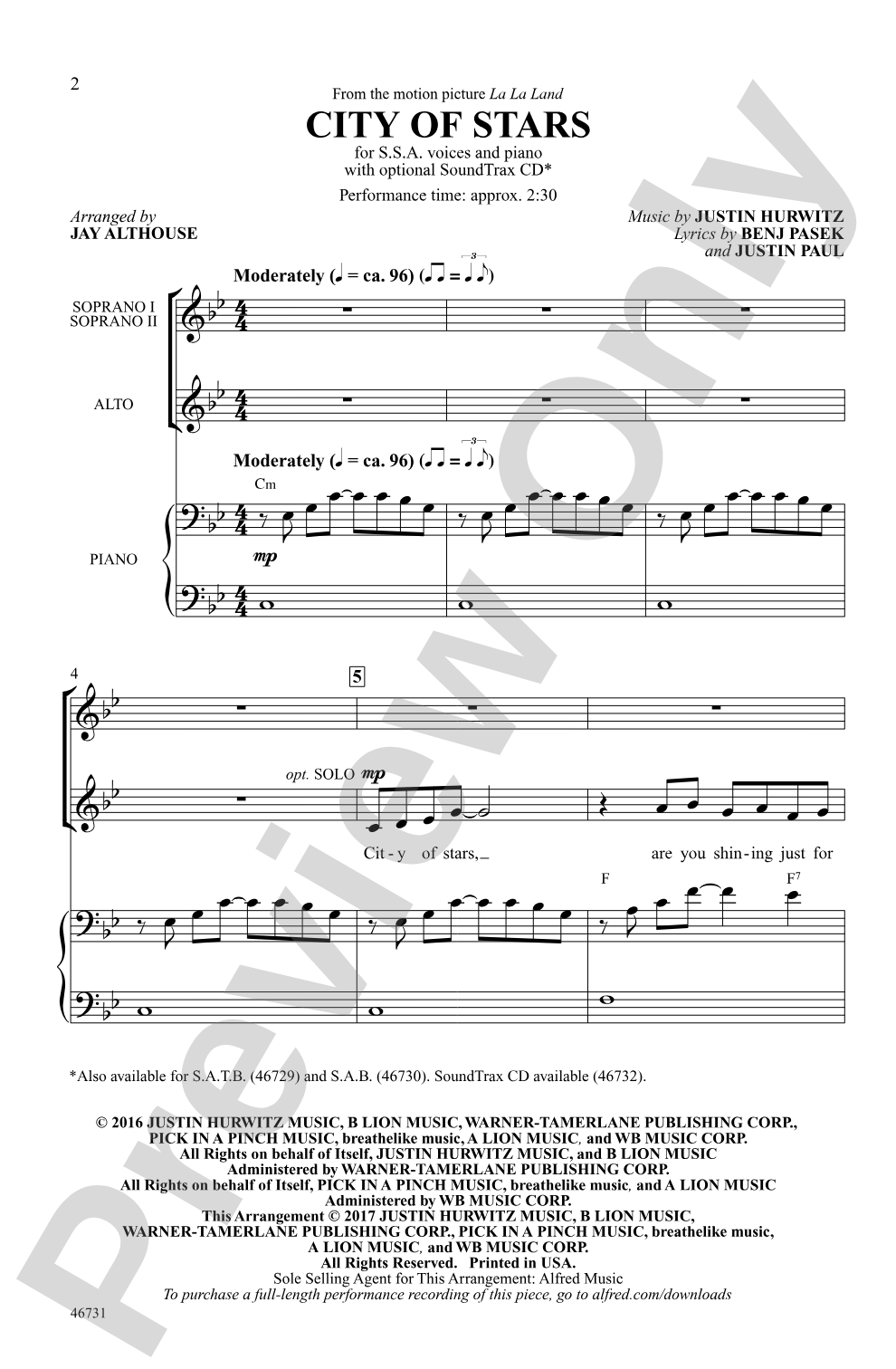
Music by Justin Hurwitz, lyrics by Benj Pasek and Justin Paul / arr. Jay Althouse
Item: 00-PO-0005774

$2.00
Minimum order quantity: 20 copies
One moment…
Related Items
City of Stars: SoundTrax Digital Audio Download |
$29.99
|
View | |
City of Stars: SATB Choral Octavo |
$2.00
|
View | |
City of Stars: SAB Choral Octavo |
$2.00
|
View | |
City of Stars: SATB Choral Octavo |
$2.00
|
View | |
City of Stars: SAB Choral Octavo |
$2.00
|
View | |
City of Stars: SSA Choral Octavo |
$2.00
|
View | |
City of Stars: Choral Octavo SoundTrax CD |
$29.99
|
View |
Description
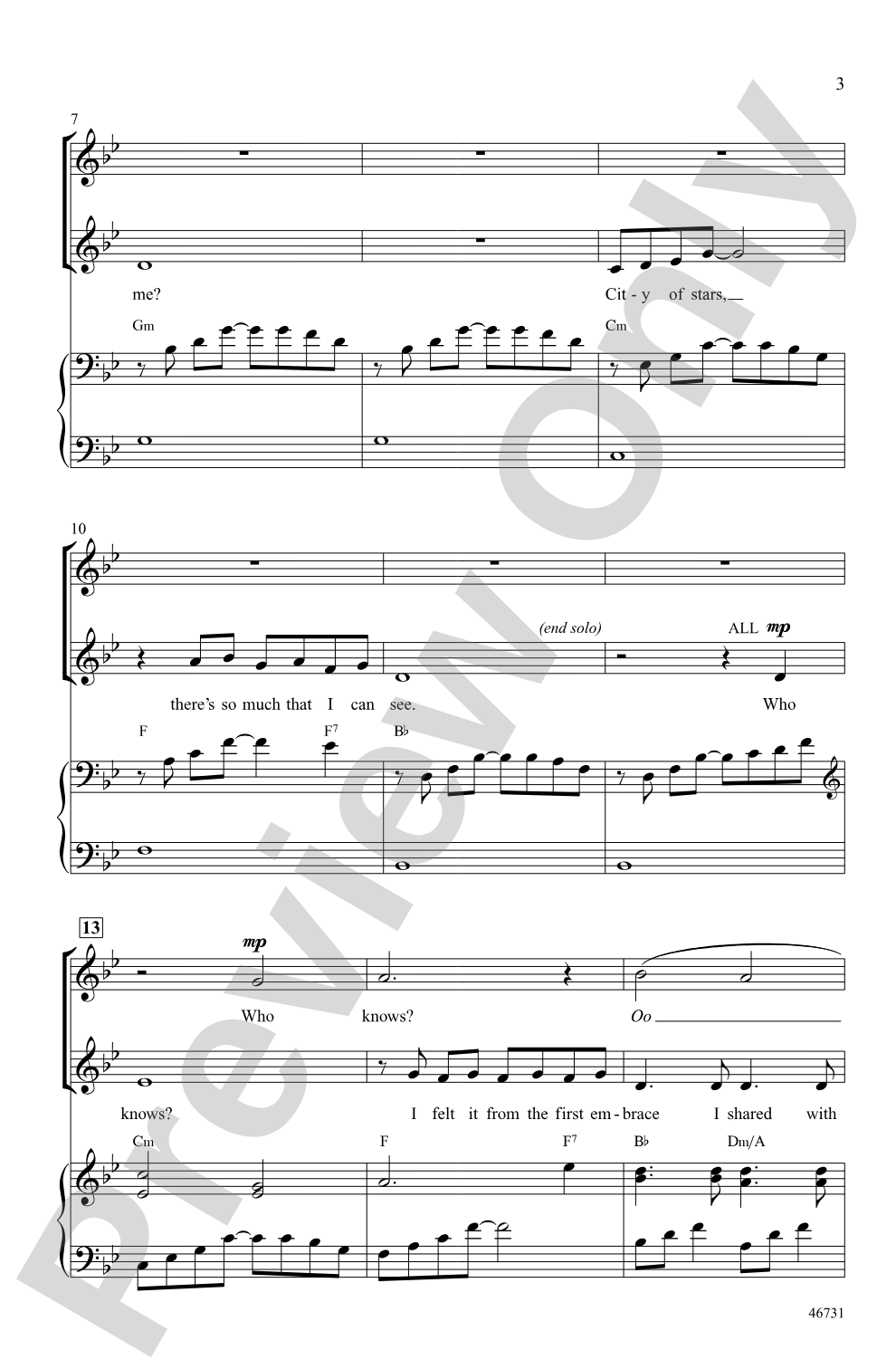
And the Oscar goes to . . . this, the signature song from critically acclaimed and highly awarded La La Land. Winner of Best Original Song at the Academy Awards®, the Golden Globes, and the Critic's Choice Movie Awards, this melancholy yet hopeful ballad features a haunting tune and a distinctive piano accompaniment that are instantly recognizable and extremely well suited for choral groups.


Don't just read it, hear it, play along with it, and watch your students grow with it. In MakeMusic Cloud, City of Stars: SSA Choral Octavo comes alive with professional accompaniment, adjustable tempo, and built-in practice tools that turn solo practice into real progress.
Open in the Player
Jump straight in and assign it today.
Start Your Free Trial
Open this title and explore the full library in minutes.
Sample Audio
1
Audio File
--:--
0:00
0:00
Sample Video
No sample videos found.
Additional Details
Series:
Alfred Pop Choral Series
Publisher:
Alfred Music
Page Count:
8
SKU:
00-PO-0005774
More about this title
About the Composer: Justin Hurwitz
Justin Hurwitz is a composer whose work spans film, television, and concert music. He is best known for his original scores for major motion pictures, including La La Land, for which he won the Academy Award for Best Original Song ("City of Stars") as well as the Golden Globe and Critic's Choice Movie Award. His ability to craft memorable melodies that resonate emotionally while remaining accessible to performers has made his music popular in both professional and educational settings.
Why we love this
Hurwitz's melody is so compelling that it carries the arrangement effortlessly, allowing singers at this level to focus on phrasing and emotional expression rather than navigating complicated vocal lines. The piano accompaniment remains recognizable and engaging without overwhelming the singers, and the SSA voicing opens the piece to mixed-age and mixed-ability choirs. This is the kind of contemporary repertoire that reminds students why they want to sing.
What to expect
Wistful and intimate, "City of Stars" draws listeners into a private moment of longing. The melody unfolds with a gentle insistence, supported by the distinctive harmonic language of Hurwitz's original score, creating an atmosphere that feels both cinematic and deeply human.
Who it's for
SSA choirs ranging from high school mixed ensembles to adult community and adult recreational groups will find this piece both vocally manageable and emotionally rewarding. The single-version voicing makes it accessible to students new to contemporary art song while offering enough musical substance to satisfy experienced singers seeking meaningful repertoire.
How to get the most out of it
- Honor the ballad's reflective quality by resisting any urge to rush; the strength of this piece lives in sustained phrases and careful dynamic shape rather than forward momentum.
- Balance the soloistic character of the melody line with warmth from the supporting voices; the accompaniment will anchor the harmonic foundation if the ensemble trusts the arrangement.
- Shape the text with genuine vulnerability; "City of Stars" is a love song tinged with doubt, so invest in the emotional truth of each phrase rather than polishing it into perfection.
- Use the recorded accompaniment strategically during rehearsal to hear how the arrangement sits with full harmonic support, then work sectionally to build independence and intonation.
How to use it
This piece works beautifully as a standalone contemporary selection in a concert that might otherwise lean toward traditional choral repertoire, or as part of a set exploring film music and popular song. Its meditative quality makes it an effective second-half opener, giving the audience a moment of reflection before building toward other selections.
Skills your students will build
- Sustaining long phrase lines with consistent tone and breath control
- Balancing a soloistic melody against harmonic accompaniment
- Interpreting contemporary secular text with emotional authenticity
- Reading and performing straightforward SSA voicing with independent voice parts
- Responding to recorded accompaniments and maintaining ensemble cohesion with full arrangement support