
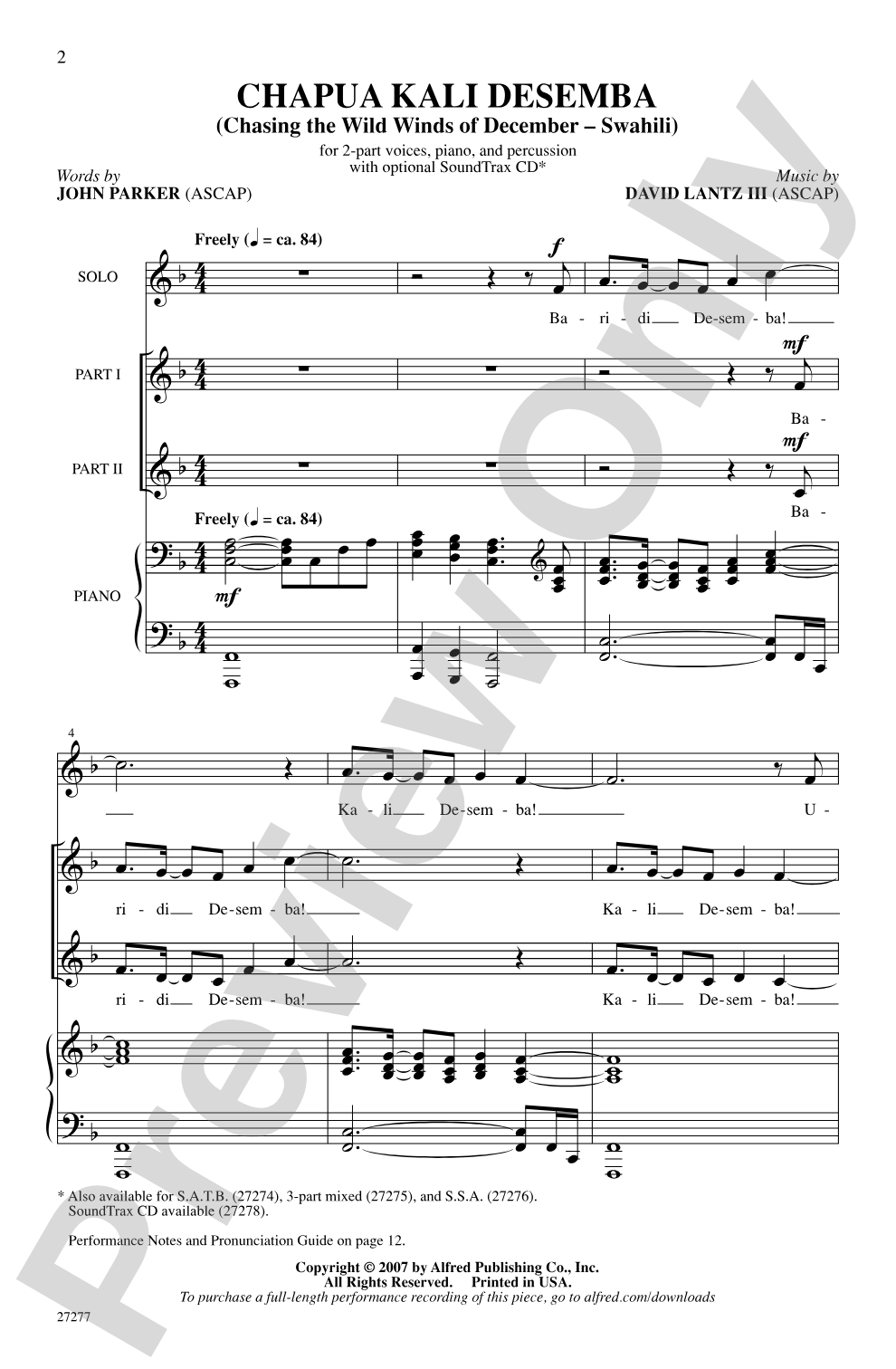
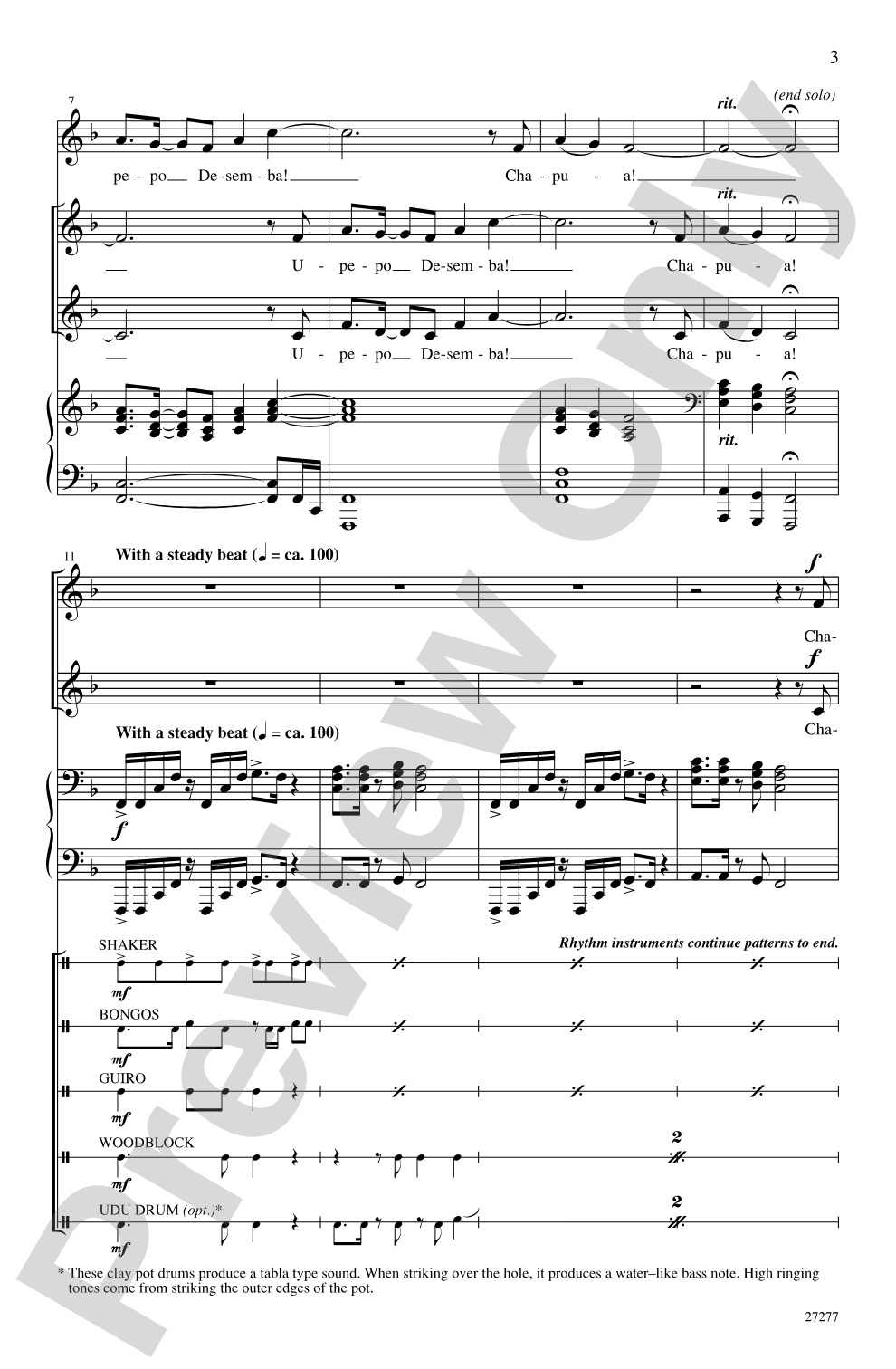
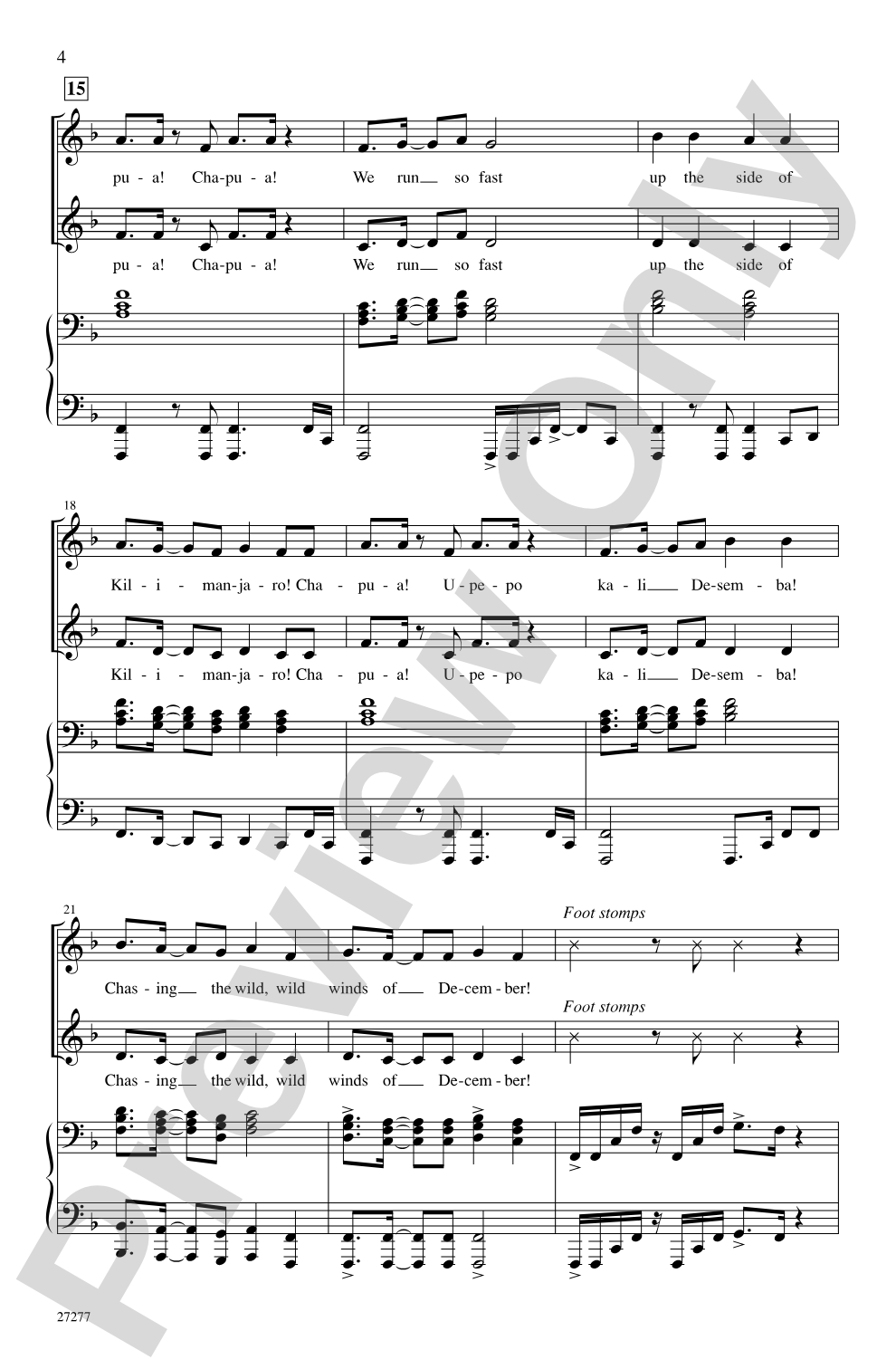

Chapua Kali Desemba (Chasing the Wild Winds of December - Swahili): 2-Part Choral Octavo
(Chasing the Wild Winds of December -- Swahili)
Words by John Parker, music by David Lantz III
Item: 00-PO-0000355
$1.75
Minimum order quantity: 20 copies
Pickup currently not available
Related Items
Chapua Kali Desemba: SoundTrax Digital Audio Download |
$27.99
|
View | |
Chapua Kali Desemba (Chasing the Wild Winds of December - Swahili): SATB Choral Octavo |
$1.75
|
View | |
Chapua Kali Desemba (Chasing the Wild Winds of December - Swahili): 3-Part Mixed Choral Octavo |
$1.75
|
View | |
Chapua Kali Desemba (Chasing the Wild Winds of December - Swahili): SSA Choral Octavo |
$1.75
|
View | |
Chapua Kali Desemba: SATB Choral Octavo |
$1.75
|
View | |
Chapua Kali Desemba: SSA Choral Octavo |
$1.75
|
View | |
Chapua Kali Desemba: 2-Part Choral Octavo |
$1.75
|
View |
Description
An exciting African choral for winter. Combination English/Swahili text describes the joy of children running through the plains of Mount Kilimanjaro "chasing the wild, wild winds of December." The choir responds in rhythmic harmony to a soloist's melodic call. Perform with optional rhythm instruments (parts included in the publication) or SoundTrax CD.


Chapua Kali Desemba (Chasing the Wild Winds of December - Swahili): 2-Part Choral Octavo isn't in MakeMusic Cloud just yet...but it could be. Let us know you'd like to see it, and you'll help shape what comes next. In the meantime, start a free trial and dive into thousands of interactive titles your students can play along with today.
Request This Title
Tell us you want it.
Start Your Free Trial
Explore everything that's ready to play right now.
Sample Audio
1
Audio File
--:--
0:00
0:00
Sample Video
No sample videos found.
Additional Details
Series:
Alfred Choral Designs
Publisher:
Alfred Music
Page Count:
12
SKU:
00-PO-0000355
Instrumentation:
Opt. Percussion
More about this title
About the Composer: David Lantz
David Lantz is a prolific composer whose catalog spans choral works, instrumental arrangements, and educational music for ensemble contexts. His compositions frequently draw on world music traditions and cultural themes, making him a valued resource for directors seeking repertoire that expands choral perspectives beyond Western classical forms.
Why we love this
Lantz captures authentic joy in this piece without relying on stereotypes or surface-level exoticism. The call-and-response structure creates natural energy and engagement, while the bilingual text grounds the winter theme in a real cultural landscape rather than generic seasonal imagery. This works as both a concert piece and a teaching tool for rhythmic responsiveness.
What to expect
Running. The piece captures the physical joy of children moving freely across open landscape, with wind imagery that suggests both the literal Kilimanjaro breeze and the exhilaration of unstructured play. The rhythmic responses create forward momentum that never lets the energy settle.
Who it's for
This piece suits middle school and high school choirs ready to tackle call-and-response textures and simple two-part writing. Younger ensembles benefit from the rhythmic clarity and the soloist role, which offers a focused entry point into leading a choral moment.
How to get the most out of it
- Lean into the rhythmic precision of the choral response. These sections succeed when the ensemble locks in as a unified ensemble, so isolate and drill the harmonic parts until the attacks and releases align cleanly.
- Let the soloist shape the melodic line with natural phrasing and breath. This is a conversational texture, not a unison chorus, so the soloist's vocal personality should shine through.
- If using the optional percussion parts, rehearse them separately first, then layer them in gradually. The rhythm instruments should enhance momentum, not overwhelm the choir's harmonies.
- Connect the English and Swahili text intentionally. Young singers sometimes rush through unfamiliar language; work on clear diction for both languages so the cultural authenticity of the piece comes through in performance.
How to use it
Program this in the first half of a winter concert to establish energy and lightness, or pair it with other world music selections to create a thematic set. The seasonal title makes it natural for December programming, but the cultural specificity and joyful character make it suitable year-round as part of a multicultural concert focus.
Skills your students will build
- Call-and-response singing with rhythmic precision
- Two-part harmonic independence while maintaining ensemble cohesion
- Diction in Swahili and English
- Responding to a soloist's phrasing and tempo without losing rhythmic integrity