
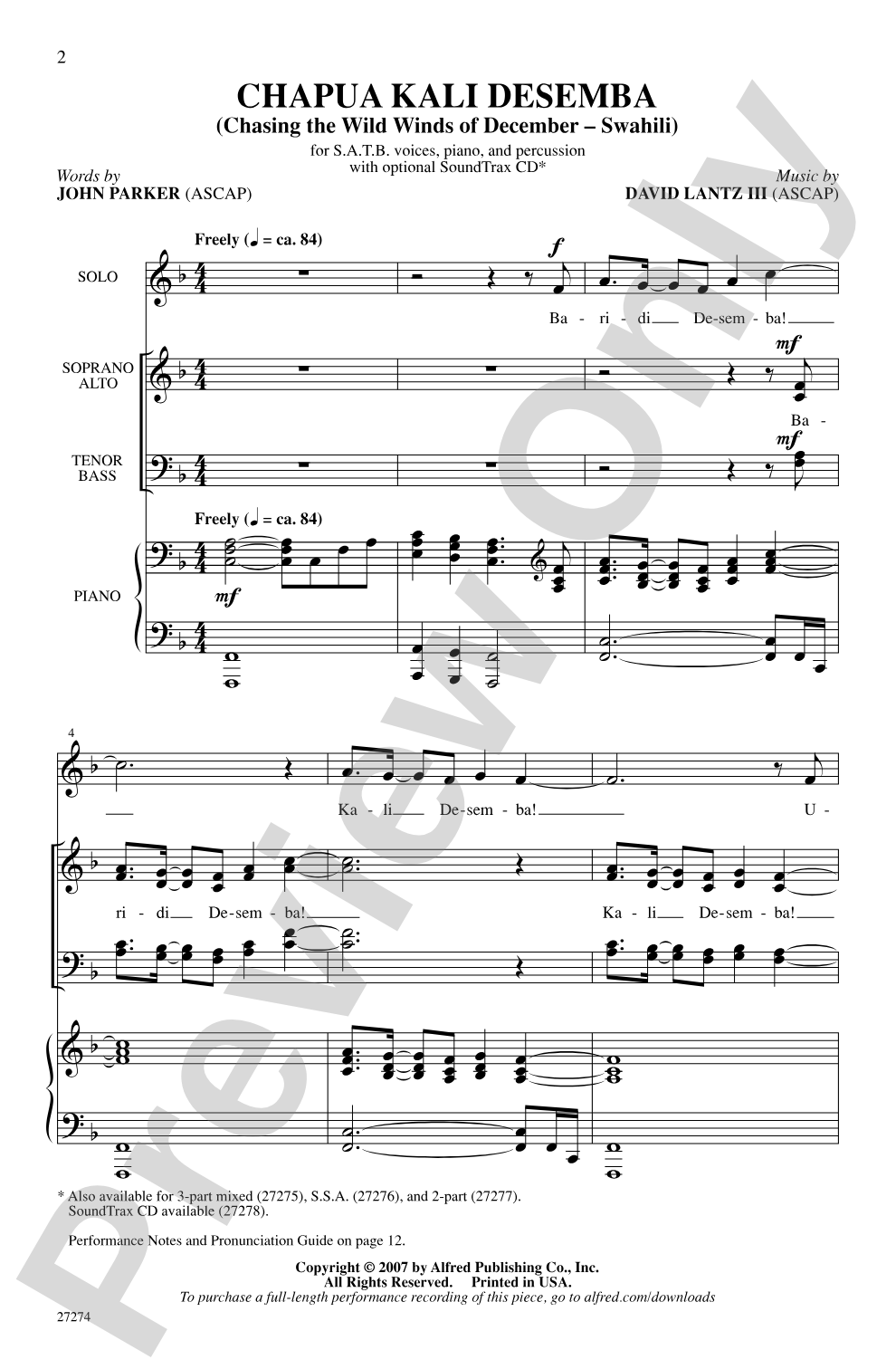

Chapua Kali Desemba (Chasing the Wild Winds of December - Swahili): SATB Choral Octavo
(Chasing the Wild Winds of December -- Swahili)
Words by John Parker, music by David Lantz III
Item: 00-PO-0000352
$1.75
Minimum order quantity: 20 copies
Pickup currently not available
Related Items
Chapua Kali Desemba: SoundTrax Digital Audio Download |
$27.99
|
View | |
Chapua Kali Desemba (Chasing the Wild Winds of December - Swahili): 3-Part Mixed Choral Octavo |
$1.75
|
View | |
Chapua Kali Desemba (Chasing the Wild Winds of December - Swahili): SSA Choral Octavo |
$1.75
|
View | |
Chapua Kali Desemba (Chasing the Wild Winds of December - Swahili): 2-Part Choral Octavo |
$1.75
|
View | |
Chapua Kali Desemba: SATB Choral Octavo |
$1.75
|
View | |
Chapua Kali Desemba: SSA Choral Octavo |
$1.75
|
View | |
Chapua Kali Desemba: 2-Part Choral Octavo |
$1.75
|
View |
Description
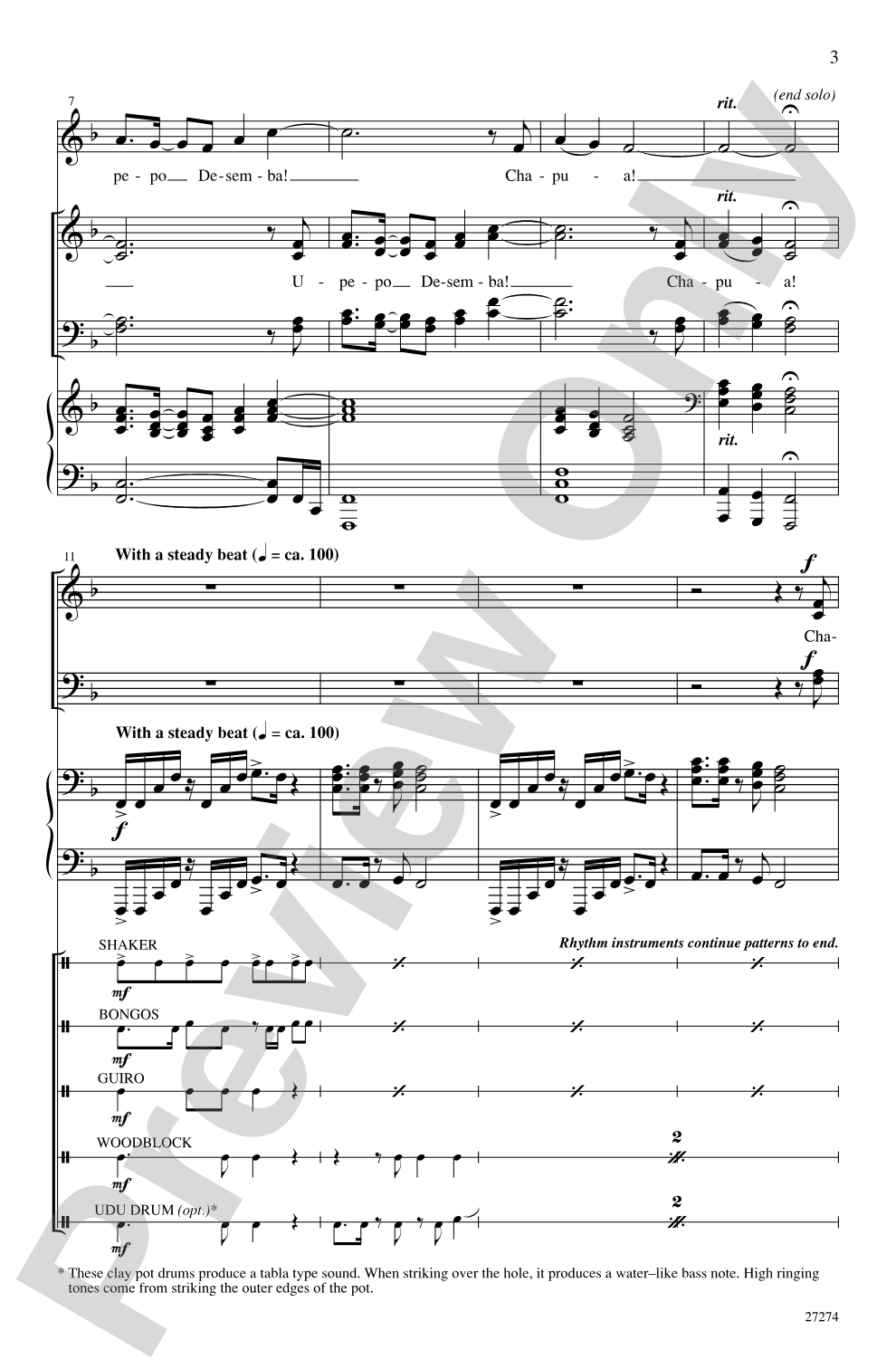
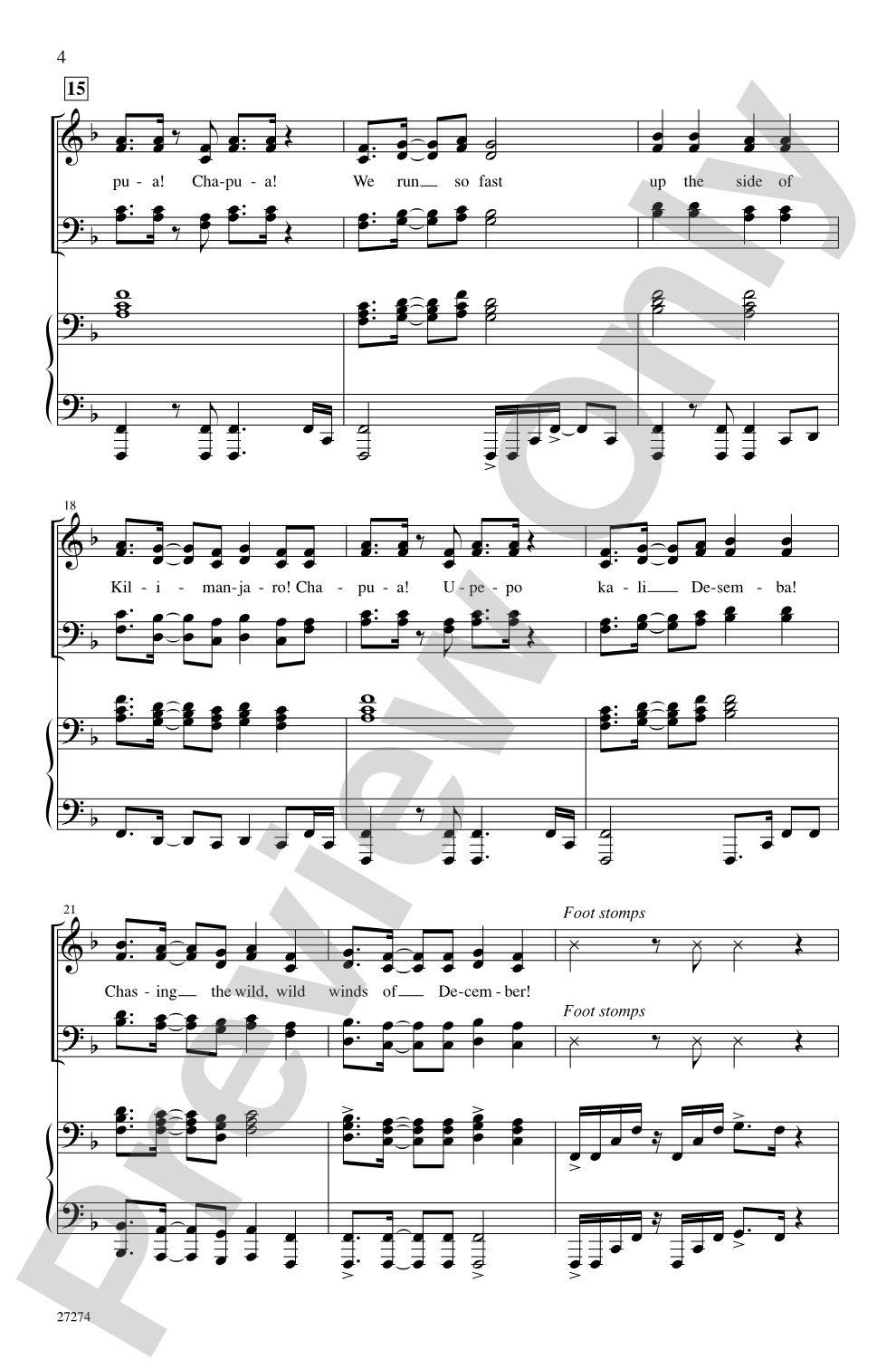
An exciting African choral for winter. Combination English/Swahili text describes the joy of children running through the plains of Mount Kilimanjaro "chasing the wild, wild winds of December." The choir responds in rhythmic harmony to a soloist's melodic call. Perform with optional rhythm instruments (parts included in the publication) or SoundTrax CD.


Chapua Kali Desemba (Chasing the Wild Winds of December - Swahili): SATB Choral Octavo isn't in MakeMusic Cloud just yet...but it could be. Let us know you'd like to see it, and you'll help shape what comes next. In the meantime, start a free trial and dive into thousands of interactive titles your students can play along with today.
Request This Title
Tell us you want it.
Start Your Free Trial
Explore everything that's ready to play right now.
Sample Audio
1
Audio File
--:--
0:00
0:00
Sample Video
No sample videos found.
Additional Details
Series:
Alfred Choral Designs
Publisher:
Alfred Music
Page Count:
12
SKU:
00-PO-0000352
Instrumentation:
Opt. Percussion
More about this title
About the Composer: David Lantz
David Lantz is a prolific composer and arranger whose choral and instrumental works appear regularly in school and community ensembles across North America. His compositions span genres from multicultural and world music settings to contemporary sacred and secular pieces, all marked by accessibility and genuine musicality. Lantz has dedicated his career to creating repertoire that engages young singers while respecting the musical traditions he arranges, making him a trusted voice in choral education.
Why we love this
This piece captures something rare: genuine joy and physical energy in a choral context without resorting to cuteness or condescension. The call-and-response structure between soloist and choir creates real dramatic momentum, while the Swahili text (paired with English) grounds the piece in authentic cultural voice rather than exoticizing it. Winter concert programming often defaults to sacred or classical repertoire, so a secular multicultural piece this energetic and singable gives your choir a chance to shine differently.
What to expect
Bright, energetic, and evocative. The piece conjures the windswept landscape of Mount Kilimanjaro and captures the uninhibited movement of children at play. Moments of rhythmic unison create a sense of collective action, while the soloist's melodic lines soar above, and the winter season backdrop gives the whole work a contemplative counterpoint to its exuberance.
Who it's for
This octavo suits intermediate to advanced SATB choirs seeking winter repertoire with character and cultural authenticity. Singers respond to the narrative and physical energy of the piece, making it engaging for high school choirs, college ensembles, and community groups. The optional percussion parts also make it accessible to musicians without extensive instrumental training.
How to get the most out of it
- Establish a steady pulse during the rhythmic response sections before adding the soloist's melody line. The choir's harmonic precision matters most when they're driving the rhythmic foundation.
- Experiment with optional percussion even if you lack trained percussionists. The parts are included, and rhythm instruments can anchor the ensemble's confidence and add genuine textural color.
- Encourage your soloists to embrace the storytelling quality of the text. The imagery of children chasing December winds invites personality and dynamic shaping in the solo passages.
- Balance the English and Swahili text so both languages carry equal weight and clarity. Diction rehearsals focusing on vowel consistency in each language will improve blend across both sections.
How to use it
Position this as a second-half anchor in a winter concert, after traditional or sacred selections. It provides contrast and vitality while remaining thematically appropriate to the season. The piece also works well in multicultural concert series, global music units, or spring programming that celebrates world traditions.
Skills your students will build
- Call-and-response singing and ensemble listening
- Rhythmic precision in unison and harmony sections
- Diction and pronunciation in English and Swahili
- Dynamic shaping and storytelling through text
- Coordination with optional rhythm section or recorded accompaniment