
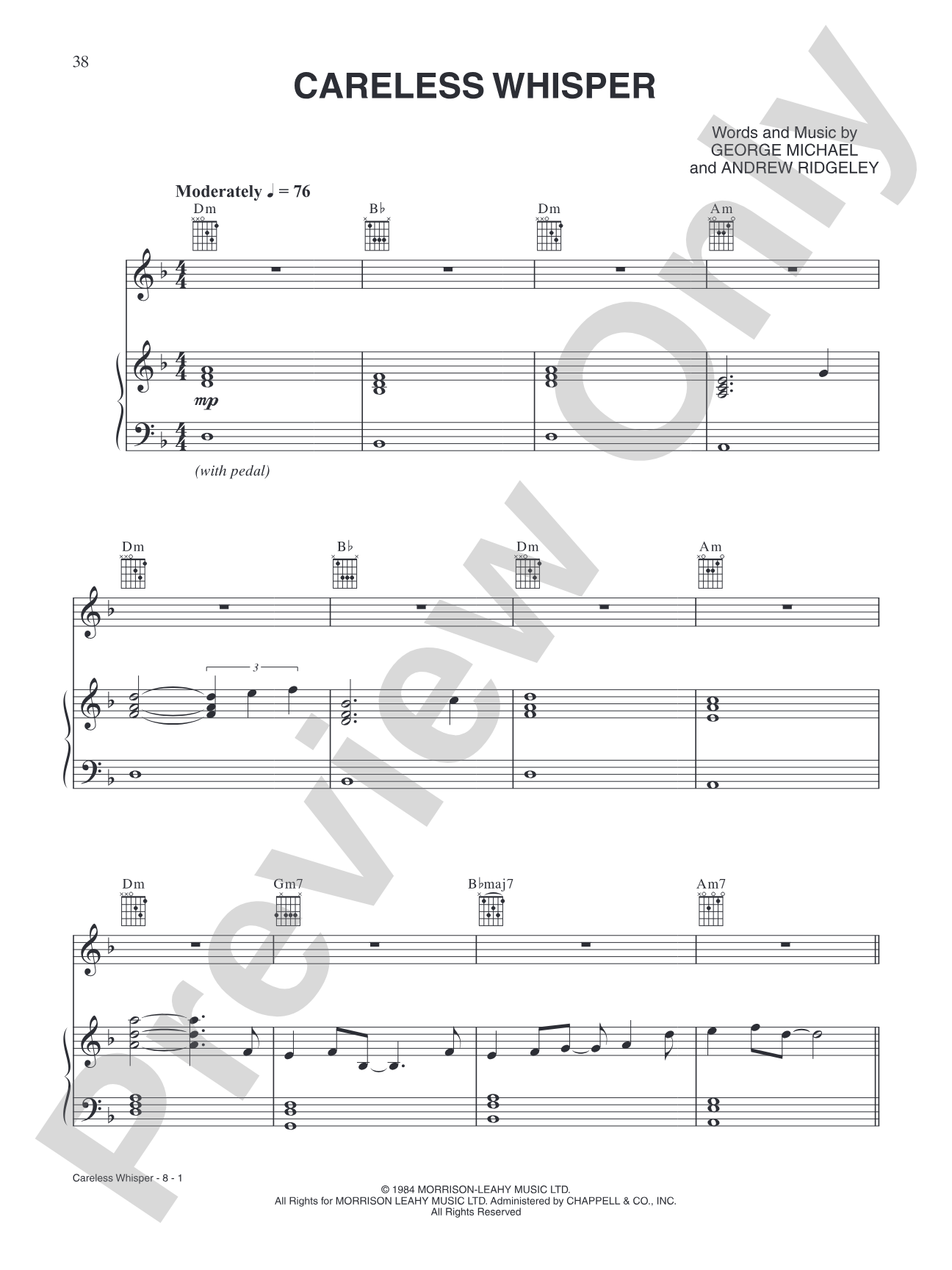
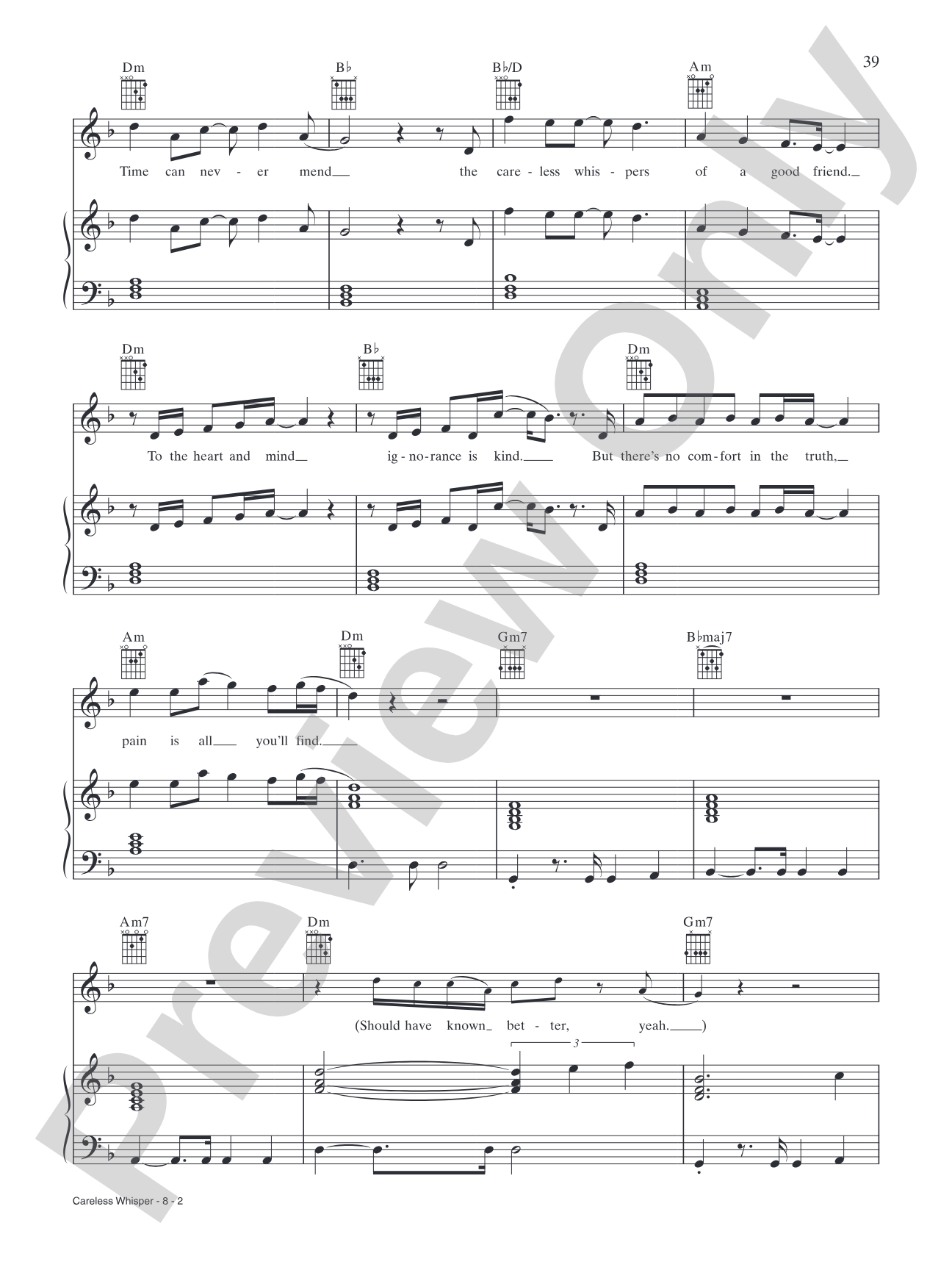

Careless Whisper: Piano/Vocal/Chords
The Biggest Hits * The Greatest Artists (Deluxe Annual Edition)
Item: 00-PS-0010839
$5.99
One moment…
Related Items
Supermassive Black Hole: Piano/Vocal/Chords |
$4.99
|
View | |
15 Step: Piano/Vocal/Chords |
$5.99
|
View | |
Footprints in the Sand: Piano/Vocal/Chords |
$4.99
|
View | |
All Summer Long: Piano/Vocal/Chords |
$5.99
|
View | |
Second Chance: Piano/Vocal/Chords |
$4.99
|
View | |
Whatever You Like: Piano/Vocal/Chords |
$5.99
|
View | |
Let It Rock: Piano/Vocal/Chords |
$5.99
|
View | |
I Hate This Part: Piano/Vocal/Chords |
$5.99
|
View | |
Live Your Life: Piano/Vocal/Chords |
$5.99
|
View | |
Broken: Piano/Vocal/Chords |
$5.99
|
View | |
Stuck With Each Other: Piano/Vocal/Chords |
$4.99
|
View |
Description
Pick up the deluxe annual edition of 2009 Greatest Pop & Rock Hits and play all the best songs of 2009 now! This unique compilation includes songs from every genre, from popular ballads by Jennifer Hudson, Beyoncé, and pop sensations Katy Perry and Kelly Clarkson, to best-selling rock singles such as Nickelback's "Gotta Be Somebody," Bruce Springsteen's "Working on a Dream," and Lifehouse's "Broken." Collect all 32 songs now and learn the best hits of the year! Titles: 1, 2, 3, 4 (Plain White T's) * 15 Step (Radiohead) * All Summer Long (Kid Rock) * Angels on the Moon (Thriving Ivory) * At Last (Beyoncé) * Broken (Lifehouse) * Careless Whisper (Seether) * Crush (David Archuleta) * Decode (Paramore) * Footprints in the Sand (Leona Lewis) * Gotta Be Somebody (Nickelback) * Home Sweet Home (Carrie Underwood) * Hot N Cold (Katy Perry) * I Hate This Part (Pussycat Dolls) * If Today Was Your Last Day (Nickelback) * Let It Rock (Kevin Rudolf) * Live Your Life (T.I. featuring Rihanna) * My Life Would Suck Without You (Kelly Clarkson) * Never Far Away (Jim Brickman featuring Rush of Fools) * One Step at a Time (Jordin Sparks) * Second Chance (Shinedown) * Shuttin' Detroit Down (John Rich) * Stuck with Each Other (Shontelle featuring Akon) * Supermassive Black Hole (Muse) * Thinking of You (Katy Perry) * What About Now (Daughtry) * What Do I Do with My Heart (Eagles) * Working on a Dream (Bruce Springsteen) * What's Right Is Right (Taylor Hicks) * Whatever You Like (T.I.) * You Pulled Me Through (Jennifer Hudson).


Discover MakeMusic Cloud: thousands of interactive titles your students can play along with today.
Sample Audio
No sample audio found.
Sample Video
No sample videos found.
Additional Details
Series:
Greatest Hits
Publisher:
Alfred Music
Page Count:
208
SKU:
00-PS-0010839
More about this title
About the Composer: George Michael
George Michael emerged as one of the defining voices of 1980s pop, first as the keyboardist and primary songwriter of Wham! before establishing himself as a solo artist. His gift for crafting sophisticated pop arrangements and emotionally direct melodies secured his place in the pantheon of contemporary songwriting. "Careless Whisper," composed in collaboration with Andrew Ridgeley, became one of the most recognizable songs in popular music history, showcasing Michael's ability to marry accessible melody with distinctive harmonic sensibility.
Why we love this
The arrangement captures what made 1980s and 1990s pop production distinctive: clean harmonic movement, singable vocal lines, and enough rhythmic clarity for accompanists at various levels. Young pianists find the chord progression logical and pianistic without feeling dated, while singers connect to a melody that sits naturally in the voice. This is the kind of standard that teaches genuine musicianship through repertoire people actually want to perform.
What to expect
The piece carries an understated sophistication. The melody unfolds with restraint, emphasizing introspection and intimate expression rather than display. Harmonically, it has the cool precision of 1980s production, yet the emotional core remains unmistakably human.
Who it's for
Pianists and singers preparing audition material or recital repertoire will find this arrangement straightforward and reliable. Teachers working with intermediate to advanced students can use it as a bridge between classical techniques and contemporary song interpretation. It's equally useful for vocalists developing microphone presence and musicians learning to accompany in a popular music context.
How to get the most out of it
- Shape the intro with restraint. The saxophone is the main voice early on; keep the piano accompaniment transparent and rhythmically locked rather than filling space with embellishments.
- Balance the vocal line against the piano voicings. The melody needs breathing room; avoid playing block chords that compete with the singer's phrasing.
- Pay attention to the song's dynamic architecture. The verse sits intimately, then the chorus opens; use dynamics to support that arc rather than playing everything at one level.
- Lock the rhythm section if this is being performed with bass and drums. The groove is straightforward but requires precision to feel effortless.
How to use it
This works as a solo recital selection, a duet for piano and voice, or the centerpiece of a popular song program that draws from multiple decades. It pairs naturally with other Michael compositions or with standards from the same era, allowing singers and pianists to explore how contemporary songwriting engages with timeless melodic principles.
Skills your students will build
- Accompaniment voicing and texture in pop and contemporary contexts
- Balancing melody and harmony within a single musical line
- Phrasing and dynamic shaping across verse-chorus song form
- Reading chord symbols and realizing them idiomatically on piano
- Coordinating with singers and other ensemble members in popular music