
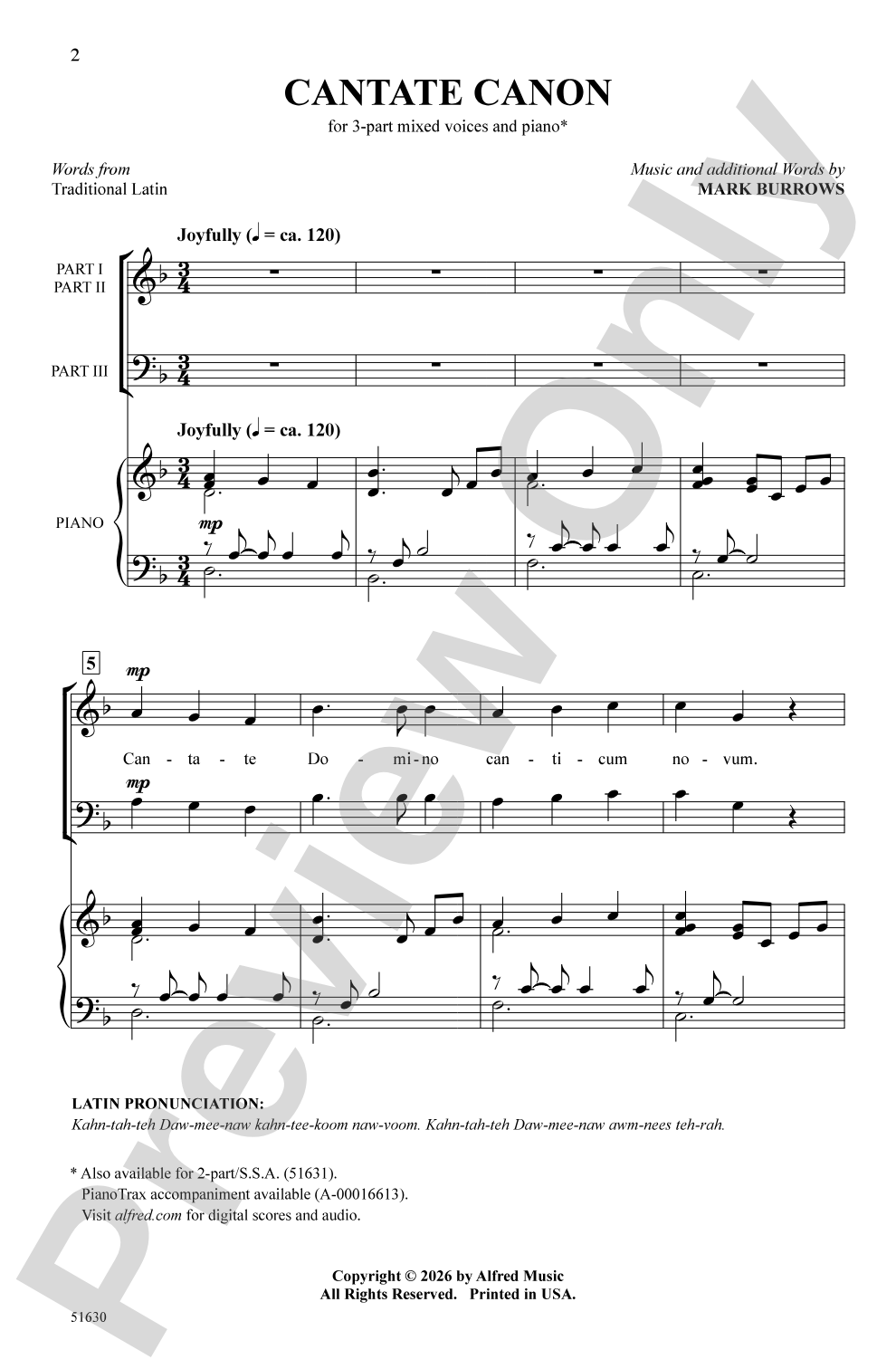
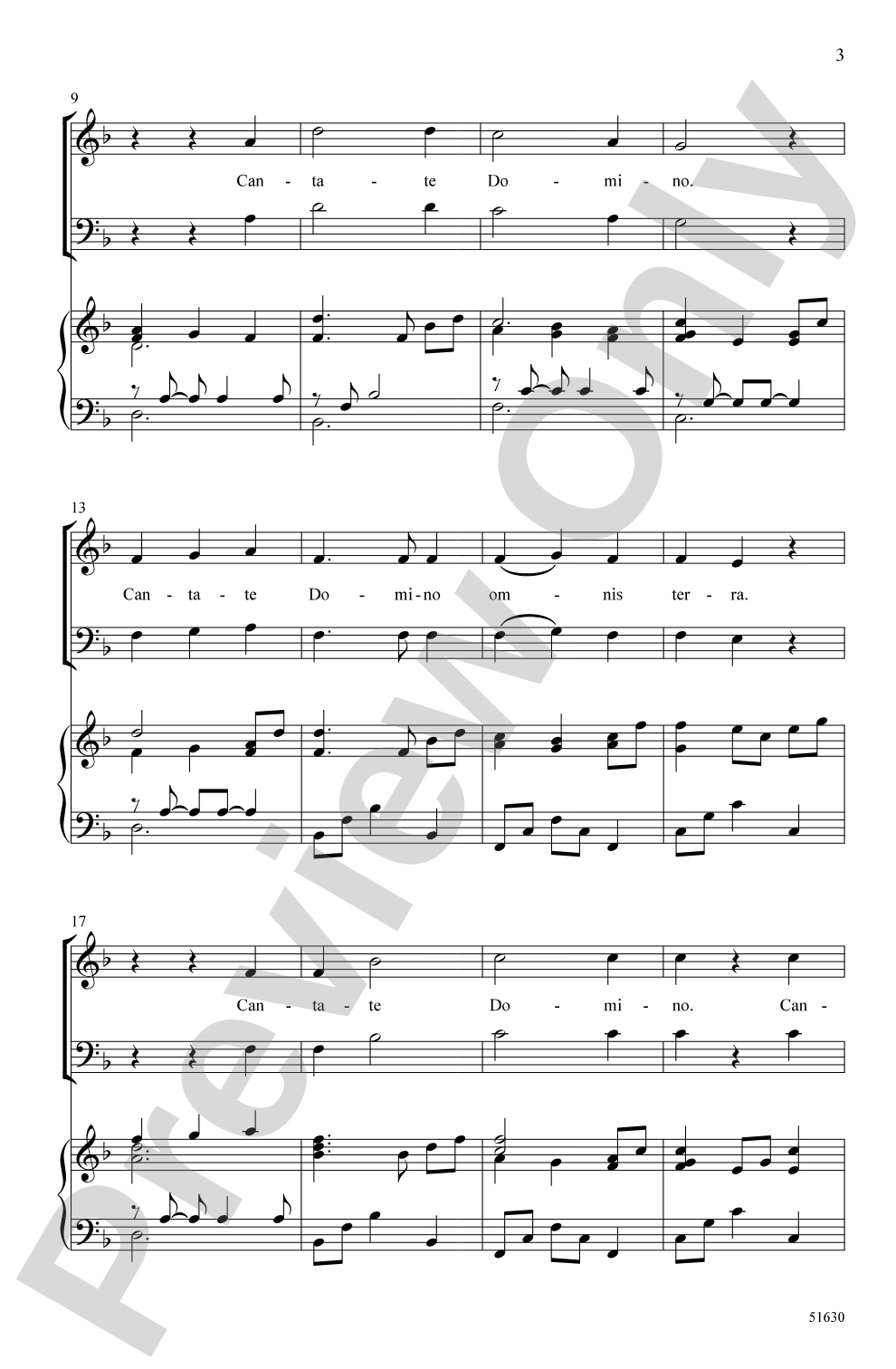
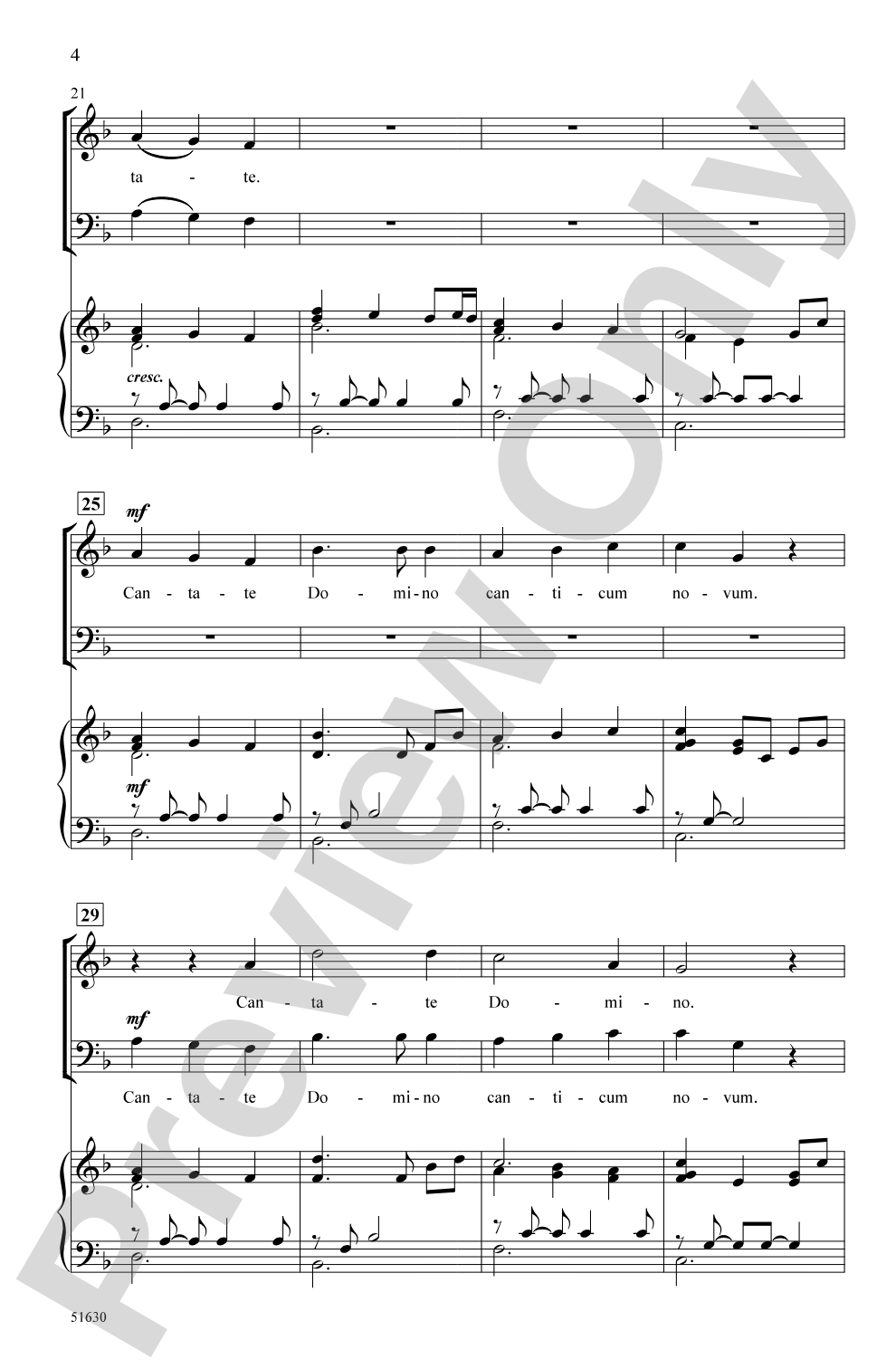

Cantate Canon: 3-Part Mixed Choral Octavo
By Mark Burrows
Item: 00-PO-0007794

$2.50
Minimum order quantity: 20 copies
Pickup currently not available
Description
Using the traditional "Cantate Domino" text, this piece is ideal for developing ensembles. The stackable melody spans a conservative six-note range that works well for changing voices, and an additive form makes part singing intuitive. In the middle, a lyrical English section offers contrast before returning to the main theme and building to a spirited, forte conclusion. Effective any time of year, but especially useful at the start of school.


Don't just read it, hear it, play along with it, and watch your students grow with it. In MakeMusic Cloud, Cantate Canon: 3-Part Mixed Choral Octavo comes alive with professional accompaniment, adjustable tempo, and built-in practice tools that turn solo practice into real progress.
Open in the Player
Jump straight in and assign it today.
Start Your Free Trial
Open this title and explore the full library in minutes.
Sample Audio
1
Audio File
--:--
0:00
0:00
Sample Video
Additional Details
Series:
Alfred Choral Designs
Publisher:
Alfred Music
Page Count:
12
SKU:
00-PO-0007794
More about this title
About the Composer: Mark Burrows

Mark Burrows brings together composition, conducting, and classroom experience in his approach to choral writing. Educated at Southern Methodist University (music education) and Texas Christian University (conducting), he has built a catalog published across major music houses with works regularly appearing on state and festival competitions. His commissions span the full spectrum of choral ensembles, from children's choirs to adult and intergenerational groups, reflecting his deep understanding of what different singers need.
Based in Fort Worth, Texas, Burrows currently directs Children's Ministries at FUMC, Fort Worth, a role that keeps him grounded in the practical realities of teaching singers of all ages and abilities. His output of multiple commissions annually speaks to the trust directors place in his ability to write music that works in real rehearsal rooms.
Why we love this
Burrows has designed this piece specifically for the moment when your singers are still finding their footing with part independence. The stackable melody and additive form remove the mystery from how voices fit together, while the English language section in the middle gives everyone a familiar breath before the Latin returns and builds momentum. It's the kind of writing that makes your job easier because the music itself teaches ensemble singing.
What to expect
There's a buoyant quality to this piece, grounded in the familiar text but lifted by the accessible range and clear voice leading. The English section offers a lyrical reprieve before the return to Latin builds energy toward a spirited, confident finish. Singers feel capable singing it, which translates to confident performances.
Who it's for
This piece belongs in any developing choir working toward independence in part singing. It's especially effective in middle school or early high school settings where voices are still adjusting, and it serves just as well in community or church choirs beginning their first explorations of three-part singing. Singers benefit from its approachability while directors appreciate writing that doesn't oversimplify the musical ideas.
How to get the most out of it
- Shape the additive form deliberately in rehearsal by building each section one voice at a time, then combining them. Let singers hear how each part contributes to the whole before asking them to manage all three lines together.
- Treat the English section as a textural contrast, not just a relief. The shift away from Latin gives you an opportunity to adjust balance and articulation, preparing the return to the main theme.
- Anchor the forte conclusion with your lower voices (the third part), which will stabilize the chord progressions while sopranos and altos navigate the melody with confidence.
- Use the recorded accompaniment to establish tempo and harmonic foundation, especially early in rehearsal when singers are still learning their parts.
How to use it
Open a concert with this piece in September or October to establish early confidence in your ensemble's ability to sing in parts. It also works beautifully as a bridge between unison and more complex part singing, placing it strategically before introducing more challenging three-part repertoire. Its festive conclusion makes it equally at home closing a concert or serving as a solid choice for competition or festival contexts.
Skills your students will build
- Part independence within a stackable melody structure
- Balance of three voices in mixed voicing (SAB)
- Confidence singing in Latin
- Textural contrast through language shift (Latin to English)
- Building dynamic shape from piano to forte in ensemble
- Additive form comprehension and execution