

Cantate Canon: 2-Part/SSA Choral Octavo
By Mark Burrows
Item: 00-PO-0007795

$2.50
Minimum order quantity: 20 copies
Pickup currently not available
Description
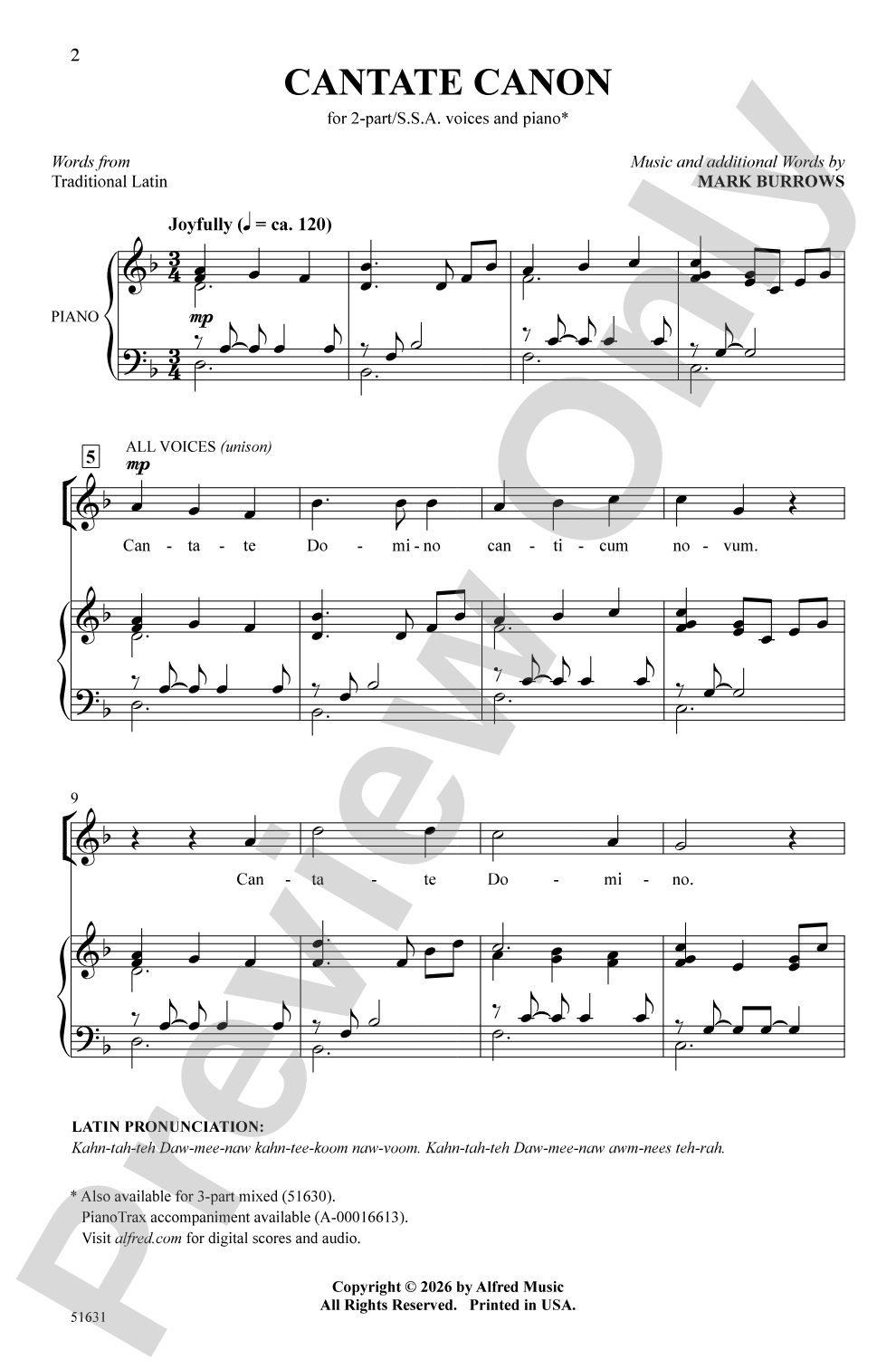
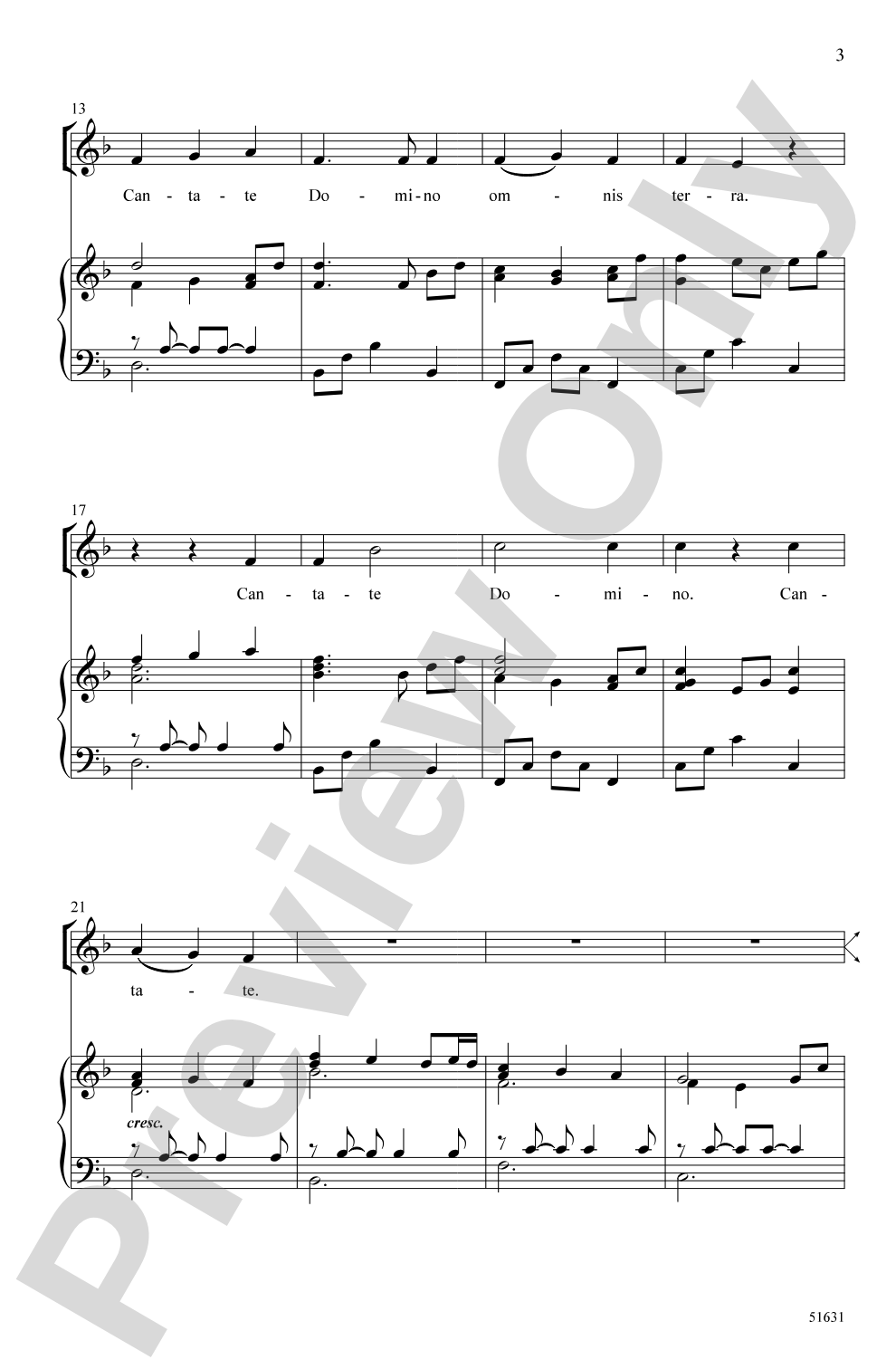
Using the traditional "Cantate Domino" text, this piece is ideal for developing ensembles. The stackable melody spans a conservative six-note range that works well for changing voices, and an additive form makes part singing intuitive. In the middle, a lyrical English section offers contrast before returning to the main theme and building to a spirited, forte conclusion. Effective any time of year, but especially useful at the start of school.


Don't just read it, hear it, play along with it, and watch your students grow with it. In MakeMusic Cloud, Cantate Canon: 2-Part/SSA Choral Octavo comes alive with professional accompaniment, adjustable tempo, and built-in practice tools that turn solo practice into real progress.
Open in the Player
Jump straight in and assign it today.
Start Your Free Trial
Open this title and explore the full library in minutes.
Sample Audio
1
Audio File
--:--
0:00
0:00
Sample Video
Additional Details
Series:
Alfred Choral Designs
Publisher:
Alfred Music
Page Count:
12
SKU:
00-PO-0007795
More about this title
About the Composer: Mark Burrows
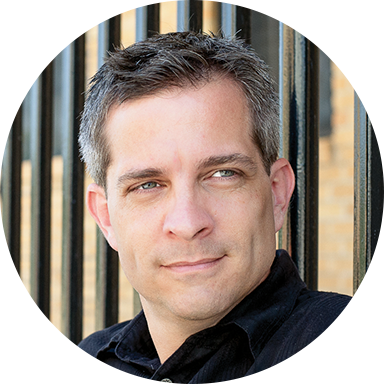
Mark Burrows composes for ensembles across the spectrum, from children's choirs to adult groups, and his works appear regularly on state and festival lists. He holds degrees in music education from Southern Methodist University and in conducting from Texas Christian University, and he currently directs children's music ministries at FUMC in Fort Worth. Burrows receives multiple commissions annually and has established himself as a trusted voice in accessible, pedagogically sound choral writing.
Based in Fort Worth, Texas, Burrows combines his work as a composer and conductor with his commitment to music education and community music-making. His catalog spans major publishers, reflecting the widespread adoption of his pieces in school and church settings.
Why we love this
Cantate Canon solves the real challenge of starting the year with a piece that builds confidence without oversimplifying the musical experience. The additive form means your singers feel the logic of the harmonies as they build, and the conservative range acknowledges the reality of September voices while still offering musicality and structure. You get a piece that works for mixed-age choirs and sounds genuinely polished by the forte finish.
What to expect
The piece opens with a straightforward, singable melody that invites participation and immediately establishes the liturgical text as something direct and grounded. When the English section arrives, the mood softens into reflection before snapping back to energy and arriving at that spirited, full-voiced finale that reminds everyone why part singing matters.
Who it's for
Directors building new ensembles or transitioning singers into part work will find this piece especially useful. Its six-note range accommodates changing voices without restriction, and the two-part and SSA voicings let you cast singers where they sit at the start of the year. This octavo rewards groups at the developing stage while remaining musically engaging.
How to get the most out of it
- Introduce the stackable melody to your full group first, then add parts gradually so singers understand how each layer fits into the harmonic scheme.
- Use the English text section as a space to refocus the ensemble on blend and supported tone; the lyrical character naturally encourages a lighter approach than the opening theme.
- Shape the final section with dynamic clarity: the return to the main theme should feel like a confident recall before the forte conclusion builds momentum.
How to use it
Program this early in the fall concert or festival slot, where it functions as both a warm-up for the ensemble and an engaging opener for your audience. Its liturgical text and additive structure also make it suitable for worship contexts, sacred concerts, or ecumenical festivals, offering musical substance without demanding advanced technique.
Skills your students will build
- Part independence and harmonic listening through additive melody construction
- Voice part security in SSA and 2-part voicing
- Stylistic contrast between Latin text and English sections
- Ensemble blend and supported tone in a fort dynamic conclusion
- Understanding of canon and round structures