

Camptown Races: SSA Choral Octavo
Words and music by Stephen Foster / arr. Jay Althouse
Item: 00-PO-0001813
$1.85
Minimum order quantity: 20 copies
Pickup currently not available
Description
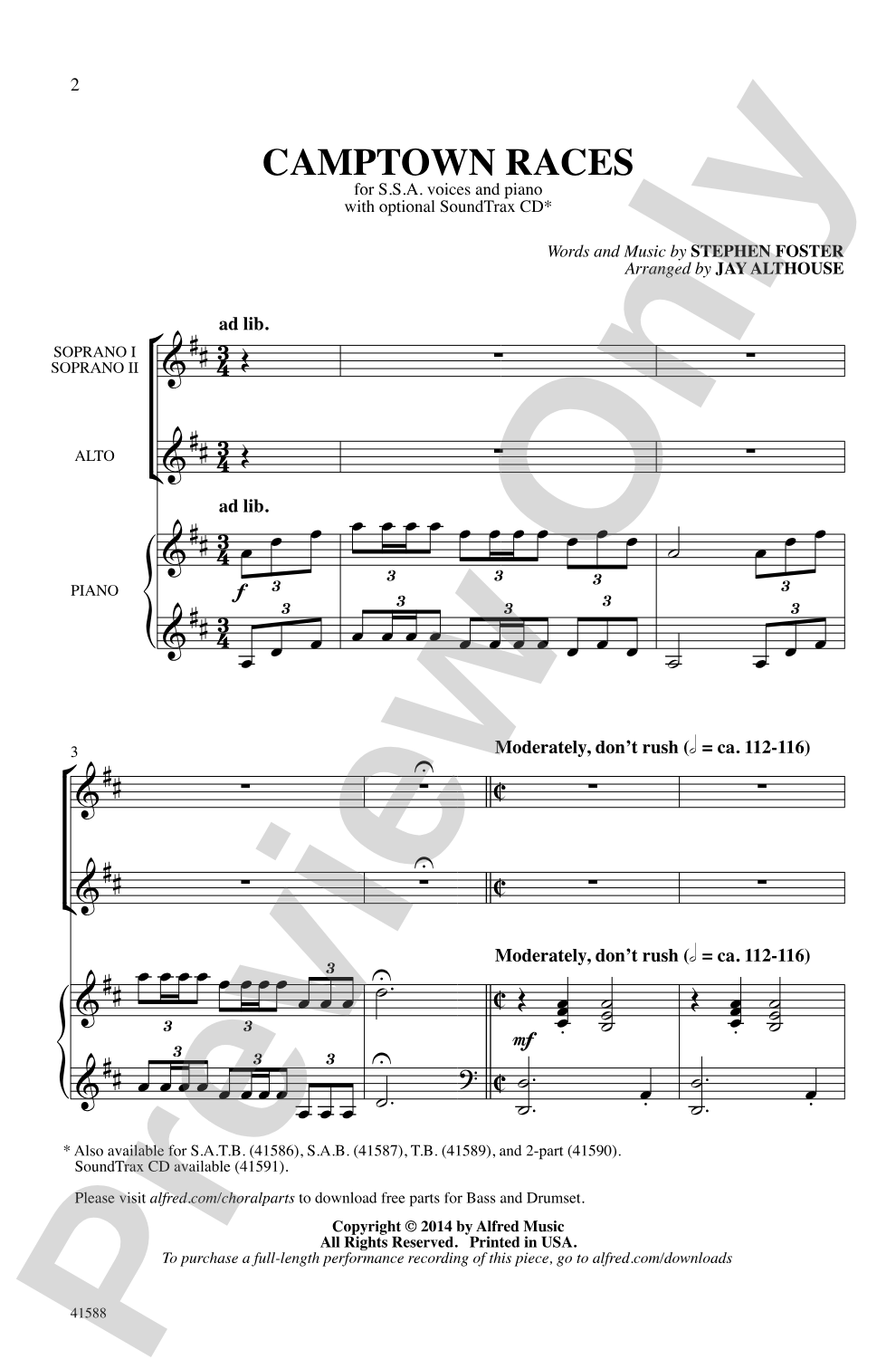
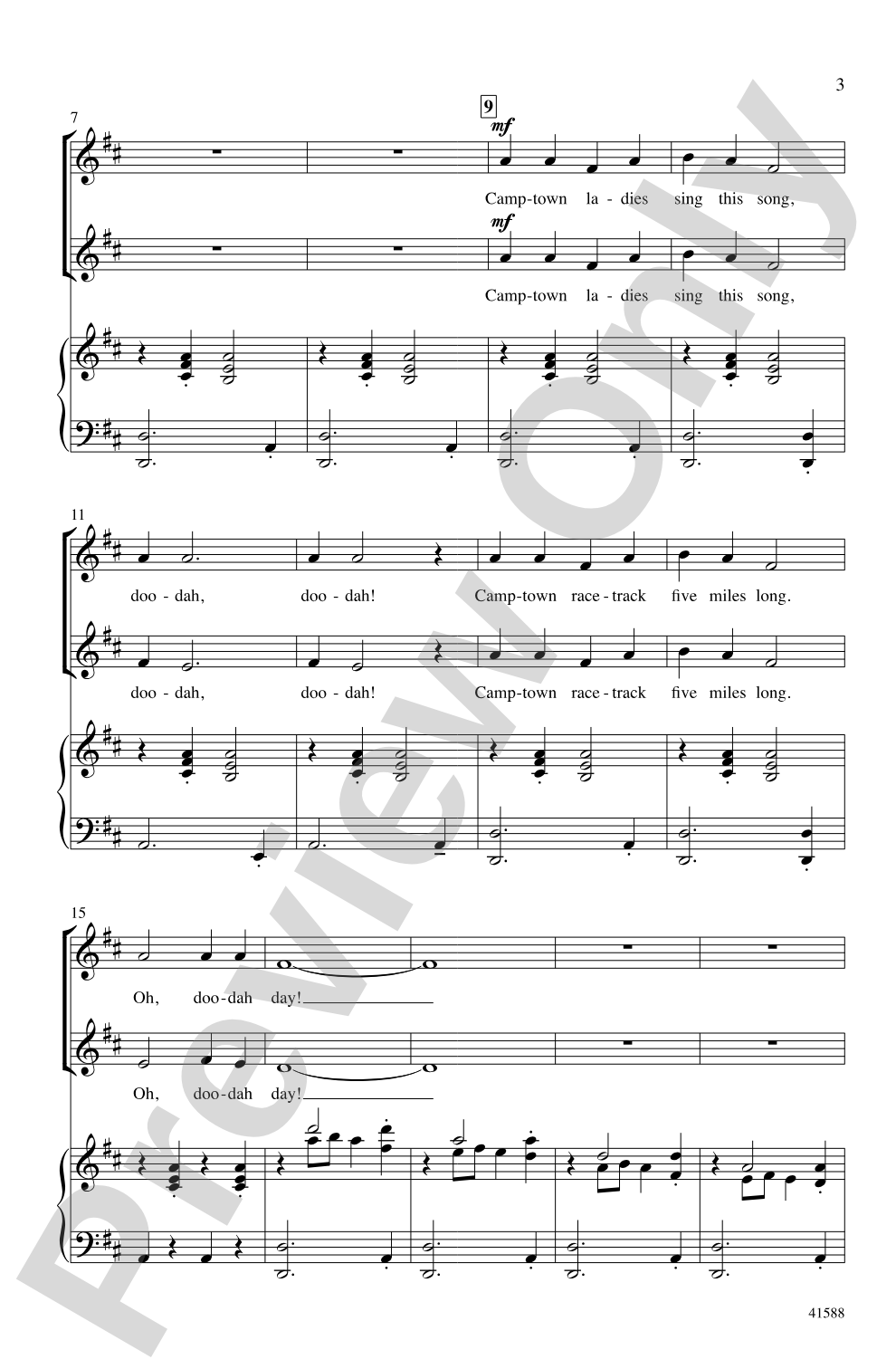
Jay's particularly folky accompaniment features a jaunty piano with optional bass and percussion (available free at alfred.com/choralparts). Fully arranged with new harmonic and rhythmic content on each subsequent verse. Rollicking and fun, "doo-dah day!"


Camptown Races: SSA Choral Octavo isn't in MakeMusic Cloud just yet...but it could be. Let us know you'd like to see it, and you'll help shape what comes next. In the meantime, start a free trial and dive into thousands of interactive titles your students can play along with today.
Request This Title
Tell us you want it.
Start Your Free Trial
Explore everything that's ready to play right now.
Sample Audio
1
Audio File
--:--
0:00
0:00
Sample Video
No sample videos found.
Additional Details
Series:
Alfred Choral Designs
Publisher:
Alfred Music
Page Count:
12
SKU:
00-PO-0001813
More about this title
About the Composer: Stephen Foster
Stephen Foster (1826-1864) shaped American popular music during the 19th century, composing nearly 200 songs that became the foundation of the nation's musical identity. His gift for melody and his ability to write for voice made his work accessible across all social classes, from parlor singers to minstrel performers. Foster's songs continue to endure because they capture genuine emotional territory with straightforward, memorable tunes.
Why we love this
Jay Althouse's arrangement strips away the minstrel show baggage and returns 'Camptown Races' to what it fundamentally is: a joyride of a song with irresistible rhythmic momentum. The evolving harmonies and percussion textures across verses keep the piece fresh through repeats, making it genuinely fun to sing rather than just novelty material. This works beautifully for choirs looking for repertoire that energizes an audience without sacrificing musicality.
What to expect
Rollicking, mischievous energy with an American folk sensibility. The piece bounces with optimism and warmth, inviting the audience into its playful spirit without winking at them. There's a genuine brightness here that makes singers and listeners alike want to move.
Who it's for
Choirs seeking accessible, crowd-pleasing secular material that works for festival and contest settings. This arrangement suits choirs of intermediate skill level who can execute clean attacks, manage the optional instrumentation, and maintain energy through a straightforward harmonic framework.
How to get the most out of it
- Lean into the rhythmic precision of the piano accompaniment. The jaunty accompaniment only lands properly when the choir locks its attacks and releases with the keyboard, so mark every entrance and cutoff in rehearsal.
- Balance the optional bass and percussion against the choral line. These parts add color and drive, but the melody should remain the focal point. Adjust your mix in run-throughs to keep the accompaniment supportive rather than overwhelming.
- Treat each verse as a small dramatic arc. Since the arrangement adds new harmonic and rhythmic content with each repeat, highlight those changes in your phrasing and dynamic shaping so the audience hears the arrangement's development.
- Keep the energy consistent from first note to final 'doo-dah.' This kind of material can drift into caricature if singers perform it ironically. Commit fully to the infectious spirit and let the humor land naturally.
How to use it
Program this as an energizer in the second half of a concert, especially when you need to shift the mood toward joy and levity after deeper repertoire. It pairs naturally with other Foster arrangements or American folk material, and its accessibility makes it an ideal closer for a pops or family concert. The optional instrumentation also makes it flexible for different performance contexts.
Skills your students will build
- Rhythmic precision and ensemble alignment with accompaniment
- SSA voice leading and harmonic independence across verse variations
- Sustained energy and focus through repeated material with evolving arrangement
- Balance between melody and optional instrumental parts