
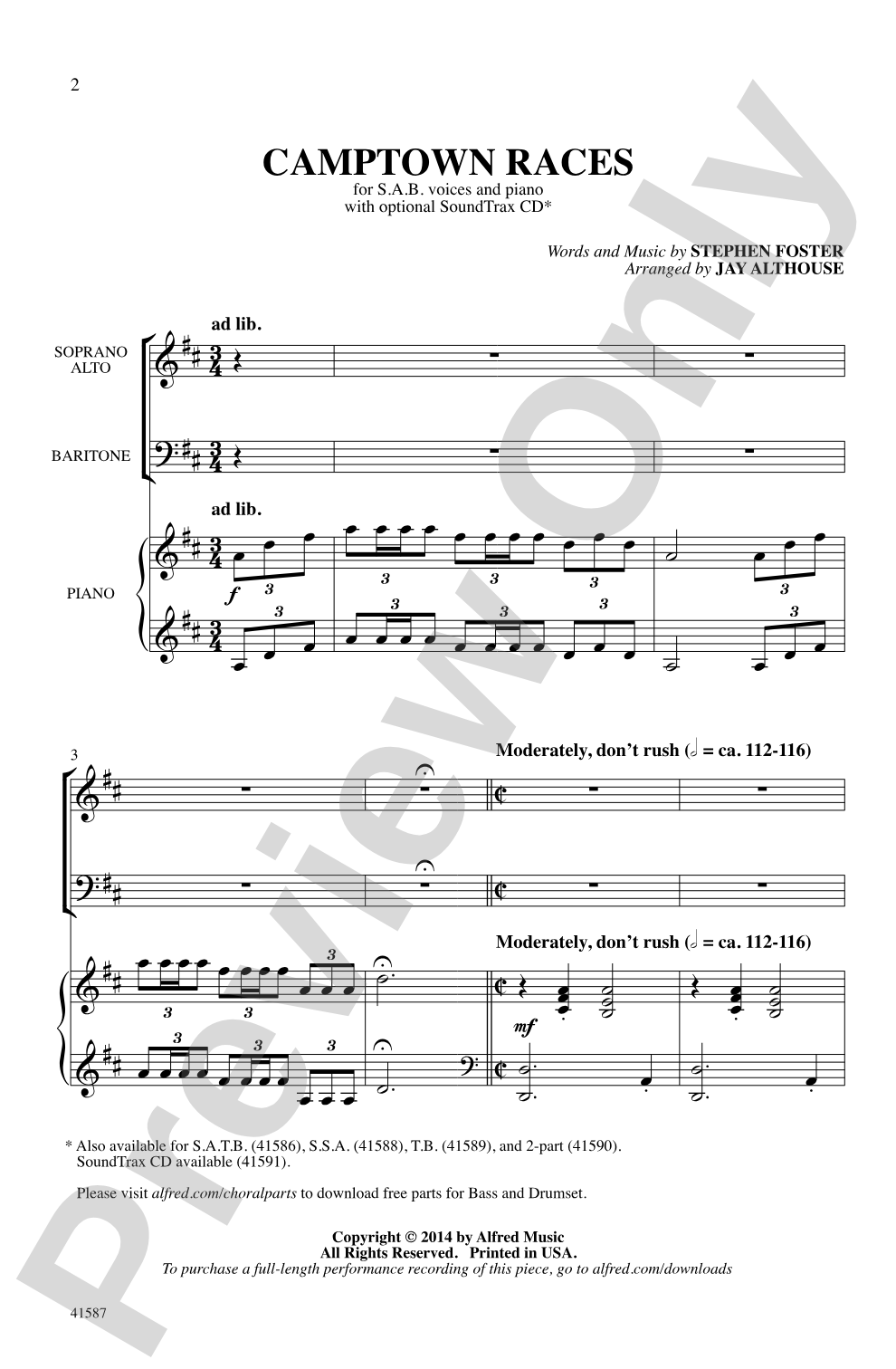

Camptown Races: SAB Choral Octavo
Words and music by Stephen Foster / arr. Jay Althouse
Item: 00-PO-0001812

$1.85
Minimum order quantity: 20 copies
Pickup currently not available
Description
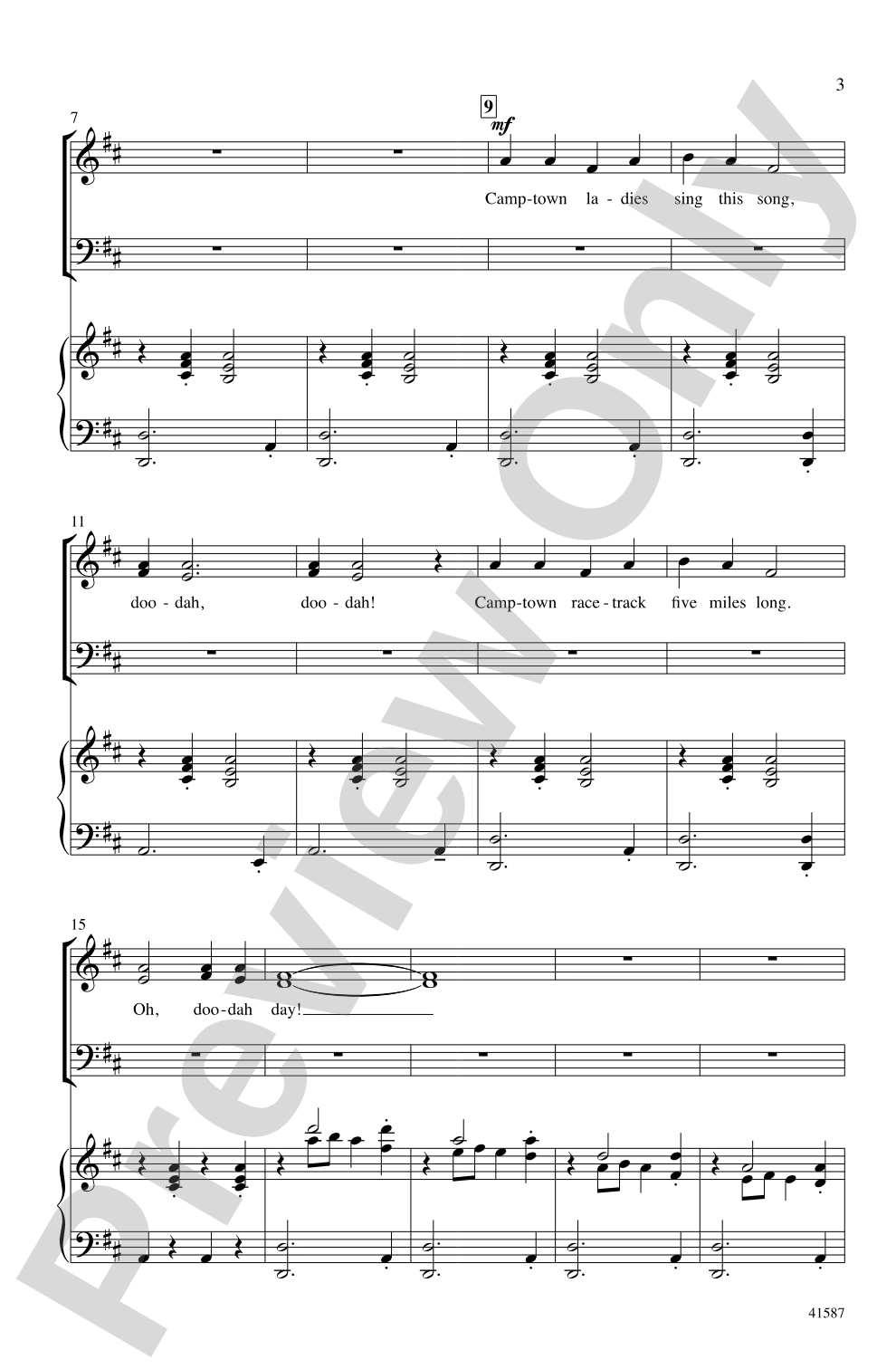
Jay's particularly folky accompaniment features a jaunty piano with optional bass and percussion (available free at alfred.com/choralparts). Fully arranged with new harmonic and rhythmic content on each subsequent verse. Rollicking and fun, "doo-dah day!"


Don't just read it, hear it, play along with it, and watch your students grow with it. In MakeMusic Cloud, Camptown Races: SAB Choral Octavo comes alive with professional accompaniment, adjustable tempo, and built-in practice tools that turn solo practice into real progress.
Open in the Player
Jump straight in and assign it today.
Start Your Free Trial
Open this title and explore the full library in minutes.
Sample Audio
1
Audio File
--:--
0:00
0:00
Sample Video
No sample videos found.
Additional Details
Series:
Alfred Choral Designs
Publisher:
Alfred Music
Page Count:
12
SKU:
00-PO-0001812
More about this title
About the Composer: Stephen Foster
Stephen Foster (1826-1864) composed nearly 200 songs that became the foundation of American popular music. His melodies were so immediately singable and memorable that they spread across the country through parlor singers, minstrel troupes, and eventually concert halls, shaping what audiences understood as American song.
Why we love this
Althouse's arrangement brings fresh harmonic and rhythmic ideas to each verse, transforming a familiar melody into something that keeps choirs engaged rather than coasting on recognition. The optional bass and percussion parts give you flexibility to match your ensemble's instrumentation, and the jaunty piano accompaniment sits perfectly between folk authenticity and polished choral sound.
What to expect
Rollicking and homespun, like a singalong that someone with real musical craft has polished without losing its playful spirit. The harmony dances around the familiar melody in unexpected ways, and the piano accompaniment has enough personality to keep players engaged too.
Who it's for
SAB choirs looking for a piece that audiences recognize instantly but that still offers arranging sophistication and performance satisfaction. It works especially well for ensembles that include changing voices or mixed-age singers who benefit from a straightforward three-part texture.
How to get the most out of it
- Shape each verse differently. Since the harmony and rhythm evolve with each repetition, encourage singers to listen to how the accompaniment changes and respond with fresh energy rather than repeating the same interpretation.
- Balance the optional bass and percussion carefully so they enhance the folk character without overwhelming the voices. Try running a rehearsal with and without these parts to find what serves your choir.
- Keep the text clear and energetic. The "doo-dah day" refrain needs crisp articulation and a grin; it's meant to bounce, not drag.
- Lock the SAB voicing by section. With only three parts, blend matters immediately; uneven balance between soprano, alto, and bass will expose gaps where the piano can't fill in.
How to use it
Place this where you want an audience smile and immediate connection. It's ideal for community concerts, pops programs, or any set where you're building toward something heavier and need a moment of unashamed fun. The 12-page length makes it substantial enough to anchor a shorter program section without overshadowing surrounding repertoire.
Skills your students will build
- Tracking harmonic and rhythmic variations across multiple verses
- Blending SAB voicing with clear part independence
- Singing with infectious rhythmic precision while maintaining textual clarity
- Following a piano accompaniment that evolves rather than repeats
- Performing with character appropriate to folk idiom without sacrificing musicality