

Benedictus: SSA Choral Octavo
By Ruth Morris Gray
Item: 00-PO-0005948
$2.05
Minimum order quantity: 20 copies
Pickup currently not available
Related Items
Benedictus: SATB Choral Octavo |
$2.05
|
View | |
Benedictus: SAB Choral Octavo |
$2.05
|
View | |
Benedictus: TTB Choral Octavo |
$2.05
|
View | |
Benedictus: SATB Choral Octavo |
$2.05
|
View | |
Benedictus: SAB Choral Octavo |
$2.05
|
View | |
Benedictus: SSA Choral Octavo |
$2.05
|
View | |
Benedictus: TTB Choral Octavo |
$2.05
|
View |
Description
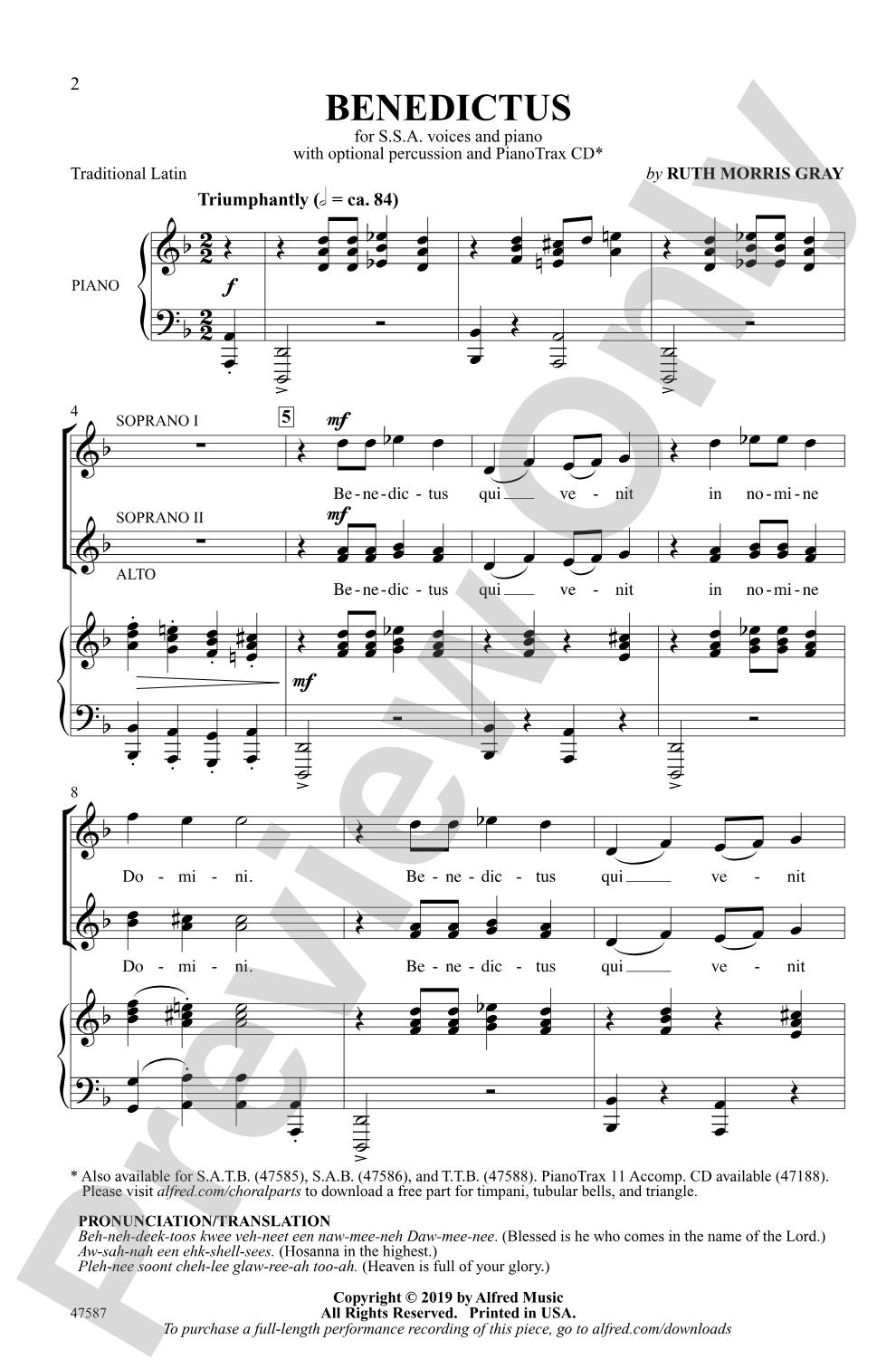
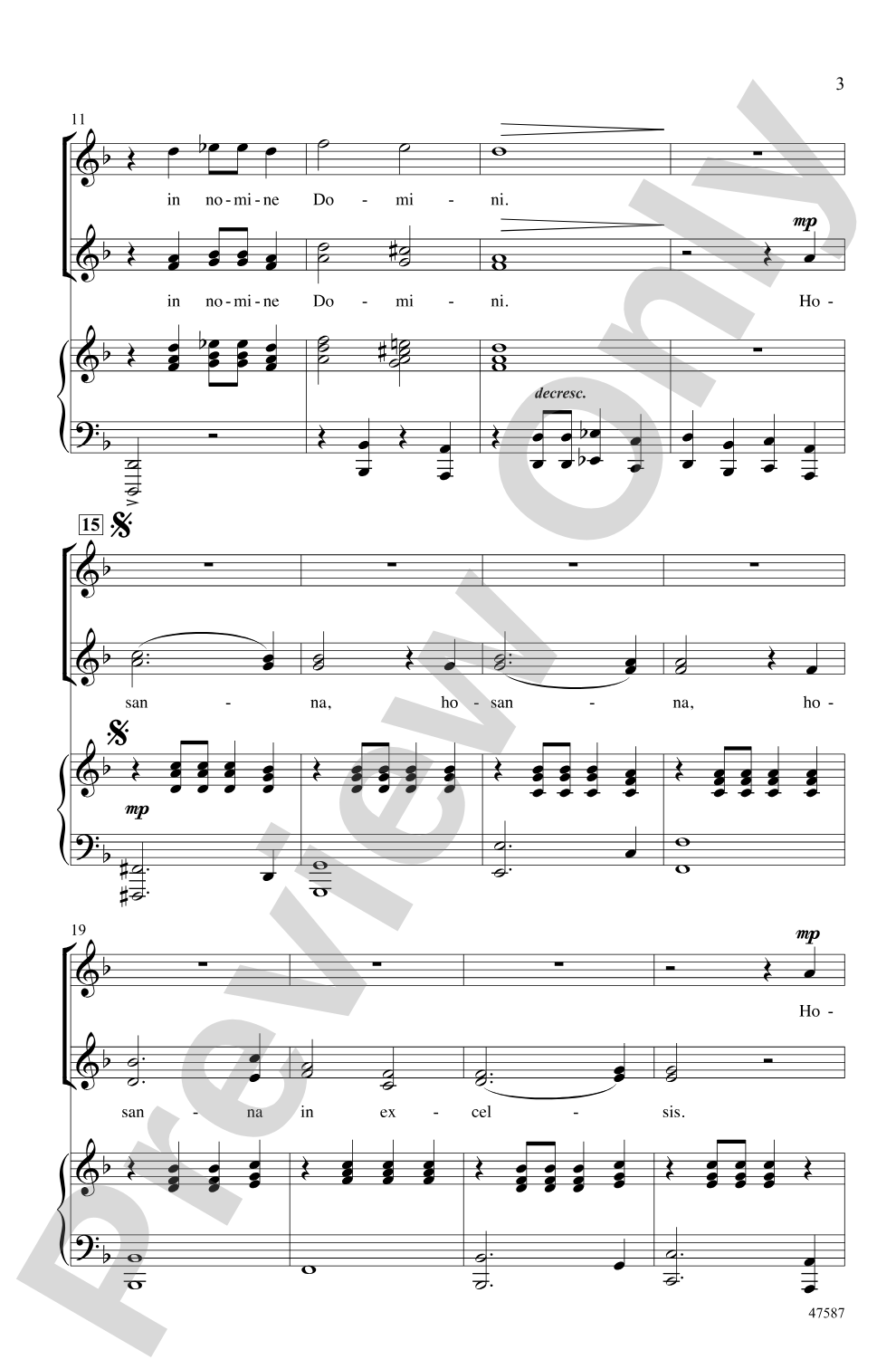
A bombastic and stately theme, based on stacked modal harmonies, gives a triumphant air to this contemporary setting of the traditional Latin text. Hushed B and C sections offer contrast before recapitulating the grandiose opening and an even fuller final cadence. Timpani, tubular bells, and triangle (which may be downloaded for free) may be performed by a single percussionist and add to the riveting drama.


Benedictus: SSA Choral Octavo isn't in MakeMusic Cloud just yet...but it could be. Let us know you'd like to see it, and you'll help shape what comes next. In the meantime, start a free trial and dive into thousands of interactive titles your students can play along with today.
Request This Title
Tell us you want it.
Start Your Free Trial
Explore everything that's ready to play right now.
Sample Audio
1
Audio File
--:--
0:00
0:00
Sample Video
Additional Details
Series:
Alfred Choral Designs
Publisher:
Alfred Music
Page Count:
8
SKU:
00-PO-0005948
Instrumentation:
Percussion
More about this title
About the Composer: Ruth Morris Gray

Ruth Morris Gray has directed choirs at Rosemead High School in California since 2004, where she also teaches piano. Her catalog includes over 100 published choral compositions, reflecting two decades of active work in both the classroom and the concert hall.
Gray holds a Bachelor of Music in Piano Performance and Composition from Biola University and a Master of Arts in Music Composition from UC Santa Barbara. She completed her California Single Subject Music Credential at California State University, Northridge. Beyond her work as composer, conductor, and performer, she is an avid traveler and outdoor enthusiast.
Why we love this
Gray's harmonic language here is unmistakably contemporary, built on stacked modal sonorities that sound rich without requiring extensive vocal ranges. The architecture is satisfyingly clear: a dramatic opening statement, strategic quiet sections that let the hall breathe, and a return that feels genuinely earned rather than merely repetitive. The optional percussion parts elevate the work from intimate to concert-hall worthy without overwhelming three-part treble voices.
What to expect
Stately and commanding, yet capable of introspection. The opening unfolds like a procession of bells tolling, and the sudden shift to whispered sections creates an almost sacred intimacy before the full return. By the final cadence, the sound feels majestic and inevitable.
Who it's for
Directors programming treble choirs in middle school, high school, or community settings who want contemporary repertoire with harmonic sophistication and dramatic range. This work suits both contest and concert contexts and rewards singers with compelling part-writing that keeps all three voices engaged throughout.
How to get the most out of it
- Balance the stacked modal harmonies by ensuring all three parts carry equal weight in the opening; avoid letting sopranos dominate the texture.
- Shape the hushed B and C sections with stillness rather than pulling back timidly. Sustained vowels and steady breath support will make the contrast more dramatic.
- Coordinate with your percussionist during rehearsals so timpani, tubular bells, and triangle entries land exactly on beat. Even one measure of miscommunication undermines the triumphant final cadence.
- Reserve full voice for the recapitulation and final section. This allows singers to crescendo convincingly into the richer closing without strain.
How to use it
Position this as a concert closer or major festival entry, where its dramatic arc and percussion color command attention. The contrast between bombast and restraint also makes it an excellent pairing with unaccompanied or a cappella sacred works, allowing audiences to hear how rhythm and percussion shape perception of reverence.
Skills your students will build
- Sustaining and blending modal harmonies without resolution to major or minor tonality
- Singing through dynamic contrast (forte to pianissimo and back) while maintaining pitch
- Coordinating with instrumental percussion and responding to non-vocal musical cues
- Articulating text (Latin) with clarity across varying dynamic levels