

Benedictus: SAB Choral Octavo
By Ruth Morris Gray
Item: 00-PO-0005947
$2.05
Minimum order quantity: 20 copies
Pickup currently not available
Related Items
Benedictus: SATB Choral Octavo |
$2.05
|
View | |
Benedictus: SSA Choral Octavo |
$2.05
|
View | |
Benedictus: TTB Choral Octavo |
$2.05
|
View | |
Benedictus: SATB Choral Octavo |
$2.05
|
View | |
Benedictus: SAB Choral Octavo |
$2.05
|
View | |
Benedictus: SSA Choral Octavo |
$2.05
|
View | |
Benedictus: TTB Choral Octavo |
$2.05
|
View |
Description
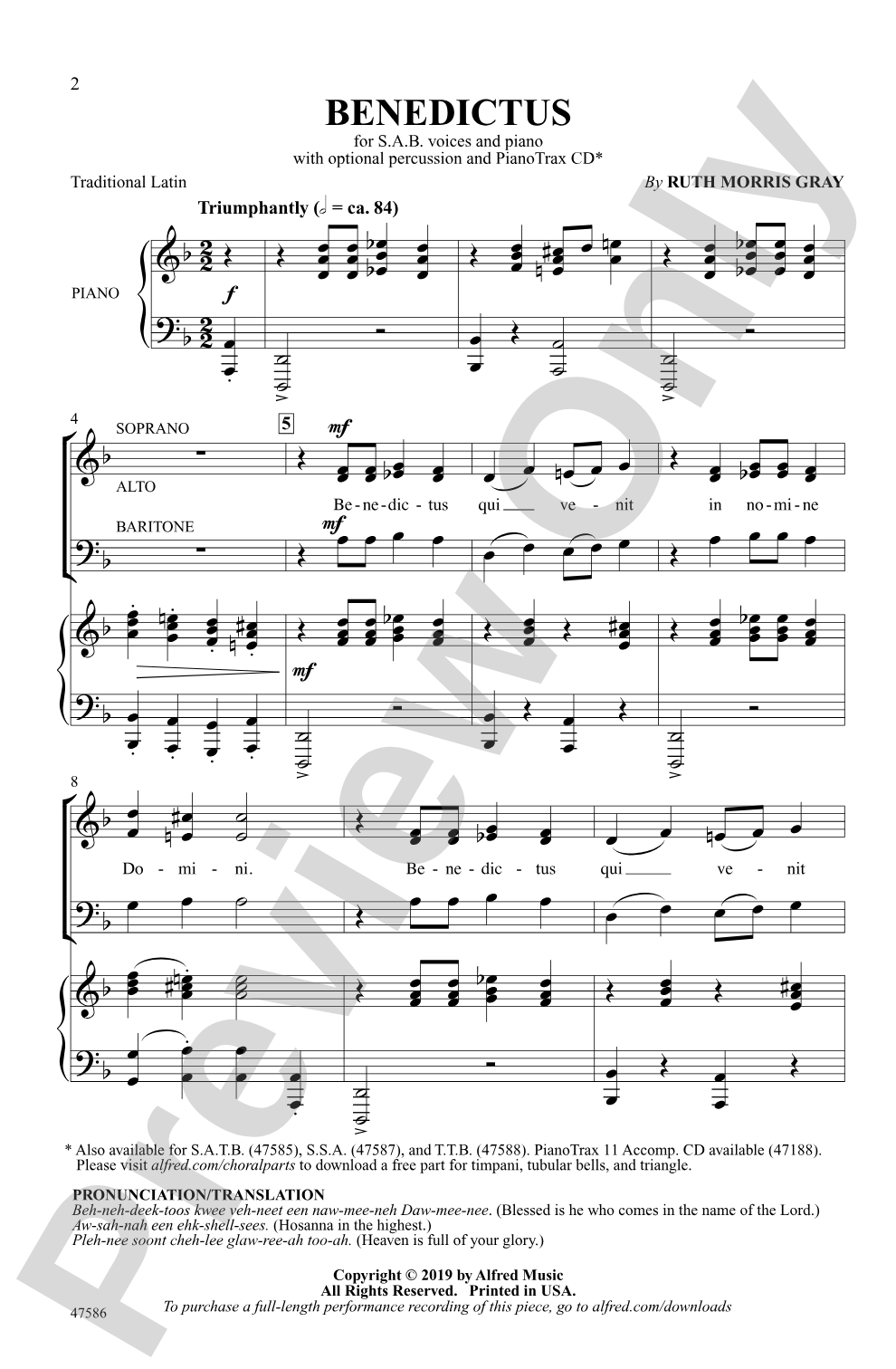
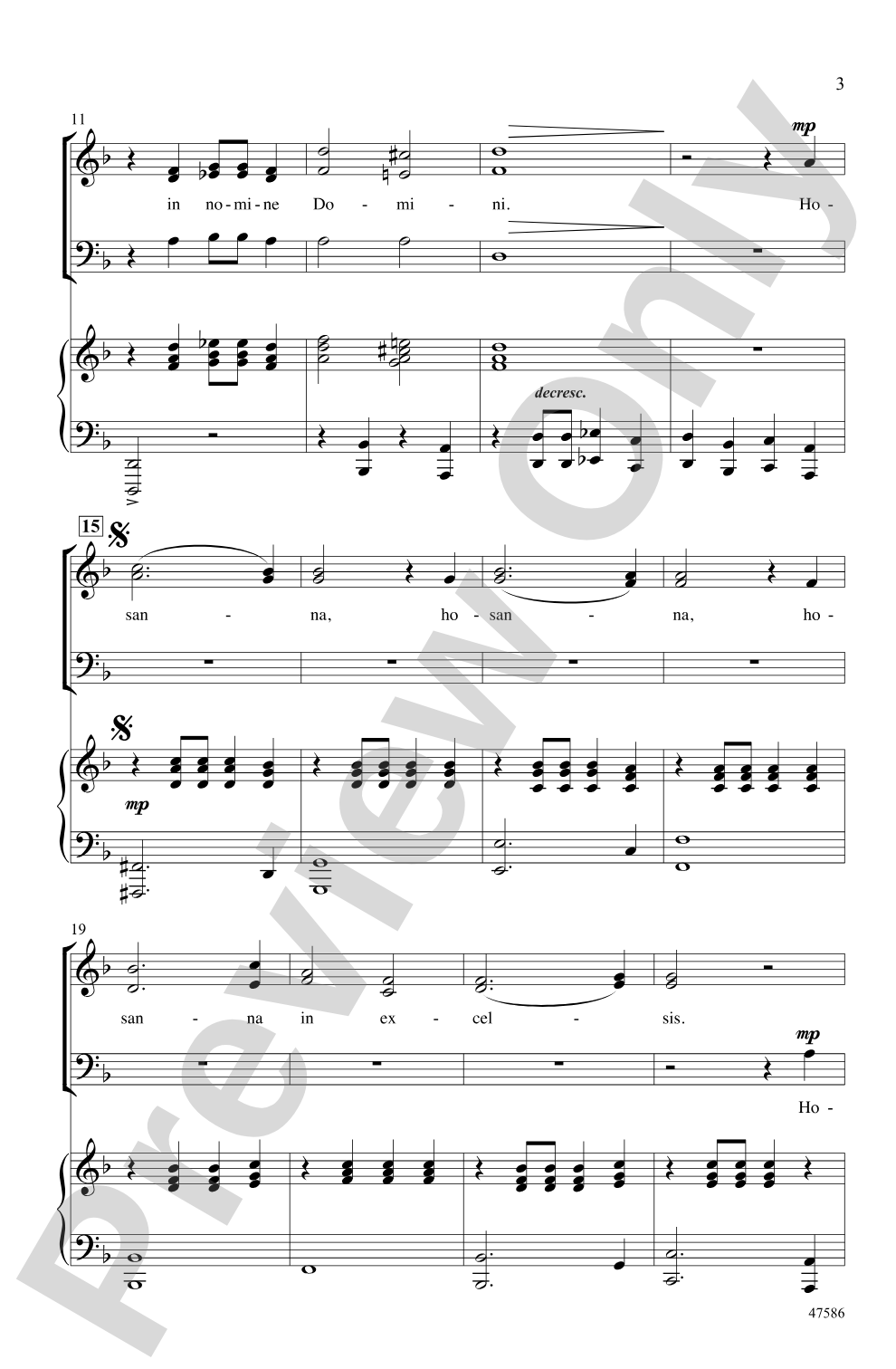
A bombastic and stately theme, based on stacked modal harmonies, gives a triumphant air to this contemporary setting of the traditional Latin text. Hushed B and C sections offer contrast before recapitulating the grandiose opening and an even fuller final cadence. Timpani, tubular bells, and triangle (which may be downloaded for free) may be performed by a single percussionist and add to the riveting drama.


Benedictus: SAB Choral Octavo isn't in MakeMusic Cloud just yet...but it could be. Let us know you'd like to see it, and you'll help shape what comes next. In the meantime, start a free trial and dive into thousands of interactive titles your students can play along with today.
Request This Title
Tell us you want it.
Start Your Free Trial
Explore everything that's ready to play right now.
Sample Audio
1
Audio File
--:--
0:00
0:00
Sample Video
Additional Details
Series:
Alfred Choral Designs
Publisher:
Alfred Music
Page Count:
8
SKU:
00-PO-0005947
Instrumentation:
Percussion
More about this title
About the Composer: Ruth Morris Gray

Ruth Morris Gray serves as Director of Choirs at Rosemead High School in California, where she has built her program since 2004. She holds a Bachelor of Music in Piano Performance and Composition from Biola University and a Master of Arts in Music Composition from UC Santa Barbara, credentials that inform both her teaching and her prolific output of over 100 published choral works.
Beyond the choir room, Gray remains active as a performer and composer while maintaining a rich creative life that includes travel, swimming, reading, and cycling. Her dual expertise in keyboard performance and advanced composition gives her compositions a distinctive blend of singability and harmonic sophistication.
Why we love this
Gray constructs this setting with real architectural care, using modal harmonies to create weight and presence without sacrificing clarity in SAB voicing. The strategic quietness of the middle sections proves just as effective as the opening fanfare because she understands the power of contrast, and the free percussion parts mean you can add genuine orchestral color without requiring additional musicians.
What to expect
The bombastic opening asserts itself with stacked harmonies that feel almost orchestral in scope, delivering triumph without bombast. The sudden shift inward at the B section draws the listener close, creating an intimate moment before the grand return and an even more resounding final cadence that sends the piece home with ceremonial weight.
Who it's for
This setting suits choirs with SAB voicing looking for a piece with concert and festival appeal that doesn't demand advanced vocal range. Directors seeking contemporary music that handles a liturgical text with dignity while offering genuine dramatic arc will find strong material here.
How to get the most out of it
- Balance the stacked harmonies in the opening by anchoring the low voices first; ask the altos to listen for the middle layer rather than doubling the sopranos.
- Shape the hushed B and C sections with genuine restraint, letting the dynamic drop create anticipation for the recapitulation rather than losing energy.
- Download the free percussion parts early and rehearse with your percussionist from the start; the timpani, tubular bells, and triangle are scored to enhance key harmonic moments, not fill space.
How to use it
Open a concert with this piece to establish architectural sophistication early, or use it as the centerpiece of a mixed-repertoire program where you're balancing classical and contemporary sacred texts. Its festival appeal makes it valuable for contest programming, and the optional percussion parts give you flexibility depending on whether you're performing in a concert or adjudicated setting.
Skills your students will build
- Singing stacked modal harmonies with independence and tuning precision
- Balancing three-part writing where no voice is disposable
- Responding to dramatic dynamic contrast between sections
- Coordinate with percussion accompaniment and maintain ensemble integrity during rhythmic dialogue