

Benedicamus Domino: SSA Choral Octavo
Words from Traditional Latin, music by Victor C. Johnson
Item: 00-PO-0006942
$2.05
Minimum order quantity: 20 copies
Pickup currently not available
Related Items
Benedicamus Domino: PianoTrax Digital Audio Download |
$9.99
|
View | |
Benedicamus Domino: SATB Choral Octavo |
$2.05
|
View | |
Benedicamus Domino: 3-Part Mixed Choral Octavo |
$2.05
|
View | |
Benedicamus Domino: SATB Choral Octavo |
$2.05
|
View | |
Benedicamus Domino: 3-Part Mixed Choral Octavo |
$2.05
|
View | |
Benedicamus Domino: SSA Choral Octavo |
$2.05
|
View |
Description
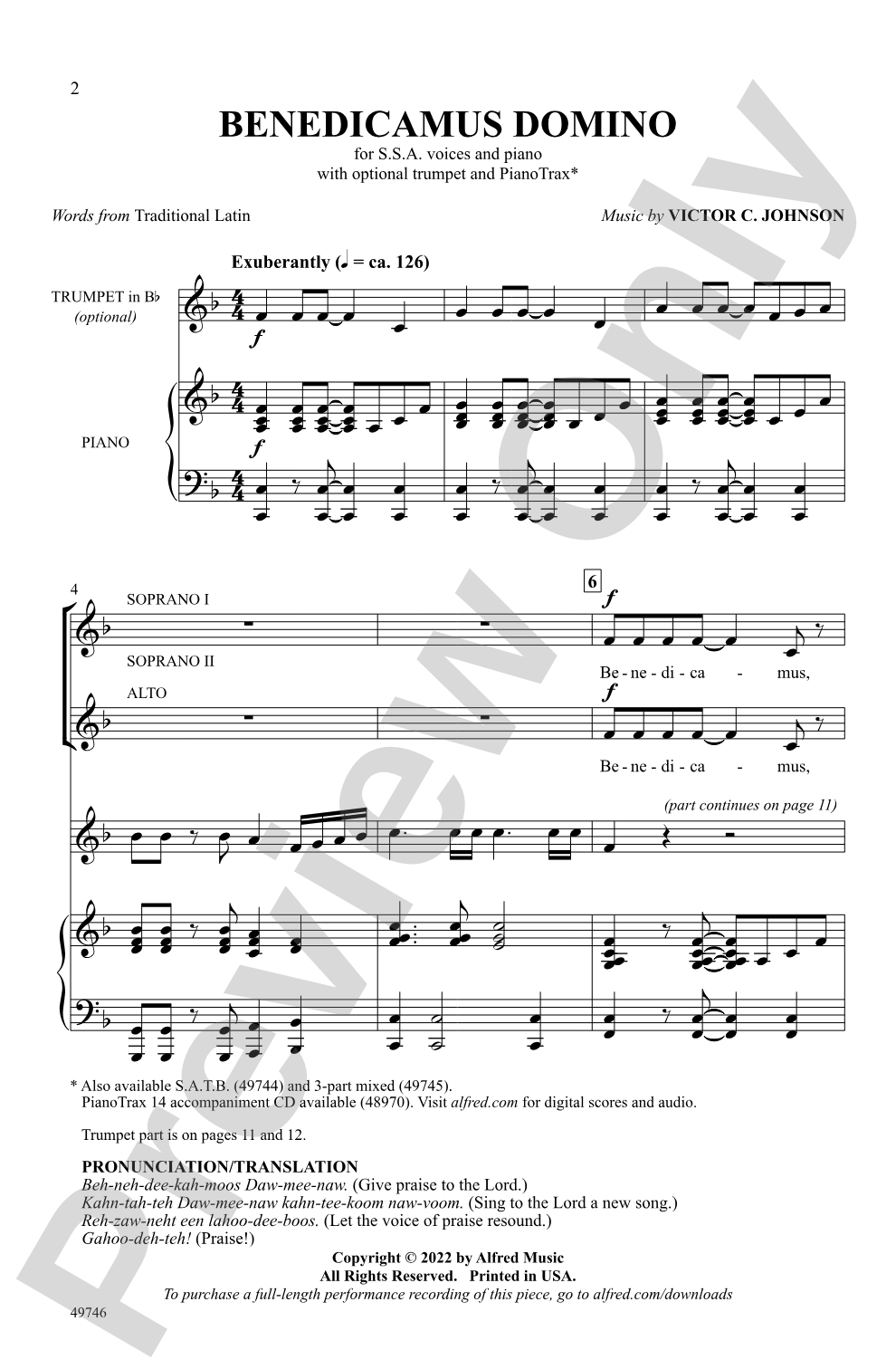
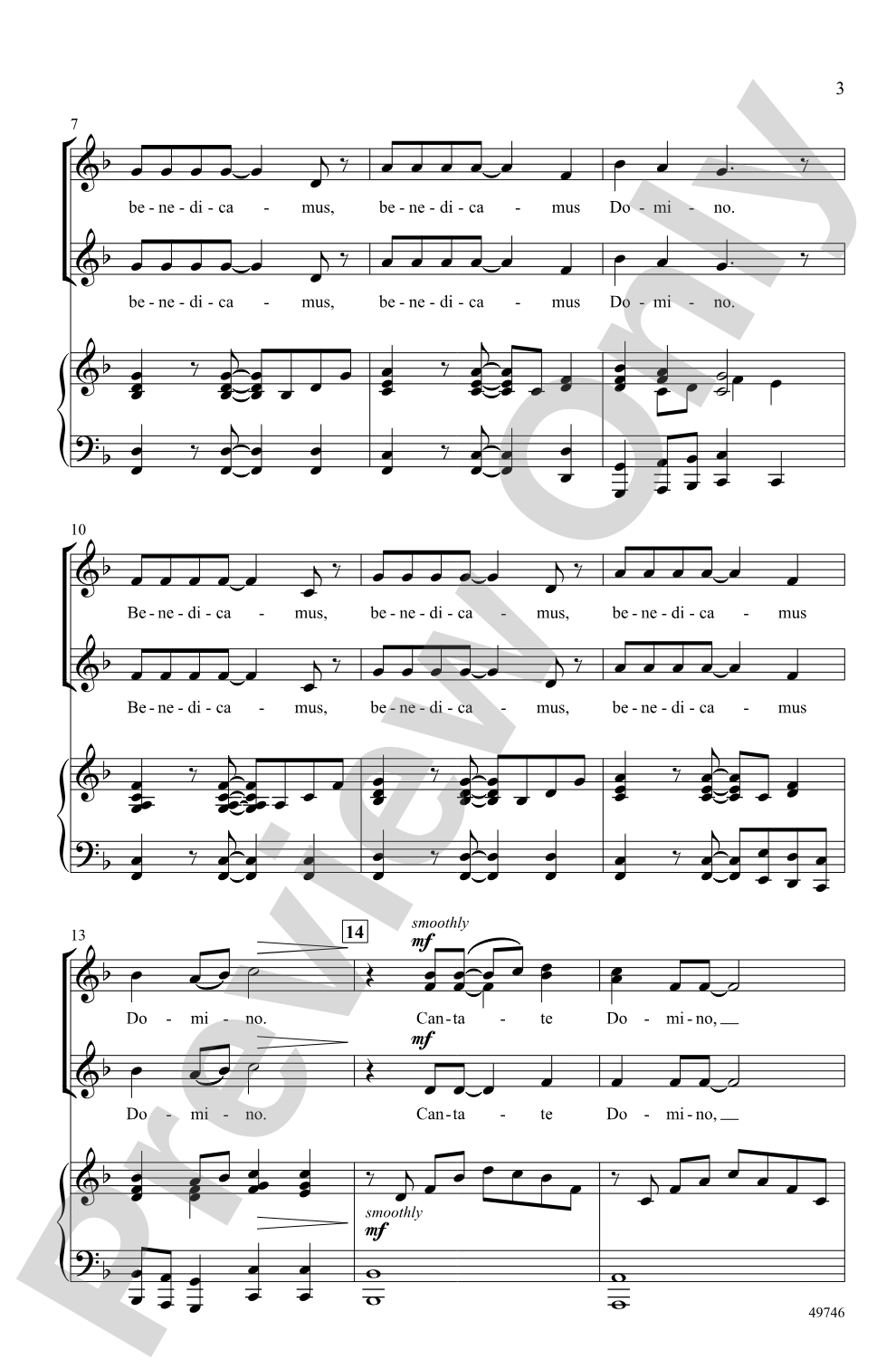
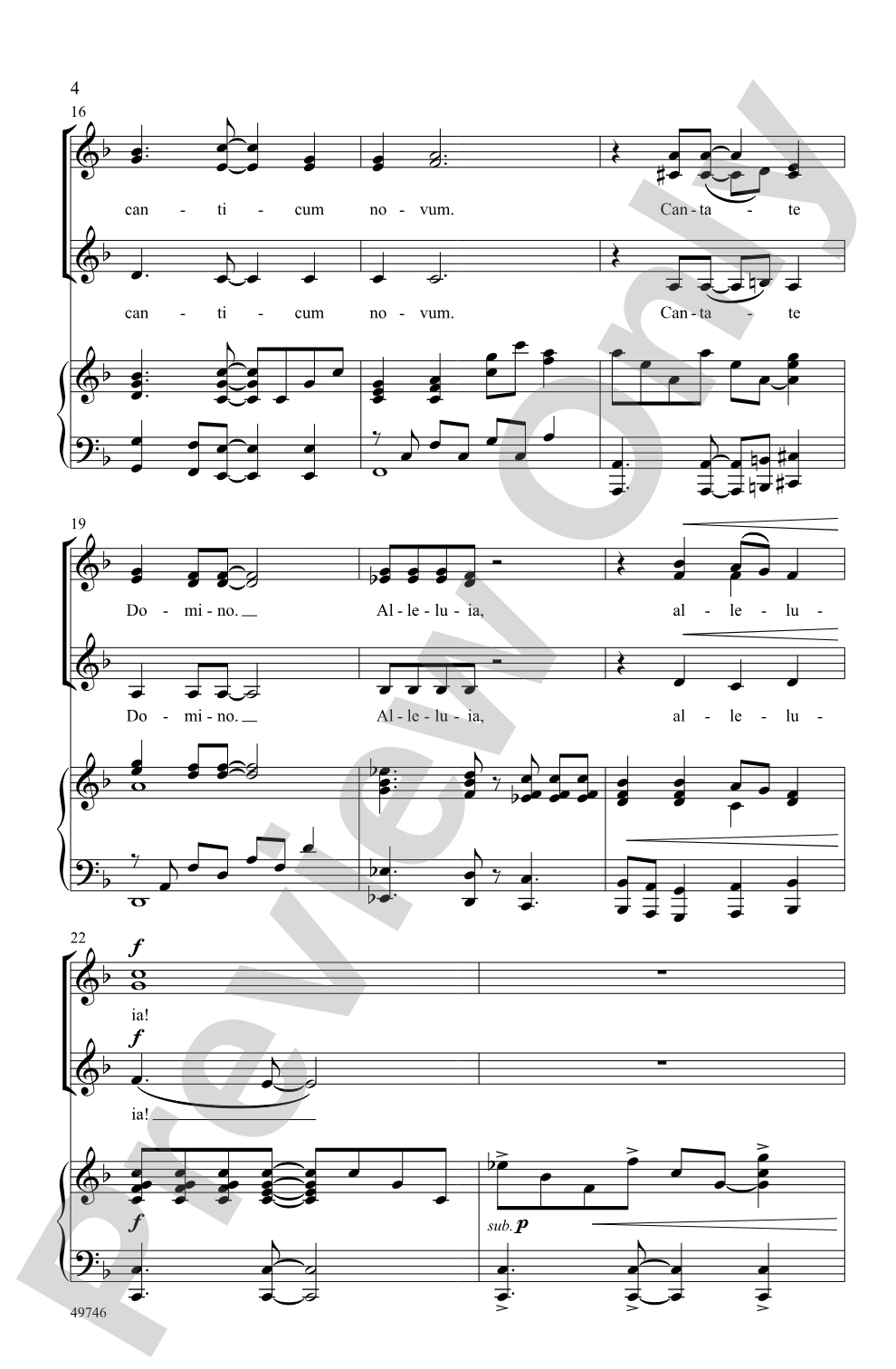
Majestic and exuberant, this quintessential concert/contest selection opens and closes with an accented Latin text theme. In the middle, a contrasting chant-like "Resonet in laudibus" softens and slows before returning to the rhythmic feel. As expected from experienced writer, Victor Johnson, each voicing is sensitive to appropriate vocal ranges and tessitura. An optional trumpet fanfare is included in the octavo.


Benedicamus Domino: SSA Choral Octavo isn't in MakeMusic Cloud just yet...but it could be. Let us know you'd like to see it, and you'll help shape what comes next. In the meantime, start a free trial and dive into thousands of interactive titles your students can play along with today.
Request This Title
Tell us you want it.
Start Your Free Trial
Explore everything that's ready to play right now.
Sample Audio
1
Audio File
--:--
0:00
0:00
Sample Video
Additional Details
Series:
Alfred Choral Designs
Publisher:
Alfred Music
Page Count:
12
SKU:
00-PO-0006942
More about this title
About the Composer: Victor C. Johnson

Victor C. Johnson, a Dallas native, has established himself as a prolific voice in contemporary choral music with more than 500 published works across choral compositions, vocal solos, and keyboard collections. He currently serves as School Choral Editor for Sing!, the educational publishing arm of Choristers Guild, bringing years of classroom experience to his editorial role.
From 2000 to 2018, Johnson directed choral ensembles at Ft. Worth Academy of Fine Arts, where he led the Academy Singers and Academy Men's Choir while serving as Artistic Director for both the Singing Girls of Texas and Children's Choir of Texas. Since 2022, he has conducted the Dallas Symphony Children's Chorus Mixed Ensemble, working with advanced high school singers as the resident children's choir for the Dallas Symphony Orchestra. His professional memberships include the American Choral Directors Association, Texas Choral Directors Association, American Guild of Organists, and ASCAP.
Why we love this
Johnson's gift for balancing structural clarity with textural variety shines here. The confident handling of dynamic contrast between the rhythmic opening/closing sections and the introspective chant-like middle gives your ensemble real dramatic arc without overcomplicating the vocal lines, and the optional trumpet fanfare makes this equally effective as a powerful opener or finale.
What to expect
The piece radiates majesty and purpose, opening with energy and focus before revealing a quieter, more contemplative interior. The return to the rhythmic material lands with renewed conviction, leaving singers and listeners with a sense of completion and affirmation.
Who it's for
SSA choirs seeking a sacred concert or festival selection with immediate impact and satisfying musical substance. This octavo works equally well for intermediate to advanced high school and community choirs that value clean voicings and clear harmonic writing.
How to get the most out of it
- Emphasize the rhythmic articulation of the Latin text at the opening to establish the piece's majestic character; crisp diction will activate the accented theme without requiring aggressive volume.
- Shape the "Resonet in laudibus" section as a genuine textural and emotional shift by allowing more legato phrasing and softer dynamics to contrast sharply with the surrounding material.
- If including the optional trumpet fanfare, ensure the instrument enters with projection that supports rather than overshadows the choir's final restatement of the opening theme.
How to use it
Deploy this as a commanding concert opener to establish tone and energy, or close a set with its exuberant return to the opening theme. The moderate length and flexible instrumentation also position it well for festival competitions where you want a single selection that demonstrates both choral technique and musicianship.
Skills your students will build
- Singing Latin text with accurate pronunciation and rhythmic precision
- Contrasting ensemble textures and dynamics to shape musical form
- Navigating mixed meters and rhythmic patterns in sacred music
- Maintaining appropriate vocal range and tessitura across SSA voicing
- Balancing choral sound with optional instrumental doubling