
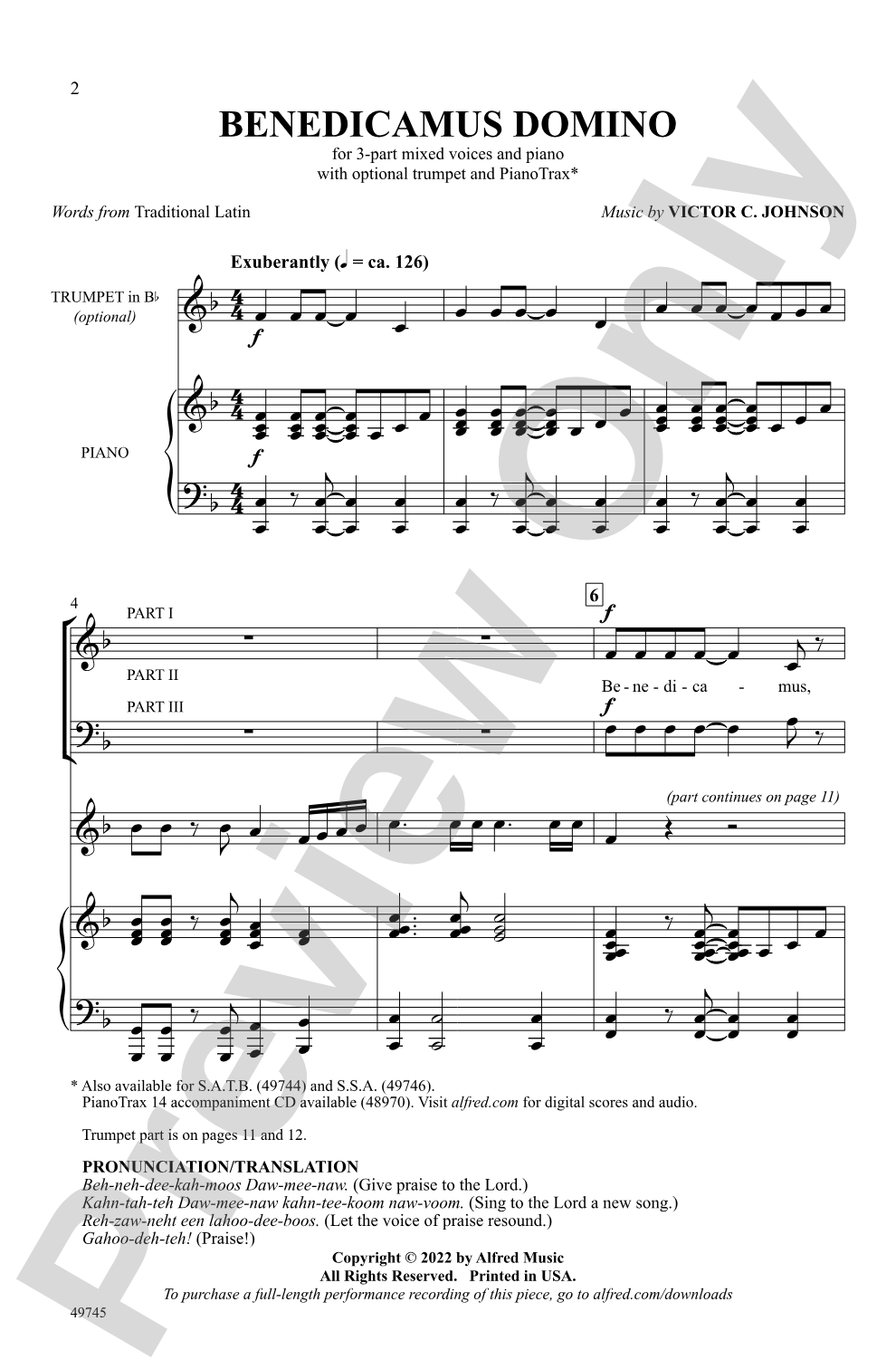

Benedicamus Domino: 3-Part Mixed Choral Octavo
Words from Traditional Latin, music by Victor C. Johnson
Item: 00-PO-0006941
$2.05
Minimum order quantity: 20 copies
Pickup currently not available
Related Items
Benedicamus Domino: PianoTrax Digital Audio Download |
$9.99
|
View | |
Benedicamus Domino: SATB Choral Octavo |
$2.05
|
View | |
Benedicamus Domino: SSA Choral Octavo |
$2.05
|
View | |
Benedicamus Domino: SATB Choral Octavo |
$2.05
|
View | |
Benedicamus Domino: 3-Part Mixed Choral Octavo |
$2.05
|
View | |
Benedicamus Domino: SSA Choral Octavo |
$2.05
|
View |
Description
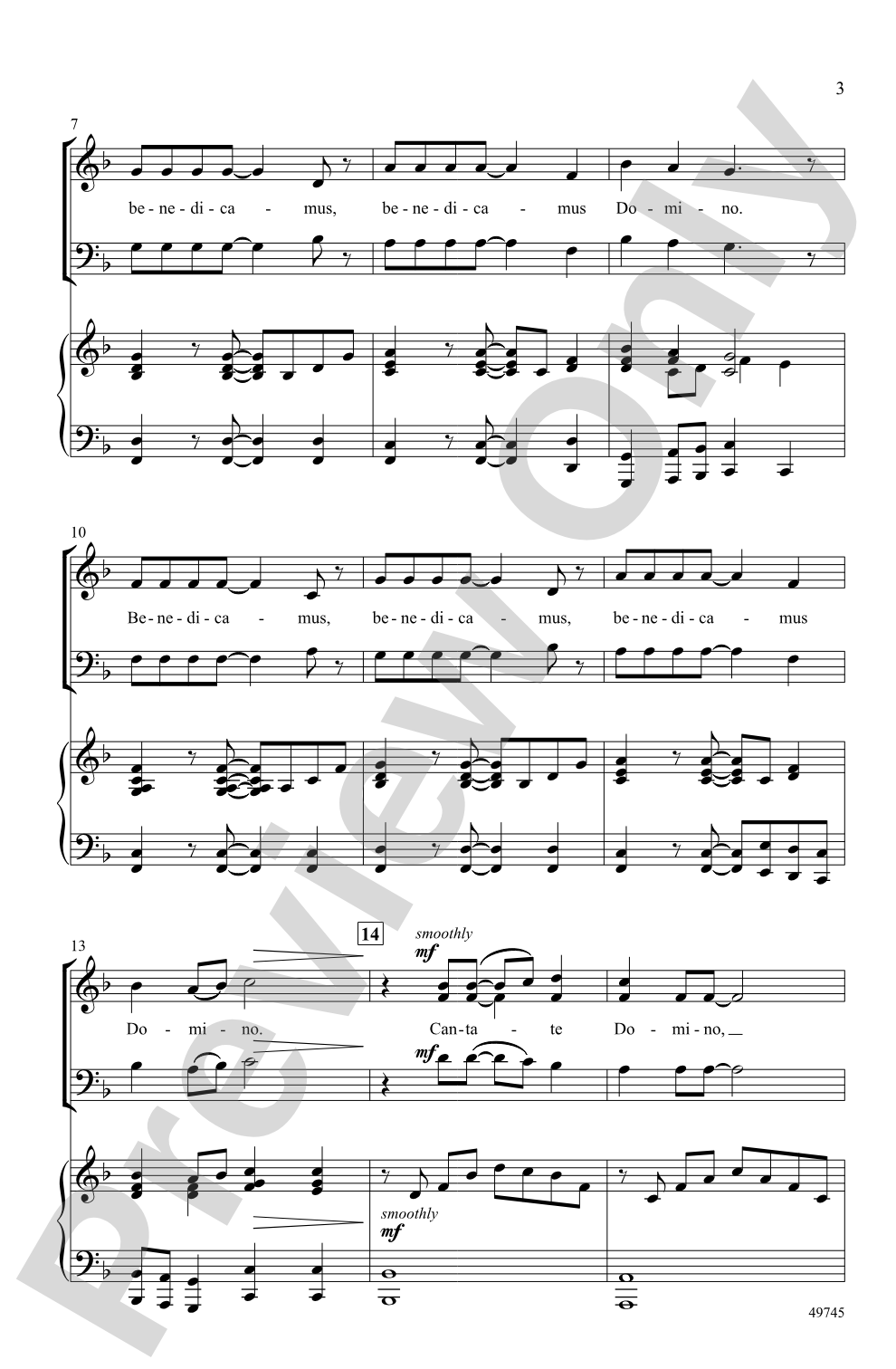
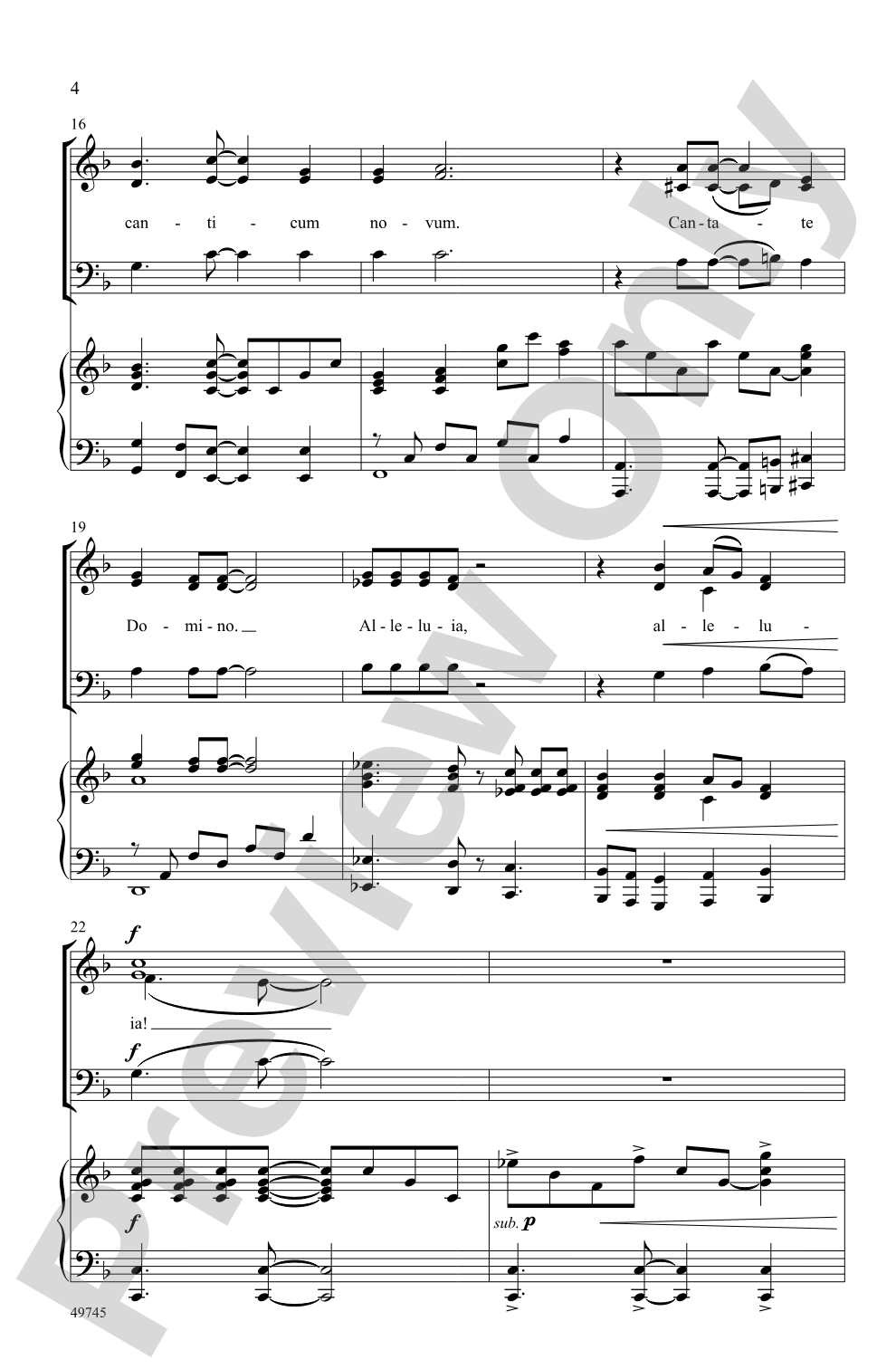
Majestic and exuberant, this quintessential concert/contest selection opens and closes with an accented Latin text theme. In the middle, a contrasting chant-like "Resonet in laudibus" softens and slows before returning to the rhythmic feel. As expected from experienced writer, Victor Johnson, each voicing is sensitive to appropriate vocal ranges and tessitura. An optional trumpet fanfare is included in the octavo.


Benedicamus Domino: 3-Part Mixed Choral Octavo isn't in MakeMusic Cloud just yet...but it could be. Let us know you'd like to see it, and you'll help shape what comes next. In the meantime, start a free trial and dive into thousands of interactive titles your students can play along with today.
Request This Title
Tell us you want it.
Start Your Free Trial
Explore everything that's ready to play right now.
Sample Audio
1
Audio File
--:--
0:00
0:00
Sample Video
Additional Details
Series:
Alfred Choral Designs
Publisher:
Alfred Music
Page Count:
12
SKU:
00-PO-0006941
More about this title
About the Composer: Victor C. Johnson

Victor C. Johnson brings decades of hands-on choral direction to his prolific composing career. Based in Dallas, he directed choirs at Ft. Worth Academy of Fine Arts from 2000-2018, where he built multiple ensembles including the Academy Singers and the Singing Girls of Texas. His experience conducting young singers across all levels informs the technical sensitivity evident throughout his 500-plus published works.
Today, Johnson serves as School Choral Editor for Sing!, the educational publishing arm of Choristers Guild, and holds the position of conductor for the Dallas Symphony Children's Chorus Mixed Ensemble. He maintains active affiliations with the American Choral Directors Association, Texas Music Educators Association, ASCAP, and several other professional organizations.
Why we love this
Johnson writes with the clarity of someone who has spent years in the rehearsal room, and it shows here. The architecture of this piece works: an arresting opening statement, a genuine textural contrast in the middle that gives singers something new to discover, and a satisfying return that feels earned rather than routine. The optional trumpet fanfare adds concert polish without requiring it.
What to expect
Majestic and purposeful. The piece opens with rhythmic energy and clear intention, then invites singers into a quieter, more introspective moment when the chant-like "Resonet in laudibus" takes over. When the opening theme returns, it feels like homecoming, and the accents land with earned weight rather than bombast.
Who it's for
Mixed choirs with solid three-part balance and some musical maturity. The piece suits concert and festival programming and works well for choirs that have tackled basic Latin diction but want a piece with real dramatic shape. High schoolers and select middle school choirs (depending on ability) will find the range and tessitura accessible.
How to get the most out of it
- Treat the opening accented Latin text theme as a call to attention. Lock the rhythmic precision in all three parts so the text lands with impact and clarity.
- Slow and soften deliberately at the 'Resonet in laudibus' chant section. This is your moment to show contrast; resist the urge to maintain the opening's energy.
- If you include the trumpet fanfare, rehearse it separately with your brass player first, then integrate it with the choir several weeks before performance so both parts settle into the texture naturally.
- Check that your soprano and alto parts sit comfortably in their ranges through the piece. Johnson's voicing is thoughtful, but your specific singers may benefit from a light spot-check of the highest passages.
How to use it
Open a concert with this piece to establish energy and focus your audience from the first note. Its length (12 pages) and structural clarity make it a strong festival entry. Alternatively, program it mid-concert as a bridge between contemporary and more traditional sacred works, letting the chant section provide textural variety in a longer set.
Skills your students will build
- Latin text clarity and pronunciation across sustained passages
- Reading and balancing three independent parts with different rhythmic profiles
- Dynamic contrast and phrasing within a single choral texture
- Sight-reading of accented rhythmic figures and chant-based melodic material