
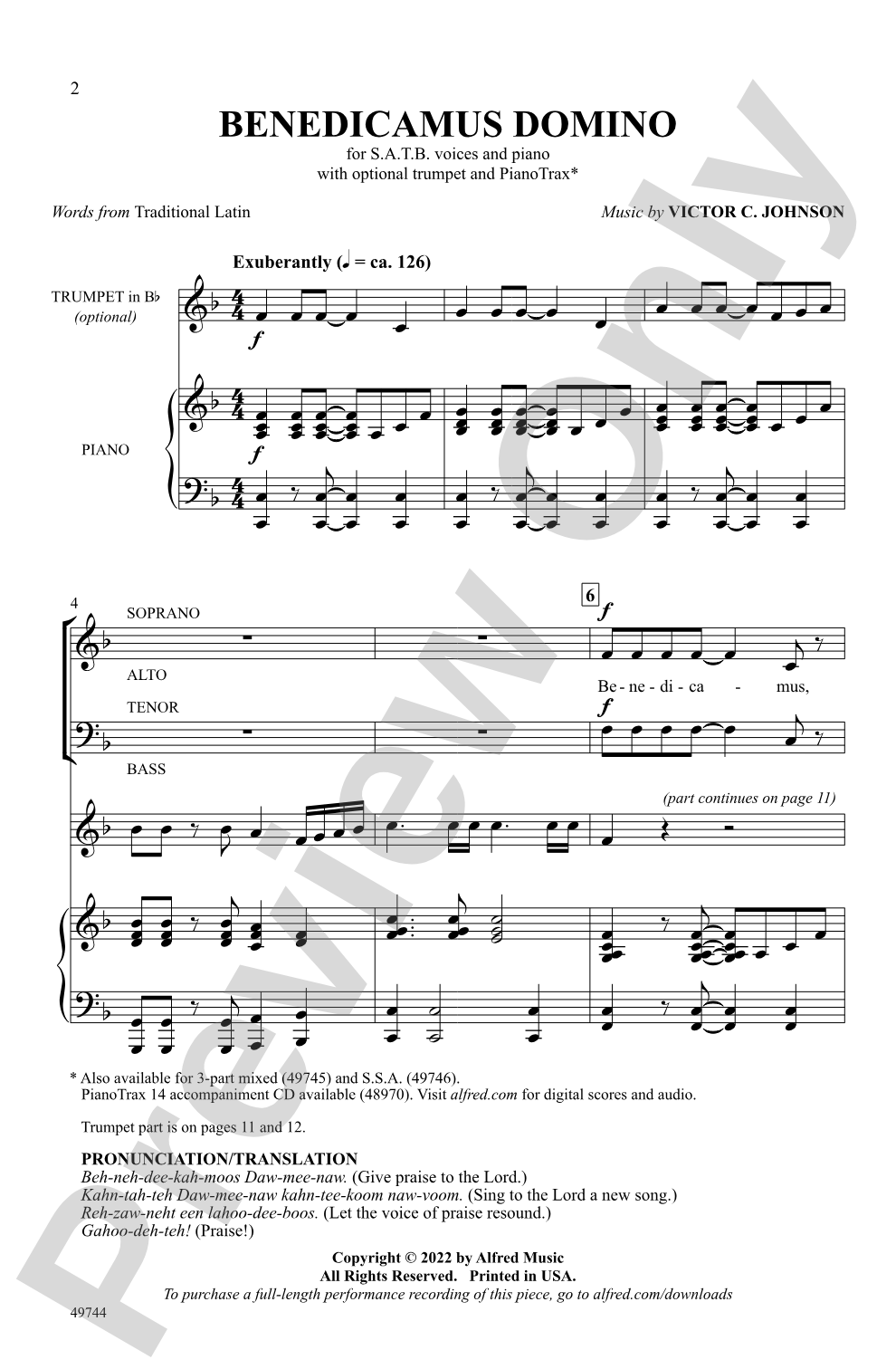

Benedicamus Domino: SATB Choral Octavo
Words from Traditional Latin, music by Victor C. Johnson
Item: 00-PO-0006940
$2.05
Minimum order quantity: 20 copies
Pickup currently not available
Related Items
Benedicamus Domino: PianoTrax Digital Audio Download |
$9.99
|
View | |
Benedicamus Domino: 3-Part Mixed Choral Octavo |
$2.05
|
View | |
Benedicamus Domino: SSA Choral Octavo |
$2.05
|
View | |
Benedicamus Domino: SATB Choral Octavo |
$2.05
|
View | |
Benedicamus Domino: 3-Part Mixed Choral Octavo |
$2.05
|
View | |
Benedicamus Domino: SSA Choral Octavo |
$2.05
|
View |
Description
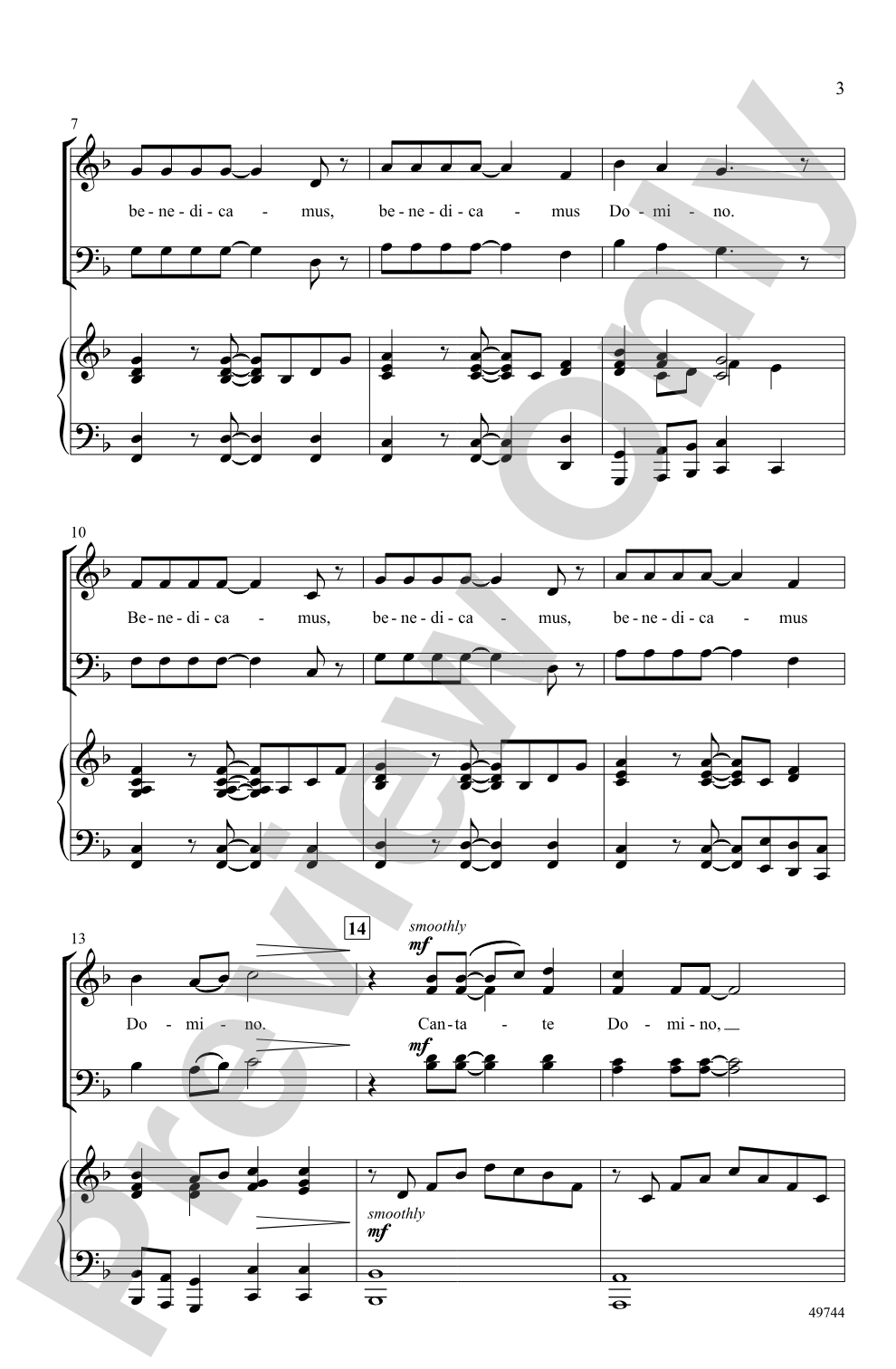
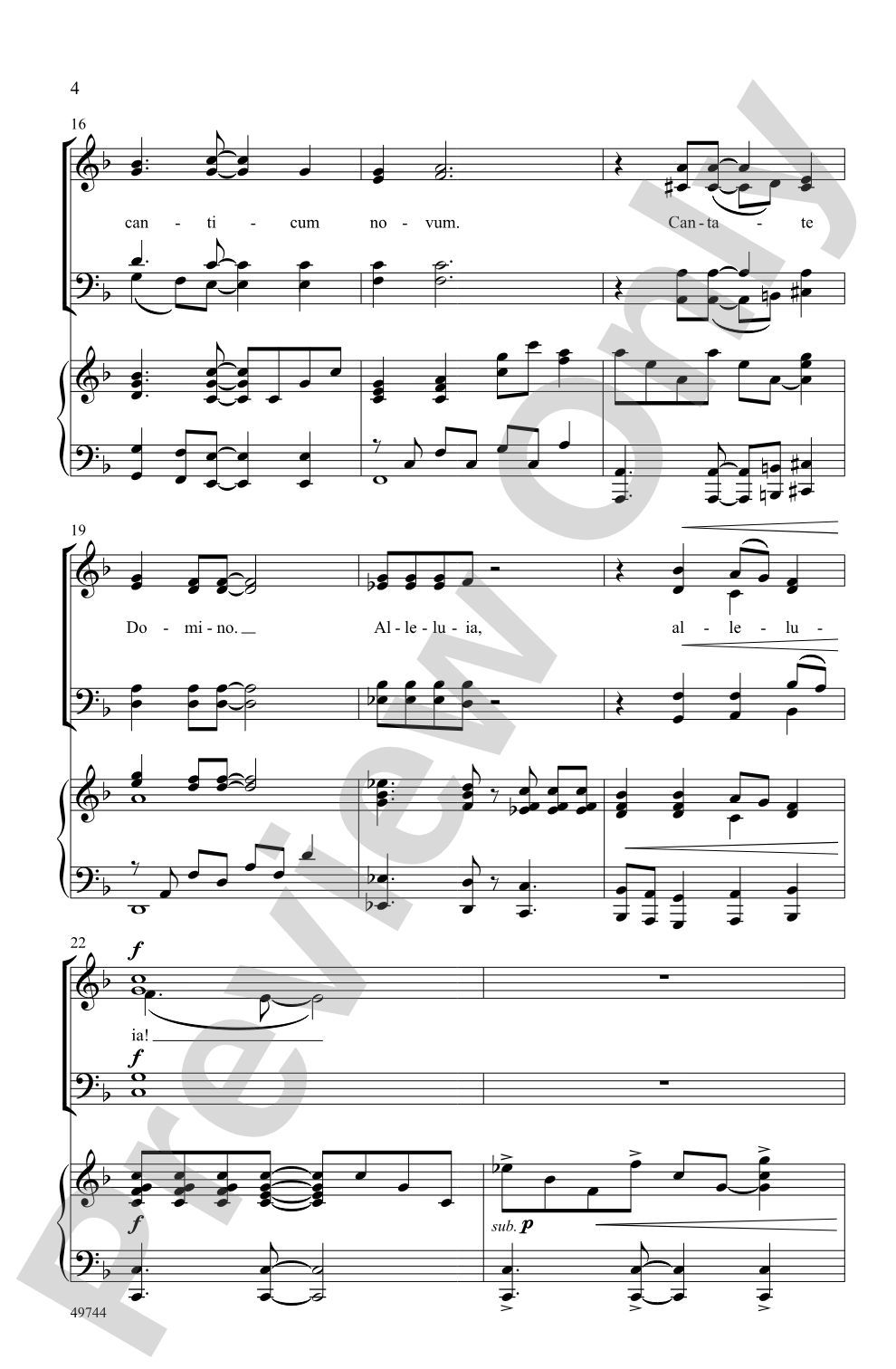
Majestic and exuberant, this quintessential concert/contest selection opens and closes with an accented Latin text theme. In the middle, a contrasting chant-like "Resonet in laudibus" softens and slows before returning to the rhythmic feel. As expected from experienced writer, Victor Johnson, each voicing is sensitive to appropriate vocal ranges and tessitura. An optional trumpet fanfare is included in the octavo.


Benedicamus Domino: SATB Choral Octavo isn't in MakeMusic Cloud just yet...but it could be. Let us know you'd like to see it, and you'll help shape what comes next. In the meantime, start a free trial and dive into thousands of interactive titles your students can play along with today.
Request This Title
Tell us you want it.
Start Your Free Trial
Explore everything that's ready to play right now.
Sample Audio
1
Audio File
--:--
0:00
0:00
Sample Video
Additional Details
Series:
Alfred Choral Designs
Publisher:
Alfred Music
Page Count:
12
SKU:
00-PO-0006940
More about this title
About the Composer: Victor C. Johnson

Victor C. Johnson brings three decades of choral leadership to his work as a composer and arranger. Based in Dallas, he has served as choral director at Ft. Worth Academy of Fine Arts, where he built and conducted multiple ensembles including the Academy Singers and the Singing Girls of Texas. He currently holds the position of conductor for the Dallas Symphony Children's Chorus Mixed Ensemble and serves as School Choral Editor for Sing!, the educational publishing division of Choristers Guild.
With more than 500 published works across choral, vocal, and keyboard genres, Johnson has established himself as a trusted voice in music education. His compositions consistently demonstrate careful attention to vocal writing and ensemble balance, earned through years of directing singers at all levels. He maintains active memberships in the American Choral Directors Association, Texas Music Educators Association, and ASCAP.
Why we love this
Johnson writes with the ear of someone who has spent decades in the rehearsal room, and it shows in every phrase. The structural arc here is genuinely satisfying: the rhythmic energy of the opening theme gives way to vulnerable, meditative writing at the center, then builds back to that same accented gesture with renewed vigor. The optional trumpet fanfare adds a concert-opener flourish that elevates the whole package without requiring additional instrumentation.
What to expect
The piece opens with the kind of assured, almost processional energy that immediately commands attention in a concert. It feels majestic and purposeful at the outset, then unfolds into something quieter and more introspective in its middle, before the energy and affirmation return with fresh impact.
Who it's for
This octavo works for choirs at the intermediate to advanced level who want a piece that's equally at home in a concert setting or a festival. If you direct singers who thrive on rhythmic clarity and enjoy sacred Latin texts, this sits squarely in your repertoire wheelhouse.
How to get the most out of it
- Shape the opening accented Latin text with clear articulation and forward motion; the rhythm is the engine that drives this piece, so lock the pulse early and let the energy speak before the choir even enters.
- When you transition into "Resonet in laudibus," allow the tempo and dynamic to drop noticeably; this chant-like section breathes differently than the outer material, and treating it as a genuine contrast keeps listeners engaged.
- If you're using the optional trumpet fanfare, rehearse it independently first so the brass enters with confidence and clarity; the gesture should feel like a ceremonial pronouncement, not an afterthought.
- Pay attention to Johnson's voicing in the middle section; the ranges are deliberately conservative here, so any instability usually signals a tempo that's too slow or soloists carrying too much weight in exposed moments.
How to use it
Program this as an opener to set a formal or liturgical tone for your concert, or use it as the centerpiece of a sacred music set where the contrasting sections frame other works. Its dual suitability for competition and concert contexts makes it an obvious choice if you're preparing for both settings in the same season.
Skills your students will build
- Singing accented articulation in Latin text with rhythmic precision
- Shifting between rhythmic and chant-like vocal production
- Maintaining pitch and balance in exposed, slow-moving middle sections
- Following dynamic and tempo changes that shape sectional contrast
- Coordinating with optional brass instrumentation