

At Last: SSA Choral Octavo
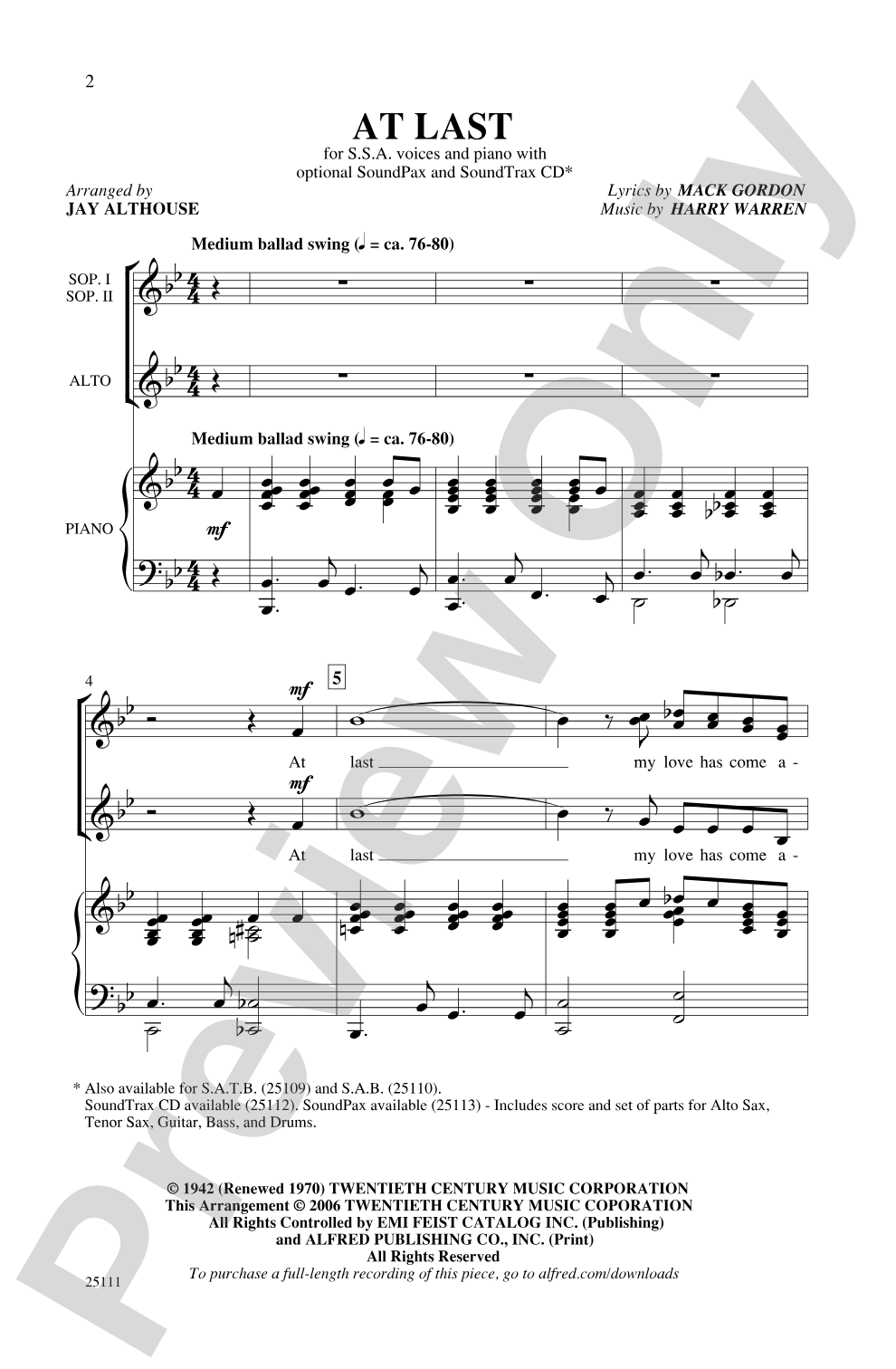
By Mack Gordon and Harry Warren / arr. Jay Althouse
Item: 00-PO-0002240
$2.10
Minimum order quantity: 20 copies
One moment…
Related Items
At Last: SoundTrax Digital Audio Download |
$27.99
|
View | |
At Last: SATB Choral Octavo |
$2.10
|
View | |
At Last: SAB Choral Octavo |
$2.10
|
View | |
At Last: Choral SoundPax |
$25.00
|
View | |
At Last: SATB Choral Octavo |
$2.10
|
View | |
At Last: SAB Choral Octavo |
$2.10
|
View | |
At Last: SSA Choral Octavo |
$2.10
|
View | |
At Last: Choral Octavo SoundTrax CD |
$27.99
|
View | |
At Last: Choral SoundPax |
$25.00
|
View |
Description
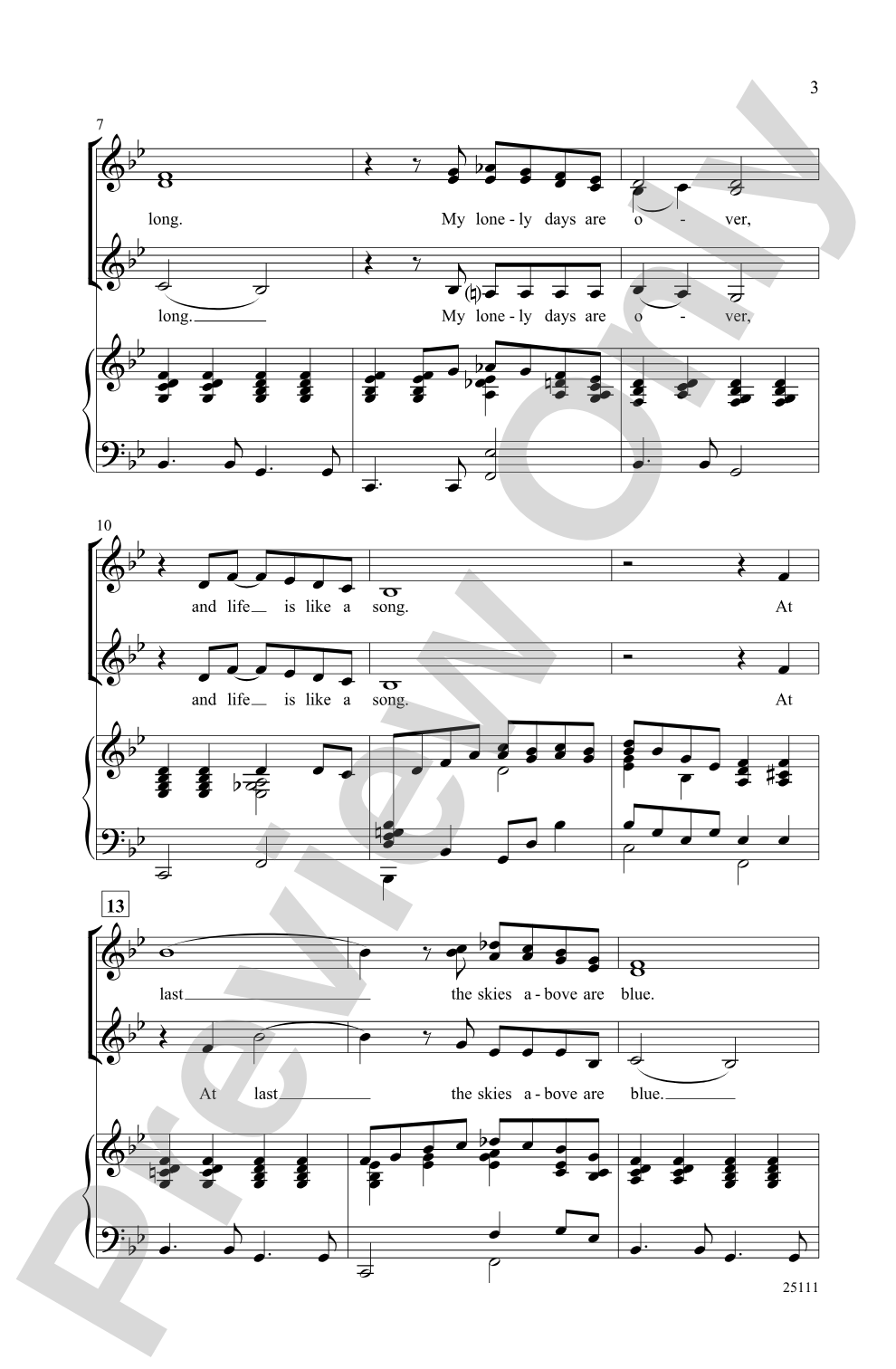
Soul and blues singer Etta James made this luscious ballad a hit in 1960, though it was written almost 20 years earlier by the songwriting team of Mack Gordon and Harry Warren. Since then it's been recorded by scores of artists. One of the great ballads of the American song repertoire.


At Last: SSA Choral Octavo isn't in MakeMusic Cloud just yet...but it could be. Let us know you'd like to see it, and you'll help shape what comes next. In the meantime, start a free trial and dive into thousands of interactive titles your students can play along with today.
Request This Title
Tell us you want it.
Start Your Free Trial
Explore everything that's ready to play right now.
Sample Audio
1
Audio File
--:--
0:00
0:00
Sample Video
No sample videos found.
Additional Details
Series:
Alfred Pop Choral Series
Publisher:
Alfred Music
Page Count:
8
SKU:
00-PO-0002240
More about this title
About the Composer: Mack Gordon
Mack Gordon (1904-1959) was one of the most prolific lyricists in American popular music, collaborating with composers like Harry Warren, James V. Monaco, and Josef Myrow across Broadway, film, and Tin Pan Alley. His gift for crafting singable, memorable melodies paired with smart, emotionally direct lyrics made him a fixture in Hollywood's Golden Age, contributing to dozens of films and countless standards that remain central to the jazz and pop vocal repertoire.
Gordon's work often balanced sophistication with accessibility, creating songs that appealed equally to trained singers and popular artists. His partnership with Harry Warren, the composer of 'At Last,' produced some of the era's most enduring material, demonstrating his ability to write lyrics that serve both the immediate emotional moment and long-term staying power.
Why we love this
This arrangement captures everything that makes 'At Last' a standard worth teaching: the melody sits naturally for SSA voices, the harmonic language is sophisticated enough to hold singers' attention without overwhelming them, and the emotional arc builds organically from intimate to full-voiced. Directors appreciate how Jay Althouse's setting honors the song's jazz roots while remaining accessible for choirs at various levels.
What to expect
Warm, unhurried, and romantic. The arrangement unfolds like a confession sung across a dimly lit room, with the bass and alto parts creating a foundation that lets sopranos shine on the melody. There's a touch of melancholy underneath the tenderness, and the harmonic movement suggests both sophistication and sincerity.
Who it's for
SSA choirs looking for a contemporary standard that sits well in all voices and connects to both jazz and pop idioms without requiring a specialist jazz ensemble. This works equally well for high school show choirs, college chamber ensembles, and community groups seeking repertoire that feels current yet rooted in music history.
How to get the most out of it
- Shape the opening phrases with long, connected breaths; resist the urge to cut off notes too early, as the beauty of this ballad lives in sustained vocal lines.
- Treat the lyrics with conversational clarity rather than operatic intensity; Etta James's original succeeds because it sounds intimate and genuinely felt, not technically perfect.
- Balance the soprano and alto lines during the key passages where they diverge; one part should never disappear into the texture.
- Use the recorded accompaniment during rehearsals to lock ensemble entries, but pull back on its volume during final rehearsals so singers learn to support each other's tuning.
How to use it
Pair this with other American standards or pop-influenced choral repertoire to create a program segment celebrating the Great American Songbook in contemporary arrangements. It also works beautifully as a closing piece or final selection in a concert, where its emotional depth and familiar melody will resonate with audiences unfamiliar with classical choral music.
Skills your students will build
- Sustaining long vocal lines with consistent breath support
- Balancing blend and intonation across three distinct parts
- Interpreting jazz-influenced harmonic language in a choral context
- Responding to and singing against a recorded accompaniment
- Connecting emotional content to phrasing choices