

Accent on Ensembles, Book 1: B-flat Tenor Saxophone Book
$6.99 USD
Sale price
$6.99 USD
Regular price
Skip to product information


Accent on Ensembles, Book 1: B-flat Tenor Saxophone Book
Duets, Trios and Quartets for Flexible Instrumentation Correlated with Accent on Achievement, Book 1
By John O'Reilly and Mark Williams
Item: 00-19617
$6.99
One moment…
Description
Accent on Ensembles is an exciting book of duets, trios and quartets for flexible instrumentation that correlates with Accent on Achievement, Book 1. Use these ensembles to develop confidence in young players and as a valuable resource for music during contest season. Since the instrumentation is flexible, any combination of instruments can play together. Accent on Ensembles, Book 2 is an exciting book of duets, trios and quartets for flexible instrumentation that correlates with Accent on Achievement, Book 2.


Discover MakeMusic Cloud: thousands of interactive titles your students can play along with today.
Sample Pages
No sample pages found.
Sample Audio
No sample audio found.
Sample Video
No sample videos found.
Additional Details
More about this title
About the Authors
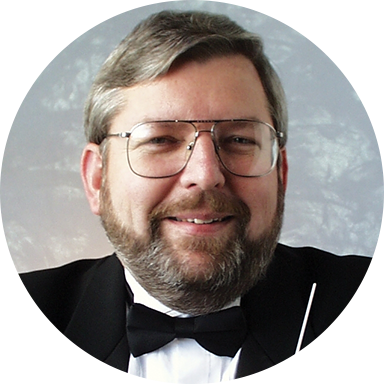
Mark Williams stands among the most prolific composers for school bands and orchestras, with more than 200 published compositions. He co-authored the widely used Accent on Achievement Band Method and earned degrees in music education from Eastern Washington University, including both a Bachelor of Arts and a Master of Education. His career took him across North America and beyond as a clinician and guest conductor visiting 34 states, five Canadian provinces, and Australia.
Williams built his teaching foundation in Washington state, where he spent many years focused on elementary band instruction. His work as a woodwind performer and arranger with the 560th Air Force Band further shaped his compositional voice. Among his many honors are the Gralia Competition award from the Western International Band Clinic and multiple ASCAP Special Awards recognizing his contributions to music.
Beyond composing and conducting clinics, Williams maintained an active performance schedule on bassoon and served as Conductor and Artistic Director for the Spokane British Brass Band. A Chicago native, he developed much of his professional career in Spokane, Washington, where his influence on school music programs remains significant.
Williams built his teaching foundation in Washington state, where he spent many years focused on elementary band instruction. His work as a woodwind performer and arranger with the 560th Air Force Band further shaped his compositional voice. Among his many honors are the Gralia Competition award from the Western International Band Clinic and multiple ASCAP Special Awards recognizing his contributions to music.
Beyond composing and conducting clinics, Williams maintained an active performance schedule on bassoon and served as Conductor and Artistic Director for the Spokane British Brass Band. A Chicago native, he developed much of his professional career in Spokane, Washington, where his influence on school music programs remains significant.