

Accent on Ensembles, Book 1: B-flat Clarinet, Bass Clarinet Book
$6.99 USD
Sale price
$6.99 USD
Regular price
Skip to product information


Accent on Ensembles, Book 1: B-flat Clarinet, Bass Clarinet Book
Duets, Trios and Quartets for Flexible Instrumentation Correlated with Accent on Achievement, Book 1
By John O'Reilly and Mark Williams
Item: 00-19615
$6.99
One moment…
Description
Accent on Ensembles is an exciting book of duets, trios and quartets for flexible instrumentation that correlates with Accent on Achievement, Book 1. Use these ensembles to develop confidence in young players and as a valuable resource for music during contest season. Since the instrumentation is flexible, any combination of instruments can play together. Accent on Ensembles, Book 2 is an exciting book of duets, trios and quartets for flexible instrumentation that correlates with Accent on Achievement, Book 2.


Discover MakeMusic Cloud: thousands of interactive titles your students can play along with today.
Sample Audio
No sample audio found.
Sample Video
No sample videos found.
Additional Details
More about this title
About the Authors
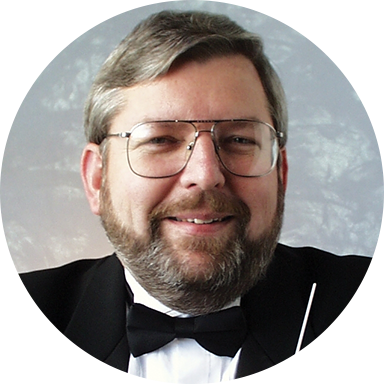
Mark Williams stands among the most celebrated composers dedicated to school band and orchestral music. A Chicago native who established his career in Spokane, Washington, he shaped generations of young musicians through his extensive teaching in elementary band programs throughout the state. He earned both his Bachelor of Arts in Education and Master of Education from Eastern Washington University.
Williams authored over 200 published compositions and co-wrote the influential Accent on Achievement Band Method. His achievements include winning the Gralia Competition at the Western International Band Clinic and receiving multiple ASCAP Special Awards for his contributions to band, orchestral, and choral music. His professional background includes service as a woodwind performer and arranger with the 560th Air Force Band.
As a clinician and guest conductor, Williams brought his expertise across North America and beyond, visiting 34 states, five Canadian provinces, and Australia. He performed regularly on bassoon and served as Conductor and Artistic Director of the Spokane British Brass Band alongside his composition and conducting commitments.
Williams authored over 200 published compositions and co-wrote the influential Accent on Achievement Band Method. His achievements include winning the Gralia Competition at the Western International Band Clinic and receiving multiple ASCAP Special Awards for his contributions to band, orchestral, and choral music. His professional background includes service as a woodwind performer and arranger with the 560th Air Force Band.
As a clinician and guest conductor, Williams brought his expertise across North America and beyond, visiting 34 states, five Canadian provinces, and Australia. He performed regularly on bassoon and served as Conductor and Artistic Director of the Spokane British Brass Band alongside his composition and conducting commitments.