
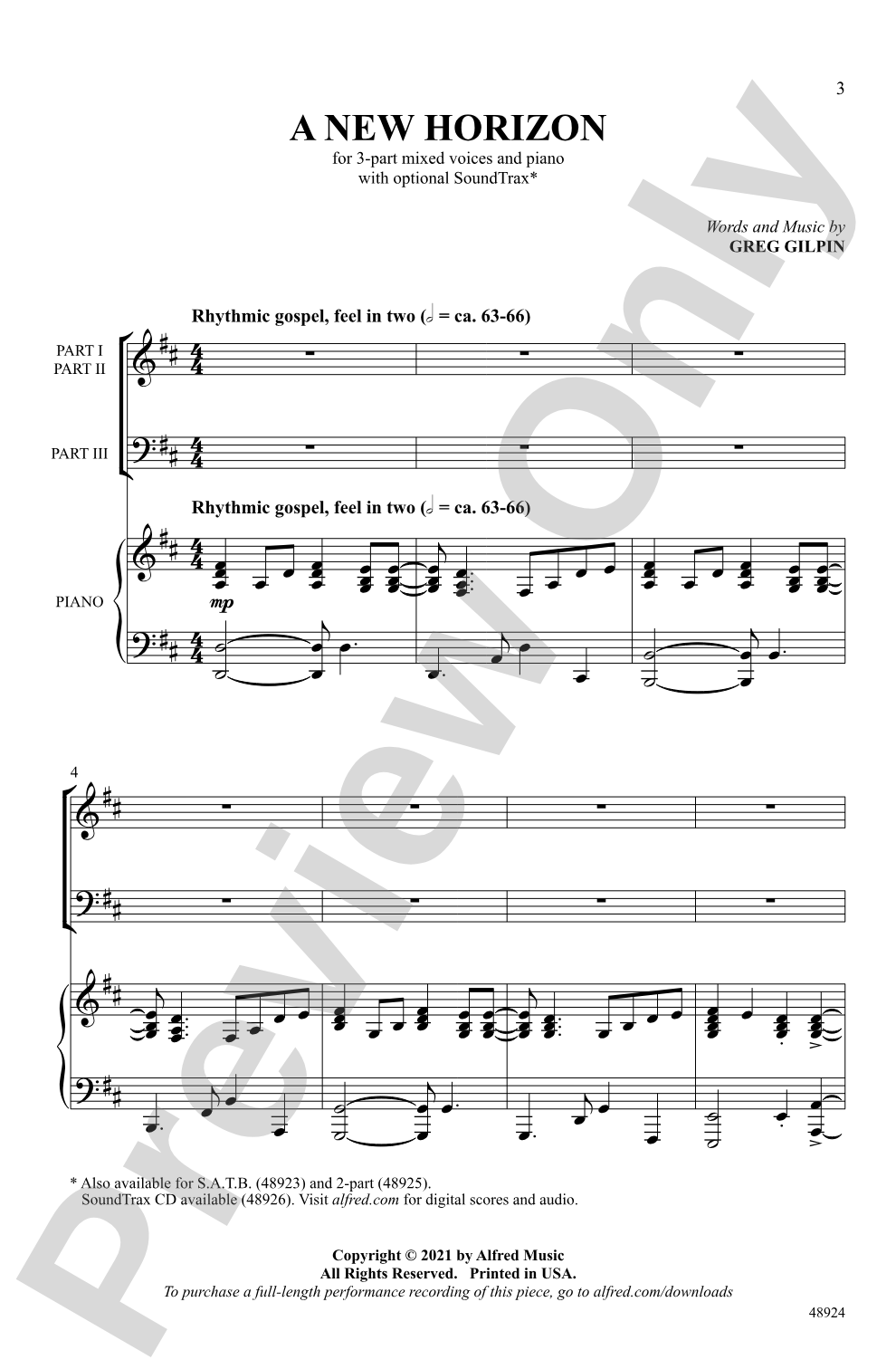

A New Horizon: 3-Part Mixed Choral Octavo
Words and music by Greg Gilpin
Item: 00-PO-0006704
$2.20
Minimum order quantity: 20 copies
Pickup currently not available
Related Items
A New Horizon: SoundTrax Digital Audio Download |
$29.99
|
View | |
A New Horizon: SATB Choral Octavo |
$2.20
|
View | |
A New Horizon: 2-Part Choral Octavo |
$2.20
|
View | |
A New Horizon: SATB Choral Octavo |
$2.20
|
View | |
A New Horizon: 3-Part Mixed Choral Octavo |
$2.20
|
View | |
A New Horizon: 2-Part Choral Octavo |
$2.20
|
View | |
A New Horizon: Choral SoundTrax CD |
$29.99
|
View |
Description
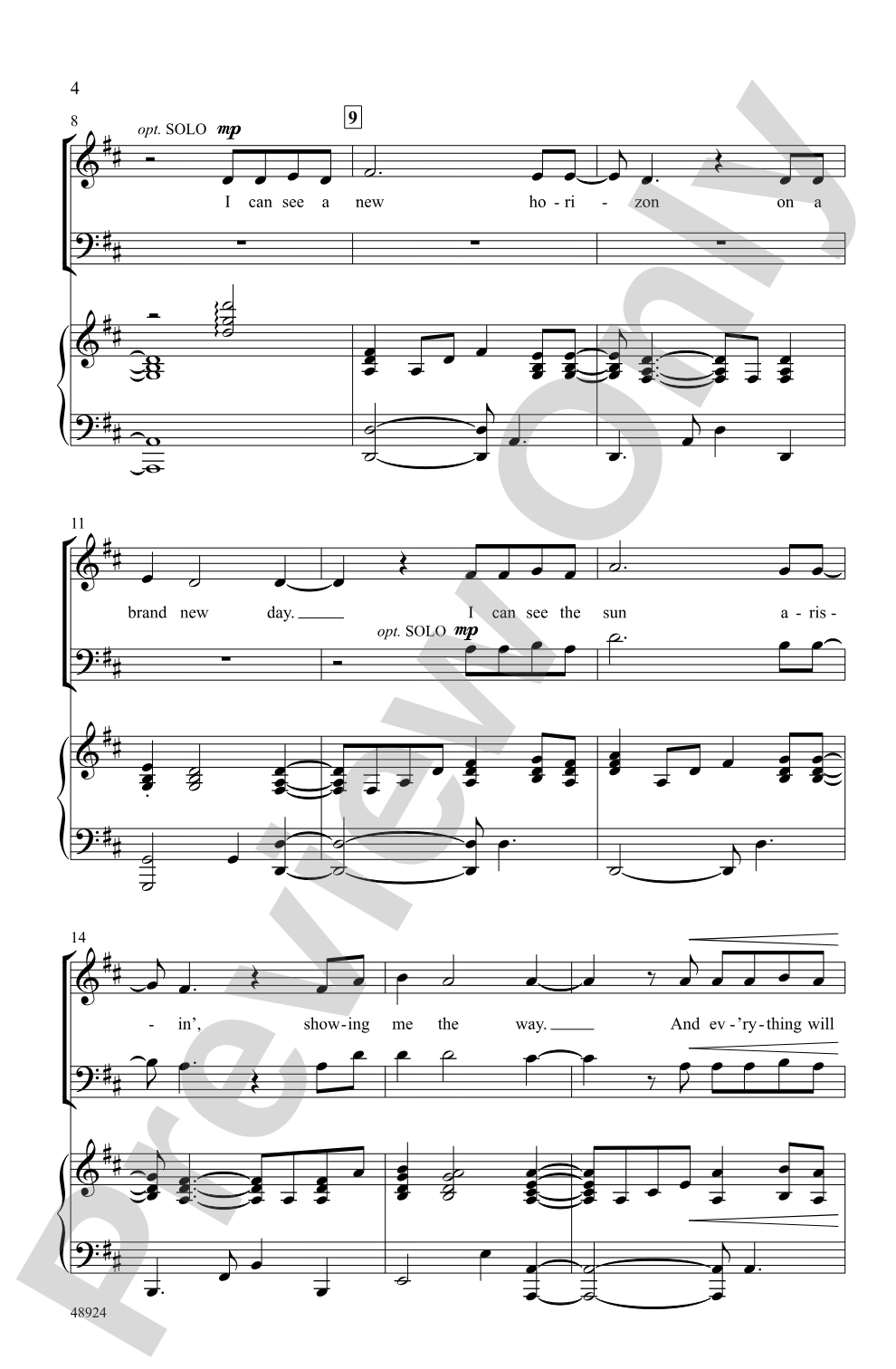
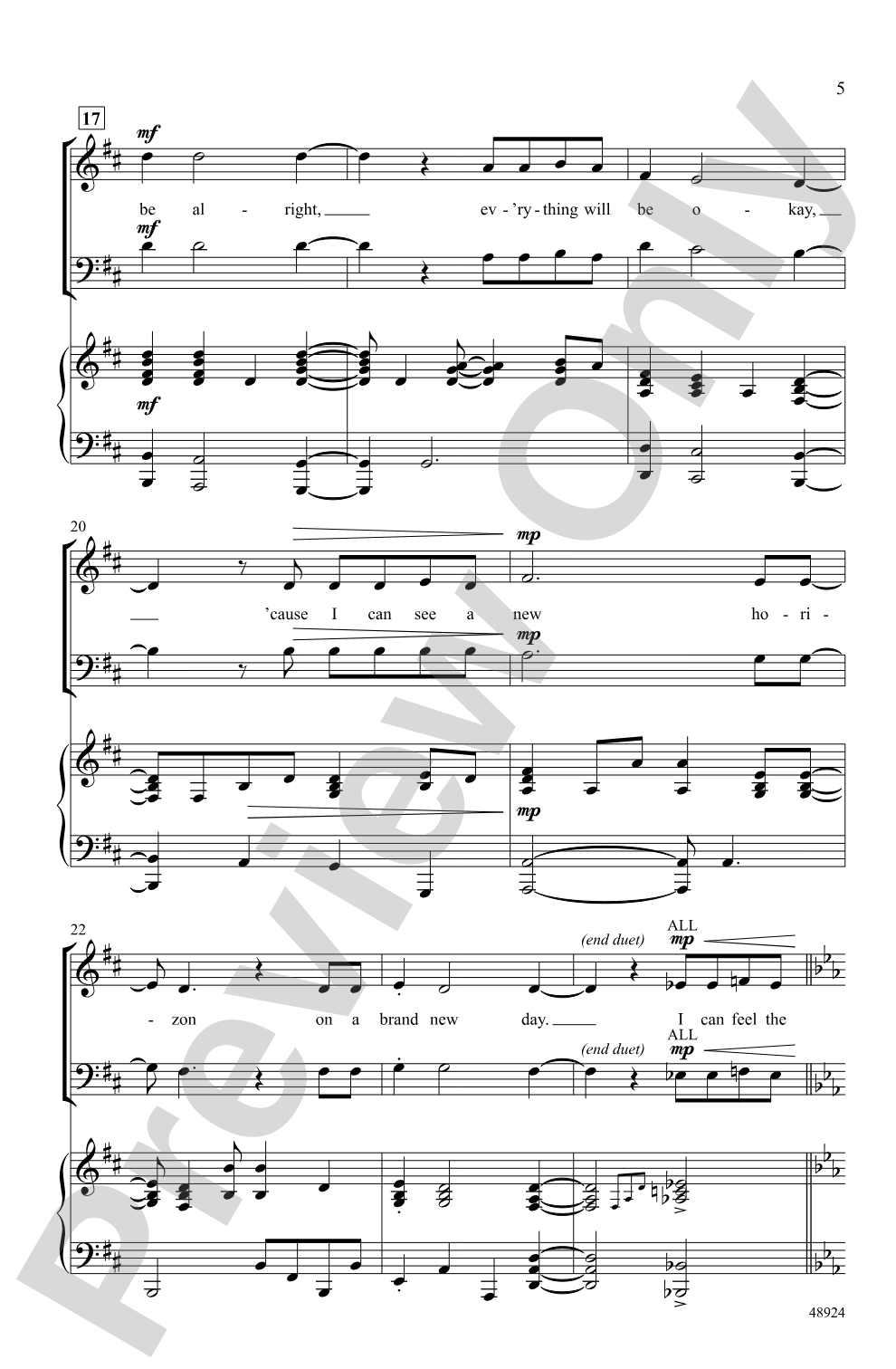
Carefully placed staccatos and well-chosen chord inversions illuminate the gospel style of this original anthem of hope. It's a perfect pep talk or pick-me-up theme song for whenever your program needs a lift. A solo voice becomes a duet before all the singers join in and grow with intensity. Several ascending key changes raise spirits, ensuring that the uplifting message resonates. "Everything will be alright, everything will be okay, 'cause I can see a new horizon on a brand new day." If you don't perform with the kickin' SoundTrax accompaniment, be sure to add a groovin' drummer and riffing organ of your own. We dare you (and your audience) not to clap along!


A New Horizon: 3-Part Mixed Choral Octavo isn't in MakeMusic Cloud just yet...but it could be. Let us know you'd like to see it, and you'll help shape what comes next. In the meantime, start a free trial and dive into thousands of interactive titles your students can play along with today.
Request This Title
Tell us you want it.
Start Your Free Trial
Explore everything that's ready to play right now.
Sample Audio
1
Audio File
--:--
0:00
0:00
Sample Video
Additional Details
Series:
Alfred Choral Designs
Publisher:
Alfred Music
Page Count:
16
SKU:
00-PO-0006704
More about this title
About the Composer: Greg Gilpin

Greg Gilpin stands among America's most prolific and performed choral composers, with his works regularly heard at prestigious venues including Carnegie Hall, Lincoln Center, and the Sydney Opera House. An ASCAP award-winning composer and conductor, Gilpin has shaped choral music education through his role as Director of Educational Choral Publications for Shawnee Press, while his international conducting appearances span from the Royal Festival Hall in London to Harpa Concert Hall in Reykjavik.
Beyond the concert hall, Gilpin has expanded his creative reach into film scoring and television, earning a Best Score award for the short film "Rosie's Rescue" and appearing on network productions. He holds membership in ACDA, NAfME, SAG-AFTRA, and maintains Life Loyal status in Phi Mu Alpha Sinfonia. His output reflects both serious artistic ambition and an instinctive understanding of what moves singers and audiences alike.
Why we love this
Gilpin has crafted an anthem that genuinely earns its uplifting message through musical choices rather than sentimentality. The ascending key changes feel organic rather than gimmicky, the staccatos and chord inversions anchor a gospel idiom that works without requiring a full contemporary worship band, and the structural arc from solo to duet to full ensemble builds momentum that singers feel in their bodies. This is the kind of piece that actually energizes a program.
What to expect
The piece radiates warmth and forward momentum, anchored by a gospel sensibility that feels both rooted and aspirational. Staccatos sparkle against full, inverted chords; the message moves from personal affirmation into collective celebration, with key changes that lift the emotional temperature organically until the full choir is in motion.
Who it's for
This is ideal for choirs wanting a genuine morale-booster that works for graduation, concert, or festival settings. Any ensemble with solid ensemble blend and basic rhythmic security can deliver this effectively; the three-part SAB voicing keeps ranges accessible while the gospel style demands groove and rhythmic precision from your singers.
How to get the most out of it
- Shape the solo-to-duet-to-ensemble progression with clear dynamics; the accumulation of voices is your storytelling tool, so resist the urge to jump to full volume too early.
- Engage a drummer and organist if the SoundTrax accompaniment isn't available; the rhythmic pocket and harmonic grounding make this piece sing, and these instruments are essential to the style.
- Work the staccatos with precision and rhythmic intent; they're not decorative but rather a defining voice in the gospel texture, especially in the ensemble sections.
- Let the key changes breathe slightly; give singers a moment to reset their vocal placement and mental focus as the piece ascends, so the intensity feels earned rather than forced.
How to use it
Save this for moments when you need genuine momentum: a graduation finale, a mid-program pick-me-up in a concert of lighter fare, or a festival closer that leaves audiences smiling. It pairs well after more introspective or serious repertoire, as its gospel energy and textual optimism create genuine contrast without feeling tonally inappropriate in a mixed program.
Skills your students will build
- Gospel rhythmic vocabulary and articulation (staccato placement, swing feel)
- Blend and balance in three-part mixed voicing
- Ensemble singing in ascending key changes without losing intonation
- Responding to solo and duet textures; entering cues as the ensemble expands
- Rhythmic precision with percussion and organ accompaniment