

A New Horizon: SATB Choral Octavo
Words and music by Greg Gilpin
Item: 00-PO-0006703
$2.20
Minimum order quantity: 20 copies
Pickup currently not available
Related Items
A New Horizon: SoundTrax Digital Audio Download |
$29.99
|
View | |
A New Horizon: 3-Part Mixed Choral Octavo |
$2.20
|
View | |
A New Horizon: 2-Part Choral Octavo |
$2.20
|
View | |
A New Horizon: SATB Choral Octavo |
$2.20
|
View | |
A New Horizon: 3-Part Mixed Choral Octavo |
$2.20
|
View | |
A New Horizon: 2-Part Choral Octavo |
$2.20
|
View | |
A New Horizon: Choral SoundTrax CD |
$29.99
|
View |
Description
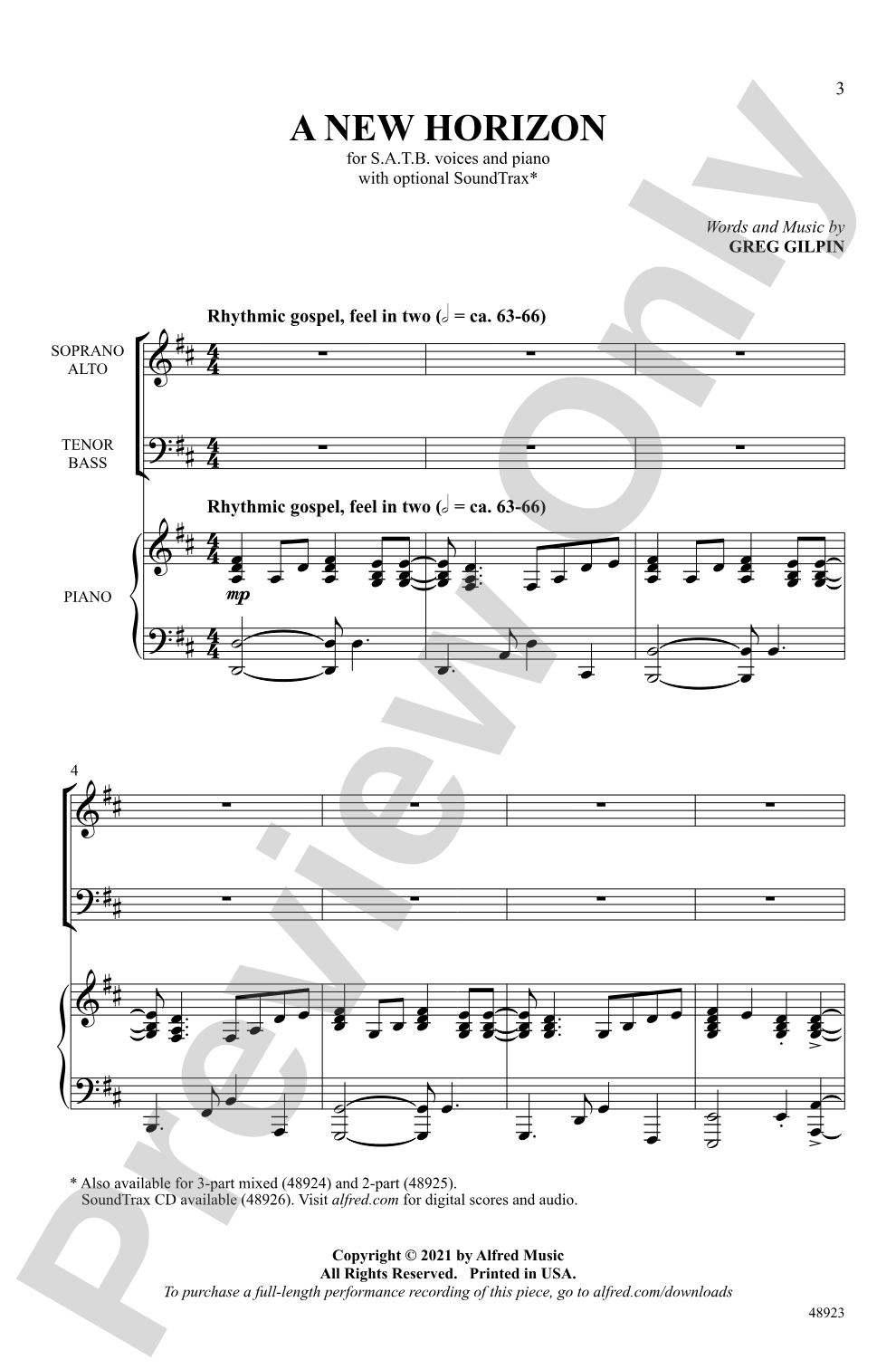
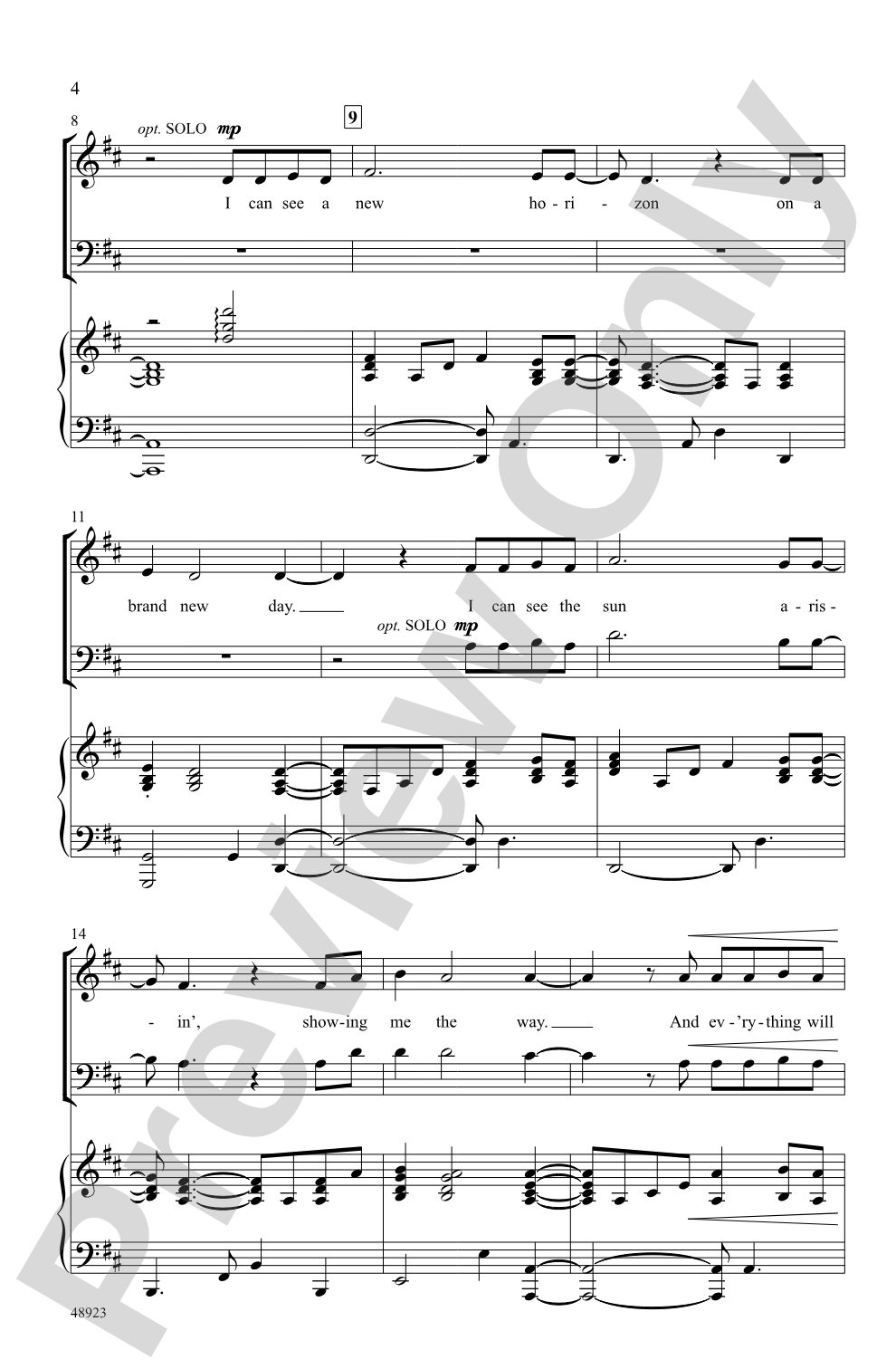
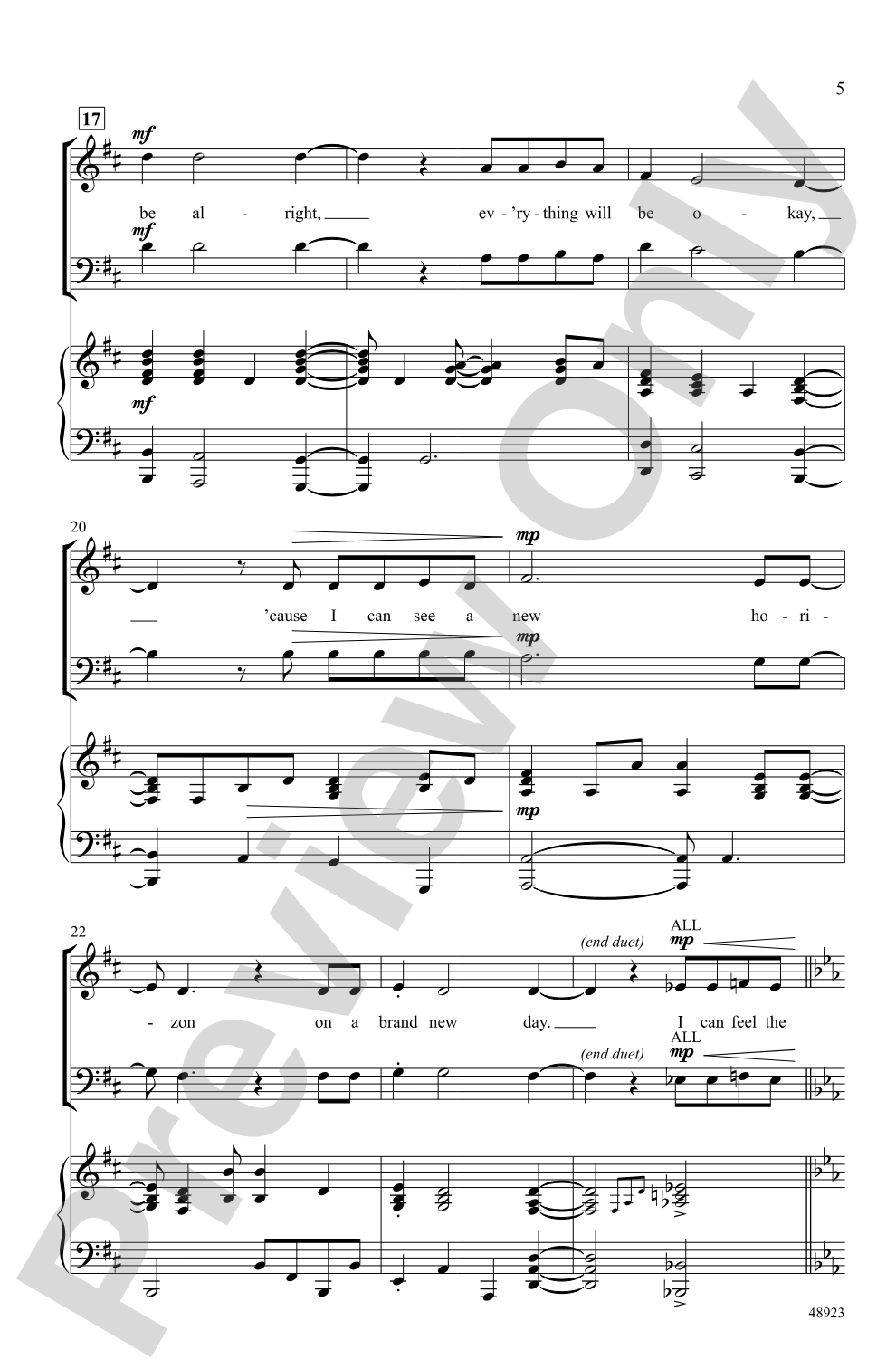
Carefully placed staccatos and well-chosen chord inversions illuminate the gospel style of this original anthem of hope. It's a perfect pep talk or pick-me-up theme song for whenever your program needs a lift. A solo voice becomes a duet before all the singers join in and grow with intensity. Several ascending key changes raise spirits, ensuring that the uplifting message resonates. "Everything will be alright, everything will be okay, 'cause I can see a new horizon on a brand new day." If you don't perform with the kickin' SoundTrax accompaniment, be sure to add a groovin' drummer and riffing organ of your own. We dare you (and your audience) not to clap along!


A New Horizon: SATB Choral Octavo isn't in MakeMusic Cloud just yet...but it could be. Let us know you'd like to see it, and you'll help shape what comes next. In the meantime, start a free trial and dive into thousands of interactive titles your students can play along with today.
Request This Title
Tell us you want it.
Start Your Free Trial
Explore everything that's ready to play right now.
Sample Audio
1
Audio File
--:--
0:00
0:00
Sample Video
1 / 2
Additional Details
Series:
Alfred Choral Designs
Publisher:
Alfred Music
Page Count:
16
SKU:
00-PO-0006703
More about this title
About the Composer: Greg Gilpin

Greg Gilpin has established himself as a prolific choral composer and conductor whose work is performed across major concert halls including Carnegie Hall, Lincoln Center, the Sydney Opera House, and Royal Festival Hall. His compositions have earned recognition from ASCAP, and he currently serves as Director of Educational Choral Publications for Shawnee Press, where he shapes the landscape of contemporary choral literature for school and church musicians.
Beyond the concert hall, Gilpin has expanded his creative reach into film scoring and collaborative premieres with accomplished vocalists. He holds membership in ACDA, NAfME, and Phi Mu Alpha Sinfonia, reflecting his deep commitment to music education and the choral art.
Why we love this
The staccato articulations and chord inversions give this piece a contemporary gospel flavor that feels fresh without sacrificing musical substance. Gilpin's structural choices—moving from solo to duet to full choir and scaling through key changes—build momentum organically, making it genuinely effective as a program closer or morale booster rather than feeling like a gimmick.
What to expect
Energetic and propulsive, with the warmth of gospel harmony grounded in staccato precision. As voices accumulate and the key rises, the piece builds a genuine sense of momentum and collective purpose that invites the audience into the celebration.
Who it's for
Directors programming graduation ceremonies, spring concerts, or any occasion where the ensemble needs a confidence boost and the audience expects to feel something genuinely uplifting. This works equally well for community choirs, church ensembles, and school choirs seeking a contemporary piece with real substance beneath its accessibility.
How to get the most out of it
- Nail the rhythmic precision of those staccatos early in rehearsal; they're what drive the groove and distinguish this from generic uplift anthems.
- Shape the solo and duet passages with real storytelling presence before the full choir enters; this contrast makes the tutti moment land with impact.
- Lock the rhythm section (drums and organ) to the recorded accompaniment's groove if you're using the SoundTrax; the pocket matters as much as the melody.
- Lean into the ascending key changes without rushing; let each modulation feel like a natural lift rather than a forced push.
How to use it
Place this toward the end of your concert when you want to send the audience out feeling hopeful and maybe clapping. It pairs well after more introspective pieces and works particularly effectively on graduation or spring concert programs where thematic coherence around renewal or new beginnings matters.
Skills your students will build
- Stylistically authentic staccato articulation in gospel idiom
- Chord inversion recognition and their voice-leading implications
- Navigating successive key changes while maintaining ensemble cohesion
- Balancing solo and choral sections with appropriate dynamic contrast
- Ensemble groove and rhythmic precision in contemporary style