
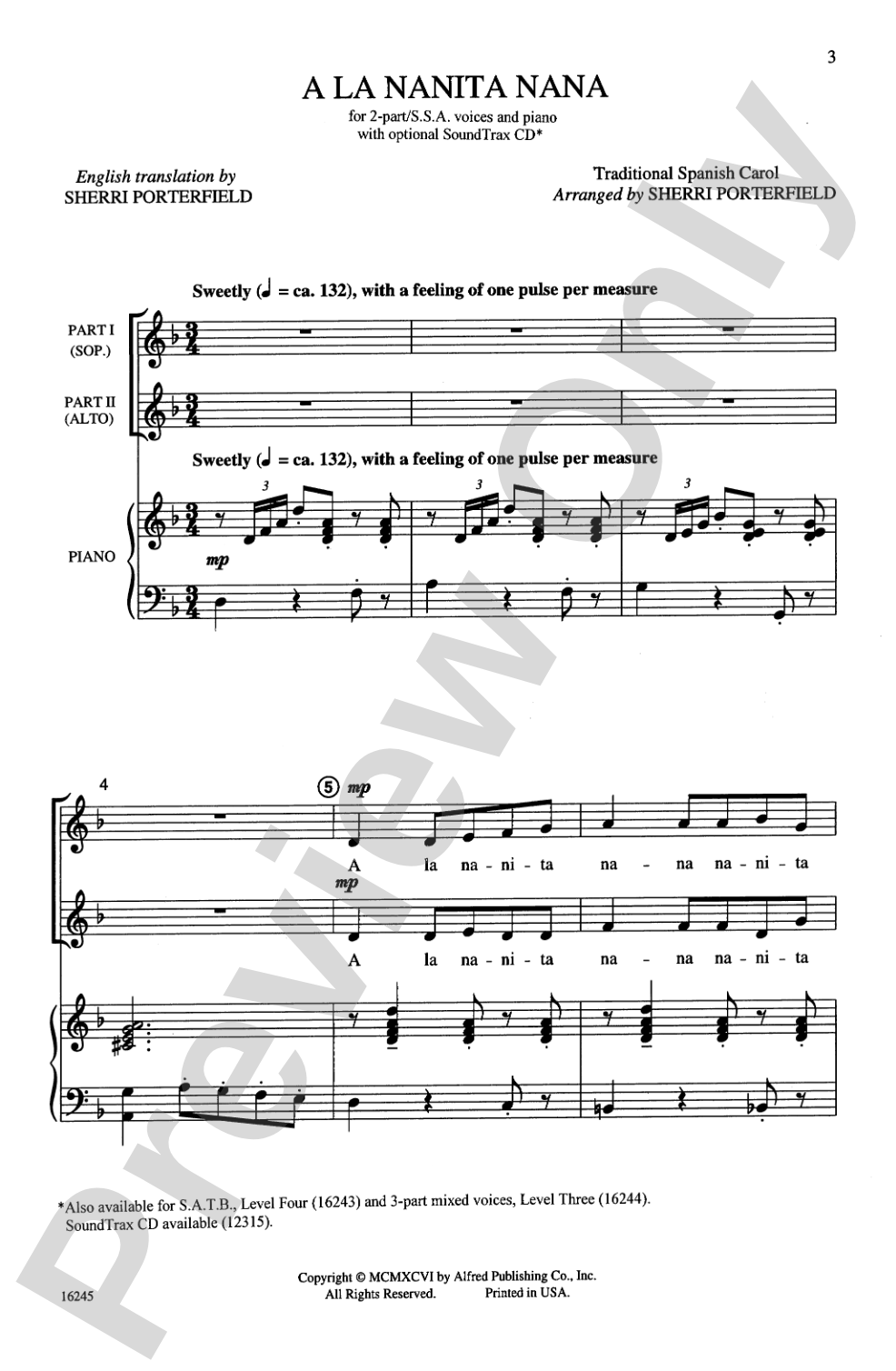

A La Nanita Nana: 2-Part/SSA Choral Octavo
Arr. Sherri Porterfield
Item: 00-PO-0002853
$2.25
Minimum order quantity: 20 copies
Pickup currently not available
Related Items
A La Nanita Nana: SATB Choral Octavo |
$2.25
|
View | |
A La Nanita Nana: 3-Part Mixed Choral Octavo |
$2.25
|
View | |
A La Nanita Nana: Choral Octavo SoundTrax CD |
$27.99
|
View | |
A La Nanita Nana: SATB Choral Octavo |
$2.25
|
View | |
A La Nanita Nana: 3-Part Mixed Choral Octavo |
$2.25
|
View | |
A La Nanita Nana: 2-Part/SSA Choral Octavo |
$2.25
|
View |
Description


A La Nanita Nana: 2-Part/SSA Choral Octavo isn't in MakeMusic Cloud just yet...but it could be. Let us know you'd like to see it, and you'll help shape what comes next. In the meantime, start a free trial and dive into thousands of interactive titles your students can play along with today.
Request This Title
Tell us you want it.
Start Your Free Trial
Explore everything that's ready to play right now.
Sample Audio
No sample audio found.
Sample Video
No sample videos found.
Additional Details
Series:
Alfred Archive Edition: Alfred Choral Designs
Publisher:
Alfred Music
Page Count:
12
SKU:
00-PO-0002853
More about this title
About the Arranger: Sherri Porterfield
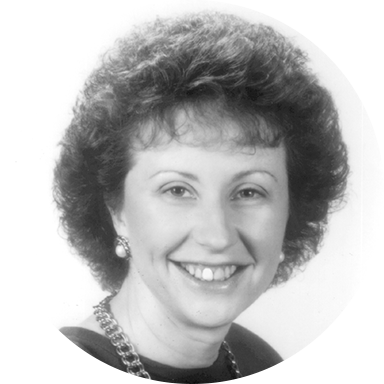
Sherri Porterfield directs choirs at Cedar Park Middle School in Cedar Park, Texas, where her students have earned numerous first-place and sweepstakes awards at competitions and performed at state music educators conventions. She has also taught in Missouri and Kansas, and served as an adjunct assistant professor of music education at the University of Missouri-Kansas City Conservatory of Music. Her work as a clinician and guest conductor has brought her to honor choirs across the country at elementary, middle, and high school levels.
With over 175 published choral compositions to her name, Porterfield has maintained an active composing career since the late 1990s, earning yearly ASCAP awards for her writing. Her music appears in the catalogs of Alfred Music Publishing and other major publishers. She holds a B.S.E. in music education from the University of Memphis and a Master of Music in choral conducting from the University of Missouri-Kansas City, and has been recognized multiple times in Who's Who publications and as Teacher of the Year.
Why we love this
Porterfield's ear for accessible, singable writing shines through in this arrangement. The 2-Part/SSA flexibility makes it genuinely useful for mixed-ability ensembles, and the Spanish text deepens cultural authenticity without demanding advanced vocal technique. This is the kind of winter repertoire that sounds beautiful, feels rewarding to rehearse, and gives every singer something to do.
What to expect
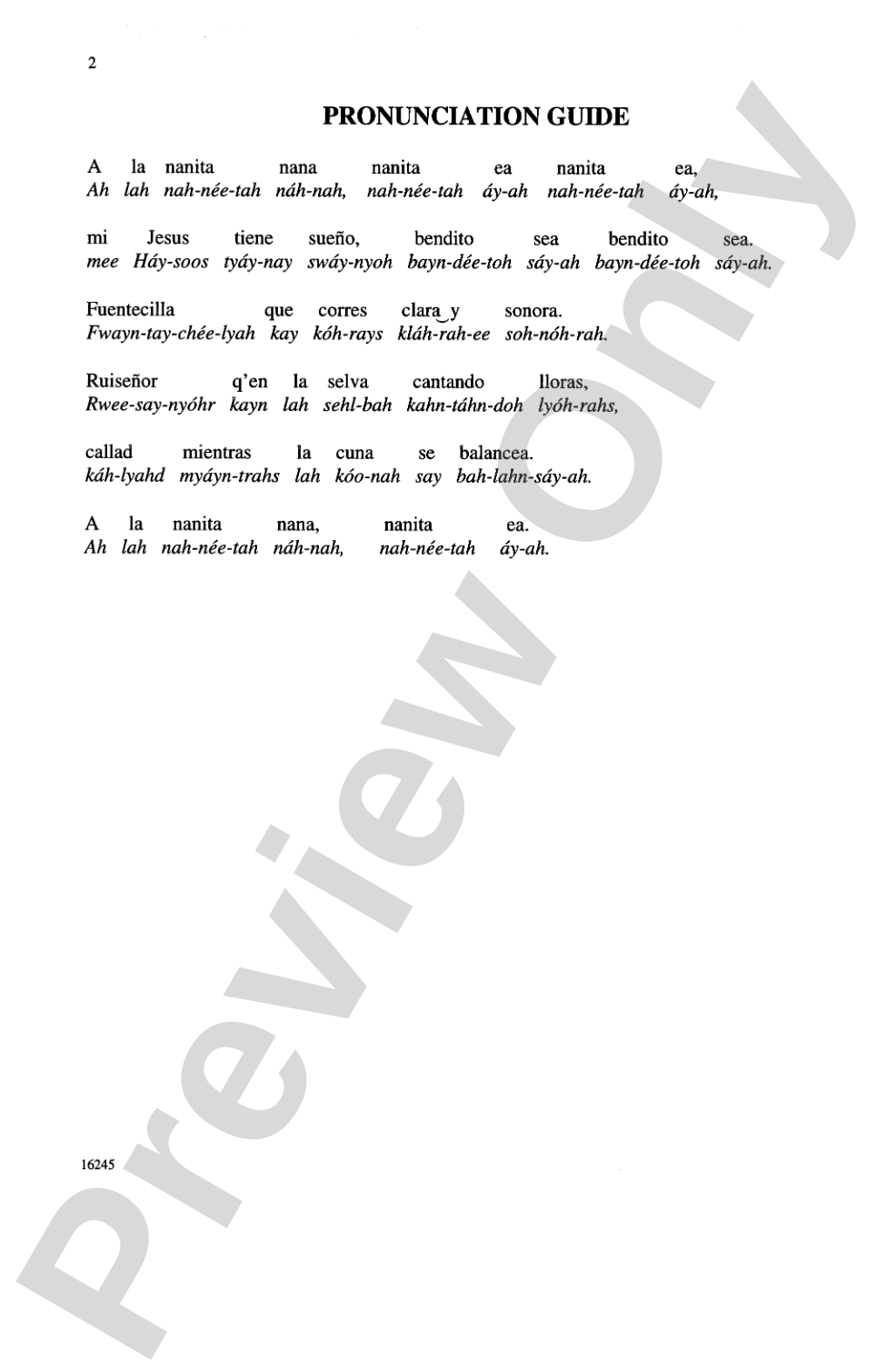
A tender, rocking lullaby that feels both timeless and intimate. The Spanish text wraps around a melody that sits naturally in the voice, creating warmth without strain. There's a hushed quality throughout, inviting singers to listen to each other and settle into the song's gentle repose.
Who it's for
Middle school and high school choirs seeking repertoire that bridges skill levels; the two-part and SSA options let you program this with both developing singers and experienced musicians. Directors building a culturally rich winter concert will find this Latin lullaby a meaningful addition that moves beyond holiday clichés.
How to get the most out of it
- Shape the lullaby's gentle contour by drawing a slight swell through each phrase rather than singing straight; the rocking quality of the text should guide your dynamic arc.
- Encourage treble voices to sustain vowels with softness in the upper register, particularly in passages that sit high; this protects tone while maintaining the intimate character.
- Balance the two-part writing by doubling attention to the lower voices, who often carry harmonic support; make sure they feel anchored and confident.
- Use the recorded accompaniment as a rehearsal tool to lock the ensemble's ensemble sense of pulse before you release from piano accompaniment.
How to use it
Slot this early in a winter concert to set a reflective mood, or use it as a palate-cleanser between more energetic numbers. The accessibility of the two-part voicing makes it an excellent choice for opening your program with full ensemble participation while introducing treble voices to cultural and linguistic breadth.
Skills your students will build
- Reading and singing Spanish text with natural pronunciation
- Balancing melody and harmonic support across two or three voice parts
- Maintaining soft, sustained tone in the upper register
- Phrasing lyrical material with gentle dynamic shape
- Ensemble listening and blend in intimate choral texture