

10,000 Hours: SAB Choral Octavo
Words and music by Shay Mooney, Dan Smyers, Jordan Reynolds, Jessie Jo Dillon, Justin Bieber, and Jason Boyd / arr. Jack Zaino
Item: 00-PO-0006479
$2.10
Minimum order quantity: 20 copies
One moment…
Related Items
10,000 Hours: SoundTrax Digital Audio Download |
$29.99
|
View | |
10,000 Hours: SATB Choral Octavo |
$2.10
|
View | |
10,000 Hours: SSA Choral Octavo |
$2.10
|
View | |
10,000 Hours: SATB Choral Octavo |
$2.10
|
View | |
10,000 Hours: SAB Choral Octavo |
$2.10
|
View | |
10,000 Hours: SSA Choral Octavo |
$2.10
|
View | |
10,000 Hours: Choral Octavo SoundTrax CD |
$29.99
|
View |
Description
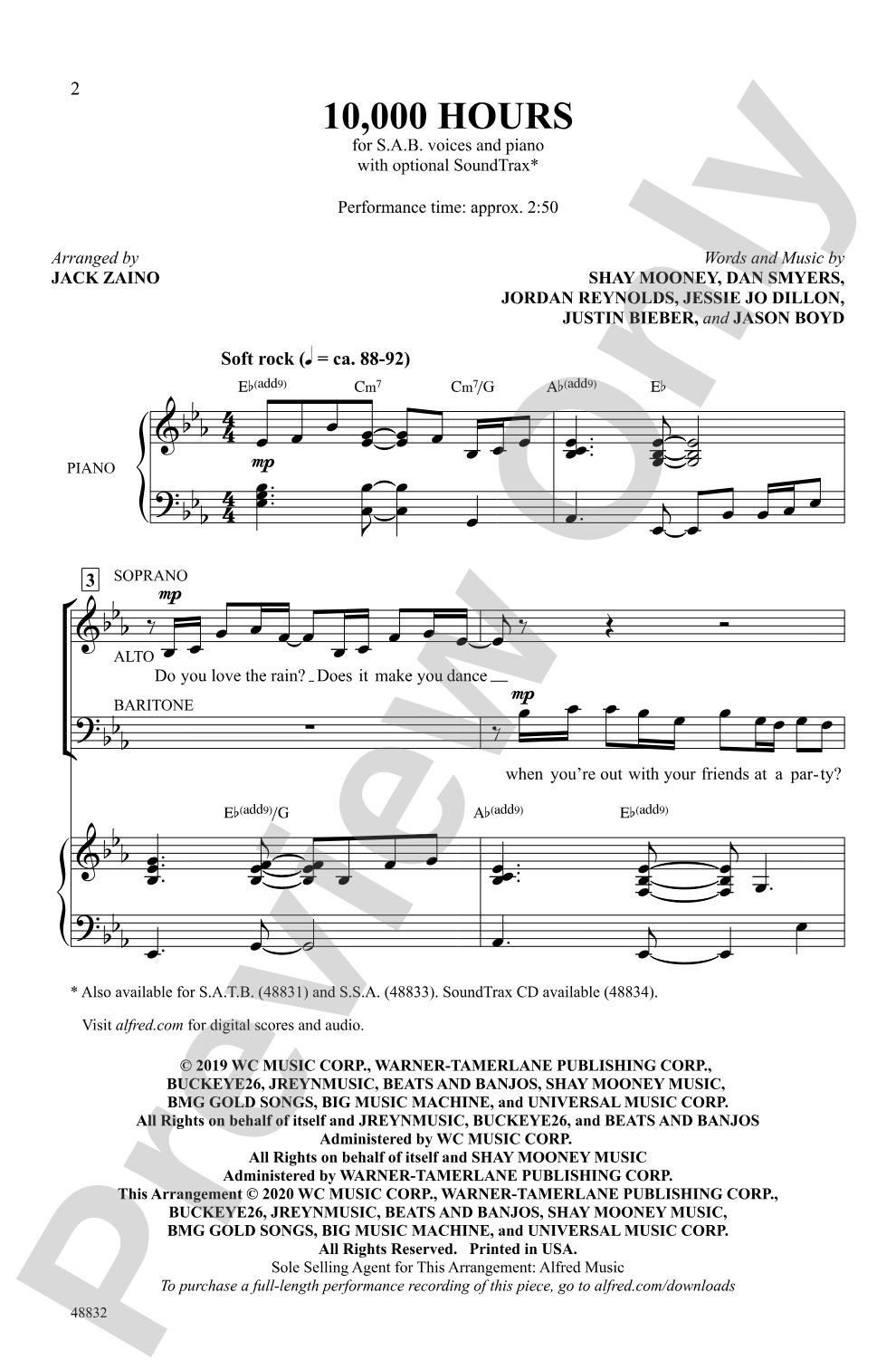
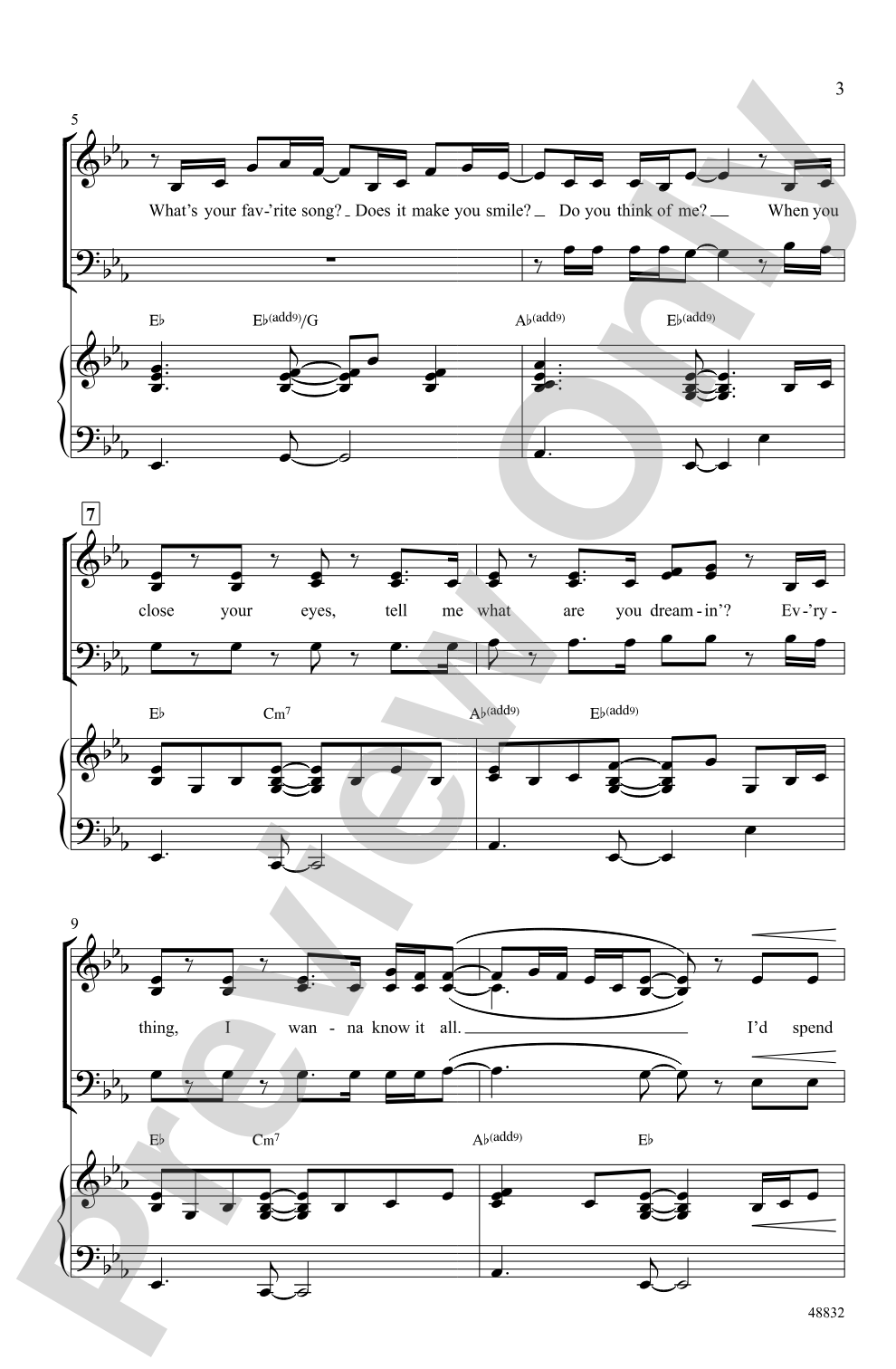
Recorded by Dan + Shay and Justin Bieber, this contemporary love song broke records as the highest-charting non-holiday country song in history on Billboard's Streaming Songs chart. This straightforward choral arrangement is well-constructed and undeniably satisfying in all voicings. The piano part lays beautifully in the hands and guitar chords are provided. Be sure to check out the soft rock ballad SoundTrax accompaniment. This title is available in MakeMusic Cloud.


10,000 Hours: SAB Choral Octavo isn't in MakeMusic Cloud just yet...but it could be. Let us know you'd like to see it, and you'll help shape what comes next. In the meantime, start a free trial and dive into thousands of interactive titles your students can play along with today.
Request This Title
Tell us you want it.
Start Your Free Trial
Explore everything that's ready to play right now.
Sample Audio
1
Audio File
--:--
0:00
0:00
Sample Video
Additional Details
Series:
Alfred Pop Choral Series
Publisher:
Alfred Music
Page Count:
12
SKU:
00-PO-0006479
More about this title
About the Composer: Shay Mooney
Shay Mooney is one half of Dan + Shay, the country duo that has dominated Billboard charts and earned multiple Grammy Awards. As a songwriter and vocalist, Mooney has collaborated with some of the biggest names in contemporary music, bringing his gift for crafting emotionally resonant melodies to the pop and country landscape.
His work on "10,000 Hours" with Justin Bieber exemplifies his ability to write songs that connect across genres and generations. For choral directors, his compositions offer the rare combination of radio-friendly accessibility and genuine musical substance.
Why we love this
This arrangement captures what makes the original so irresistible: a singable melody that sits naturally in all three voices and harmonic progressions that feel both contemporary and musically satisfying. Your singers will recognize the song immediately, which means they'll invest in nailing the details. The provided guitar chords give you flexibility for accompaniment choices beyond the SoundTrax track.
What to expect
Warm and intimate, like a duet that opens up to include the whole ensemble. The song moves with the natural phrasing of speech, grounded in a soft-rock sensibility that lets the harmony shine without requiring vocal fireworks.
Who it's for
Choirs looking for contemporary material that sits comfortably in SAB voicing without sacrificing musicality. This works equally well for middle school groups ready to engage with current repertoire and high school choirs seeking a crowd-pleasing concert piece.
How to get the most out of it
- Balance the melody across all three voices during the ensemble sections. The tune has enough profile that SAB voices can share it without losing its impact.
- The piano voicings are idiomatic and friendly to play; resist the urge to double-track them. Let them breathe and frame the voices cleanly.
- If you use the SoundTrax accompaniment, have singers sing through at least two rehearsals with piano only first. This builds vocal independence and makes the recorded track feel like a welcome addition rather than a crutch.
- Pay attention to the dynamics marked in the score. This is a ballad, and restraint in the verses will make the final chorus land with real power.
How to use it
Pair this with other contemporary pop or country arrangements for a concert section that demonstrates your choir's range and relevance. It also works as an accessible opener on a more classical program, reorienting the audience's ears before moving into other repertoire. Consider it for spring concerts when singers and audiences alike can appreciate a song that feels current and emotionally grounded.
Skills your students will build
- Blending three-part harmony in a contemporary idiom
- Singing contemporary melodic contours with natural phrasing
- Reading and following a constructed piano part that supports rather than doubles the voices
- Balancing familiarity (the song they know) with the demands of choral intonation and ensemble listening