
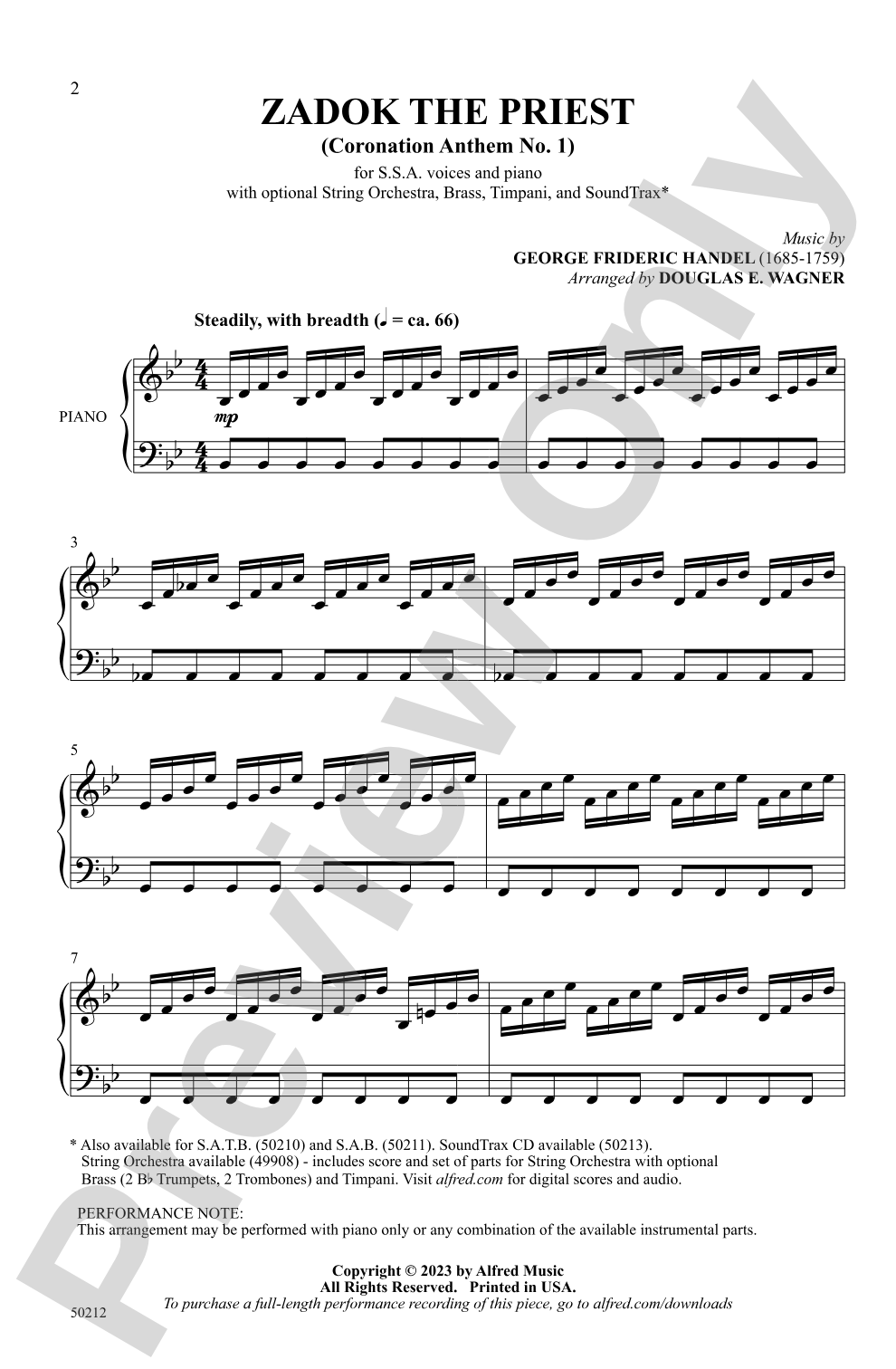
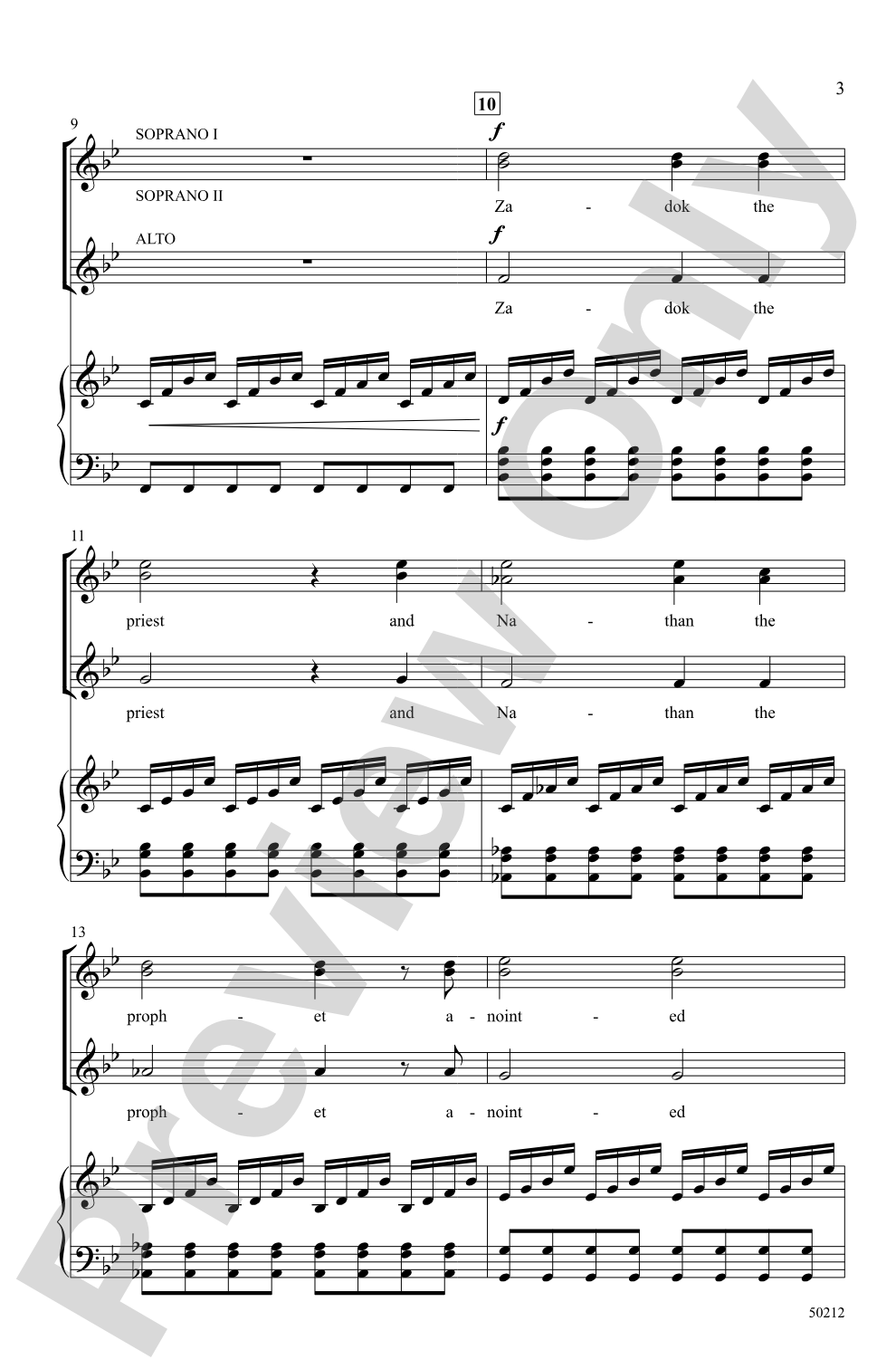

Zadok the Priest: SSA Choral Octavo
(Coronation Anthem No. 1)
Music by George Frideric Handel / arr. Douglas E. Wagner
Item: 00-PO-0007059
$2.05
Minimum order quantity: 20 copies
Pickup currently not available
Related Items
Zadok the Priest: SoundTrax Digital Audio Download |
$29.98
|
View | |
Zadok the Priest: String Orchestra Conductor Score & Parts |
$60.00
|
View | |
Zadok the Priest: SATB Choral Octavo |
$2.05
|
View | |
Zadok the Priest: SAB Choral Octavo |
$2.05
|
View | |
Zadok the Priest: String Orchestra Conductor Score & Parts |
$60.00
|
View | |
Zadok the Priest: String Orchestra Conductor Score |
$10.00
|
View | |
Zadok the Priest: SATB Choral Octavo |
$2.05
|
View | |
Zadok the Priest: SAB Choral Octavo |
$2.05
|
View | |
Zadok the Priest: SSA Choral Octavo |
$2.05
|
View | |
Zadok the Priest: Choral SoundTrax CD |
$29.99
|
View |
Description
This, the first of Handel's four Coronation Anthems, has been a cherished part of crowning British royalty from George II in 1727 to the current sovereign, Charles III. Commemorate the grand occasion with this condensed version of the majestic Baroque masterwork. Available in three fresh editions designed with student choirs in mind. Perform with the accessible piano reduction, or combine with your school orchestra (strings, brass, and timpani) for a regal fanfare.


Zadok the Priest: SSA Choral Octavo isn't in MakeMusic Cloud just yet...but it could be. Let us know you'd like to see it, and you'll help shape what comes next. In the meantime, start a free trial and dive into thousands of interactive titles your students can play along with today.
Request This Title
Tell us you want it.
Start Your Free Trial
Explore everything that's ready to play right now.
Sample Audio
1
Audio File
--:--
0:00
0:00
Sample Video
Additional Details
Series:
Alfred Choral Designs
Publisher:
Alfred Music
Page Count:
12
SKU:
00-PO-0007059
More about this title
About the Composer: George Frideric Handel
George Frideric Handel (1685–1759) was a German-born composer who spent most of his career in England, becoming the dominant figure in London's musical life during the 18th century. He mastered virtually every musical form of his era, from Italian opera to English oratorio, and his music combines Italian melodic richness with German contrapuntal skill and English sensibility.
Handel's Coronation Anthems represent the pinnacle of his sacred choral writing. Composed for the coronation of King George II in 1727, these works showcase his ability to blend grandeur with intimacy, creating music that moves both court and common listener. His influence on choral music education remains profound; generations of singers have learned musicianship through his demanding yet deeply rewarding vocal lines.
Why we love this
Douglas E. Wagner's arrangement captures the ceremonial splendor of Handel's original without overwhelming student singers. The SSA voicing sits comfortably in accessible ranges while preserving the harmonic richness and dramatic arc that made this anthem legendary at royal coronations. Best of all, you can perform it with just piano or elevate it with orchestra parts for strings, brass, and timpani, giving your program flexibility without sacrificing authenticity.
What to expect
Handel's ceremonial grandeur meets youthful energy in this arrangement. The opening soars with fanfare-like exuberance, building through declarative homophonic sections that feel both majestic and intimate. There's a theatrical quality to the harmonic shifts and cadences, giving singers the sense they're part of something historically weighty and genuinely important.
Who it's for
Student choirs in grades 7 and up, especially those new to Baroque choral music or looking to perform a historically significant work without extreme difficulty. Treble-voiced ensembles benefit most from this SSA voicing, whether in middle school, high school, or community choral settings.
How to get the most out of it
- Shape the opening fanfare with clear articulation and unified breath placement among the sopranos; the brass doubling in the optional orchestration will lock onto your ensemble's confidence here.
- Balance the lower voices during the homophonic sections so the alto line remains audible; Handel's harmonic progressions lose their impact if any voice disappears into the texture.
- Allow the piece to breathe at phrase cadences, particularly before the dramatic key shifts; resist the urge to rush, as weight and ceremony demand space.
- If using the recorded accompaniment, rehearse without it first to build independence; this ensures your singers can sustain musical line even when the piano texture thickens.
How to use it
Open a concert with this piece to establish formality and gravitas, especially effective at winter or spring formal performances. It pairs well with other Baroque sacred or secular works, and the optional orchestra arrangement makes it ideal for collaborative concerts with your school ensemble. Its historical connection to British coronation ceremony also opens doors for interdisciplinary programming around monarchy, history, or cultural traditions.
Skills your students will build
- Baroque phrasing and articulation (especially the opening fanfare figures)
- Harmonic awareness through shifting tonal centers
- Blend and balance in homophonic textures
- Sustained singing and breath control across longer phrases
- Ensemble precision when coordinating with optional instrumental parts