
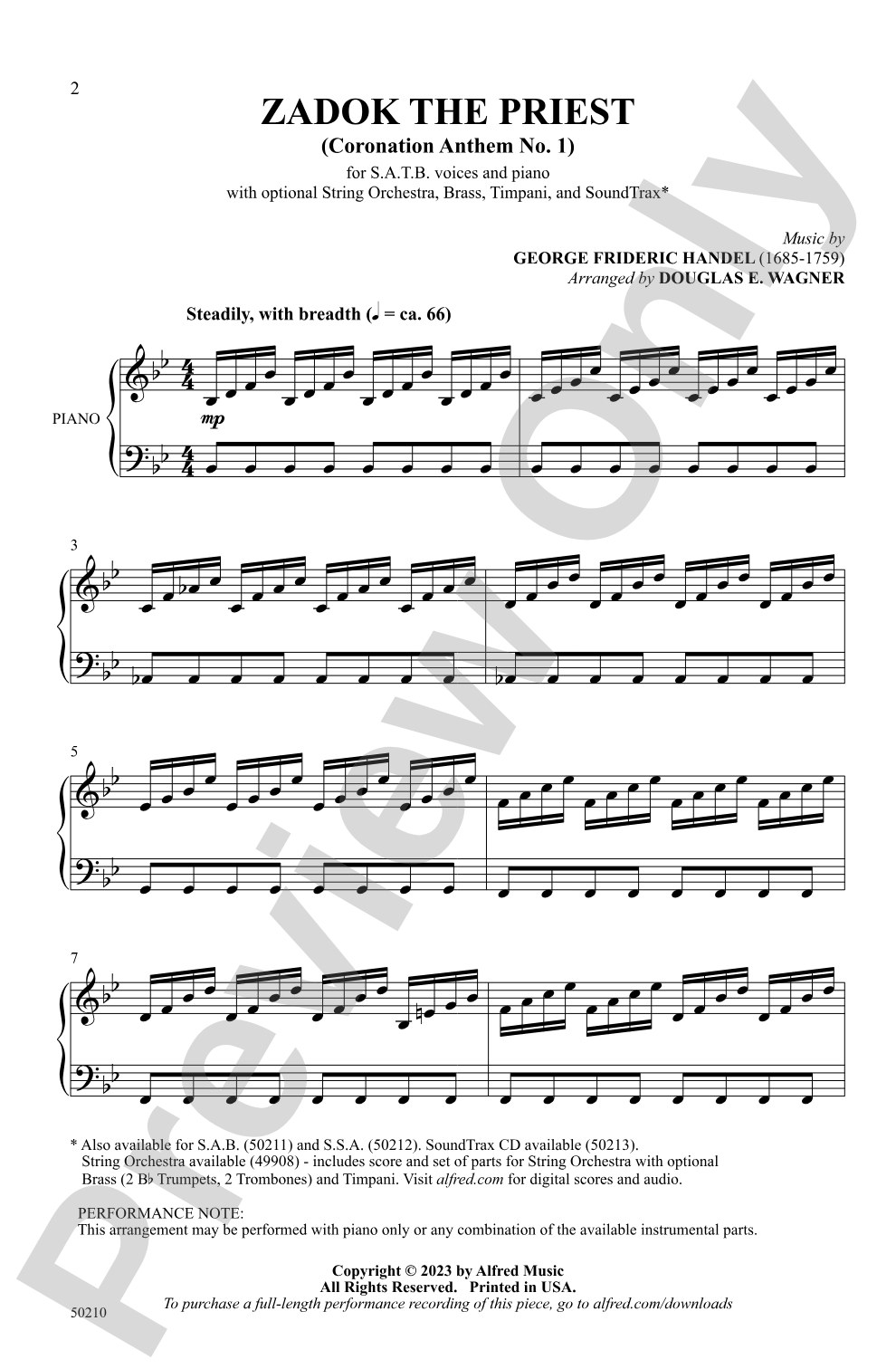

Zadok the Priest: SATB Choral Octavo
(Coronation Anthem No. 1)
Music by George Frideric Handel / arr. Douglas E. Wagner
Item: 00-PO-0007057
$2.05
Minimum order quantity: 20 copies
Pickup currently not available
Related Items
Zadok the Priest: SoundTrax Digital Audio Download |
$29.98
|
View | |
Zadok the Priest: String Orchestra Conductor Score & Parts |
$60.00
|
View | |
Zadok the Priest: SAB Choral Octavo |
$2.05
|
View | |
Zadok the Priest: SSA Choral Octavo |
$2.05
|
View | |
Zadok the Priest: String Orchestra Conductor Score & Parts |
$60.00
|
View | |
Zadok the Priest: String Orchestra Conductor Score |
$10.00
|
View | |
Zadok the Priest: SATB Choral Octavo |
$2.05
|
View | |
Zadok the Priest: SAB Choral Octavo |
$2.05
|
View | |
Zadok the Priest: SSA Choral Octavo |
$2.05
|
View | |
Zadok the Priest: Choral SoundTrax CD |
$29.99
|
View |
Description
This, the first of Handel's four Coronation Anthems, has been a cherished part of crowning British royalty from George II in 1727 to the current sovereign, Charles III. Commemorate the grand occasion with this condensed version of the majestic Baroque masterwork. Available in three fresh editions designed with student choirs in mind. Perform with the accessible piano reduction, or combine with your school orchestra (strings, brass, and timpani) for a regal fanfare.


Zadok the Priest: SATB Choral Octavo isn't in MakeMusic Cloud just yet...but it could be. Let us know you'd like to see it, and you'll help shape what comes next. In the meantime, start a free trial and dive into thousands of interactive titles your students can play along with today.
Request This Title
Tell us you want it.
Start Your Free Trial
Explore everything that's ready to play right now.
Sample Audio
1
Audio File
--:--
0:00
0:00
Sample Video
Additional Details
Series:
Alfred Choral Designs
Publisher:
Alfred Music
Page Count:
12
SKU:
00-PO-0007057
More about this title
About the Composer: George Frideric Handel
George Frideric Handel (1685–1759) arrived in England as an ambitious young composer and became the defining voice of English Baroque music. His command of grand choral writing and instrumental color made him the ideal choice when the English monarchy needed music for state occasions; his four Coronation Anthems, composed for George II's 1727 coronation, remain the gold standard for ceremonial choral music.
Handel's genius lay in his ability to blend Italian melodic gifts with English choral traditions, creating works that feel both intimate and monumental. His influence on choral repertoire extends far beyond the Baroque; generations of composers studied his handling of text, voice leading, and dramatic timing.
Why we love this
Wagner's condensed version strips away nothing essential while making the piece teachable for student choirs who might otherwise never tackle Baroque masterworks at this level. The orchestral option gives your ensemble a genuine performance upgrade without requiring decades of experience, and the recorded accompaniment option ensures strong support during the learning phase. This is Handel written for real schools, not simplified into oblivion.
What to expect
Regal pageantry grounded in clear, singable lines. The opening unfolds with ceremonial grandeur, but the music never feels distant or untouchable; instead, it invites singers into a tradition that stretches back nearly three hundred years. Baroque brightness meets student-choir accessibility.
Who it's for
Student choirs ready to perform a historically significant work with real musical substance. This arrangement works well for groups with a few years of ensemble experience and singers comfortable with moderate rhythmic independence. Directors seeking impressive concert repertoire that also teaches genuine Baroque technique will find immediate value here.
How to get the most out of it
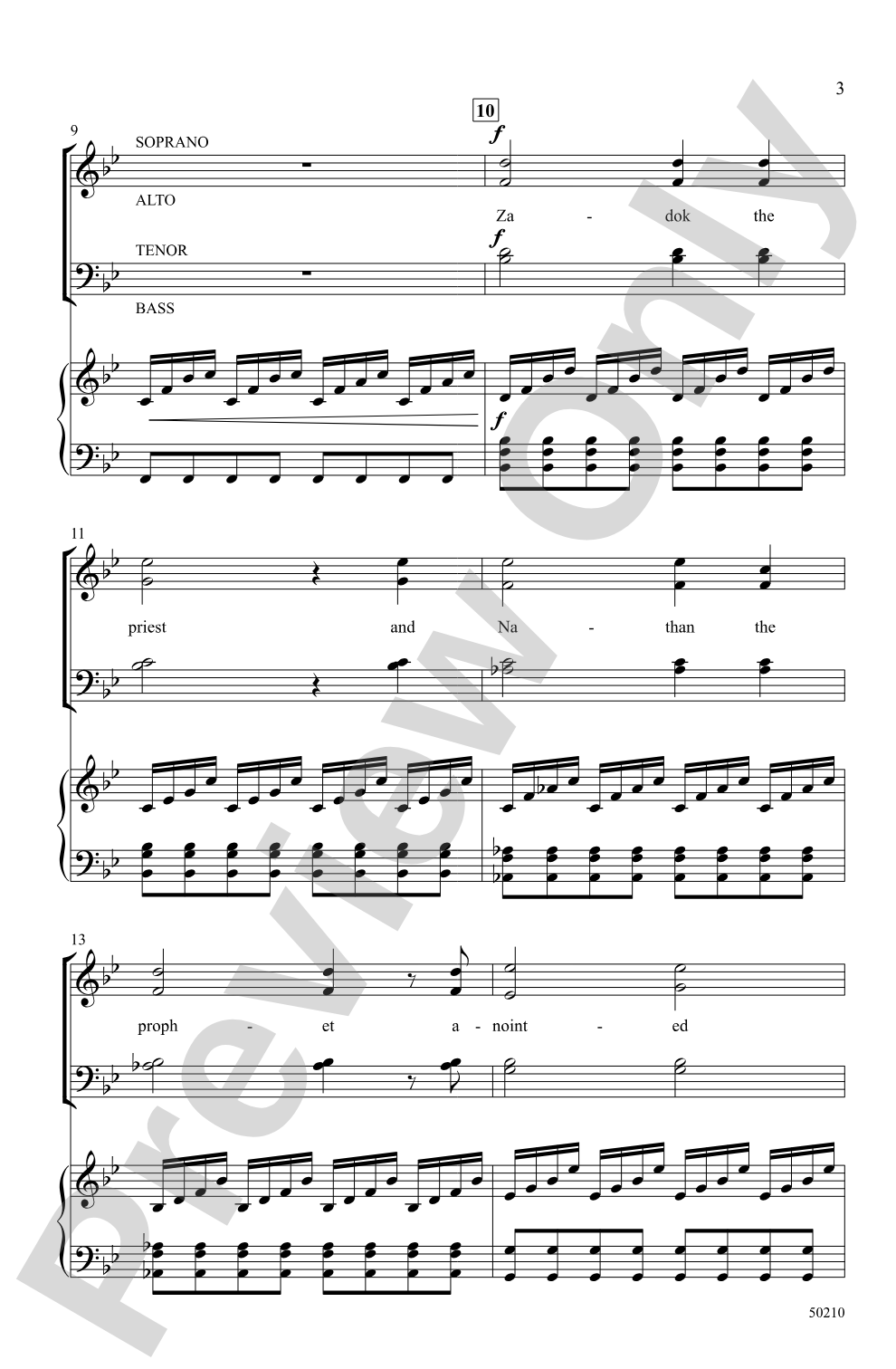
- Balance the parts carefully in the opening "Zadok the Priest" section; the alto and tenor lines are as important as the soprano melody, and clarity here sets the tone for the entire piece.
- Shape the famous ascending scale passage that follows the opening with buoyant, forward energy; this moment has carried coronations for nearly three centuries, so let it breathe with confidence.
- If using orchestra, rehearse the tutti sections frequently with your accompaniment so the choir hears exactly how the parts sit against strings, brass, and timpani.
- Pay attention to text underlay in the fugal section; crisp articulation on consonants will keep the counterpoint audible even when multiple voice parts move independently.
How to use it
Perfect as a concert centerpiece or festival selection where you want to demonstrate serious musicianship without programming exclusively contemporary work. Pair it with other Baroque choral selections for a thematic concert, or use it as your spring finale piece when singers have built stamina and musical maturity. The orchestral version transforms a school concert into something genuinely ceremonial.
Skills your students will build
- Baroque text articulation and phrasing conventions
- Singing in multiple voice parts with independence and blend
- Managing longer sustained lines without breath interruption
- Balancing soprano melody against moving inner parts
- Understanding fugal structure and entrance cues
- Coordinate with orchestra or keyboard accompaniment