
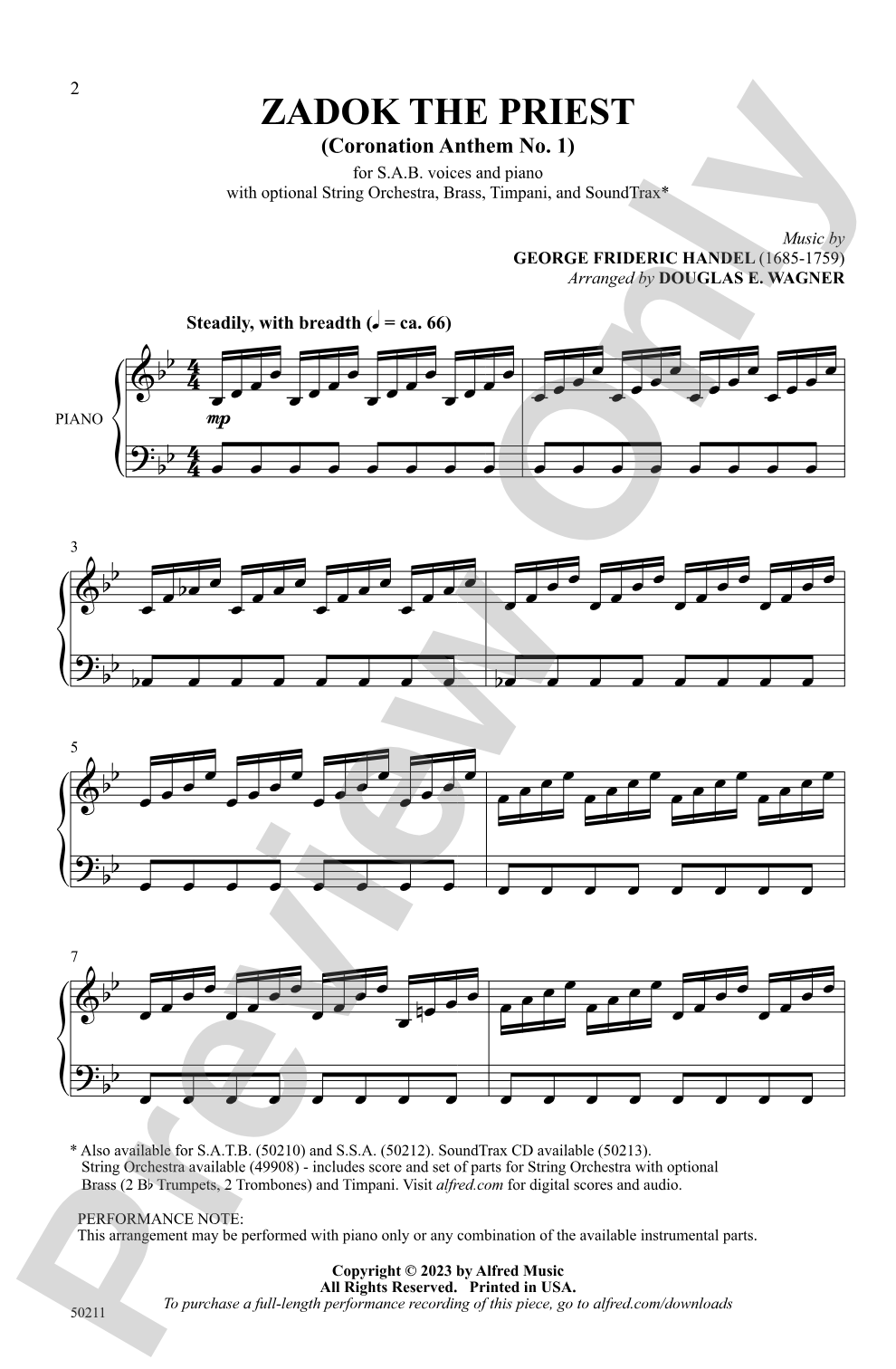
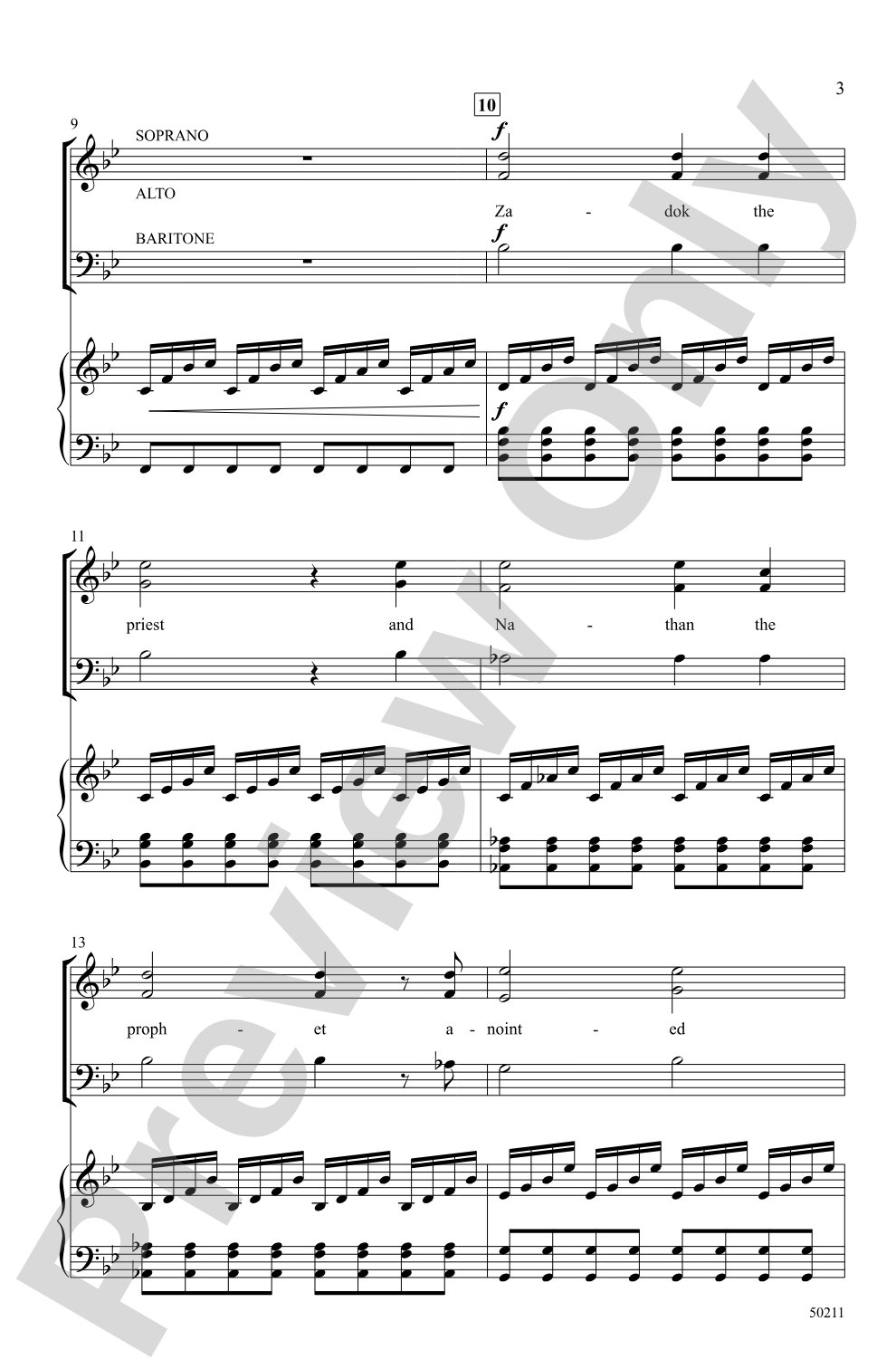

Zadok the Priest: SAB Choral Octavo
(Coronation Anthem No. 1)
Music by George Frideric Handel / arr. Douglas E. Wagner
Item: 00-PO-0007058
$2.05
Minimum order quantity: 20 copies
Pickup currently not available
Related Items
Zadok the Priest: SoundTrax Digital Audio Download |
$29.98
|
View | |
Zadok the Priest: String Orchestra Conductor Score & Parts |
$60.00
|
View | |
Zadok the Priest: SATB Choral Octavo |
$2.05
|
View | |
Zadok the Priest: SSA Choral Octavo |
$2.05
|
View | |
Zadok the Priest: String Orchestra Conductor Score & Parts |
$60.00
|
View | |
Zadok the Priest: String Orchestra Conductor Score |
$10.00
|
View | |
Zadok the Priest: SATB Choral Octavo |
$2.05
|
View | |
Zadok the Priest: SAB Choral Octavo |
$2.05
|
View | |
Zadok the Priest: SSA Choral Octavo |
$2.05
|
View | |
Zadok the Priest: Choral SoundTrax CD |
$29.99
|
View |
Description
This, the first of Handel's four Coronation Anthems, has been a cherished part of crowning British royalty from George II in 1727 to the current sovereign, Charles III. Commemorate the grand occasion with this condensed version of the majestic Baroque masterwork. Available in three fresh editions designed with student choirs in mind. Perform with the accessible piano reduction, or combine with your school orchestra (strings, brass, and timpani) for a regal fanfare.


Zadok the Priest: SAB Choral Octavo isn't in MakeMusic Cloud just yet...but it could be. Let us know you'd like to see it, and you'll help shape what comes next. In the meantime, start a free trial and dive into thousands of interactive titles your students can play along with today.
Request This Title
Tell us you want it.
Start Your Free Trial
Explore everything that's ready to play right now.
Sample Audio
1
Audio File
--:--
0:00
0:00
Sample Video
Additional Details
Series:
Alfred Choral Designs
Publisher:
Alfred Music
Page Count:
12
SKU:
00-PO-0007058
More about this title
About the Composer: George Frideric Handel
George Frideric Handel (1685-1759) was a German-born composer who became the defining musical voice of Baroque England. He mastered every major vocal and instrumental form of his era, from operas and oratorios to concertos and keyboard works, and his music seamlessly blended Italian melodic richness with German contrapuntal craft. Handel's four Coronation Anthems, composed for George II's coronation in 1727, stand as some of the most ceremonial and structurally ambitious choral works in the English language, establishing a tradition of coronation music that persists to the present day.
For music educators, Handel represents both accessibility and architectural sophistication. His melodies are immediately singable and memorable, yet his harmonic language and formal structures reward close study. The Coronation Anthems in particular demonstrate how choral writing can achieve grandeur without sacrificing clarity, making them ideal models for student choirs learning to balance ensemble blend with architectural purpose.
Why we love this
Douglas E. Wagner's SAB arrangement preserves the ceremonial brilliance and soaring choral writing that made this anthem famous at royal coronations while rendering it genuinely accessible for student ensembles. The condensed format respects Handel's harmonic language and melodic integrity, and the option to perform with piano alone or add orchestral parts creates multiple performance pathways for schools with varying instrumentation.
What to expect
Handel's anthem radiates ceremonial grandeur and jubilation. The opening unfolds with trumpet-like fanfare figures that announce majesty, while the harmonic progressions move with stately confidence. When the choir enters fully, there is an almost physical sense of collective proclamation—voices bloom across a rich harmonic palette that feels both reverent and triumphant.
Who it's for
This edition is designed for intermediate and advancing student choirs (grades 6-12) who have developed secure blend and part independence but may find the original four-part version or full orchestration logistically challenging. It works equally well for smaller school choirs, community youth ensembles, and even early-college programs looking for a masterwork that reads clearly while teaching authentic Baroque style.
How to get the most out of it
- Shape the opening fanfare with clear articulation and rhythmic precision, treating the dotted figures as ceremonial rather than ornamental.
- Balance the sopranos and altos against the bass line so that the harmonic foundation remains audible without drowning out the melody.
- Use the optional recorded accompaniment as a rehearsal tool to internalize the harmonic progression and period style before rehearsing with live piano or instruments.
- When combining with strings and brass, establish a clear tempo in early rehearsals and ensure instrumental and vocal entries are locked together through deliberate sectional work.
How to use it
Program this as a concert finale or festival showcase piece that elevates the entire evening's musical caliber. It pairs naturally with other Baroque or early classical works, or it can stand alone as the centerpiece of a program celebrating British musical heritage or ceremonial choral traditions. Consider performing it in spring concerts, end-of-year festivals, or special events where programming a recognized masterwork signals artistic ambition.
Skills your students will build
- Baroque articulation and phrasing style
- Part independence and blend in three-part mixed voicing
- Reading and performing dotted rhythms with period accuracy
- Intonation security across wide harmonic movement
- Ensemble coordination with optional instrumental accompaniment
- Understanding of functional harmony and cadential structure