
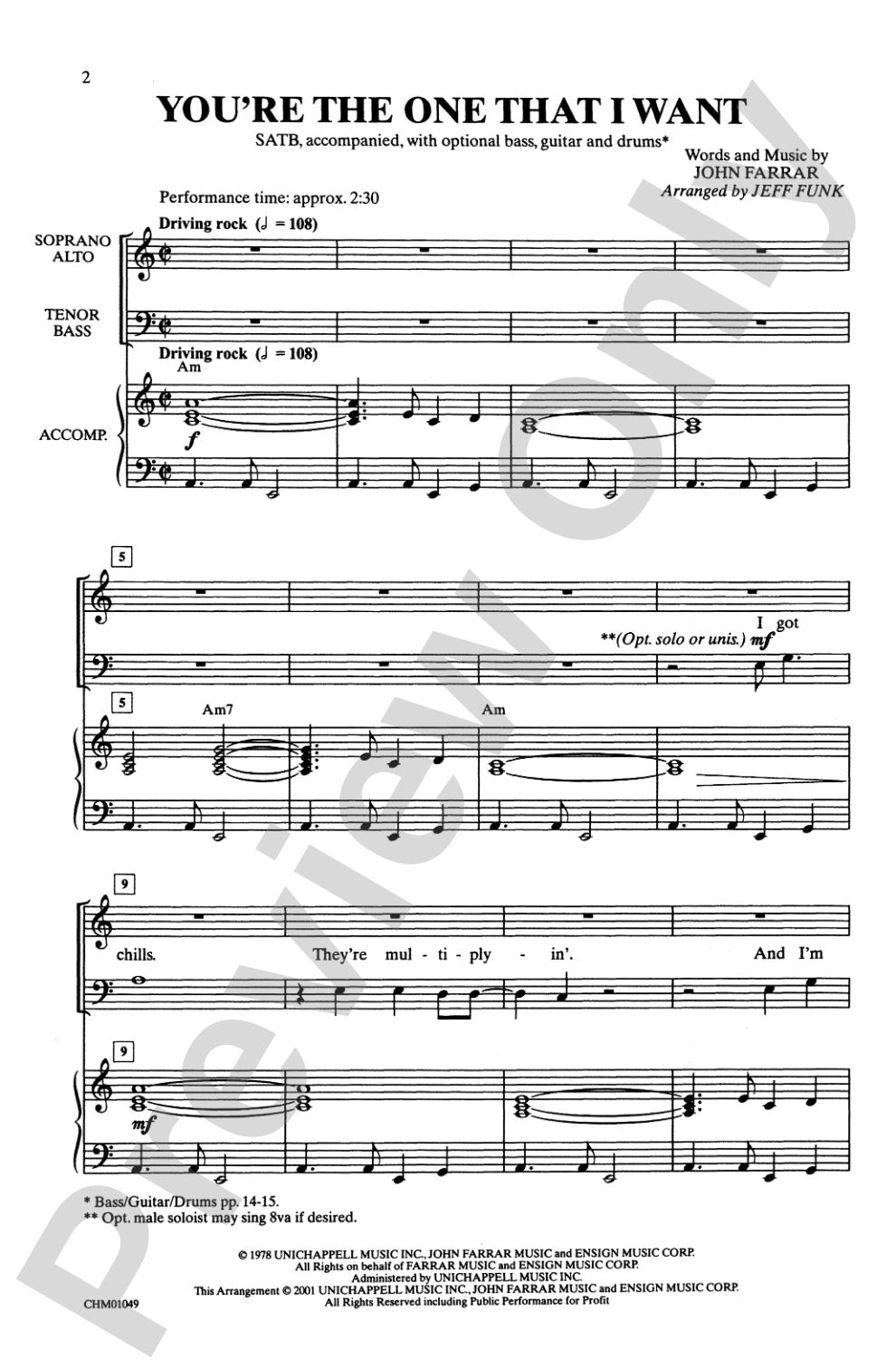
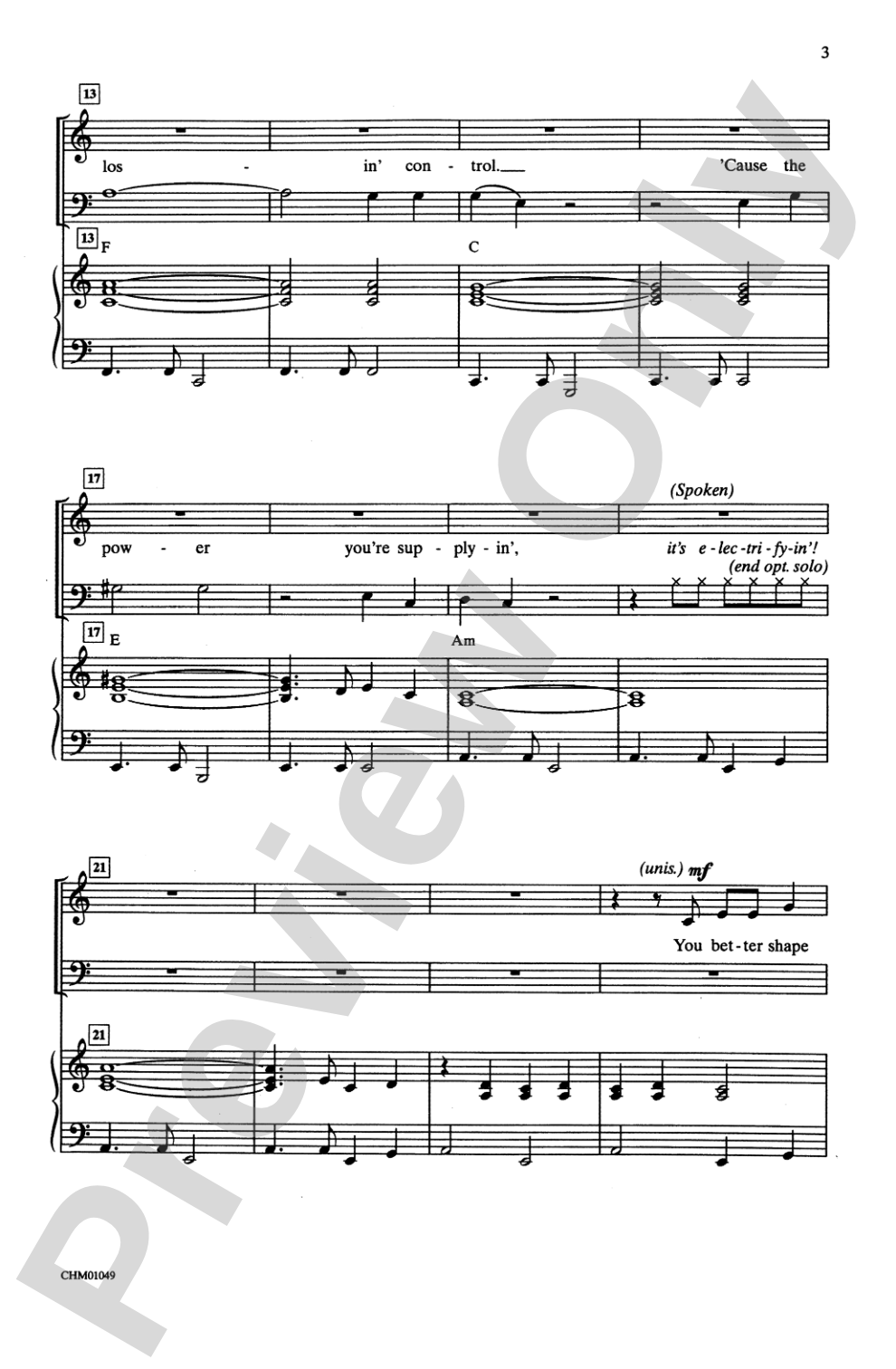
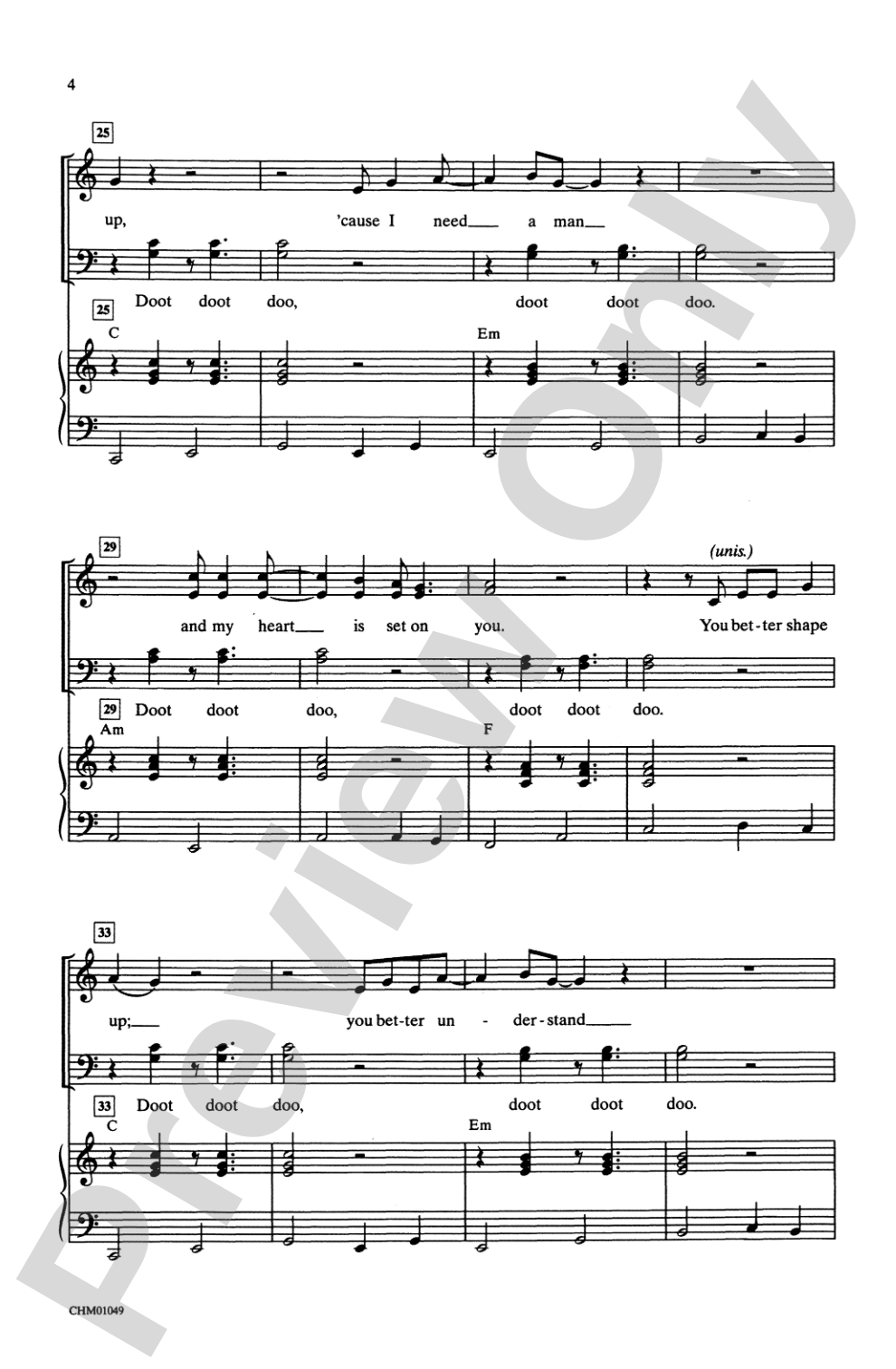

You're the One That I Want: SATB Choral Octavo
Words and music by John Farrar / arr. Jeff Funk
Level: Moderate
Item: 00-PO-0006761
$2.95
Minimum order quantity: 20 copies
One moment…
Related Items
You're the One That I Want: SAB Choral Octavo |
$2.95
|
View | |
You're the One That I Want: 2-Part Choral Octavo |
$2.95
|
View | |
You're the One That I Want: SATB Choral Octavo |
$2.95
|
View | |
You're the One That I Want: SAB Choral Octavo |
$2.95
|
View | |
You're the One That I Want: Choral Octavo SoundTrax CD |
$27.99
|
View |
Description
The recent revival of Grease on Broadway has helped to re-popularize the songs from the original film. Everyone will remember this one from the film that made Olivia Newton John and John Travolta superstars.


Discover MakeMusic Cloud: thousands of interactive titles your students can play along with today.
Sample Audio
No sample audio found.
Sample Video
No sample videos found.
Additional Details
Publisher:
Alfred Music
Page Count:
16
SKU:
00-PO-0006761
More about this title
About the Composer: John Farrar
John Farrar is an Australian singer, songwriter, and producer who became a central figure in 1970s pop music. He wrote and produced much of Olivia Newton-John's early material, including her breakthrough hits, and collaborated extensively with the creative team behind the film adaptation of Grease. His work bridged pop sensibility with theatrical storytelling, making him instrumental in shaping the sound of one of cinema's most enduring musicals.
Farrar's compositions are marked by accessible melodies, strong rhythmic drive, and an intuitive sense of vocal writing. His contributions to film and recorded music have made his work a staple in choral and educational settings, where the combination of popular appeal and solid musicianship continues to engage singers and audiences alike.
Why we love this
This arrangement captures the infectious energy and theatrical charm of the original without overshadowing the text or becoming overly complex. Moderate level writing and SATB voicing make it accessible for strong developing choirs while the cultural moment of renewed Grease popularity gives it immediate relevance. Singers genuinely enjoy this repertoire, and audiences respond with immediate recognition and warmth.
What to expect
Confident, propulsive, and joyfully theatrical. The piece radiates the optimism and infectious charm of its source film, with the kind of melodic clarity and rhythmic momentum that makes singers feel energized rather than burdened. There's a lightness to the arrangement despite its moderate complexity, inviting the ensemble to commit fully to the character without overthinking.
Who it's for
Choirs in grades 6-12 and adult ensembles seeking engaging, popular repertoire with solid arranging craft. This works particularly well for choirs with sufficient soprano range and confident lower voices to balance the part writing. Programming it requires access to recorded accompaniment and a group comfortable with the rhythmic and stylistic demands of 1970s pop-influenced music.
How to get the most out of it
- Keep the groove steady and buoyant. The rhythmic vitality of this song depends on consistent pulse from the rhythm section and a light touch from the ensemble; avoid dragging into sentiment.
- Balance the solo moments carefully. If you're assigning the featured phrases to soloists, ensure they have confidence and projection without drowning out the supporting harmonic material.
- Shape the dynamic arc to build energy into the final section. Start accessible and let the arrangement reveal its full character through carefully controlled crescendos rather than starting at full intensity.
- Use the recorded accompaniment to lock in the stylistic feel. This song has a specific rhythmic pocket; hearing it modeled removes guesswork during rehearsal and frees singers to focus on blend and intonation.
How to use it
This pairs naturally with other Grease selections or 1970s musical theatre repertoire, giving a concert a thematic coherence that audiences instantly recognize. It works equally well as a standalone crowd-pleaser in a mixed programme, offering a tonal and stylistic shift that keeps listeners engaged. Consider programming it late in a set where energy and audience familiarity can drive a strong finish.
Skills your students will build
- Rhythmic precision in pop and musical theatre idioms
- SATB blend and balance in contemporary harmonic textures
- Stylistic interpretation of film-sourced material
- Confidence singing recognizable, text-driven melodies
- Ensemble coordination with recorded accompaniment