
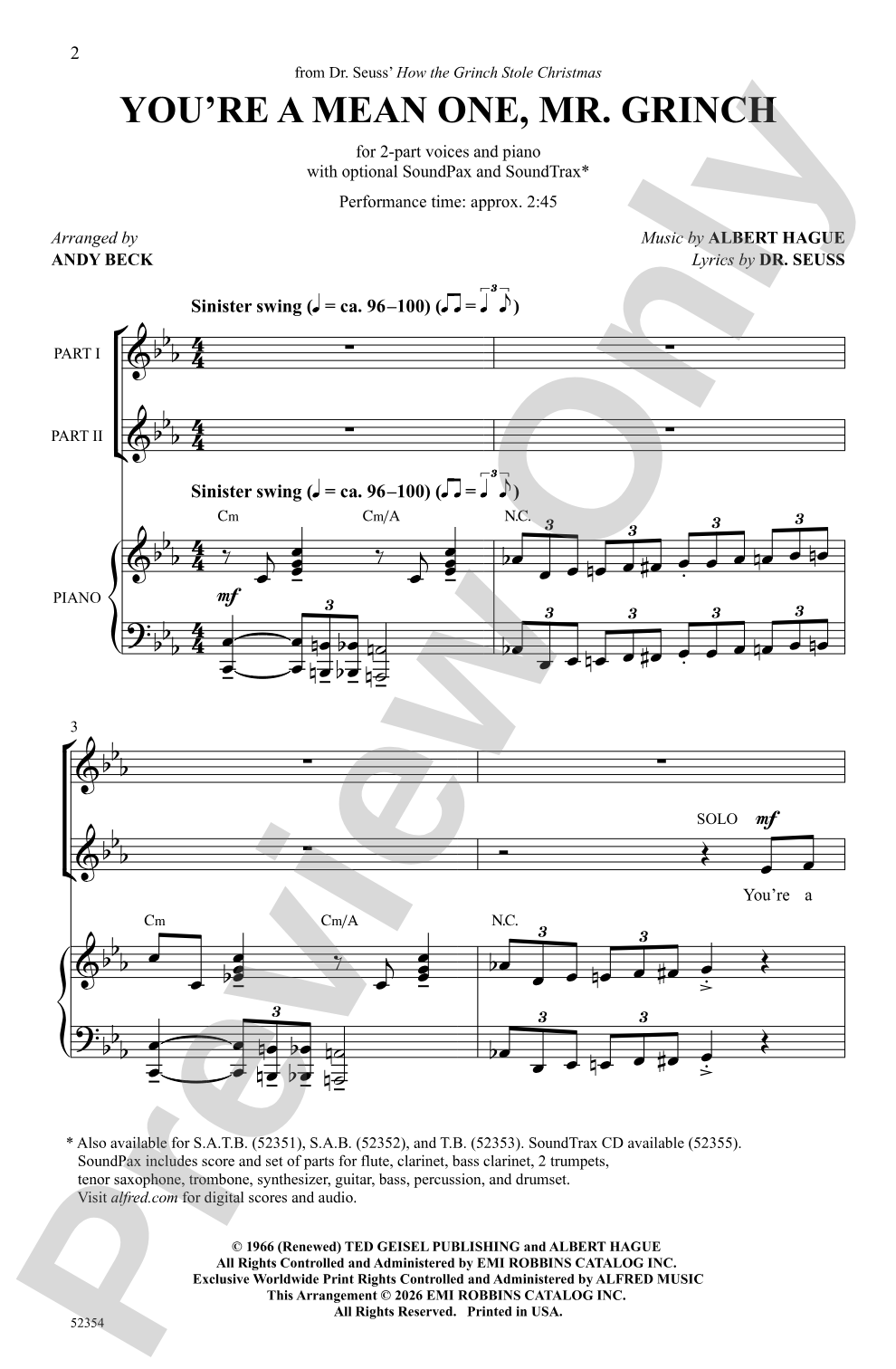
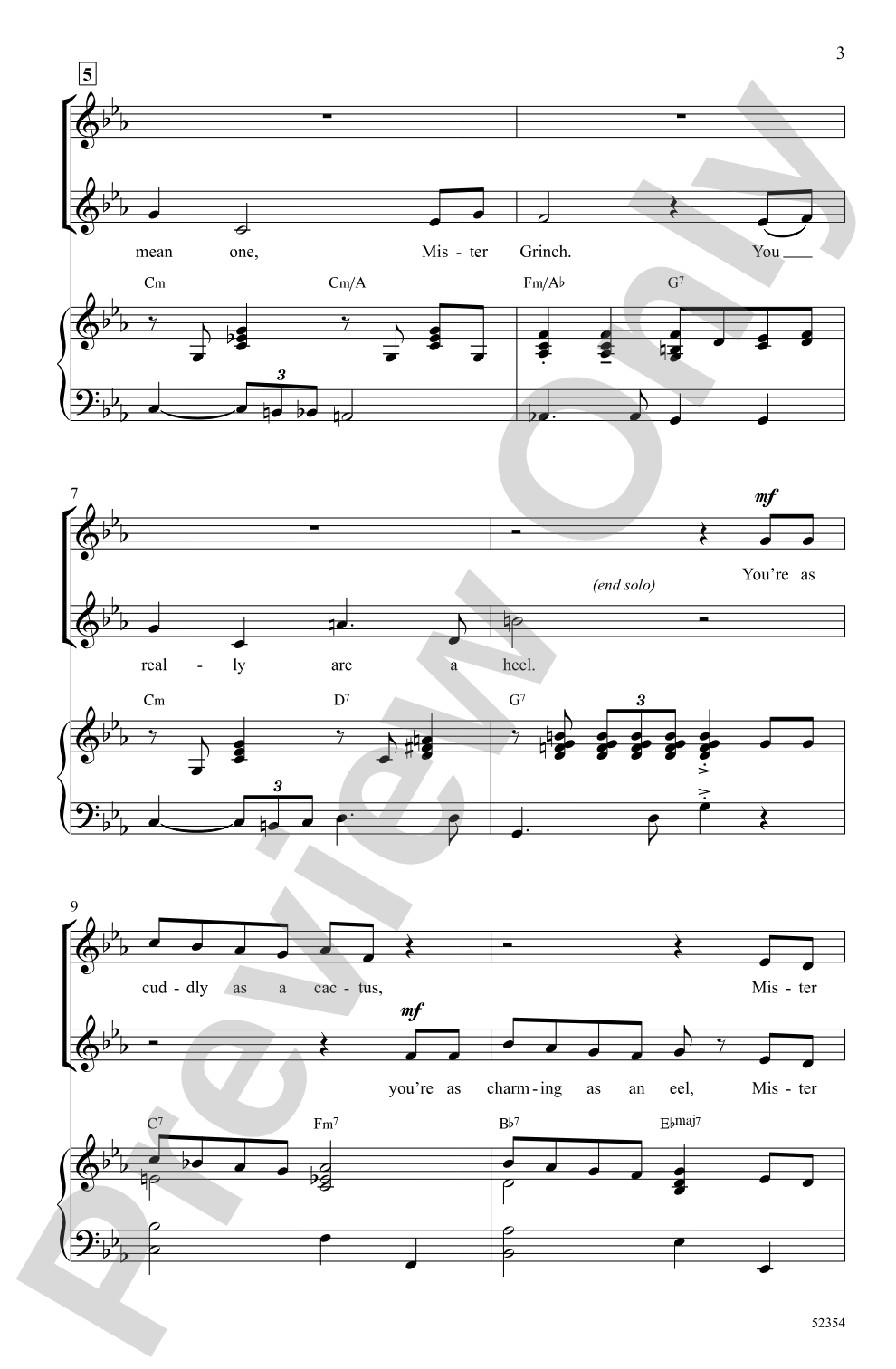
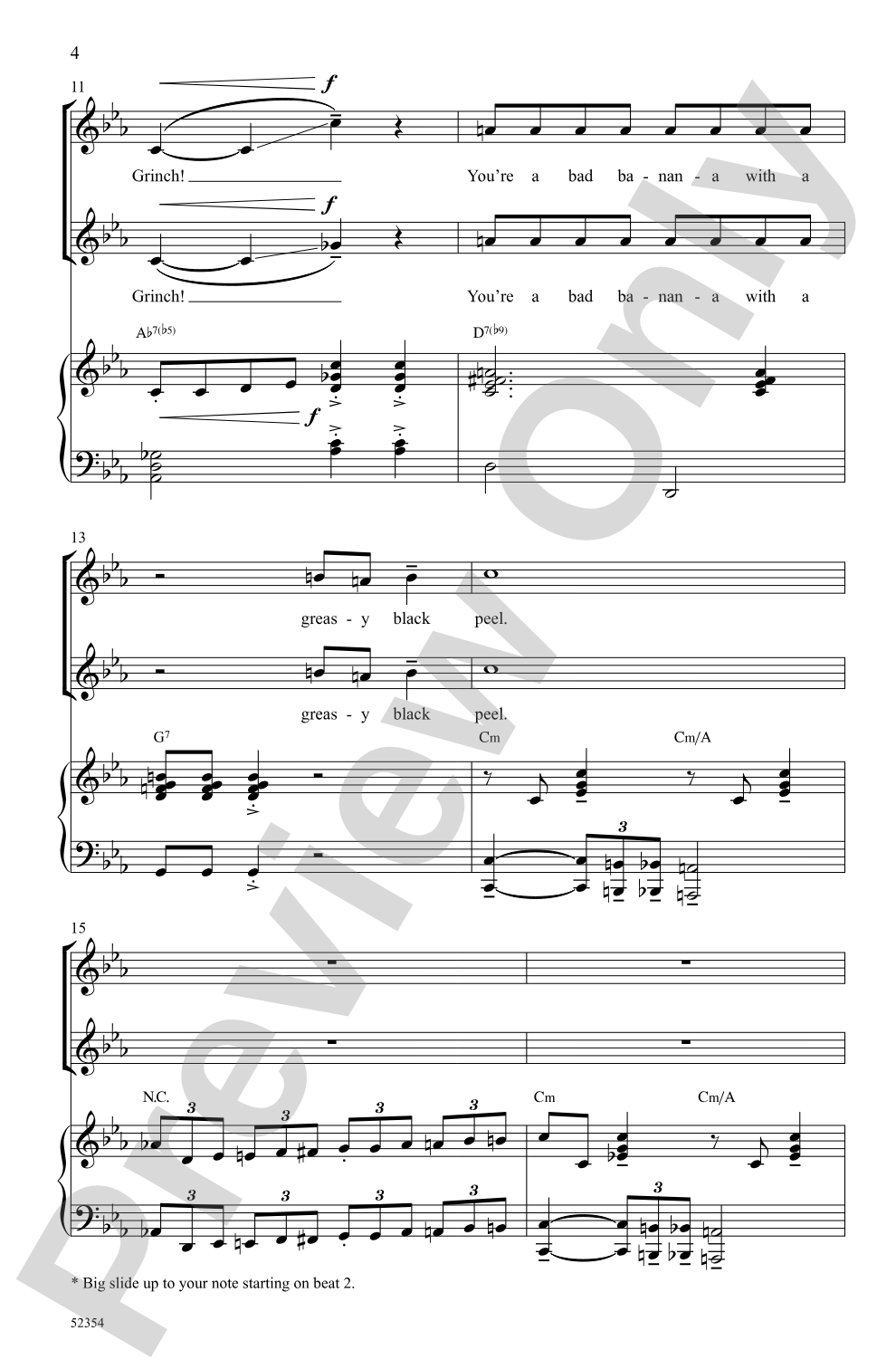

You're a Mean One, Mr. Grinch: 2-Part Choral Octavo
from Dr. Seuss' How the Grinch Stole Christmas
Lyrics by Dr. Seuss, music by Albert Hague / arr. Andy Beck
Item: 00-PO-0007898
$2.65
Minimum order quantity: 20 copies
One moment…
Related Items
You're a Mean One, Mr. Grinch: SATB Choral Octavo |
$2.65
|
View | |
You're a Mean One, Mr. Grinch: SAB Choral Octavo |
$2.65
|
View | |
You're a Mean One, Mr. Grinch: TB Choral Octavo |
$2.65
|
View | |
You're a Mean One, Mr. Grinch: SATB Choral Octavo |
$2.65
|
View | |
You're a Mean One, Mr. Grinch: SAB Choral Octavo |
$2.65
|
View | |
You're a Mean One, Mr. Grinch: TB Choral Octavo |
$2.65
|
View | |
You're a Mean One, Mr. Grinch: 2-Part Choral Octavo |
$2.65
|
View | |
You're a Mean One, Mr. Grinch: Choral Octavo SoundTrax CD |
$29.99
|
View |
Description
Dr. Seuss's iconic curmudgeon takes center stage in this swinging arrangement from the animated holiday classic. Choirs will love delivering over-the-top lyrics and stylized vocals with showstopping big-band flair. Bring the house down with sung and spoken mini-solos, punchy counterlines, theatrical slides, exaggerated dynamics, and more. It's a true crowd-pleaser delivered with pizzazz!


Discover MakeMusic Cloud: thousands of interactive titles your students can play along with today.
Sample Audio
1
Audio File
--:--
0:00
0:00
Sample Video
Additional Details
Series:
Alfred Pop Choral Series
Publisher:
Alfred Music
Page Count:
12
SKU:
00-PO-0007898
More about this title
About the Composer: Albert Hague
Albert Hague composed the original score for the 1966 animated television special "How the Grinch Stole Christmas!" His work became inseparable from Dr. Seuss's beloved story, with "You're a Mean One, Mr. Grinch" emerging as one of the most recognizable holiday songs in American popular culture. Hague's gift for crafting memorable melodies that matched Seuss's rhythmic language established him as a significant voice in musical theater and holiday entertainment.
Beyond the Grinch special, Hague had a distinguished career as a composer for stage and screen, contributing to numerous theatrical productions and television projects. His ability to blend sophisticated harmonic language with accessibility made his work ideal for both professional and educational settings.
Why we love this
Andy Beck's arrangement captures the theatrical irreverence of the original while giving your singers genuine performative moments. The mix of sung melody, spoken lines, counterpoint, and dynamic extremes means everyone gets a chance to shine, and the big-band swagger keeps the energy relentless from start to finish.
What to expect
Mischievous and relentless energy wrapped in the warm glow of a beloved holiday memory. The big-band setting gives it sophistication and swing, while the theatrical elements invite playfulness and character work that makes the performance feel less like a concert and more like a show.
Who it's for
Choirs looking for an immediate crowd-pleaser with built-in comedic appeal and holiday nostalgia. The accessible 2-part voicing opens this to mixed-ability ensembles and younger singers, while the arrangements of sung and spoken solos keep more advanced singers engaged.
How to get the most out of it
- Lean into the exaggeration. The theatrical slides and over-the-top dynamics exist to entertain; singers who commit fully to the character choices will land every laugh and gasp.
- Balance the solo moments carefully. The sung and spoken mini-solos should feel like individual personalities emerging from the ensemble, not disconnected from the group.
- Tap into the rhythmic precision of the big-band style. Punchy articulation and synchronized phrasing in the counterlines drive the swinging feel and comedic timing.
- Use the recorded accompaniment to lock in the groove and feel the full orchestral texture that frames the vocal writing.
How to use it
Program this as a closing number or act finale where you want to send the audience out laughing. It pairs well with other holiday novelty pieces or pop arrangements in a pops concert, or as a brief comedic palate cleanser between more substantial choral works.
Skills your students will build
- Performing rhythmic precision in swing and big-band idioms
- Executing theatrical staging and character choices within an ensemble context
- Managing dynamic contrast and exaggerated articulation for comic effect
- Singing countermelody lines while maintaining harmonic independence
- Integrating spoken-word elements into choral singing
- Responding to phrasing cues that prioritize comedic timing over legit vocal technique