
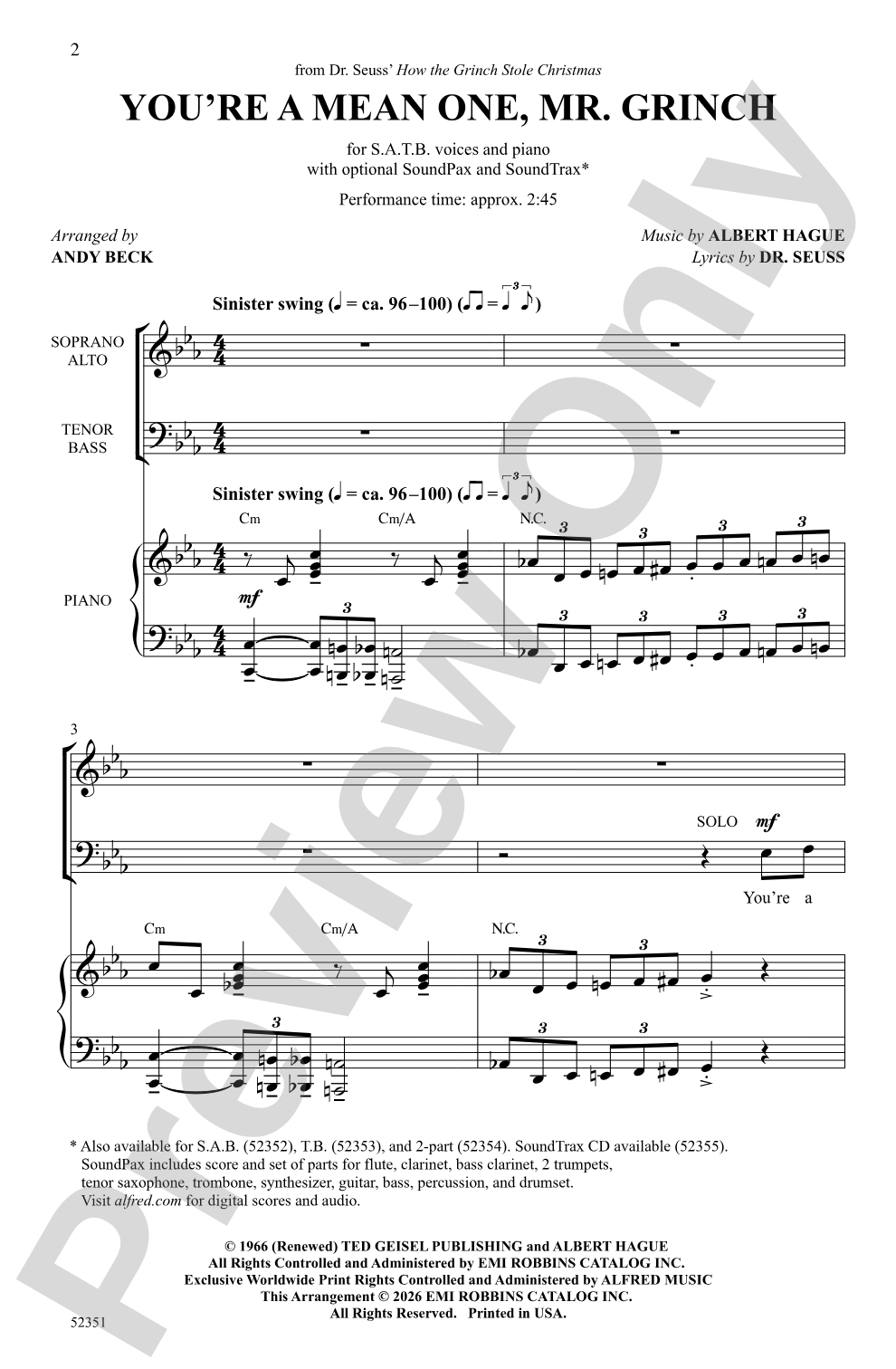
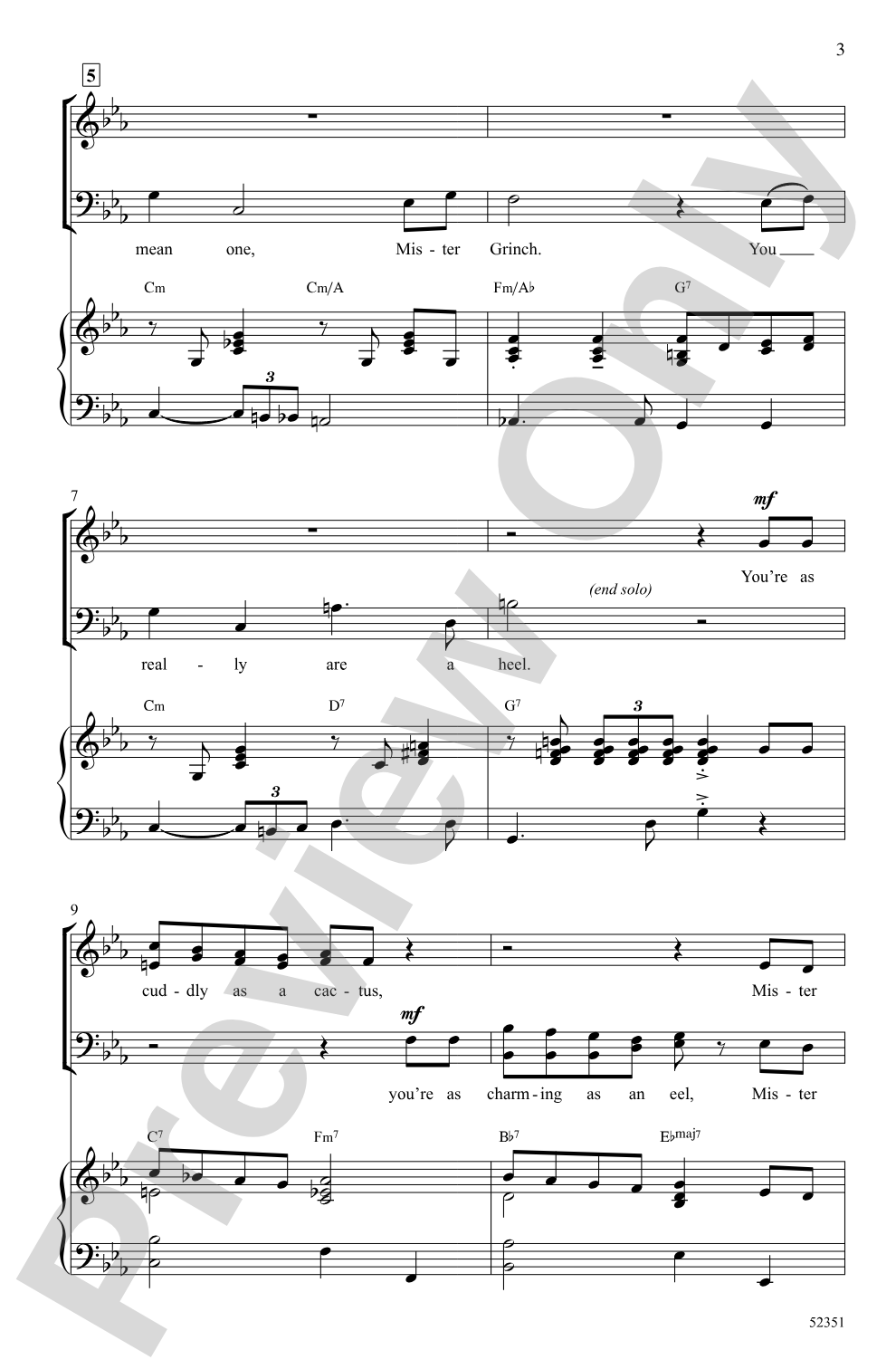
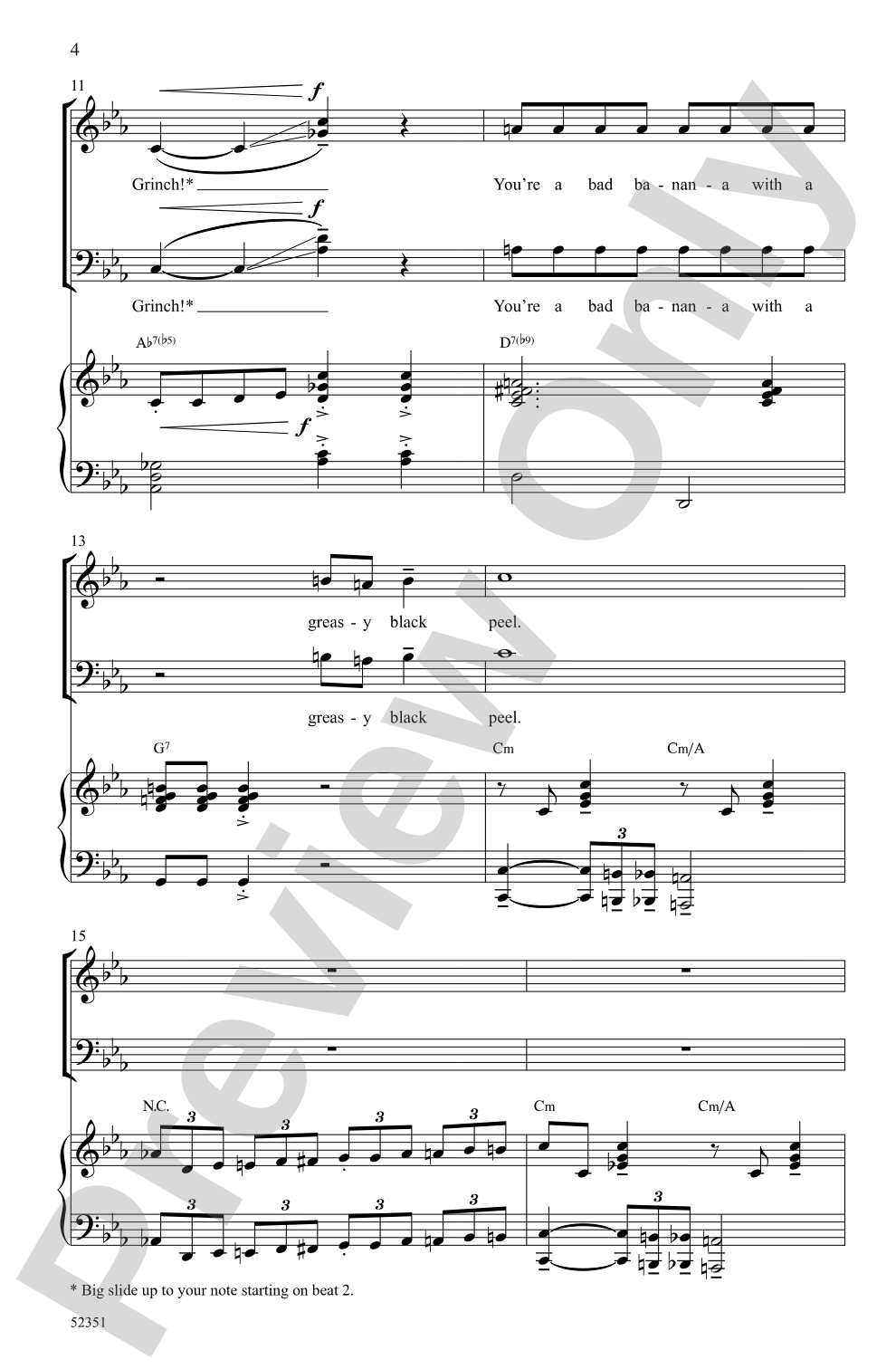

You're a Mean One, Mr. Grinch: SATB Choral Octavo
from Dr. Seuss' How the Grinch Stole Christmas
Lyrics by Dr. Seuss, music by Albert Hague / arr. Andy Beck
Item: 00-PO-0007895

$2.65
Minimum order quantity: 20 copies
One moment…
Related Items
You're a Mean One, Mr. Grinch: SAB Choral Octavo |
$2.65
|
View | |
You're a Mean One, Mr. Grinch: TB Choral Octavo |
$2.65
|
View | |
You're a Mean One, Mr. Grinch: 2-Part Choral Octavo |
$2.65
|
View | |
You're a Mean One, Mr. Grinch: SATB Choral Octavo |
$2.65
|
View | |
You're a Mean One, Mr. Grinch: SAB Choral Octavo |
$2.65
|
View | |
You're a Mean One, Mr. Grinch: TB Choral Octavo |
$2.65
|
View | |
You're a Mean One, Mr. Grinch: 2-Part Choral Octavo |
$2.65
|
View | |
You're a Mean One, Mr. Grinch: Choral Octavo SoundTrax CD |
$29.99
|
View |
Description
Dr. Seuss's iconic curmudgeon takes center stage in this swinging arrangement from the animated holiday classic. Choirs will love delivering over-the-top lyrics and stylized vocals with showstopping big-band flair. Bring the house down with sung and spoken mini-solos, punchy counterlines, theatrical slides, exaggerated dynamics, and more. It's a true crowd-pleaser delivered with pizzazz!


Don't just read it, hear it, play along with it, and watch your students grow with it. In MakeMusic Cloud, You're a Mean One, Mr. Grinch: SATB Choral Octavo comes alive with professional accompaniment, adjustable tempo, and built-in practice tools that turn solo practice into real progress.
Open in the Player
Jump straight in and assign it today.
Start Your Free Trial
Open this title and explore the full library in minutes.
Sample Audio
1
Audio File
--:--
0:00
0:00
Sample Video
Additional Details
Series:
Alfred Pop Choral Series
Publisher:
Alfred Music
Page Count:
12
SKU:
00-PO-0007895
More about this title
About the Composer: Albert Hague
Albert Hague (1920-2001) composed music for theater, film, and television throughout a prolific career spanning five decades. His gift for melody and his knack for writing accessible, singable lines made him a favorite among performers and audiences alike. Hague's score for the 1966 animated television special "How the Grinch Stole Christmas!" became a holiday standard, with "You're a Mean One, Mr. Grinch" emerging as one of the most recognizable seasonal songs in American popular culture.
Why we love this
This arrangement captures everything that made the original television special so entertaining while giving your choir room to ham it up and have genuine fun. Andy Beck's writing respects the song's comedic timing and theatrical DNA, layering in spoken moments, dynamic contrasts, and stylized vocal effects that reward expressive singing without requiring operatic chops. Your audience will recognize it immediately, and your singers will actually want to rehearse something this entertaining.
What to expect
Mischievous and swinging, with a wink to the audience. The big-band orchestration moves with energy and snap, while the lyrics invite your singers into a collaborative joke. There's a theatrical lightness throughout that makes even the most curmudgeonly Grinch seem charming rather than mean.
Who it's for
SATB choirs of any age who want a showstopper that combines holiday appeal with genuine musical fun. Directors programming holiday concerts will find this works equally well for youth choirs, community groups, and school ensembles seeking contemporary seasonal repertoire with entertainment value.
How to get the most out of it
- Lean into the exaggeration. The theatrical slides, punchy dynamics, and over-the-top character work are not optional flourishes; they're essential to the arrangement. Direct your singers to commit fully to the attitude.
- Balance the spoken mini-solos so they land clearly without overwhelming the ensemble sections. These moments break up the texture and deserve careful mic awareness in performance.
- Use the recorded accompaniment to lock the swinging rhythm and big-band groove, especially if your choir hasn't performed in this style before. It establishes the stylistic pocket immediately.
- Shape the counterlines to pop out without drowning the main melody. This arrangement asks for transparency and precision in the inner voices.
How to use it
Program this as a finale or closing number on a holiday concert where the tonal shift from reverent to comedic will land with maximum impact. It pairs naturally with other secular holiday selections or movie-themed pops, and the 12 pages make it substantial enough to anchor a concert block without overstaying its welcome.
Skills your students will build
- Rhythmic precision in swinging, syncopated lines
- Stylized vocal production (theatrical exaggeration, slides, character work)
- Balancing ensemble and solo singing in the same arrangement
- Part independence when singing counterlines beneath a primary melody
- Responsiveness to dynamic contrasts and sudden shifts in texture