
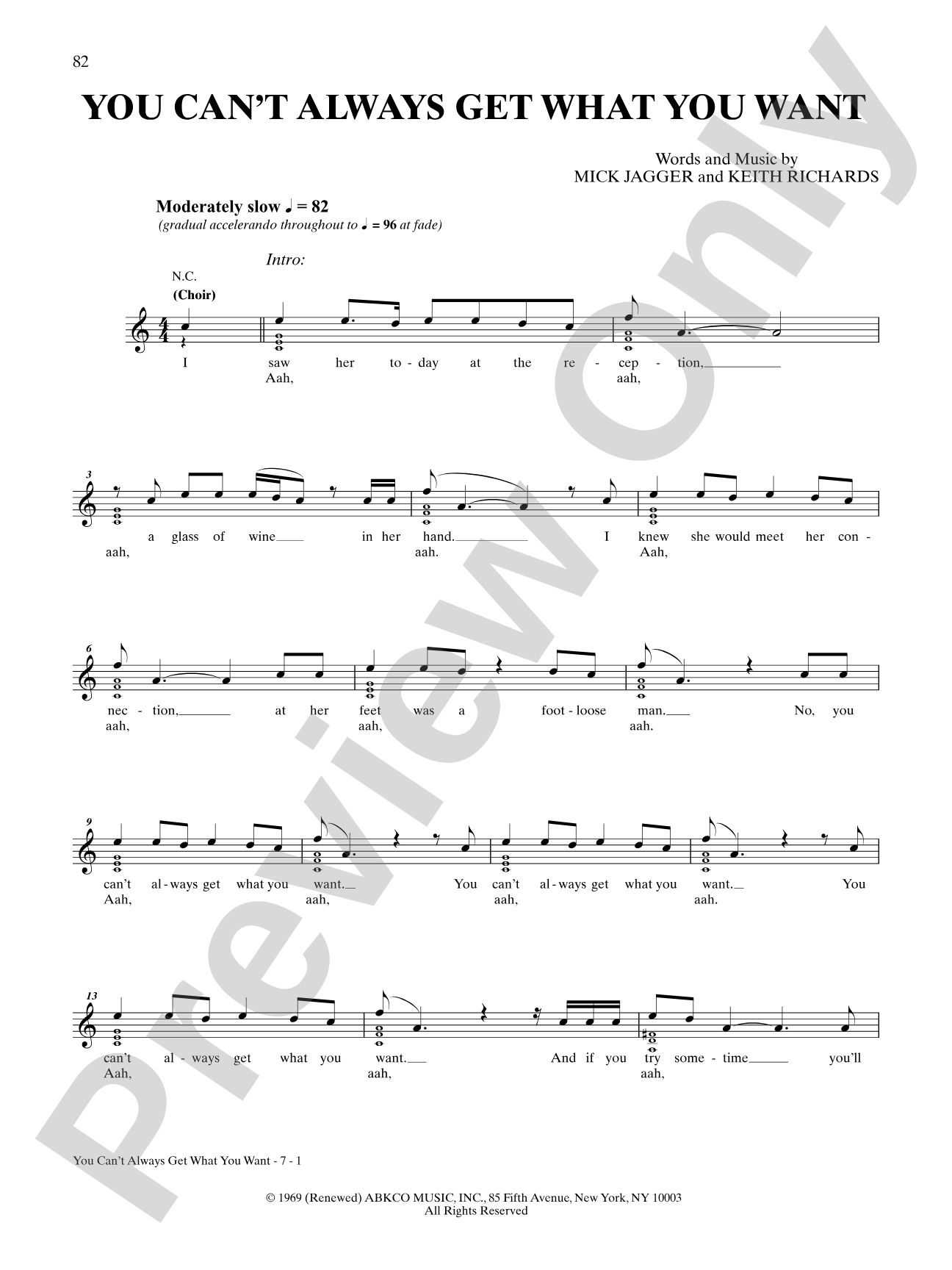
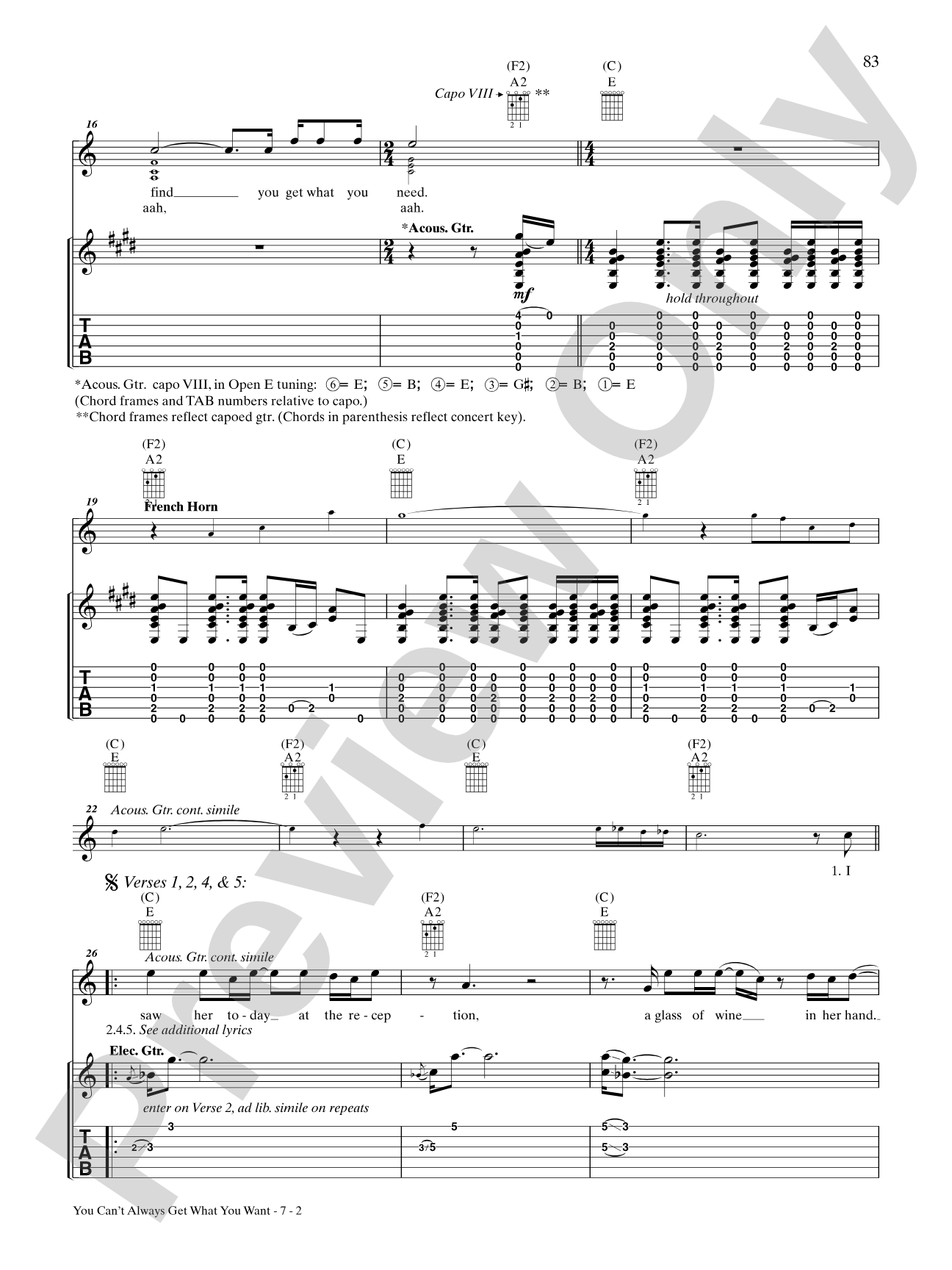

You Can't Always Get What You Want: Guitar TAB
20 Classic Hits
The Rolling Stones
Item: 00-PS-0013707
$5.99
Pickup currently not available
Related Items
Paint It, Black: Guitar TAB |
$4.99
|
View | |
(I Can't Get No) Satisfaction: Guitar TAB |
$4.99
|
View | |
The Last Time: Guitar TAB |
$4.99
|
View | |
Get Off of My Cloud: Guitar TAB |
$4.99
|
View | |
19th Nervous Breakdown: Guitar TAB |
$5.99
|
View | |
Play with Fire: Guitar TAB |
$4.99
|
View | |
Mother's Little Helper: Guitar TAB |
$4.99
|
View | |
Honky Tonk Women: Guitar TAB |
$4.99
|
View | |
As Tears Go By: Guitar TAB |
$4.99
|
View | |
Ruby Tuesday: Guitar TAB |
$4.99
|
View | |
Sympathy for the Devil: Guitar TAB |
$5.99
|
View | |
Brown Sugar: Guitar TAB |
$5.99
|
View | |
Let's Spend the Night Together: Guitar TAB |
$4.99
|
View | |
Under My Thumb: Guitar TAB |
$4.99
|
View | |
Gimme Shelter: Guitar TAB |
$4.99
|
View | |
Let It Bleed: Guitar TAB |
$4.99
|
View | |
No Expectations: Guitar TAB |
$4.99
|
View | |
Jumpin' Jack Flash: Guitar TAB |
$5.99
|
View | |
Wild Horses: Guitar TAB |
$4.99
|
View | |
The Rolling Stones: Easy Guitar TAB Anthology: Easy Guitar TAB Book |
$26.99
|
View |
Description
Featuring 20 of The Rolling Stones greatest hits, each guitar part is carefully arranged in full notation and TAB to be easily playable yet still accurately reflect all of Keith Richard's classic guitar parts with correct fingerings and tunings. Titles: 19th Nervous Breakdown * As Tears Go By * Brown Sugar * Get Off of My Cloud * Gimme Shelter * Honky Tonk Women * Jumpin' Jack Flash * Let it Bleed * Let's Spend The Night Together * Mother's Little Helper * No Expectations * Paint It, Black * Play With Fire * Ruby Tuesday * (I Can't Get No) Satisfaction * Sympathy for the Devil * The Last Time * Under My Thumb * Wild Horses * You Can't Always Get What You Want.


You Can't Always Get What You Want: Guitar TAB isn't in MakeMusic Cloud just yet...but it could be. Let us know you'd like to see it, and you'll help shape what comes next. In the meantime, start a free trial and dive into thousands of interactive titles your students can play along with today.
Request This Title
Tell us you want it.
Start Your Free Trial
Explore everything that's ready to play right now.
Sample Audio
No sample audio found.
Sample Video
No sample videos found.
Additional Details
Series:
Guitar TAB Anthology
Publisher:
Alfred Music
Page Count:
88
SKU:
00-PS-0013707
More about this title
About the Composer: Mick Jagger
Mick Jagger has shaped popular music for more than six decades as The Rolling Stones' primary lyricist and frontman. His songwriting partnership with Keith Richards produced some of rock music's most enduring compositions, influencing generations of musicians across multiple genres. Beyond performance, Jagger's work demonstrates how melodic sensibility and lyrical economy can drive rock composition at the highest level.
For guitar students, studying Jagger and Richards' compositions reveals the architecture beneath iconic rock songs. Their arrangements prioritize memorable riffs and singable melodies while leaving room for instrumental interpretation, making their catalog ideal material for players learning how classic rock songs are structured and performed.
Why we love this
This collection captures the DNA of rock guitar in one manageable volume. The TAB transcriptions preserve Keith Richards' actual fingerings and tuning choices, meaning students aren't learning generic versions but the real parts that defined each song. For intermediate players, these 20 tracks offer a direct pathway into classic rock idiom without oversimplification.
What to expect
Opening this collection feels like having Keith Richards' classic parts handed to you with working notes. Each piece radiates the swagger and swagger of the Stones' sound, from the menacing drone of open-tuned riffs to the fingerpicked subtlety of acoustic numbers. The guitar work spans blues-rooted crunch, folk-inflected fingerstyle, and layered studio arrangements, offering sonic variety across 88 pages.
Who it's for
Intermediate to advanced guitarists ready to tackle recognizable rock repertoire with real-world technical demands. Players seeking to understand how classic rock guitar parts are constructed and wanting accurate transcriptions of famous riffs will find this collection both educational and immediately playable. This works equally well for solo study or as a resource for cover bands and ensemble guitarists.
How to get the most out of it
- Pay attention to the tuning notations for each piece. Richards frequently used alternate tunings (Open G especially), and tuning correctly is essential to capturing the actual tone and feel of the original.
- Use the fingering suggestions as a starting point, then experiment with hand positioning. The TAB shows what notes to play, but the printed fingerings teach efficient movement between phrases.
- Lock the rhythm first before adding embellishments. Many of these parts succeed through groove and timing rather than speed, so nail the pocket before worrying about perfect note articulation.
- Reference the original recordings while learning. The TAB captures what's played, but hearing Richards' touch, tone, and phrasing choices shows you what the notation can't convey.
How to use it
Use these pieces to frame a rock history unit in your guitar studio or ensemble class. Pairing them chronologically (from 1960s to later hits) teaches how the Stones' guitar voice evolved. Individual songs also work as recital selections for students comfortable with intermediate repertoire, and the famous status of these tracks means audiences respond immediately to the selections.
Skills your students will build
- Reading and executing alternate tunings (Open G, Open D, and others)
- Interpreting fingering recommendations and optimizing hand position for efficiency
- Balancing rhythmic precision with groove-based phrasing in rock contexts
- Translating TAB notation into tone and articulation choices
- Understanding how classic rock riffs combine melody, rhythm, and harmonic function