
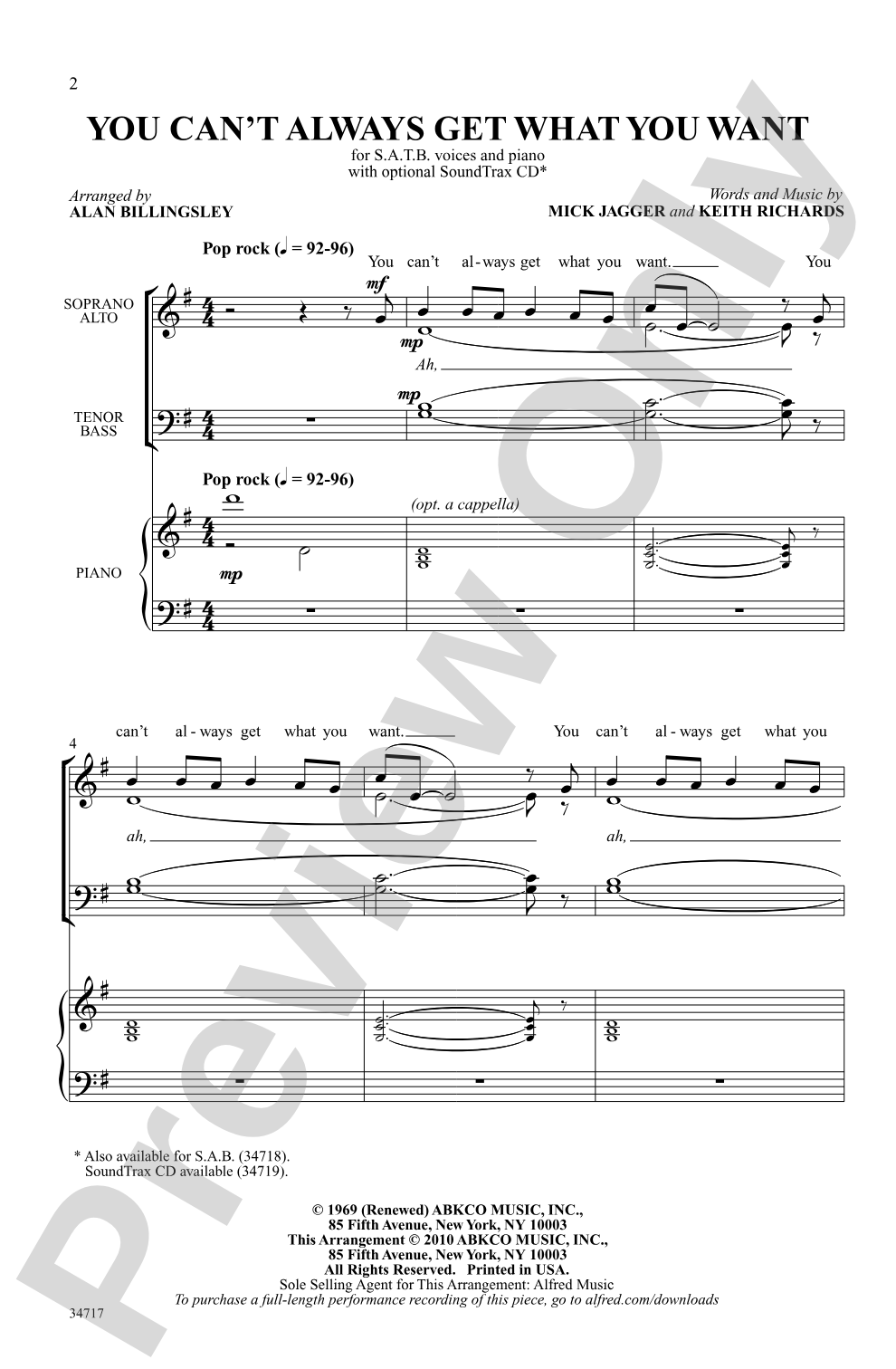
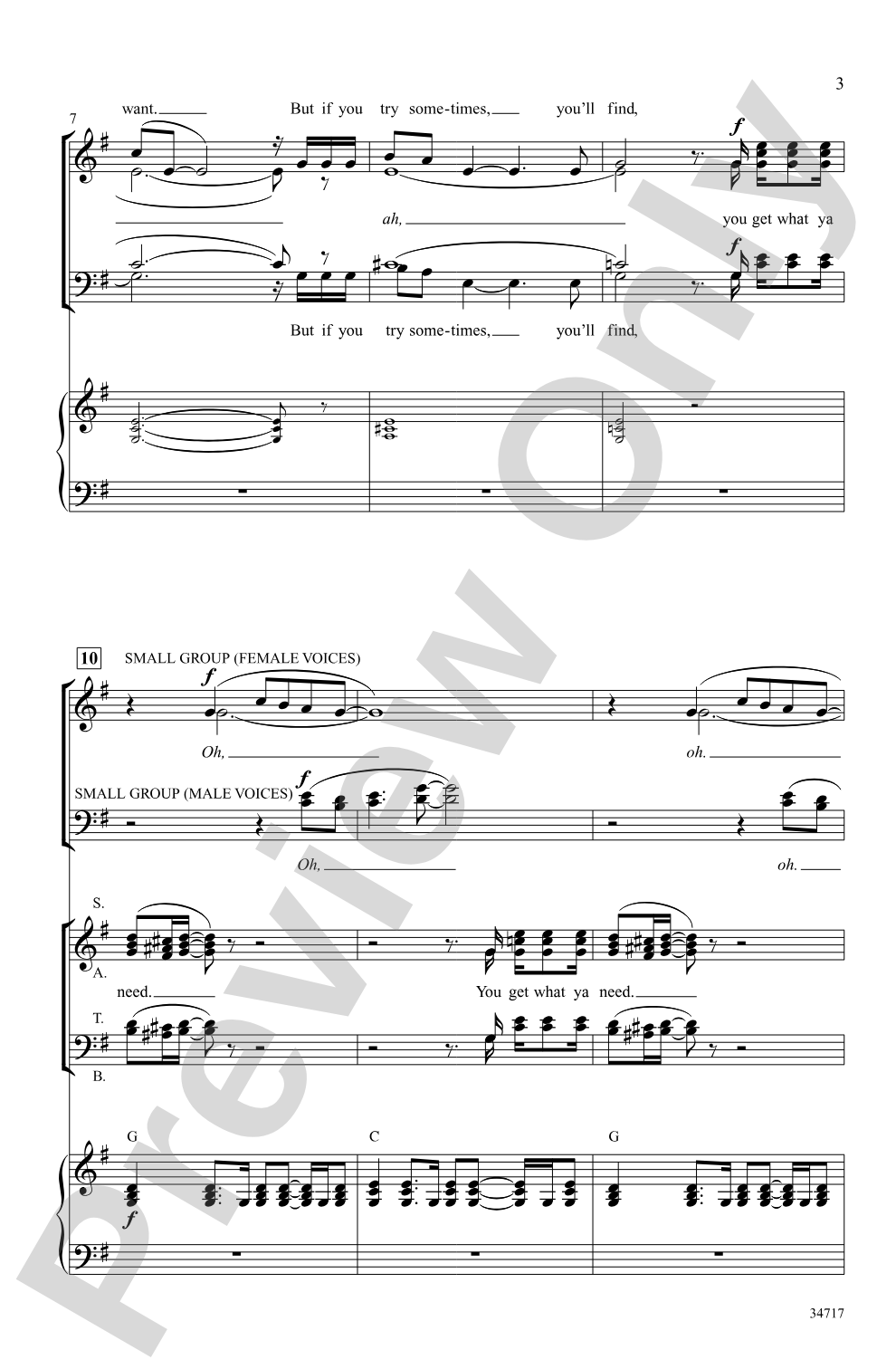
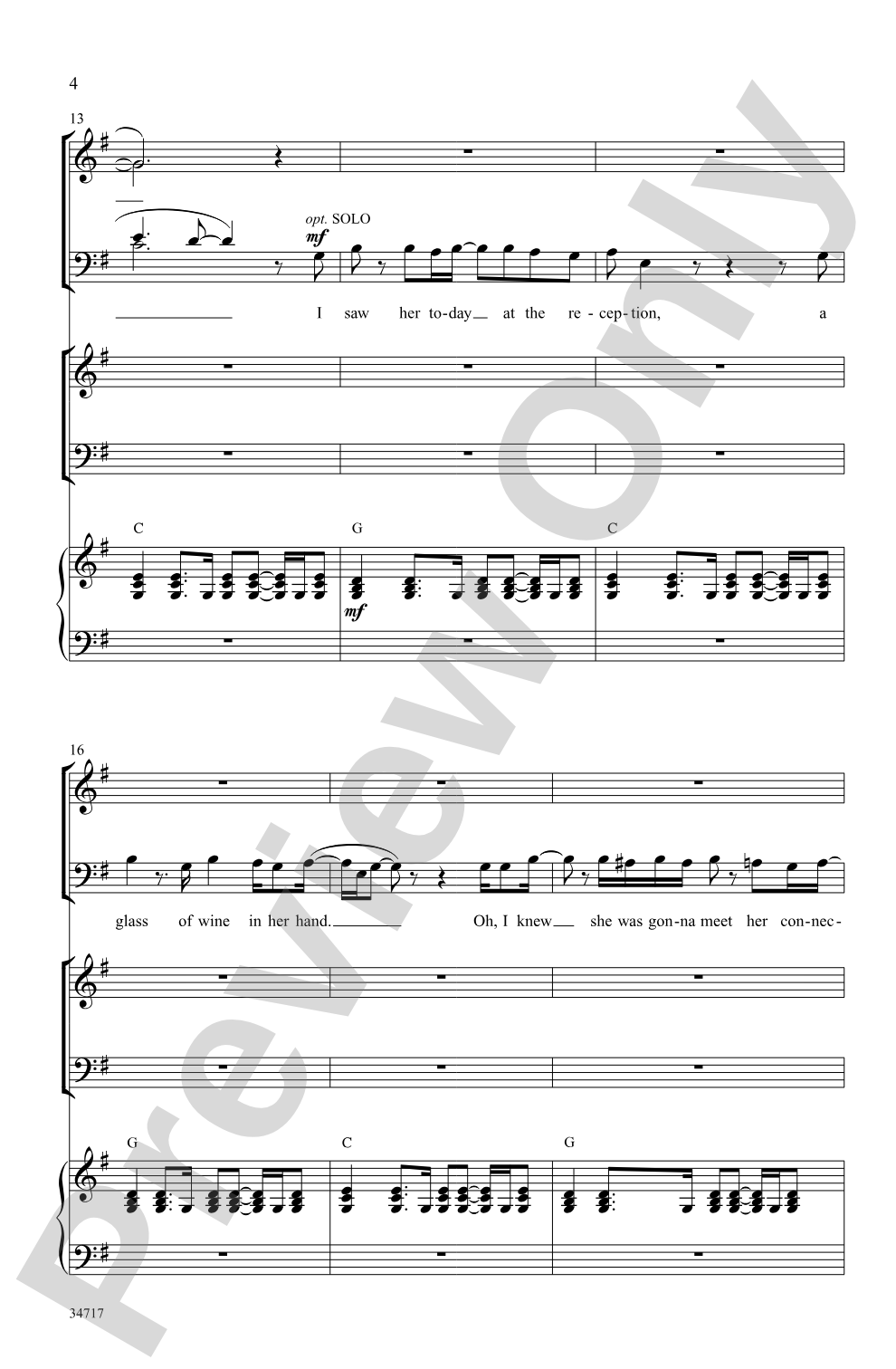

You Can't Always Get What You Want: SATB Choral Octavo
As performed by the Cast of Glee
Words and music by Mick Jagger and Keith Richards / arr. Alan Billingsley
Item: 00-PO-0006608
$2.95
Minimum order quantity: 20 copies
Pickup currently not available
Related Items
You Can't Always Get What You Want: SoundTrax Digital Audio Download |
$29.99
|
View | |
You Can't Always Get What You Want: SAB Choral Octavo |
$2.95
|
View | |
You Can't Always Get What You Want: SATB Choral Octavo |
$2.95
|
View | |
You Can't Always Get What You Want: SAB Choral Octavo |
$2.95
|
View | |
You Can't Always Get What You Want: Choral Octavo SoundTrax CD |
$29.99
|
View |
Description
This 1969 Rolling Stones hit has found new life as one of the best singles yet from the TV hit Glee. Featured in the "Sectionals" episode. "You get what you need!"


You Can't Always Get What You Want: SATB Choral Octavo isn't in MakeMusic Cloud just yet...but it could be. Let us know you'd like to see it, and you'll help shape what comes next. In the meantime, start a free trial and dive into thousands of interactive titles your students can play along with today.
Request This Title
Tell us you want it.
Start Your Free Trial
Explore everything that's ready to play right now.
Sample Audio
1
Audio File
--:--
0:00
0:00
Sample Video
No sample videos found.
Additional Details
Series:
Alfred Pop Choral Series
Publisher:
Alfred Music
Page Count:
16
SKU:
00-PO-0006608
More about this title
About the Composer: Mick Jagger
Mick Jagger co-wrote "You Can't Always Get What You Want" with Keith Richards during the final sessions for The Rolling Stones' 1969 album Let It Bleed. The song became one of the band's most enduring compositions, reaching across generations of listeners and proving itself as durable as the band's catalog gets. Jagger's gift for crafting memorable melodies paired with sardonic, quotable lyrics established him as one of rock's most influential songwriters.
In music education contexts, this song's accessibility and cultural resonance make it an ideal choice for teaching contemporary choral arrangements. The composition's structural simplicity and emotional directness translate exceptionally well to SATB voicing, allowing singers to focus on rock style and authentic interpretation rather than technical complexity.
Why we love this
Billingsley's arrangement captures the original's swagger and attitude while creating genuine musical interest across all four voice parts. This isn't a note-for-note transcription; it's a thoughtful choral reimagining that respects both the song and your singers' capabilities. The Glee connection means your students already know it, which removes the barrier between "assigned music" and "music they actually want to sing."
What to expect
Cynical yet weirdly comforting. The song moves with the unhurried confidence of someone who's made peace with disappointment. There's a minor-key weariness in the verses that brightens into something almost redemptive by the final repetitions of the title phrase, giving singers a genuine emotional arc to explore.
Who it's for
Choirs with access to a recorded accompaniment player and singers mature enough to handle a song about acceptance and resilience. The piece suits intermediate to advanced high school choirs, college groups, and adult ensembles. This is especially effective in programs where students have already encountered the song through Glee or mainstream media.
How to get the most out of it
- Commit to the rhythmic swagger from the first measure. This arrangement lives or dies on groove; lock the rhythm section early in rehearsals so the choir feels supported rather than exposed.
- Shape the phrase "You get what you need" as a statement, not a question. These closing lines carry the song's philosophical weight, and they deserve emphasis in the text.
- Balance the soloists carefully if the arrangement includes featured moments. The Stones' original thrives on Jagger's conversational delivery, so allow your soloists room to own the narrative.
- Let the recorded accompaniment do its work. This gives your singers permission to focus on blend, diction, and attitude rather than worrying about pitch accuracy.
How to use it
Program this alongside other contemporary pop standards to show your audience the range of what choral music can be. It works particularly well as an opener or closer for a show built around rock and pop repertoire. The song's philosophical message also makes it suitable for concerts exploring themes of resilience or acceptance.
Skills your students will build
- Singing in a contemporary rock idiom with appropriate style and groove
- Balancing four-part harmony in a homophonic texture
- Responding dynamically to a recorded accompaniment track
- Interpreting text for emotional truthfulness rather than pure technical perfection
- Understanding how existing hits can be recontextualized for choral performance