Woolloongabba Waltz Cover Image

Woolloongabba Waltz: String Orchestra Conductor Score & Parts

$45.00 USD
Sale price  $45.00 USD Regular price 
Skip to product information
Woolloongabba Waltz Cover Image

Woolloongabba Waltz: String Orchestra Conductor Score & Parts

By Loreta Fin

Grade: 1.5-2

Item: 76-30169

Need it now?

Buy Digital Version
$45.00
Shipped

One moment…

Description
It can be played in the second year of learning. There is a lovely melody in the 1st violins with a straightforward accompaniment in the other parts.

Woolloongabba Waltz: String Orchestra Conductor Score & Parts isn't in MakeMusic Cloud just yet...but it could be. Let us know you'd like to see it, and you'll help shape what comes next. In the meantime, start a free trial and dive into thousands of interactive titles your students can play along with today.

Sample Pages

Sample Audio
No sample audio found.
Sample Video
Additional Details
Series: Wilfin String Orchestra: Young String Ensemble Series
Publisher: Wilfin Music
Page Count: 66
UPC: 038081327075
SKU: 76-30169

More about this title

About the Composer: Loreta Fin
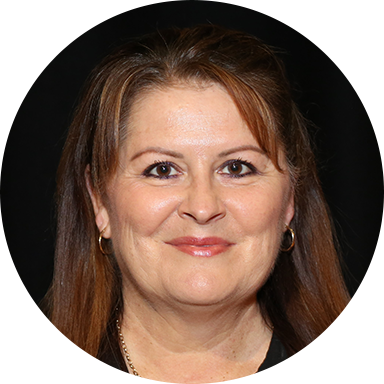
Loreta Fin

Loreta Fin is an Australian violist, educator, and prolific composer whose career has centered on string education and performance. A graduate of the Sydney Conservatorium of Music, she served as Principal Viola with the Queensland Pops Orchestra for over 25 years and held the position of Director of Strings at Somerville House School in Brisbane since 1993. She has presented at national music conferences in Australia and the United States, adjudicated major competitions across Australia, and composed over 100 works for string orchestra published internationally by Alfred Music.

Fin's contributions to string education extend well beyond composition. She served as both State and National President of the Australian Strings Association, examined for the Australian Music Examinations Board as State Advisor for Strings, and regularly conducted the State and National Honours Ensembles Programs in Brisbane beginning in 2015. Her work with young musicians in Malaysia, her 2017 Beginner String Ensemble Series, and her mentorship of string programs across Australia earned her the National Award for Services to Music and String Teaching and a nomination for the ARIA "Best Teacher" award.

Why we love this

Fin understands exactly what second-year string players need: a piece that sits comfortably in their range and reading level while giving them a genuine melody to own. The straightforward accompaniment parts allow less advanced players to support the line without struggling, making this an ideal choice for mixed-ability ensembles where you need every voice engaged and successful.

What to expect

A sprightly waltz with genuine character and charm. The melody in the first violins sings with the ease of folk tradition while the supporting parts create a clear harmonic and rhythmic foundation that young players can rely on without distraction.

Who it's for

String orchestras in their second year of study, including mixed-age or mixed-ability groups where you need a piece that lets developing players succeed without oversimplifying the musical content. It works equally well for festival performances, concert programs, or contest repertoire at early levels.

How to get the most out of it

  • Balance the first violin melody by letting it sing clearly while keeping the accompaniment parts light and supportive; younger players often rush when given rhythmically simple material, so steady the pulse through the lower strings.
  • Work the ensemble's intonation in the opening phrases by having players match the first violins' natural vibrato point, especially on longer notes where tuning tends to drift.
  • Shape the phrasing in small sections rather than over entire phrases; second-year players respond better to local musical direction (where does this bar lead?) than long-term line planning.

How to use it

Program this waltz as an accessible opener that establishes ensemble confidence early in a concert, or pair it with other early-level works to create a cohesive set for young orchestras. It also serves contest and festival appearances well, offering a piece where players can demonstrate clean playing and musical maturity rather than technical virtuosity.

Skills your students will build

  • Maintaining steady accompaniment rhythms while listening to a featured melody
  • Playing longer sustained notes with consistent tone and intonation
  • Reading in first and second positions across multiple clefs (violin, viola, cello, bass)
  • Responding to conductor cues and shaping musical phrases in a waltz style
  • Balancing individual part clarity within an ensemble texture

You May Also Like