
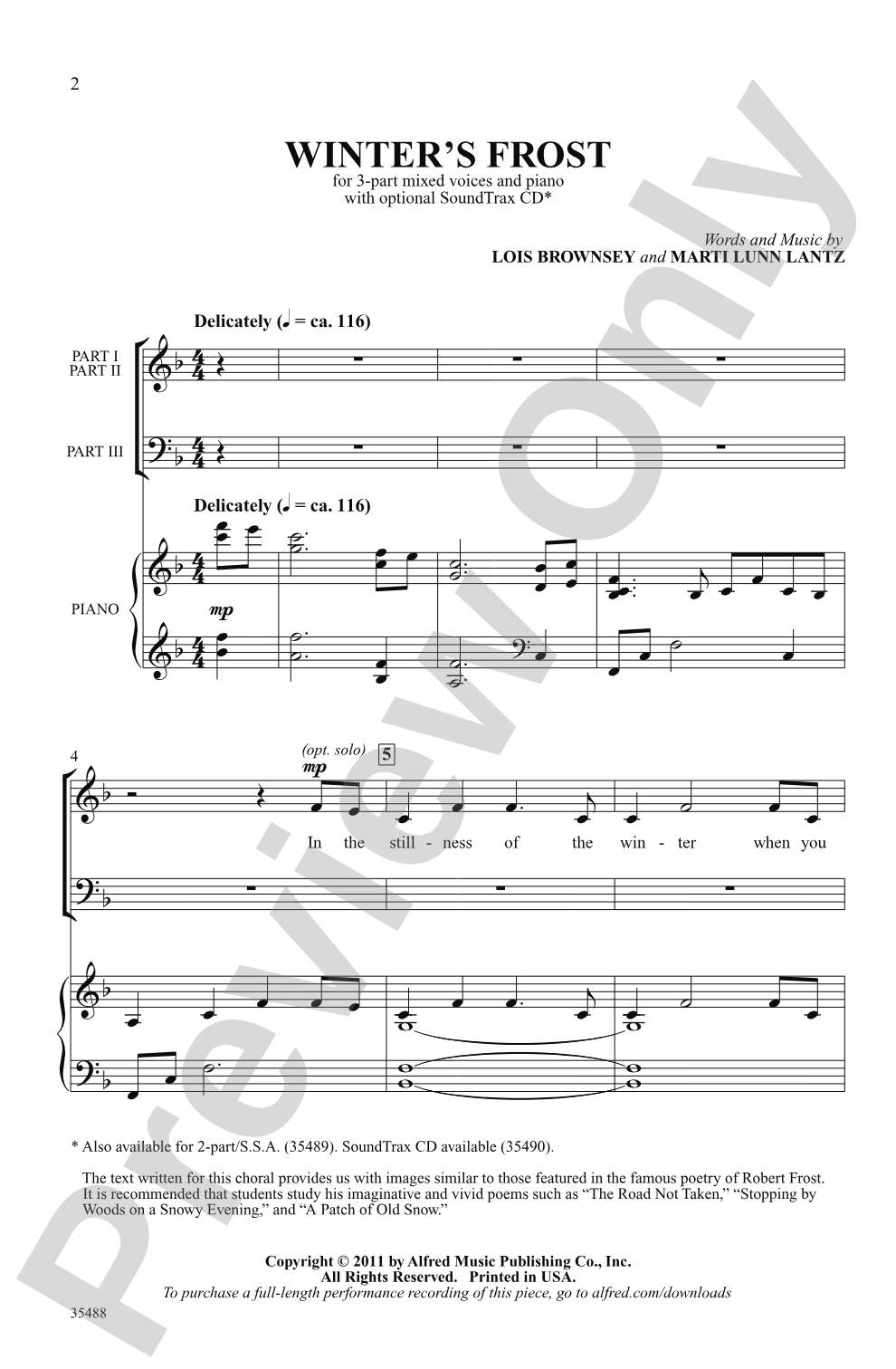
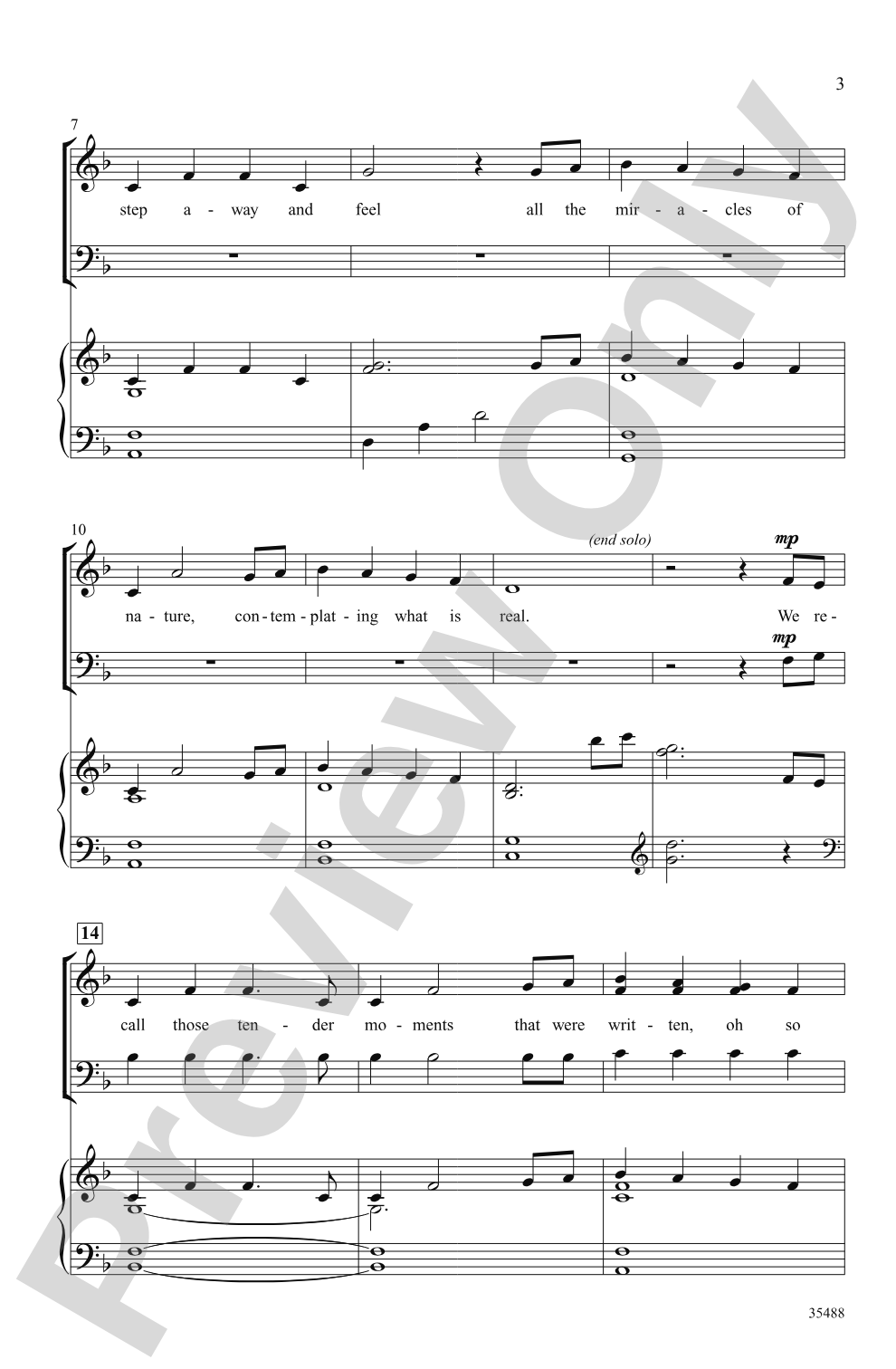
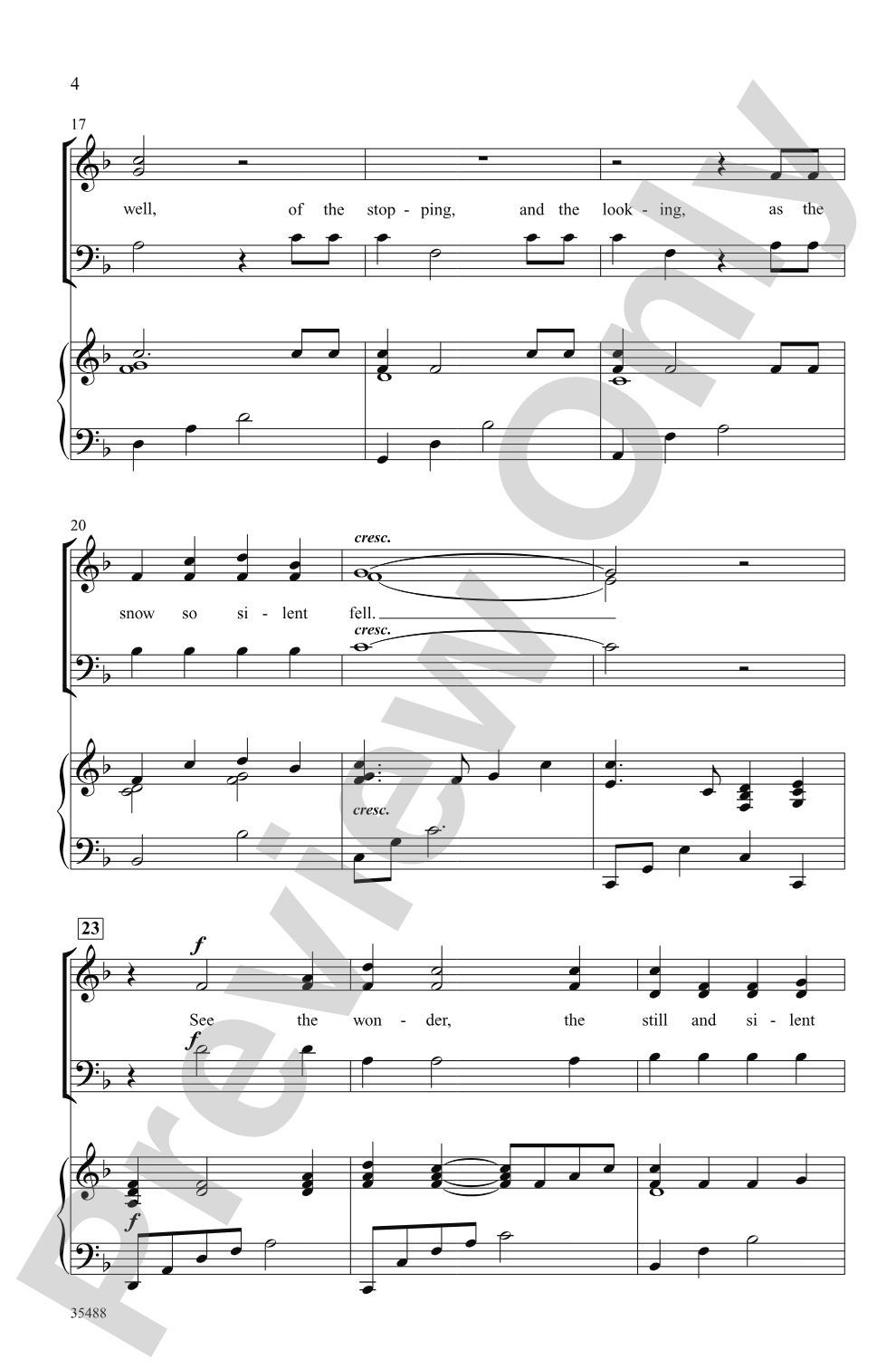

Winter's Frost: 3-Part Mixed Choral Octavo
Words and music by Lois Brownsey and Marti Lunn Lantz
Item: 00-PO-0000896
$1.80
Minimum order quantity: 20 copies
Pickup currently not available
Description
Though the text is entirely original, this contemporary winter song recalls images similar to those in the poems of Pulitzer prize winner Robert Frost. Educationally and vocally appropriate for beginning choir students, it's the perfect material for cross-curricular study.


Winter's Frost: 3-Part Mixed Choral Octavo isn't in MakeMusic Cloud just yet...but it could be. Let us know you'd like to see it, and you'll help shape what comes next. In the meantime, start a free trial and dive into thousands of interactive titles your students can play along with today.
Request This Title
Tell us you want it.
Start Your Free Trial
Explore everything that's ready to play right now.
Sample Audio
1
Audio File
--:--
0:00
0:00
Sample Video
No sample videos found.
Additional Details
Series:
Alfred Choral Designs
Publisher:
Alfred Music
Page Count:
12
SKU:
00-PO-0000896
More about this title
About the Composer: Lois Brownsey

Lois Brownsey studied at Temple University in her native Philadelphia, where she immersed herself in guitar performance and musical theatre before launching a songwriting career that spanned decades. From 1973 through the 1990s, she performed as a vocalist and bassist in pop, rock, and blues ensembles across the United States and internationally, while also composing commercial music for major clients including AT&T and GMC.
For many years, Brownsey has collaborated with composer Marti Lunn Lantz on choral works and song collections that draw heavily on multicultural and seasonal themes. Together they have built a catalog of popular pieces for Alfred Music, ranging from octavos to full collections like Celebrations around the World and The Wonders of the Earth. Based in the Pocono Mountains of Pennsylvania, Brownsey remains active in community and arts organizations, and co-owns Red Rock Recording Studios with her husband, where numerous Alfred projects are produced and engineered.
Why we love this
This piece gives your beginning choir authentic artistic material without sacrificing accessibility. The original poetry captures the contemplative mood associated with winter imagery, and the SAB voicing sits comfortably for developing singers while the music itself never feels simplified or oversimplified.
What to expect
Quiet and contemplative, with a sense of stillness that mirrors frost settling on a winter landscape. The piece invites singers into an intimate musical space that feels mature and thoughtful despite its technical simplicity.
Who it's for
Beginning choir students in mixed voice settings who are ready for accessible three-part writing and need repertoire that connects to cross-curricular study. This is also well-suited for singers working on blend, tuning, and part independence for the first time.
How to get the most out of it
- Balance the three parts carefully during sectional rehearsals; many singers new to part-singing benefit from standing in voice parts so they can hear the harmonic relationships clearly.
- Shape the phrasing toward natural phrase endings rather than resting on every bar line; this helps prevent a choppy, rhythmically rigid feel.
- If you're using the recorded accompaniment, rehearse with it early and often so singers develop independence and confidence with the harmonic foundation.
- Take time to unpack the original text and images with your singers; understanding the poetic intent behind the words deepens their emotional investment in the performance.
How to use it
Include this in a winter or seasonal concert where it pairs naturally with other contemporary choral works. Its accessible demands and literary connection make it ideal for a concert paired with student reflections on winter imagery or as part of a humanities collaboration exploring American poetry and music.
Skills your students will build
- Three-part harmonic voicing and blend in SAB arrangement
- Phrasing across multiple measures rather than in single bar units
- Confidence singing independent melodic lines while hearing supporting parts
- Tonal control in sustained, slower passages
- Text expression and interpretation from original poetry