

Winter Canon: 2-Part Choral Octavo
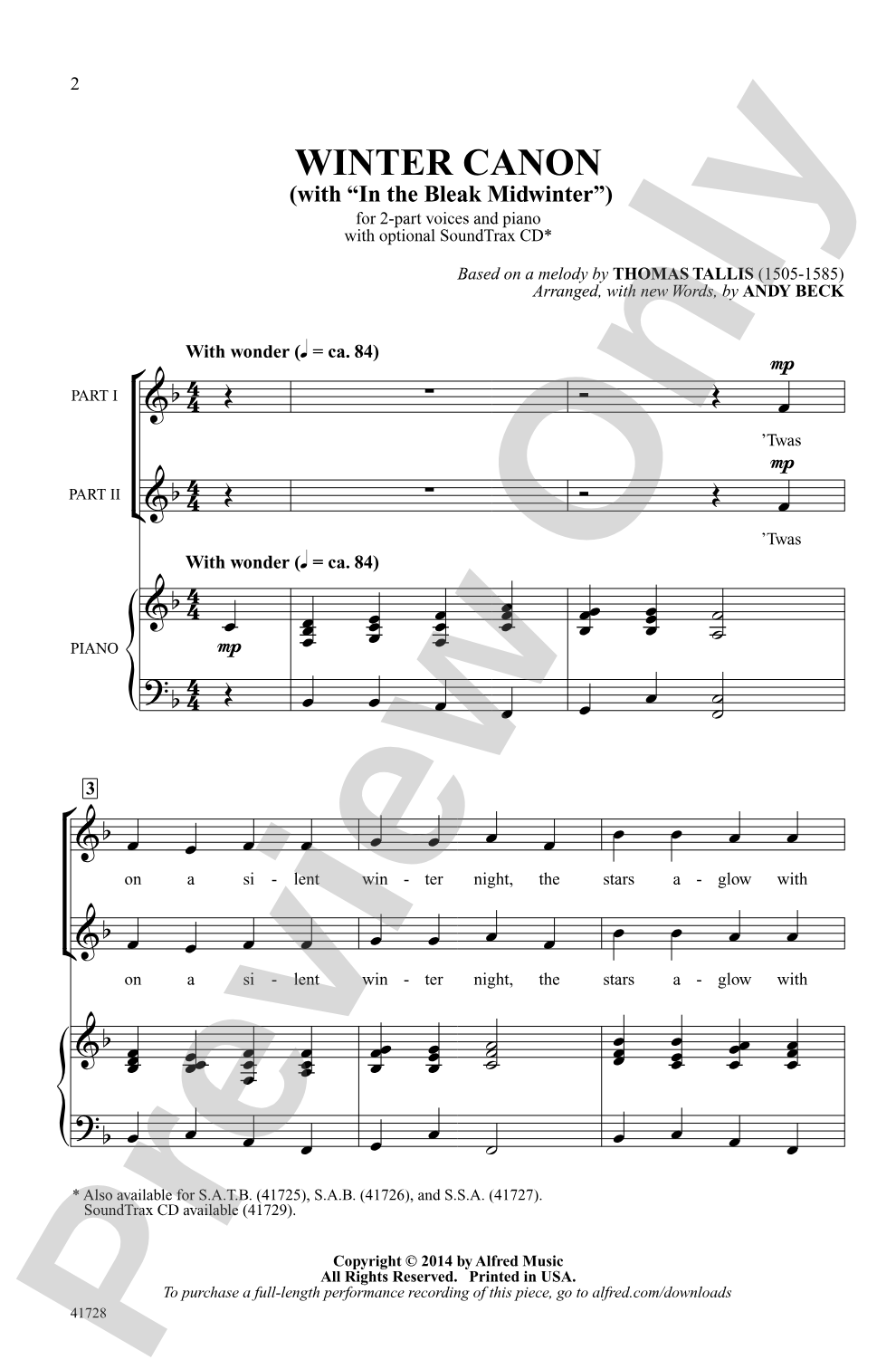
(with "In the Bleak Midwinter")
Based on a melody by Thomas Tallis / arr., with new words, by Andy Beck
Item: 00-PO-0001886

$2.05
Minimum order quantity: 20 copies
Pickup currently not available
Related Items
Winter Canon: SoundTrax Digital Audio Download |
$27.99
|
View | |
Winter Canon: SATB Choral Octavo |
$2.05
|
View | |
Winter Canon: SAB Choral Octavo |
$2.05
|
View | |
Winter Canon: SSA Choral Octavo |
$1.85
|
View | |
Winter Canon: SATB Choral Octavo |
$2.05
|
View | |
Winter Canon: SAB Choral Octavo |
$2.50
|
View | |
Winter Canon: SSA Choral Octavo |
$1.85
|
View | |
Winter Canon: 2-Part Choral Octavo |
$2.05
|
View | |
Winter Canon: Choral Octavo SoundTrax CD |
$27.99
|
View |
Description
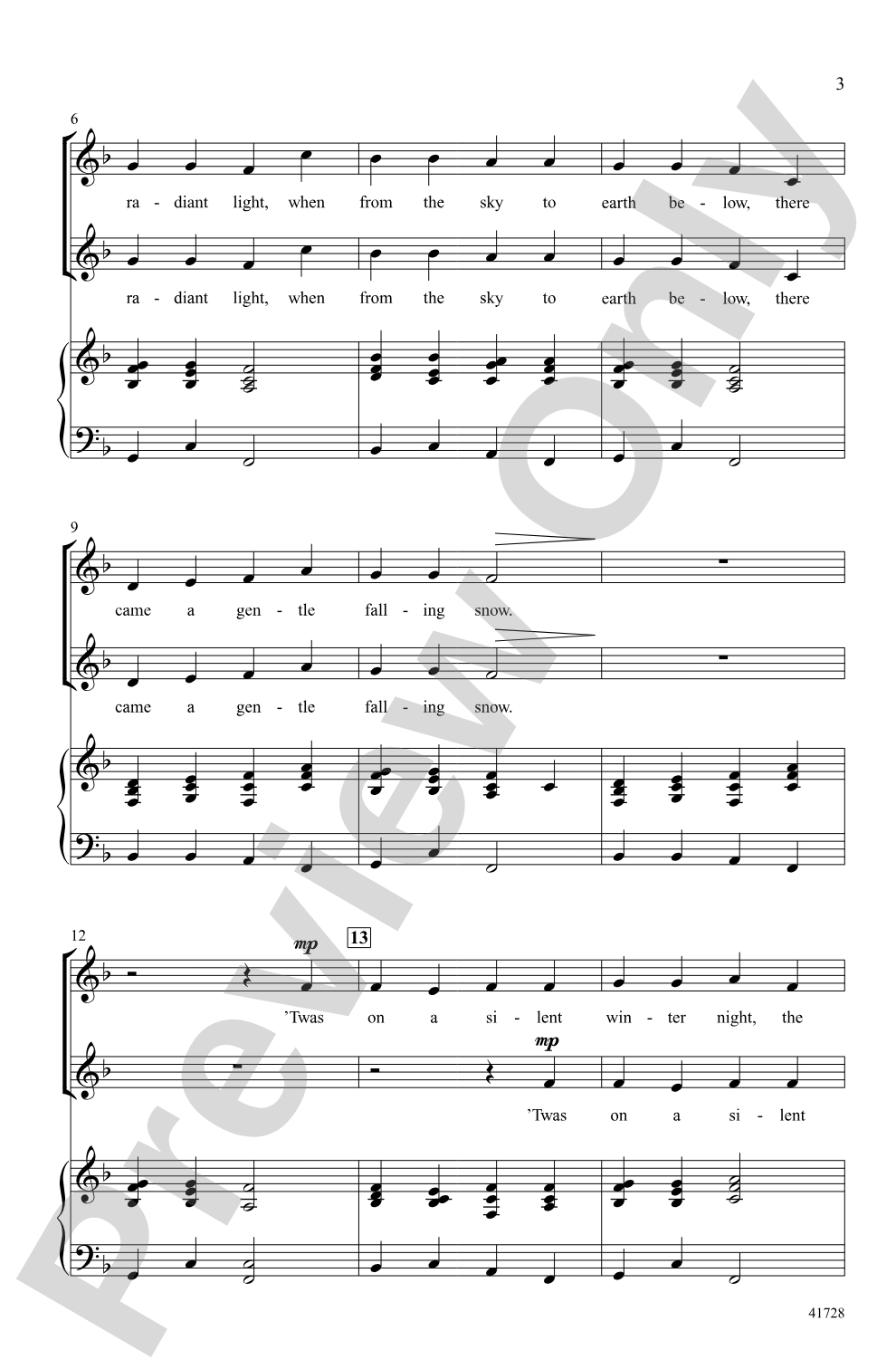
Sung in unison, two, three, and eventually four-part round, this beautiful melody was penned by sixteenth century master of polyphony Thomas Tallis. An excellent teaching piece, the lyrical tune (set with an original winter text) sits so well in the voice. As a special touch, phrases from "In the Bleak Midwinter" are artfully woven throughout. This title is available in Music Prodigy.


Don't just read it, hear it, play along with it, and watch your students grow with it. In MakeMusic Cloud, Winter Canon: 2-Part Choral Octavo comes alive with professional accompaniment, adjustable tempo, and built-in practice tools that turn solo practice into real progress.
Open in the Player
Jump straight in and assign it today.
Start Your Free Trial
Open this title and explore the full library in minutes.
Sample Audio
1
Audio File
--:--
0:00
0:00
Sample Video
No sample videos found.
Additional Details
Series:
Alfred Choral Designs
Publisher:
Alfred Music
Page Count:
12
SKU:
00-PO-0001886
More about this title
About the Composer: Thomas Tallis
Thomas Tallis (c. 1505-1585) stands among the most significant English composers of the Renaissance, serving the Tudor court through periods of religious upheaval that would have ended lesser musicians' careers. His mastery of counterpoint and his ability to write music of profound spiritual depth across both Latin and English texts established him as a foundational figure in the English choral tradition. Tallis composed across every genre available to him, from massive 40-part motets to intimate English anthems, and his influence on English church music remained unmatched for centuries after his death.
Why we love this
This arrangement captures what makes Tallis's melodic gift so enduring: a tune that feels inevitable and effortless, yet sits beautifully in the voice across a 2-part canon structure. Andy Beck's original winter text and the integrated references to Christina Rossetti's beloved poem create a piece that sounds like a timeless carol while maintaining the scholarly craft of its source material. For choirs building canon technique, the progression from unison through four parts offers a clear pedagogical pathway without sacrificing musical substance.
What to expect
The piece unfolds with quiet contentment, the Tallis melody acquiring new dimensions as voices layer atop one another like snow accumulating in stillness. There is an intimacy to the unison opening that deepens into contemplative richness as the canon structure fills in, creating a sense of inevitability and wholeness. The winter text and the subtle nods to Rossetti's carol give the Renaissance melody a distinctly reflective, modern sensibility.
Who it's for
This octavo serves choirs working at the 2-part level who are ready to explore canon technique and layering without tackling complex rhythmic or harmonic obstacles. It works equally well for middle school choirs building ensemble skills and adult community choirs seeking accessible yet sophisticated repertoire. The recorded accompaniment makes independent rehearsal practical for distributed choirs or ensemble singers preparing their parts.
How to get the most out of it
- Shape the melody to breathe with the poetry, not against it; let the natural phrasing of the text guide your line rather than cutting it into rigid metric segments.
- When moving from unison into the canon sections, establish the melody as your secure foundation before other voices enter, ensuring that entries feel organic rather than mechanical.
- Balance becomes crucial as the canon thickens; focus ensemble singers on singing through their parts as fully independent lines while maintaining unified vowel production across all voices.
- The woven phrases from "In the Bleak Midwinter" should emerge naturally from the texture; they are enrichments, not interruptions, so let them blend rather than punctuate.
How to use it
Program this during the holiday season as a bridge between traditional Renaissance motets and contemporary carol arrangements, positioning it as a teaching moment that honors historical roots while demonstrating how classical craft speaks across centuries. The 12-page length and accessible two-part voicing make it viable for a single rehearsal block on a mixed program, or feature it in a chamber concert setting where its craft can receive proper attention without competing with larger works.
Skills your students will build
- Canon technique and independent line singing
- Maintaining a secure melodic foundation while other voices enter
- Blending and balancing multiple simultaneous voice parts
- Interpretation of Renaissance melody within modern textual contexts
- Awareness of musical connections and quotation across different repertoire