
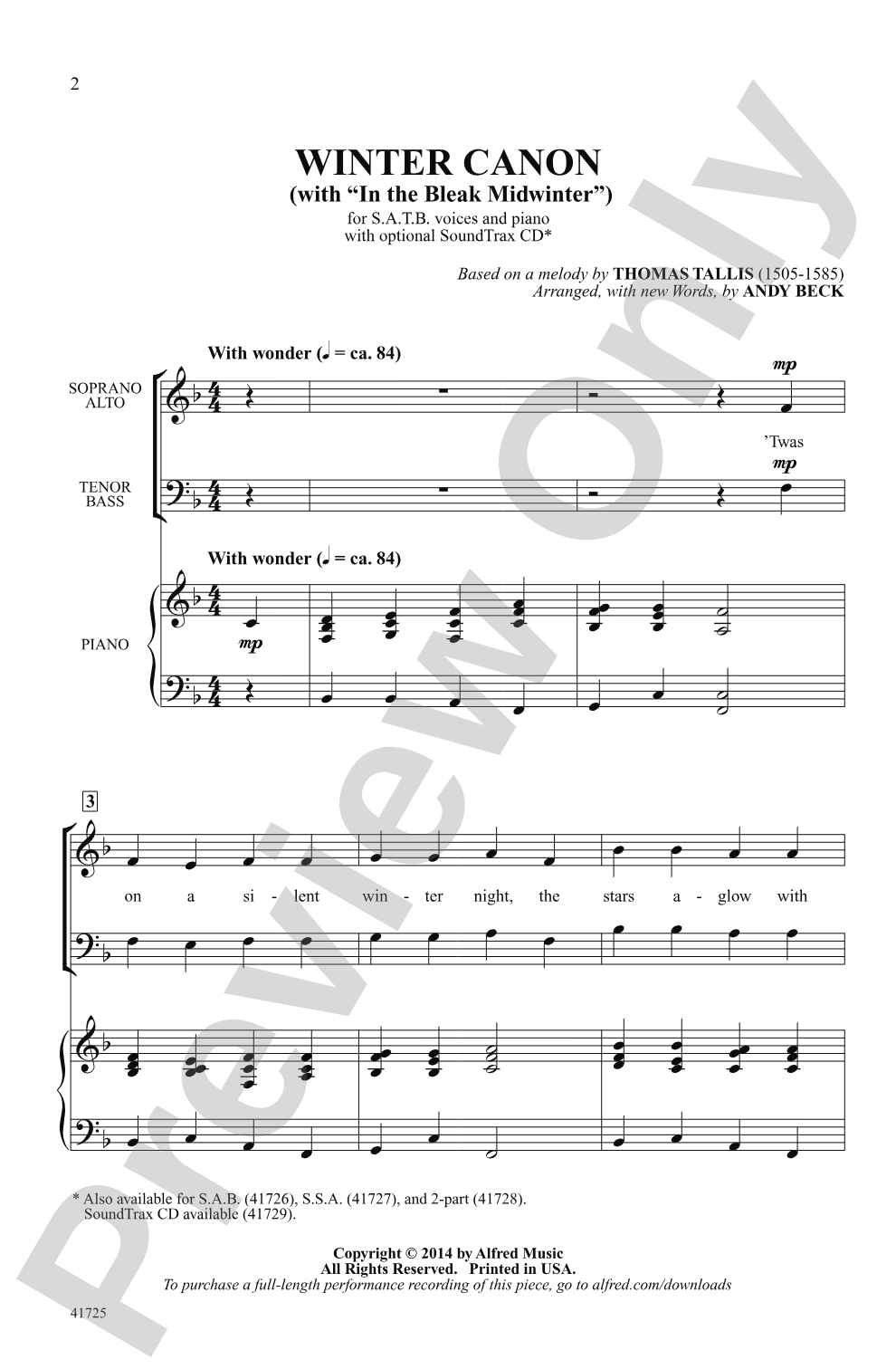

Winter Canon: SATB Choral Octavo
(with "In the Bleak Midwinter")
Based on a melody by Thomas Tallis / arr., with new words, by Andy Beck
Item: 00-PO-0001883

$2.05
Minimum order quantity: 20 copies
Pickup currently not available
Related Items
Winter Canon: SoundTrax Digital Audio Download |
$27.99
|
View | |
Winter Canon: SAB Choral Octavo |
$2.05
|
View | |
Winter Canon: SSA Choral Octavo |
$1.85
|
View | |
Winter Canon: 2-Part Choral Octavo |
$2.05
|
View | |
Winter Canon: SATB Choral Octavo |
$2.05
|
View | |
Winter Canon: SAB Choral Octavo |
$2.50
|
View | |
Winter Canon: SSA Choral Octavo |
$1.85
|
View | |
Winter Canon: 2-Part Choral Octavo |
$2.05
|
View | |
Winter Canon: Choral Octavo SoundTrax CD |
$27.99
|
View |
Description
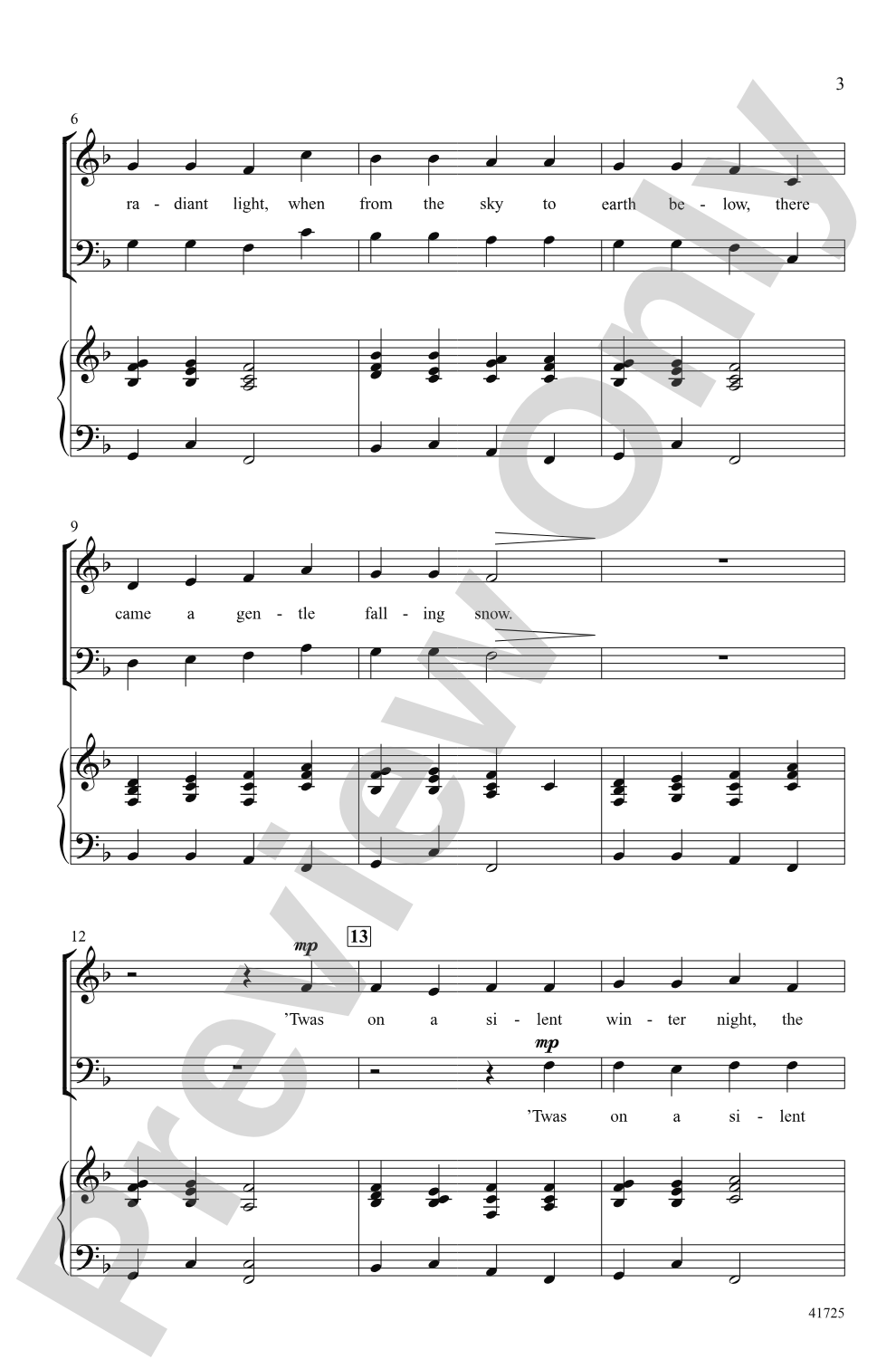
Sung in unison, two, three, and eventually four-part round, this beautiful melody was penned by sixteenth century master of polyphony Thomas Tallis. An excellent teaching piece, the lyrical tune (set with an original winter text) sits so well in the voice. As a special touch, phrases from "In the Bleak Midwinter" are artfully woven throughout.


Don't just read it, hear it, play along with it, and watch your students grow with it. In MakeMusic Cloud, Winter Canon: SATB Choral Octavo comes alive with professional accompaniment, adjustable tempo, and built-in practice tools that turn solo practice into real progress.
Open in the Player
Jump straight in and assign it today.
Start Your Free Trial
Open this title and explore the full library in minutes.
Sample Audio
1
Audio File
--:--
0:00
0:00
Sample Video
Additional Details
Series:
Alfred Choral Designs
Publisher:
Alfred Music
Page Count:
12
SKU:
00-PO-0001883
More about this title
About the Composer: Thomas Tallis
Thomas Tallis (c. 1505-1585) stands among the most significant English composers of the Renaissance, navigating the religious and political upheaval of Tudor England with remarkable diplomatic skill. His output spans Latin motets, English anthems, and instrumental works that showcase his mastery of counterpoint and harmonic innovation, making him a foundational figure in the development of English sacred music.
Why we love this
Andy Beck's arrangement transforms one of Tallis's enduring melodies into a genuinely pedagogical experience, allowing singers to progress from unison through increasingly complex polyphony without losing the elegance of the original line. The integration of text from "In the Bleak Midwinter" adds seasonal resonance and literary depth, while the round structure gives every voice part something meaningful to sing rather than relegating anyone to filler harmonies.
What to expect
The progression from solo voice through layered rounds creates an almost meditative quality, as if the melody is gently multiplying across the room. Tallis's natural phrasing and the wintry text create an atmosphere of quiet reflection that feels both intimate and expansive, depending on how you shape the voicing.
Who it's for
This octavo works beautifully for intermediate to advanced high school or adult choirs seeking a piece that teaches round technique without resorting to nursery-rhyme material. It also suits sacred music programs that want to include Renaissance masters within secular winter programming, and smaller ensembles who want vocal writing that demonstrates polyphonic thinking without excessive range demands.
How to get the most out of it
- Begin with full voice on the unison section to establish the melody's shape clearly; this foundation makes the entrance points in later rounds immediately obvious to singers.
- Emphasize the text painting in the winter imagery; the lyrical quality of Tallis's melody responds beautifully to thoughtful declamation and vowel consistency across voice parts.
- Balance the layering carefully as voices enter in the round; use light dynamics in earlier entrances to preserve clarity rather than letting the texture collapse into a dense wash.
- If using recorded accompaniment, rehearse voices independently first to secure accuracy before adding the backing track.
How to use it
Position this during the first half of a winter concert to provide textural variety among longer, more demanding works; its modest length and transparent writing offer listeners a moment of clarity. It pairs well with modern winter compositions or other Renaissance sacred music, and works equally at holiday galas, concert services, or community sing-alongs where the round structure engages audiences.
Skills your students will build
- Round singing and independent melodic thinking
- Layered entrances and maintaining a part against competing vocal lines
- Renaissance polyphonic style and text underlay
- Sustained legit tone production across phrase lengths