

Who Has Seen the Wind?: SSAB Choral Octavo
Words by Christina Rossetti, music by Jay Althouse
Item: 00-PO-0005499
$1.90
Minimum order quantity: 20 copies
Pickup currently not available
Related Items
Who Has Seen the Wind?: PianoTrax Digital Download |
$9.99
|
View | |
Who Has Seen the Wind?: SSATB Choral Octavo |
$1.90
|
View | |
Who Has Seen the Wind?: SSA Choral Octavo |
$2.05
|
View | |
Who Has Seen the Wind?: SSATB Choral Octavo |
$1.90
|
View | |
Who Has Seen the Wind?: SSAB Choral Octavo |
$1.90
|
View | |
Who Has Seen the Wind?: SSA Choral Octavo |
$2.05
|
View |
Description
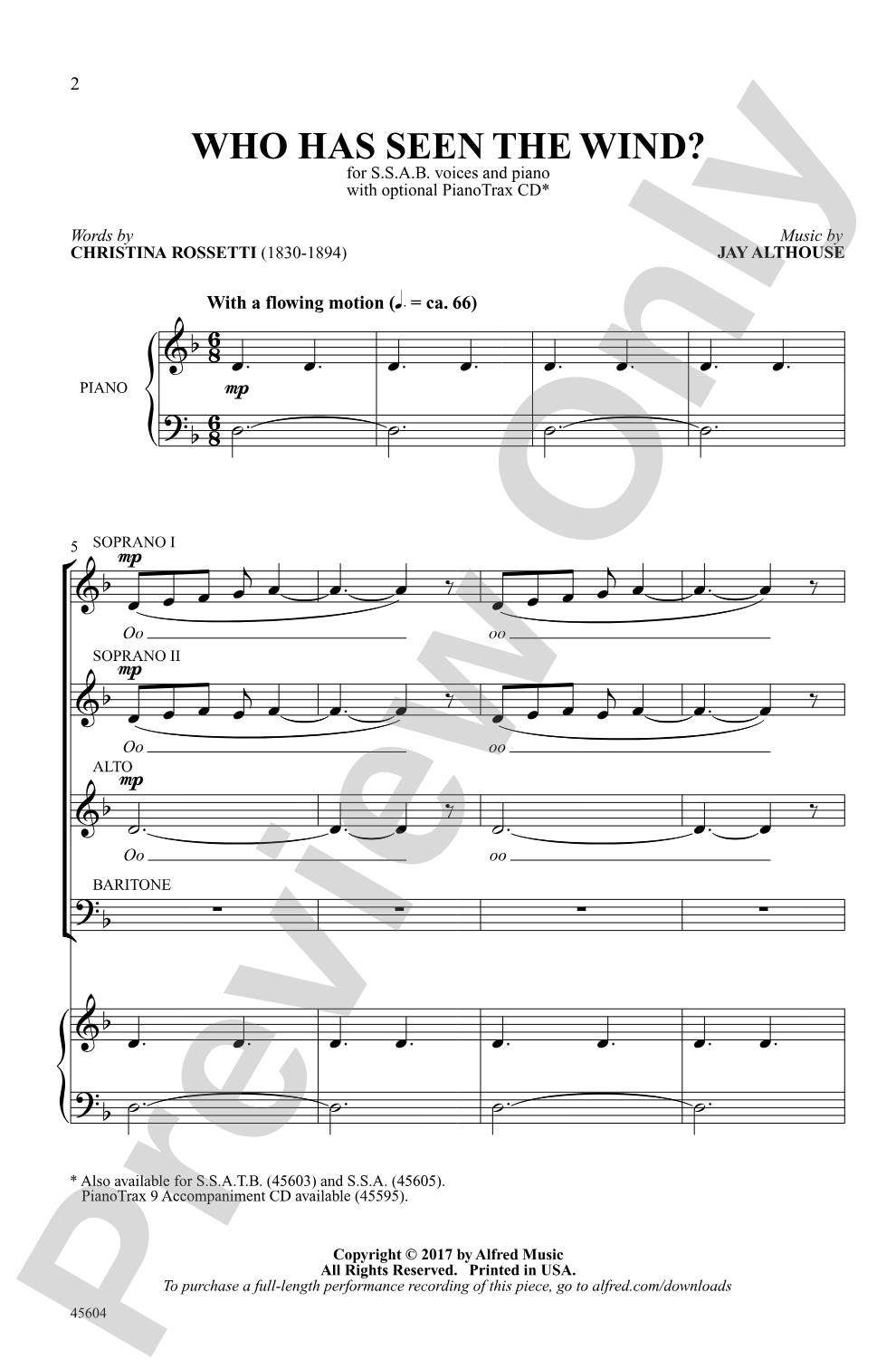
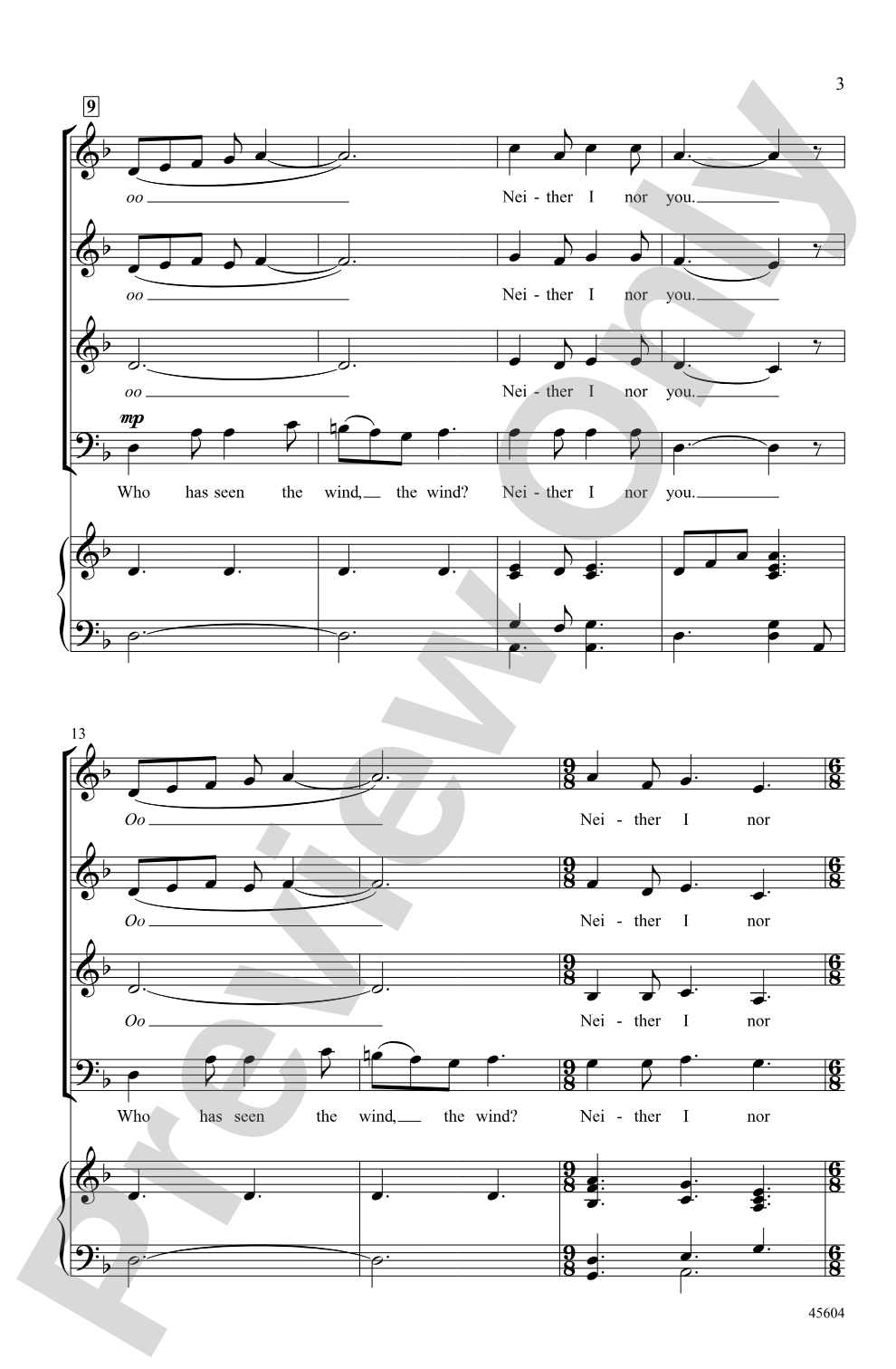
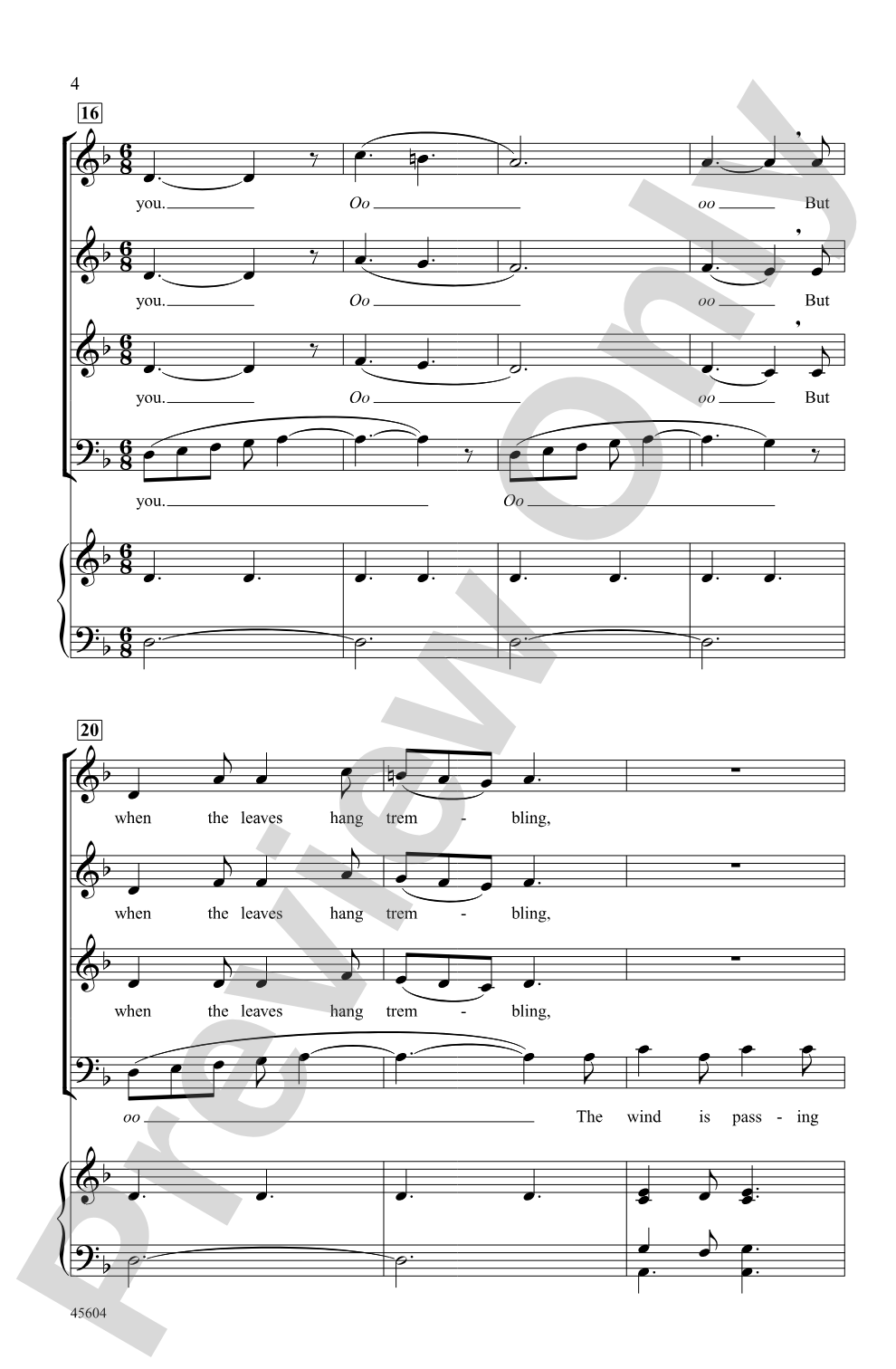
This text-driven setting of Rossetti's treasured poem is top-tier. A well-developed choral interlude sounds like swirling winds with round vowels and captivating harmonies to spare. Most notably, Jay's masterful text painting weaves the sound of the breeze throughout. Artful. Haunting.


Who Has Seen the Wind?: SSAB Choral Octavo isn't in MakeMusic Cloud just yet...but it could be. Let us know you'd like to see it, and you'll help shape what comes next. In the meantime, start a free trial and dive into thousands of interactive titles your students can play along with today.
Request This Title
Tell us you want it.
Start Your Free Trial
Explore everything that's ready to play right now.
Sample Audio
1
Audio File
--:--
0:00
0:00
Sample Video
No sample videos found.
Additional Details
Series:
Alfred Choral Designs
Publisher:
Alfred Music
Page Count:
12
SKU:
00-PO-0005499
More about this title
About the Composer: Jay Althouse

Jay Althouse holds degrees in Music Education and Music from Indiana University of Pennsylvania, where he was later honored with the Distinguished Alumni award. His career spans both administration and composition; he spent eight years managing rights and licensing for a major educational music publisher and served on the Executive Board of the Music Publishers Association of America. As a prolific composer, Althouse has over 800 choral works in print across all skill levels, performed widely throughout English-speaking countries.
Beyond composition, Althouse has shaped music education through multiple channels. He co-wrote children's musicals with Sally K. Albrecht, his wife and frequent collaborator, edited respected vocal solo collections including Folk Songs for Solo Singers, and authored influential classroom resources such as Ready to Read Music and One-Page Composer Bios. His compositions have earned regular ASCAP Special Awards, and he co-wrote I Hear America Singing, performed by the San Francisco Girls and Boys Choirs at President Obama's 2009 Inauguration. Althouse currently serves on the National Advisory Board of the Folk Art Society of America and resides in Wake Forest, North Carolina.
Why we love this
Althouse's setting transforms Rossetti's poem into a visceral choral experience through deliberate, sophisticated sound painting. The interlude section genuinely evokes wind movement via harmonic language and vowel placement, making the text inseparable from the music itself. This is the kind of piece that stays with singers and audiences alike because it demonstrates how skillfully chosen choral sonorities can deepen a poem's meaning.
What to expect
The piece unfolds with a haunting, introspective quality grounded in Rossetti's questions about the invisible and intangible. When the interlude arrives, the harmonic language seems to shift and move like air itself, creating a momentary space of wonder before the text returns. The overall effect is contemplative and sophisticated, never sentimental.
Who it's for
This octavo works beautifully for choirs seeking a piece that bridges poetry and music with intellectual rigor and emotional depth. It suits ensembles comfortable with three-part writing and ready to explore nuanced text expression; it's equally at home in a concert setting or a choral festival where artistry matters more than vocal size.
How to get the most out of it
- Shape the text painting moments by requesting that singers visualize wind patterns during the interlude; ask them to trace those imagined movements with their breath support and vowel resonance.
- Balance the SAB voicing carefully so that the soprano and alto lines remain clear against the broader midrange of the blended voices; mark potential spots where one part needs to step back dynamically.
- Record a sectional rehearsal of just the interlude to isolate the harmonic colors Althouse created; have each section listen to the full blend and adjust intonation to support the rounded vowel quality he intended.
- Prepare singers for the emotional shift between the narrative sections and the instrumental interlude by discussing the poem's structure; they'll commit more fully to the textual contrast when they understand its poetic purpose.
How to use it
Place this piece in a concert program where it can anchor a thematic exploration of nature or poetry, perhaps paired with other text-driven works that share similar literary merit. Its 12-page length and moderate technical demands make it practical for festival programming, and the concert or contest category designation means it translates well to competitive settings where interpretive choices matter.
Skills your students will build
- Shaping long phrases across three-part writing
- Sustaining consistent vowel quality in block harmony
- Interpreting text painting and compositional symbolism
- Balancing SAB voicing with clear voice independence