

Who Has Seen the Wind?: SSATB Choral Octavo
Words by Christina Rossetti, music by Jay Althouse
Item: 00-PO-0005498
$1.90
Minimum order quantity: 20 copies
Pickup currently not available
Related Items
Who Has Seen the Wind?: PianoTrax Digital Download |
$9.99
|
View | |
Who Has Seen the Wind?: SSAB Choral Octavo |
$1.90
|
View | |
Who Has Seen the Wind?: SSA Choral Octavo |
$2.05
|
View | |
Who Has Seen the Wind?: SSATB Choral Octavo |
$1.90
|
View | |
Who Has Seen the Wind?: SSAB Choral Octavo |
$1.90
|
View | |
Who Has Seen the Wind?: SSA Choral Octavo |
$2.05
|
View |
Description
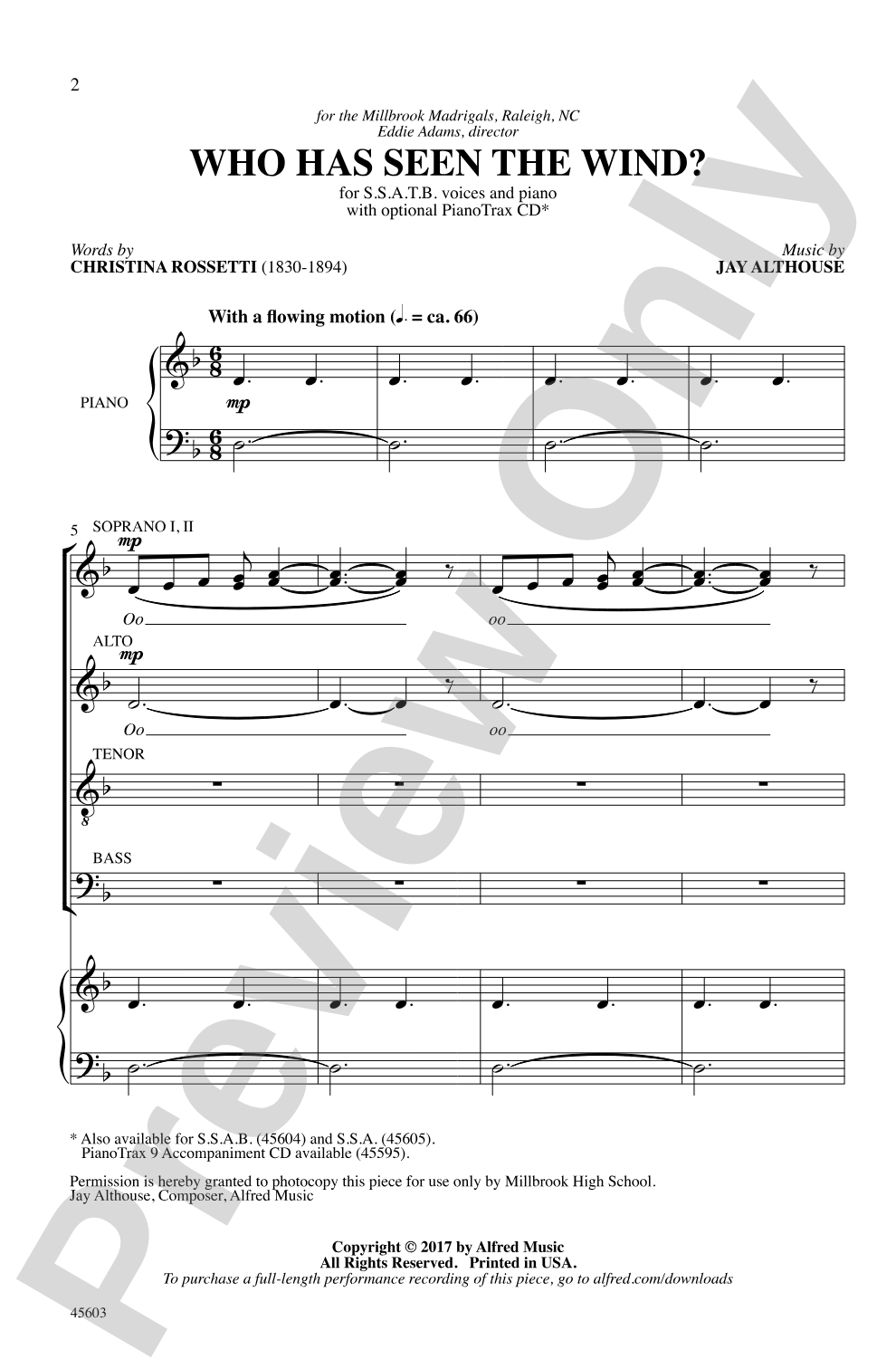
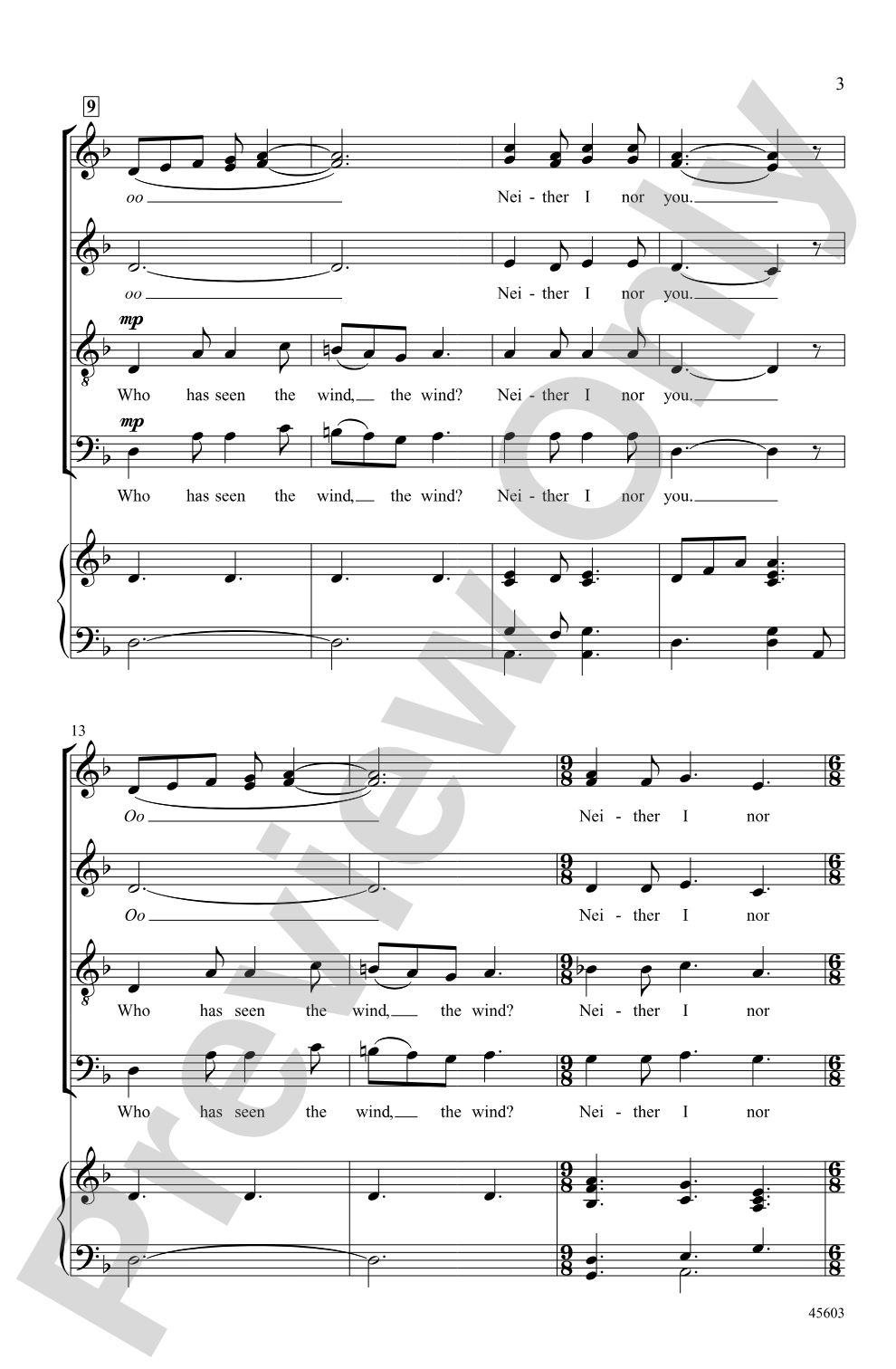
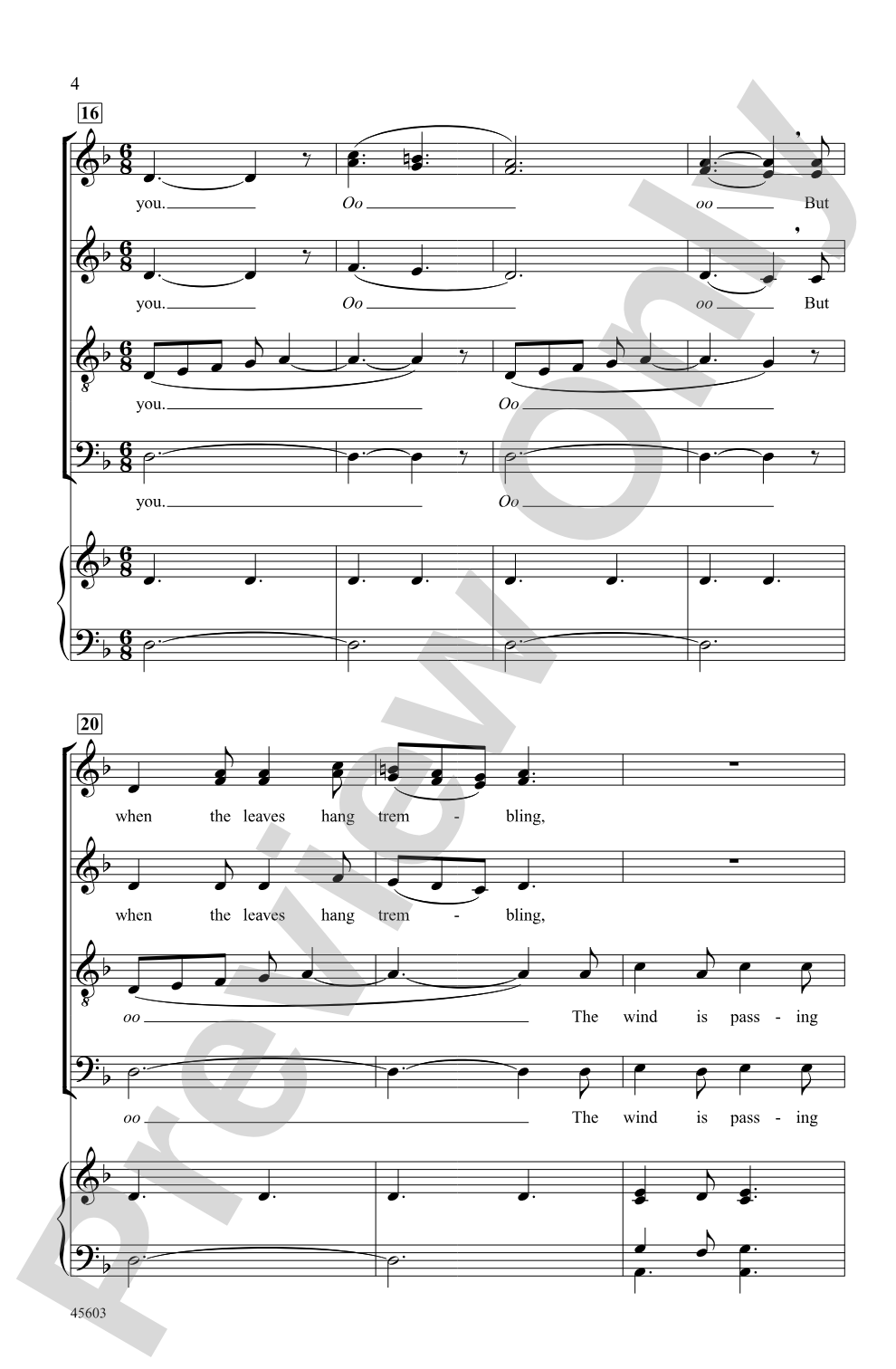
This text-driven setting of Rossetti's treasured poem is top-tier. A well-developed choral interlude sounds like swirling winds with round vowels and captivating harmonies to spare. Most notably, Jay's masterful text painting weaves the sound of the breeze throughout. Artful. Haunting.


Who Has Seen the Wind?: SSATB Choral Octavo isn't in MakeMusic Cloud just yet...but it could be. Let us know you'd like to see it, and you'll help shape what comes next. In the meantime, start a free trial and dive into thousands of interactive titles your students can play along with today.
Request This Title
Tell us you want it.
Start Your Free Trial
Explore everything that's ready to play right now.
Sample Audio
1
Audio File
--:--
0:00
0:00
Sample Video
Additional Details
Series:
Alfred Choral Designs
Publisher:
Alfred Music
Page Count:
12
SKU:
00-PO-0005498
More about this title
About the Composer: Jay Althouse

Jay Althouse holds degrees in Music Education and Music from Indiana University of Pennsylvania, where he was later honored as a Distinguished Alumnus. His eight-year tenure as a rights and licenses administrator at a major educational publisher gave him deep insight into the field, including a term on the Executive Board of the Music Publishers Association of America.
With over 800 choral compositions in print across all levels, Althouse has established himself as a prolific and respected voice in choral music education. His work spans choral octavos, children's musicals (co-written with his wife Sally K. Albrecht), vocal solo collections, and pedagogical resources including The Complete Choral Warm-up Book and Accent on Composers. He holds ASCAP membership and is a regular recipient of the ASCAP Special Award. Althouse served on the board of the North Carolina Master Chorale and currently advises the National Advisory Board of the Folk Art Society of America.
Why we love this
Althouse's text painting here transcends the expected. Rather than simply setting Rossetti's words, he creates sonic architecture that mirrors the poem's central image; the choral interlude genuinely sounds like wind moving through space. The harmonic vocabulary is sophisticated enough to intrigue advanced choirs while remaining accessible to solid intermediate ensembles, and the literary depth invites meaningful interpretation without requiring excessive rehearsal time to unlock.
What to expect
Haunting and contemplative, with moments of ethereal movement. The music captures both the philosophical weight of Rossetti's meditation and the physical sensation of invisible wind, creating a piece that lingers in listeners' ears long after the final chord.
Who it's for
This octavo suits intermediate to advanced SATB choirs seeking concert or festival repertoire with literary substance. Directors working with student choirs that have secure part-reading and some harmonic awareness will find the text painting rewarding to rehearse without becoming a technical obstacle.
How to get the most out of it
- Shape the SATB passages with attention to vowel color; the well-developed interlude depends on uniform, rounded vowels across all four parts to achieve that swirling wind effect.
- Find the phrase arcs early rather than treating lines as static blocks. Rossetti's poetry naturally suggests breath and momentum that should carry through the harmonic movement.
- Balance the interlude section carefully so text painting remains audible; resist the temptation to let it become atmospheric wash, as the compositional design is deliberate and detailed.
How to use it
Pair this with other text-driven art song settings or Romantic-era choral repertoire for a concert focused on literary interpretation. Its 12-page length makes it suitable for a complete concert program or as a substantial standalone selection at a festival.
Skills your students will build
- Text painting and interpretive musicianship through composer intent
- Blend and balance across four-part harmony
- Sustained phrasing through harmonic movement
- Choral tone control using vowel awareness