When Words Are Not Enough Cover Image

When Words Are Not Enough: PartTrax Digital Audio Download

$49.99 USD
Sale price  $49.99 USD Regular price 
Skip to product information
When Words Are Not Enough Cover Image

When Words Are Not Enough: PartTrax Digital Audio Download

Words and music by Sally K. Albrecht and Jay Althouse

Item: 00-AA-0000429

$49.99
Digital Download
Description

When Words Are Not Enough: PartTrax Digital Audio Download isn't in MakeMusic Cloud just yet...but it could be. Let us know you'd like to see it, and you'll help shape what comes next. In the meantime, start a free trial and dive into thousands of interactive titles your students can play along with today.

Sample Pages

No sample pages found.

Sample Audio
1 When Words Are Not Enough (Accompaniment) --:--
2 When Words Are Not Enough 2-Part (Part I Dominant) --:--
3 When Words Are Not Enough 2-Part (Part II Dominant) --:--

When Words Are Not Enough (Accompaniment)

0:00
0:00
Sample Video
Additional Details
Series: Alfred Choral Designs
Publisher: Alfred Music
SKU: 00-AA-0000429

More about this title

About the Composer: Sally K. Albrecht
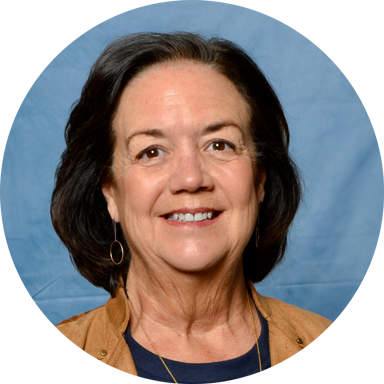
Sally K. Albrecht

Sally K. Albrecht has shaped American choral music for over four decades as a composer, conductor, clinician, and educational publisher. Since 1987, she has received the ASCAP Special Music Award annually and has more than 600 choral publications in print, alongside 75 large-scale musicals and songbooks. Her work as Director of School Choral, Vocal, and Elementary Publications at Alfred Music and her guest conducting at major venues including Lincoln Center, Carnegie Hall, and The Kennedy Center have made her voice central to contemporary school choral practice.

Albrecht earned her B.A. in Music and Theater from Rollins College, then studied at the University of Miami, where she received an M.A. in Drama and an M.M. in Accompanying. She has taught at Oakland University, Jersey City State College, and Meredith College, and in 2021 was honored with the Distinguished Alumna Award from both the University of Miami Frost School of Music and Rollins College. She lives in Wake Forest, North Carolina, with her husband, composer and arranger Jay Althouse.

Why we love this

This piece carries real emotional weight without requiring a large ensemble or complex harmonic language. The inclusion of sign language integration, recorded accompaniment, and contest-ready polish means you can program it confidently whether you're preparing for festival adjudication or building a concert around meaningful contemporary repertoire that your singers will care about.

What to expect

The piece unfolds with understated elegance, letting silence and space do as much work as melody. There's a contemplative quality that builds gradually, arriving at moments of genuine vulnerability where the lyric's meaning resonates in the voices themselves rather than drowning in accompaniment.

Who it's for

This two-part arrangement works beautifully for developing treble choirs or mixed ensembles with limited lower-voice depth, and it sits comfortably for singers ranging from middle school through young adult levels. Directors preparing for contest or festival performances will appreciate the professional recorded accompaniment and polished arrangement that doesn't sacrifice emotional authenticity for technical accessibility.

How to get the most out of it

  • Balance the vocal line prominently against the accompaniment so the lyrical content cuts through; use dynamics to shape the text rather than volume alone.
  • If using sign language, rehearse the integration early and treat the signing as a full ensemble choice, not an afterthought. It should feel natural and unified across all singers.
  • Reference the recorded accompaniment during early rehearsals to lock the harmonic framework, then gradually reduce your reliance on it to build ensemble independence.
  • Honor the closing moment as a true cadence; resist rushing the final measures, and allow silence to underscore the emotional resolution.

How to use it

Program this as a moment of stillness in a concert, especially when surrounded by more energetic work; its introspective character provides necessary contrast. It also reads powerfully as a closer, leaving the audience with a quiet, thoughtful exit rather than applause-driven momentum.

Skills your students will build

  • Phrasing and text expression in contemporary secular repertoire
  • Blend and balance in two-part voicing
  • Performing with recorded accompaniment and maintaining ensemble cohesion
  • Integration of movement and sign language as interpretive tools
  • Sustained tone production over longer melodic lines

You May Also Like