

When the Sun Goes In: 2-Part Choral Octavo
All My Trials / Every Night When the Sun Goes In
Traditional Spirituals / arr. Greg Gilpin
Item: 00-PO-0000040
$1.65
Minimum order quantity: 20 copies
Pickup currently not available
Related Items
When the Sun Goes In: SoundTrax Digital Audio Download |
$22.95
|
View | |
When the Sun Goes In: SAB Choral Octavo |
$1.65
|
View | |
When the Sun Goes In: SSA Choral Octavo |
$1.65
|
View | |
When the Sun Goes In: SAB Choral Octavo |
$1.65
|
View | |
When the Sun Goes In: SSA Choral Octavo |
$1.65
|
View | |
When the Sun Goes In: 2-Part Choral Octavo |
$1.65
|
View | |
When the Sun Goes In: Choral Octavo SoundTrax CD |
$22.95
|
View |
Description
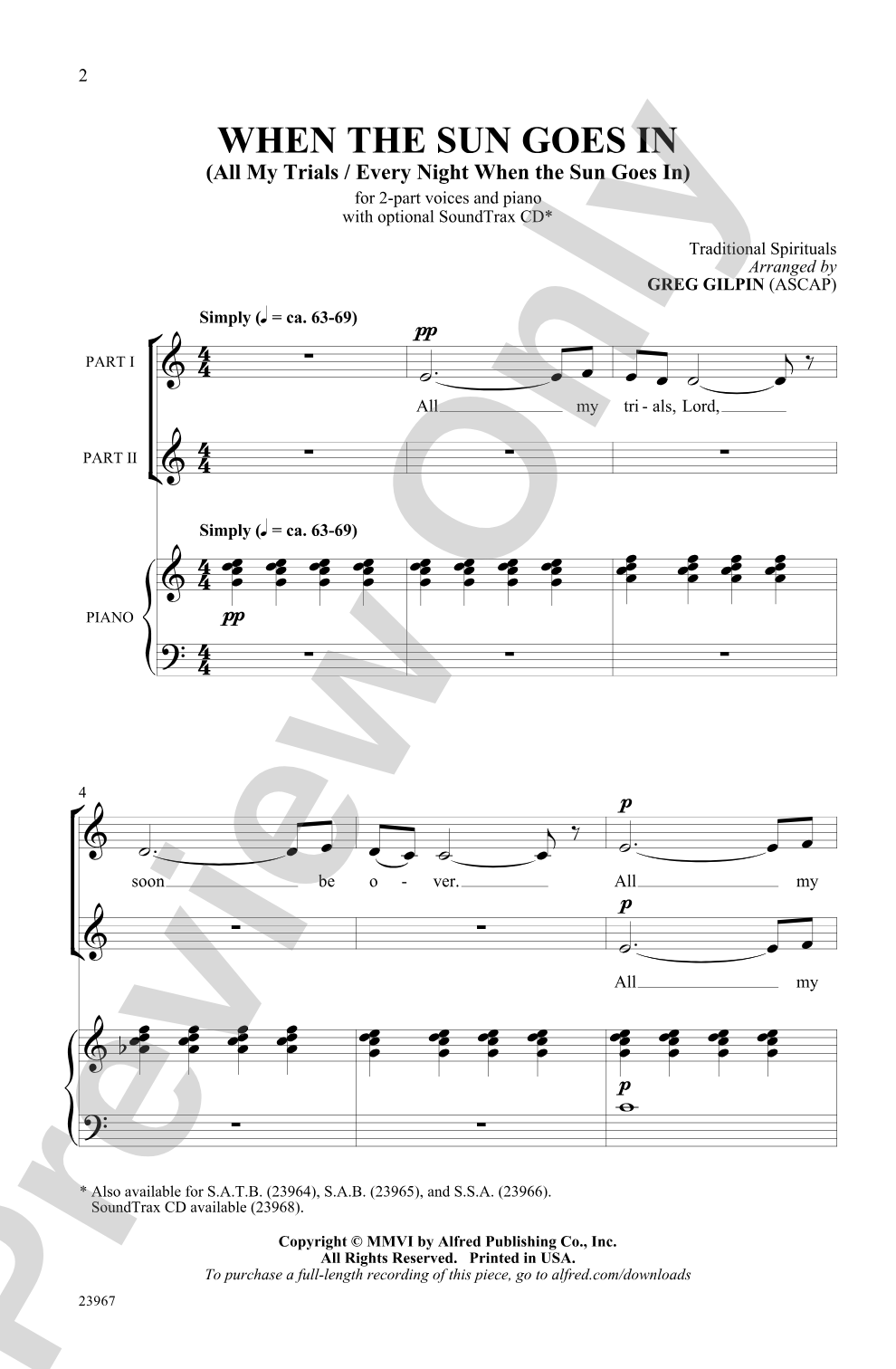
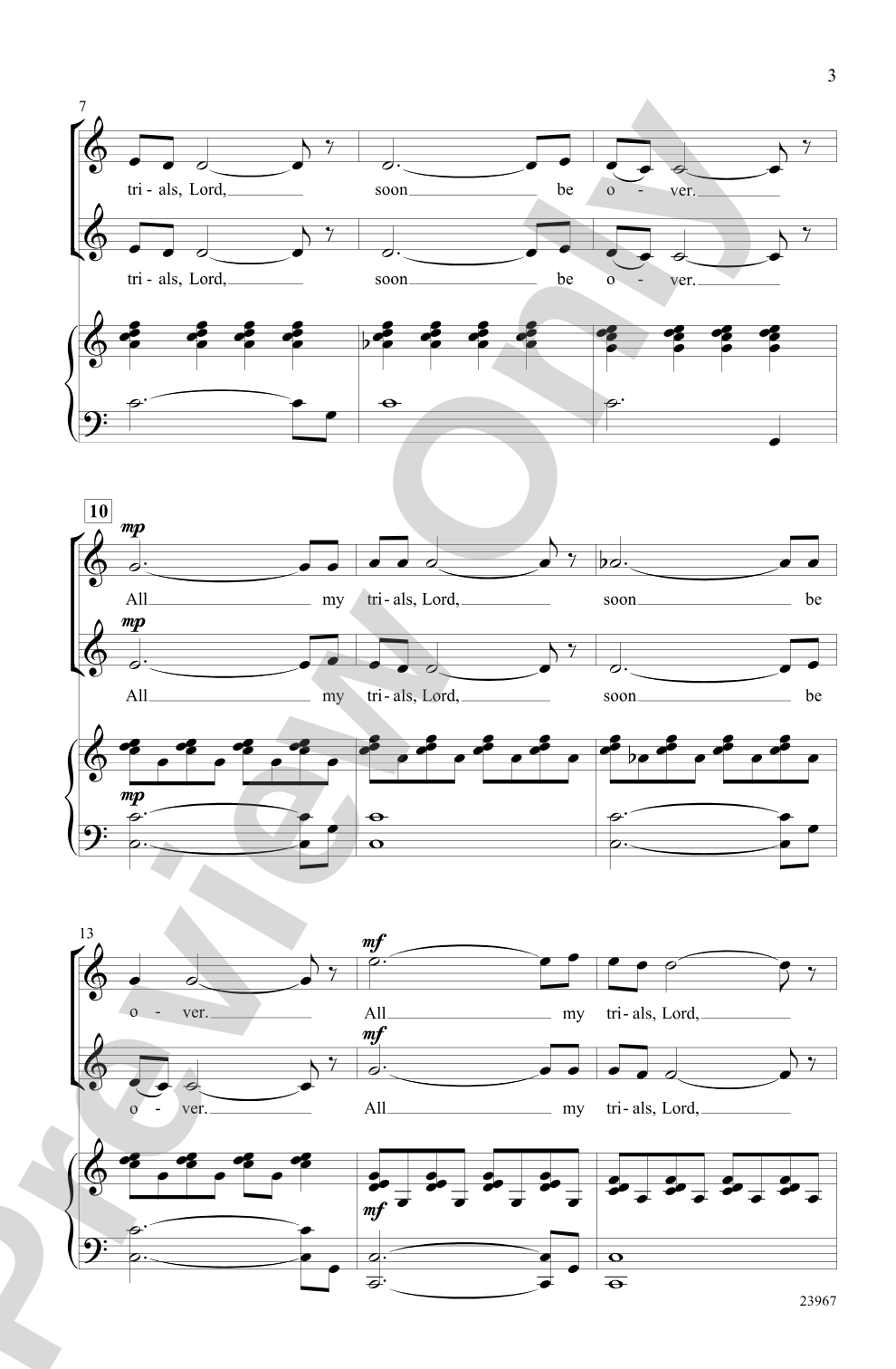
A sublime combination of "All My Trials" and "Every Night When the Sun Goes In," enjoyable and accessible for all choirs. A delicate piano accompaniment underscores the simple sustained vocal phrases that begin on unison pianissimo and grow to full harmonic beauty. A stunning spiritual setting!


When the Sun Goes In: 2-Part Choral Octavo isn't in MakeMusic Cloud just yet...but it could be. Let us know you'd like to see it, and you'll help shape what comes next. In the meantime, start a free trial and dive into thousands of interactive titles your students can play along with today.
Request This Title
Tell us you want it.
Start Your Free Trial
Explore everything that's ready to play right now.
Sample Audio
1
Audio File
--:--
0:00
0:00
Sample Video
No sample videos found.
Additional Details
Series:
Alfred Choral Designs
Publisher:
Alfred Music
Page Count:
8
SKU:
00-PO-0000040
More about this title
About the Arranger: Greg Gilpin

Greg Gilpin is an ASCAP award-winning composer and arranger whose choral works have been performed across the United States at venues including Carnegie Hall, Lincoln Center, and Ryman Auditorium. His conducting and arranging credentials extend internationally to stages like the Sydney Opera House, Royal Festival Hall in London, and Harpa Concert Hall in Reykjavik. As Director of Educational Choral Publications for Shawnee Press, Gilpin shapes the landscape of accessible, singable choral literature.
Beyond the concert hall, Gilpin has scored the award-winning short film "Rosie's Rescue" and collaborated with opera singer Angela Brown on a striking arrangement of "What Child is This?" premiered with the Indianapolis Symphonic Choir. He is an active member of ACDA, NAfME, SAG-AFTRA, and holds Life Loyal membership in Phi Mu Alpha Sinfonia.
Why we love this
Gilpin's fusion of two beloved spirituals feels inevitable rather than contrived, letting each melody enhance rather than compete with the other. The opening in unison pianissimo gives singers an anchoring moment before the piece expands into full harmony, making it approachable for less experienced ensembles without sacrificing musical sophistication. The delicate piano writing supports without overwhelming, allowing the spiritual's inherent beauty to remain the focus.
What to expect
The piece unfolds like a quiet prayer becoming a hymn of affirmation. Beginning in hushed unison, it gradually opens into luminous harmony, supported by understated piano writing that cradles rather than dominates. The spiritual's familiar emotional territory combined with the arranger's restraint creates an intimate yet expansive sound.
Who it's for
This arrangement welcomes choirs of all experience levels, from community ensembles and church choirs to school programs looking for accessible sacred music with emotional depth. The 2-part voicing removes technical barriers while the spiritual's text and melody invite genuine expression. Directors seeking repertoire that builds confidence without oversimplifying will find this an ideal choice.
How to get the most out of it
- Maintain transparency in the opening unison passage by keeping the tone warm but restrained; this section sets the dynamic and emotional foundation for the entire piece.
- Shape the growth from pianissimo to full harmony as a gradual, inevitable unfolding rather than a sudden swell; think of it as a sunrise rather than a light switch.
- Balance the two vocal lines so neither dominates once the harmonic section begins; blend is essential for the "full harmonic beauty" to emerge.
- Use the recorded accompaniment to secure the piano's gentle support and to model the intended pacing and interpretation.
How to use it
Position this early in a concert program as a moment of reflection and spiritual grounding, or pair it with other spirituals for a thematic set exploring this essential American tradition. Its gentle character and accessibility make it effective during a transition between more energetic or complex works, allowing the audience and singers to gather breath and presence.
Skills your students will build
- Singing sustained tones with consistent tone quality and intonation
- Blending and balancing two-part harmony
- Dynamic control and gradual crescendo from pianissimo to mezzo-forte
- Interpreting text from the spiritual tradition with authenticity and reverence
- Following piano accompaniment while maintaining independence of line