

When the Sun Goes In: SAB Choral Octavo
All My Trials / Every Night When the Sun Goes In
Traditional Spirituals / arr. Greg Gilpin
Item: 00-PO-0000038
$1.65
Minimum order quantity: 20 copies
Pickup currently not available
Related Items
When the Sun Goes In: SoundTrax Digital Audio Download |
$22.95
|
View | |
When the Sun Goes In: SSA Choral Octavo |
$1.65
|
View | |
When the Sun Goes In: 2-Part Choral Octavo |
$1.65
|
View | |
When the Sun Goes In: SAB Choral Octavo |
$1.65
|
View | |
When the Sun Goes In: SSA Choral Octavo |
$1.65
|
View | |
When the Sun Goes In: 2-Part Choral Octavo |
$1.65
|
View | |
When the Sun Goes In: Choral Octavo SoundTrax CD |
$22.95
|
View |
Description
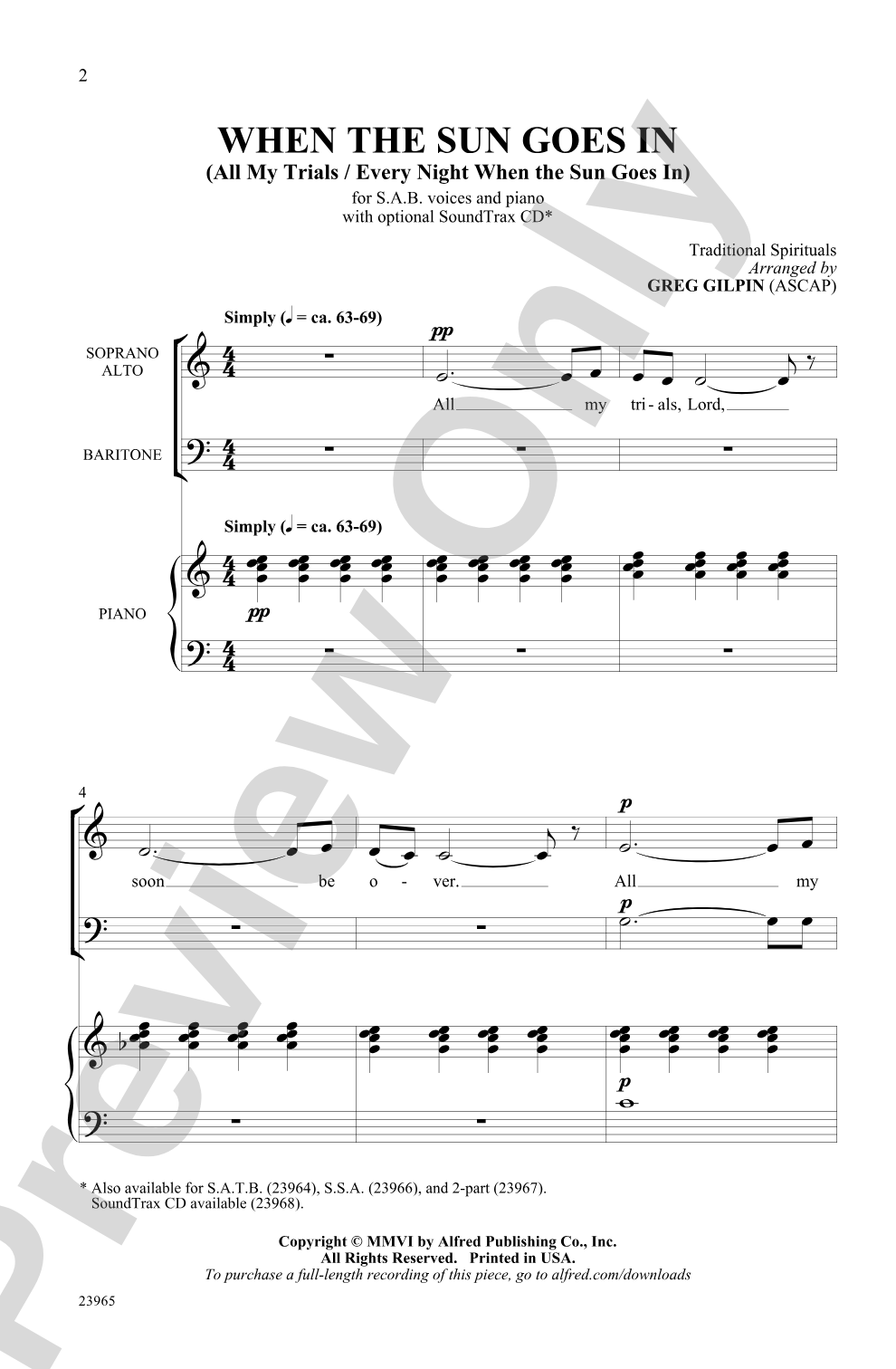
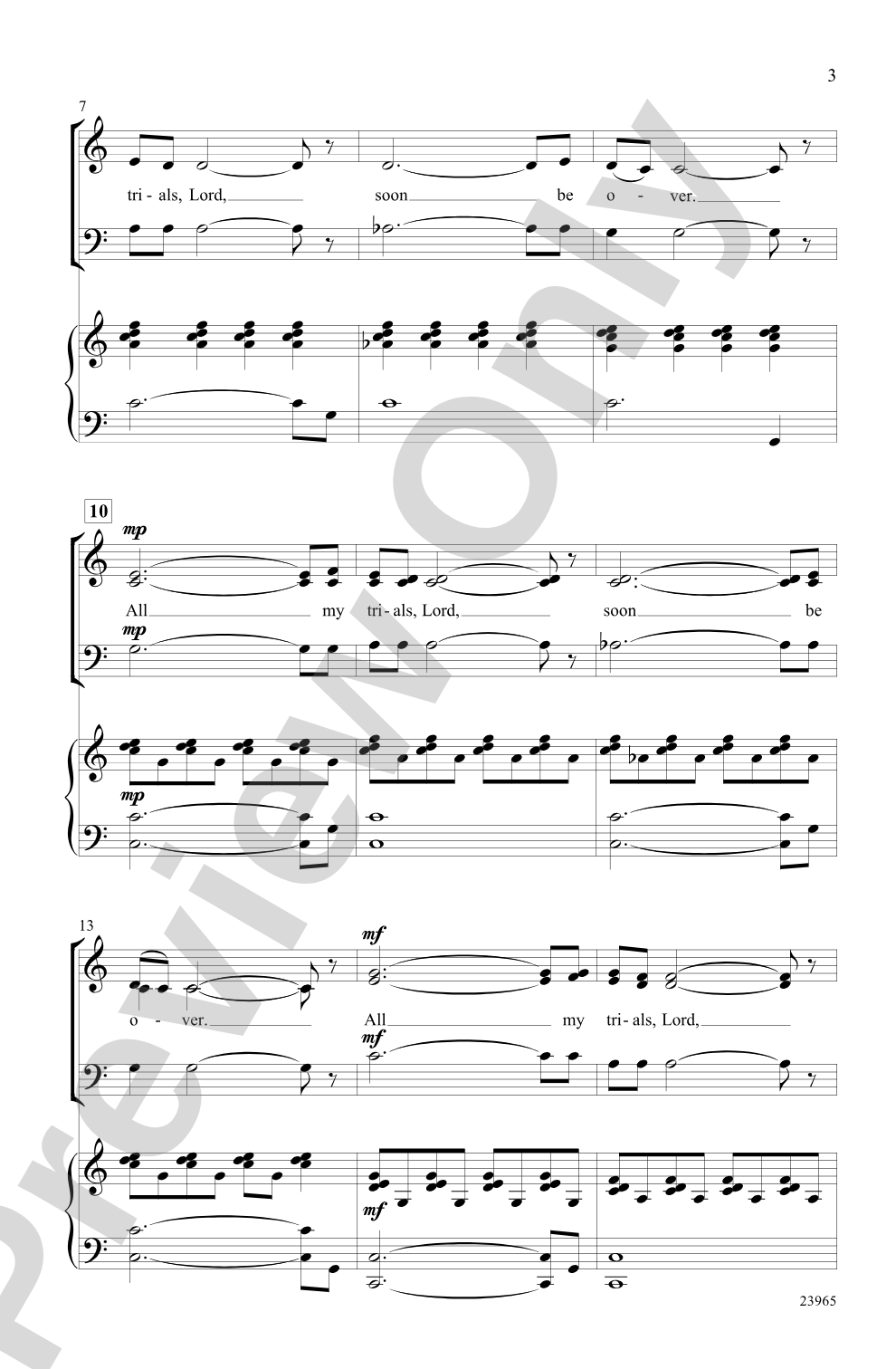
A sublime combination of "All My Trials" and "Every Night When the Sun Goes In," enjoyable and accessible for all choirs. A delicate piano accompaniment underscores the simple sustained vocal phrases that begin on unison pianissimo and grow to full harmonic beauty. A stunning spiritual setting!


When the Sun Goes In: SAB Choral Octavo isn't in MakeMusic Cloud just yet...but it could be. Let us know you'd like to see it, and you'll help shape what comes next. In the meantime, start a free trial and dive into thousands of interactive titles your students can play along with today.
Request This Title
Tell us you want it.
Start Your Free Trial
Explore everything that's ready to play right now.
Sample Audio
1
Audio File
--:--
0:00
0:00
Sample Video
No sample videos found.
Additional Details
Series:
Alfred Choral Designs
Publisher:
Alfred Music
Page Count:
8
SKU:
00-PO-0000038
More about this title
About the Arranger: Greg Gilpin

Greg Gilpin has established himself as a prolific choral composer and arranger whose work appears regularly on concert stages across North America and internationally. His conducting engagements have taken him to Carnegie Hall, Lincoln Center, Ryman Auditorium, Sydney Opera House, Royal Festival Hall, and Harpa Concert Hall, where he has led performances that showcase his deep understanding of choral literature. As Director of Educational Choral Publications for Shawnee Press, Gilpin shapes the landscape of accessible, singable choral music for student and community ensembles.
Beyond the choral world, Gilpin has expanded his creative reach into film scoring, earning "Best Score" recognition for the short film "Rosie's Rescue" in 2021. He has also collaborated on high-profile concert arrangements, including a world premiere performance with opera singer Angela Brown and the Indianapolis Symphonic Choir. An active member of ACDA, NAfME, and Phi Mu Alpha Sinfonia, Gilpin continues to compose, arrange, conduct, and teach.
Why we love this
Gilpin's gift for blending two spiritual traditions into a single, cohesive piece gives directors an arrangement that feels fresh rather than precious. The writing respects the vulnerability of unison singing while building toward moments of genuine harmonic depth, making it as rewarding for confident ensembles as it is encouraging for groups still finding their voices.
What to expect
The arrangement opens with spare, meditative simplicity before gently unfurling into richer harmony. There is reverence in the sustained phrases and warmth in the progression, creating an intimate spiritual moment that lingers rather than overwhelms.
Who it's for
SAB choirs of all levels will find success with this setting. The unison opening and accessible range make it attainable for developing ensembles, while the harmonic writing engages more experienced singers with opportunities for nuanced, supported voice leading.
How to get the most out of it
- Hold the opening unison passages with true pianissimo control; the delicate piano accompaniment will disappear if the voices overshadow it, so rehearse the texture specifically with accompaniment rather than a cappella.
- Shape the harmonic growth gradually across the middle section, resisting the urge to jump immediately to full volume. Mark clear dynamic arrival points in your score so singers understand where the phrase is heading.
- Balance the sustained notes in the upper voices against the moving lines below; assigning specific singers to the alto or second soprano parts helps maintain clarity when voices sit in close harmony.
- Use the recorded accompaniment during early rehearsals to establish the correct tempo and feel, then remove it periodically to ensure the choir can maintain independence and ensemble integrity.
How to use it
This works beautifully in a concert devoted to spirituals or American sacred music, offering a quieter counterpoint to more spirited arrangements. It also fits naturally into ecumenical or interfaith services where its gentle synthesis of two traditions communicates inclusivity and respect.
Skills your students will build
- Singing sustained phrases with supported tone in unison
- Balancing SAB parts in close harmony without losing individual line clarity
- Understanding dynamic shape across longer harmonic arcs
- Listening for blend and balance in three-part textures
- Connecting text and music in spiritual/traditional repertoire